

12 Fuel-Efficient Hybrid Cars That Aren't A Toyota Prius
The 2026 Toyota Prius hybrid is the U.S. fuel efficiency champ if you exclude plug-in hybrids. The base model, which starts at $29,845 (with delivery) has an astonishing 57 mpg combined EPA rating, and equally bonkers 57 mpg city and 56 highway. Even the all-wheel-drive variant, which boasts an electric motor on the rear axle, is highly economical. It's rated at 54 mpg combined, 53 city, and 54 highway. Higher-end trims are worse, but still among the country's most fuel-efficient cars.
What's even more impressive is that unlike previous generations, the current Prius isn't slow. The 2.0-liter hybrid system with two electric motors produces 194 horsepower (196 hp for the AWD model), enough for a 0-60 sprint of 7.2 seconds (front-wheel drive) or 7.0 seconds (AWD), according to Toyota. Another thing that has changed for the better: the design. Instead of the cacophonous styling of the previous-gen Prius, the new model looks clean, fresh, and dare we say it — sporty? No wonder we called the 2024 Toyota Prius hybrid perfection.
But of course, the Prius isn't the only highly efficient hybrid car on sale in the U.S. Electrified power trains are more prevalent than ever, and many of them approach the Prius efficiency figures. Some are also more practical, others more luxurious. So, let's have a closer look at them in ascending order, from the lowest to the highest mpg. Important notice: The prices mentioned are with delivery fee included.
2026 Ford Escape Hybrid (39 mpg combined)
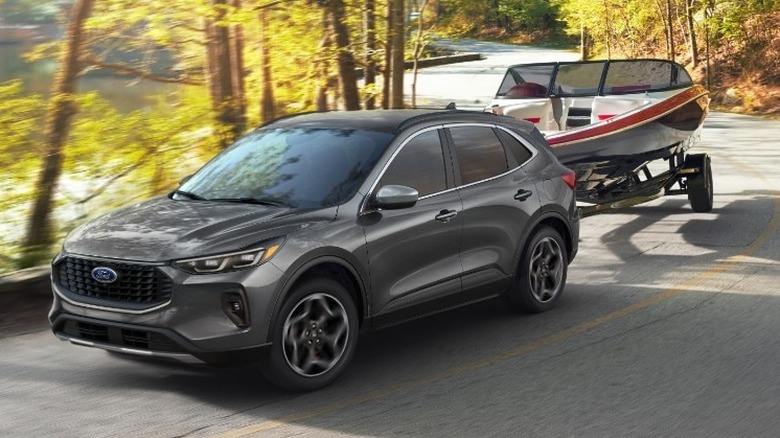
The 2026 Ford Escape Hybrid is an excellent example of a roomy, practical, fuel-efficient family crossover. It packs a 2.5-liter four-cylinder aided by two electric motors, producing 192 hp. The Escape Hybrid can be equipped with front-wheel or all-wheel drive, and comes standard with an electronically controlled continuously variable automatic transmission (eCVT). The AWD model returns an EPA combined figure of 39 mpg, 42 mpg in the city, and 36 on the highway.
Those figures are a far cry from the Prius', but the Escape is much larger, with significantly more passenger space, particularly in the rear seats. Its 31-cubic-foot cargo area is bigger than the Prius' 23.8 cubic feet, too. The cabin is otherwise forgettable, though, with a dated design and cheap materials in places. The 13.2-inch infotainment screen, optional on lower grades (the standard is 8.0-inch) and standard on higher grades, does help modernize the cabin a bit, though, especially when paired with the 12.3-inch digital instrument cluster (available on higher grades).
As for safety, the 2026 Escape comes standard with automatic emergency braking, lane-keeping assist, and blind-spot monitoring, though adaptive cruise control is only optional. The Prius has a higher level of standard safety equipment, with adaptive cruise control available standard on all grades. The 2026 Ford Escape Hybrid starts at $35,085.
2026 Honda CR-V Hybrid (40 mpg combined)
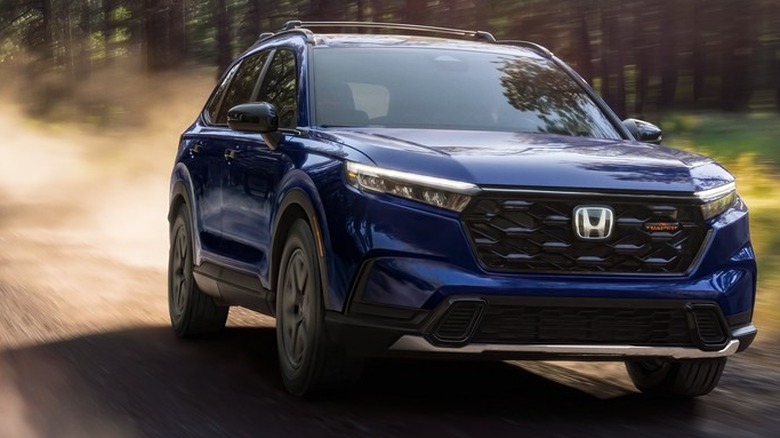
The 2026 Honda CR-V starts at a higher $37,080 than the Escape, but it comes with more standard safety equipment, similar to the Prius. The CR-V also comes with a larger 9.0-inch infotainment screen as standard, although higher-end trims don't get a larger screen like on some rivals.
The CR-V's hybrid power train combines a 2.0-liter four-cylinder engine with two electric motors and produces 204 hp. It comes standard with AWD on the TrailSport and Sport Touring Hybrid trims, though the Sport Hybrid trim lets you choose AWD or FWD. There's a fuel efficiency penalty if you pick AWD, though; the FWD CR-V is rated at 40 mpg combined, while the AWD model offers 37 mpg combined. Likewise, the FWD model returns 43 mpg city and 36 highway, while the AWD is good for 40 mpg city and 34 highway.
According to Car and Driver, the CR-V sprints to 60 in 7.1 seconds, respectable for a family crossover. That good straight-line punch is combined with tossable handling; the TrailSport Hybrid model we tested remained an on-road champ, despite being geared more toward off-road driving.
Still, it's the CR-V's spacious cabin that will attract most buyers. Adults will find both seating rows comfortable, and the 35-cubic-foot cargo area is among the best in the business. The driver will also find the clear, button-oriented dashboard easy to use — not a given in modern vehicles.
2026 Kia Sportage Hybrid (42 mpg combined)
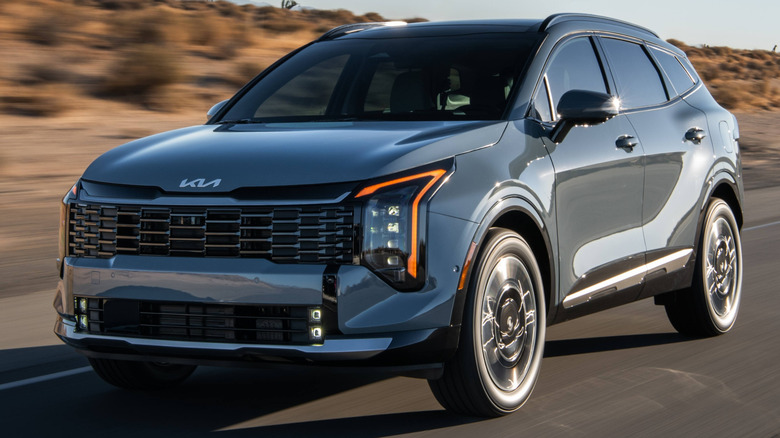
The 2026 Kia Sportage Hybrid trumps the Escape and CR-V in the fuel economy game with a 42-mpg combined EPA rating. The 44-mpg highway and 41-mpg city figures are also excellent for a family crossover. However, all these figures are for the front-wheel-drive model; the Sportage Hybrid AWD has a significantly worse fuel economy of 35 mpg combined, 36 highway and 35 city.
Even so, the Sportage Hybrid also has a more potent hybrid power train than most of its rivals. It packs a 1.6-liter turbo-four with two electric motors, a combo that's good for 232 hp and 271 pound-feet of torque. The Sportage Hybrid also comes standard with a six-speed auto, not a CVT, so it should be more familiar to people accustomed to regular automatics.
Kia's family crossover isn't very fast; in Car and Driver's test, the Sportage Hybrid reached 60 in 7.4 seconds. However, it's competitive when you put the price into context — it starts at $31,895. Yes, adaptive cruise control and lane-centering are optional, but it does come standard with a 12.3-inch infotainment and a 12.3-inch driver information display. The cabin is also spacious for passengers, and the 40-cubic-foot cargo volume trumps most of its rivals.
2026 Toyota RAV4 (43 mpg combined)
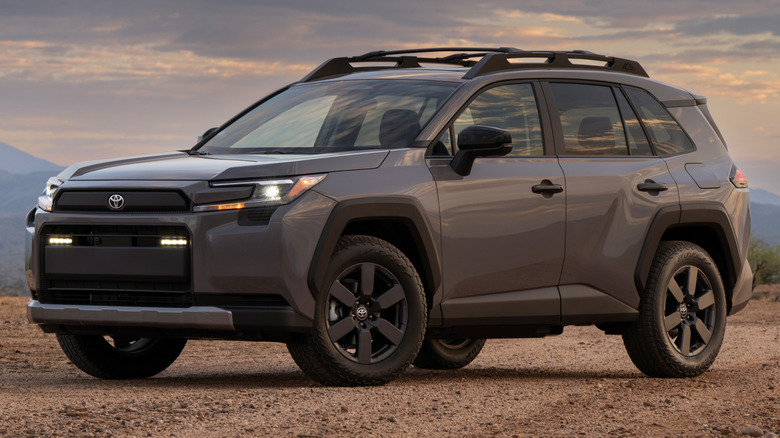
The brand-new 2026 Toyota RAV4 went hybrid-only for the first time. This means that now the base power train is a 2.5-liter inline-4 with two electric motors and an e-CVT, producing 236 hp in AWD form and 226 hp in FWD form. Toyota also added a RAV4 GR Sport plug-in hybrid that's genuinely fun to drive (it has 320 hp), while the off-roady Woodland trim serves outdoorsy people with all-terrain tires and standard AWD.
Regarding performance, the regular RAV4 hybrid is closely matched to the CR-V, reaching 60 in 7.1 seconds (via Car and Driver). It's more economical, though; the FWD model is EPA-rated at 43 mpg combined, 47 city, and 40 highway. The AWD model is only slightly worse at 42 mpg combined, 46 city, and 39 highway, so it's meaningfully more economical than its AWD rivals.
Inside, the 2026 RAV4 has a more tech-forward dashboard than before, with a 12.3-inch driver information display and a 10.5-inch infotainment screen standard in lower-end models, with a 12.9-inch infotainment offered as an option on some trims. It's spacious for passengers and offers many storage bins for smaller items. The 38-cubic-foot cargo volume is competitive, too. The 2026 RAV4 starts at $33,495 and comes standard with a comprehensive set of driver-assistance systems, including lane-keeping assist and adaptive cruise control.
2026 Lexus ES 350h (46 mpg combined)
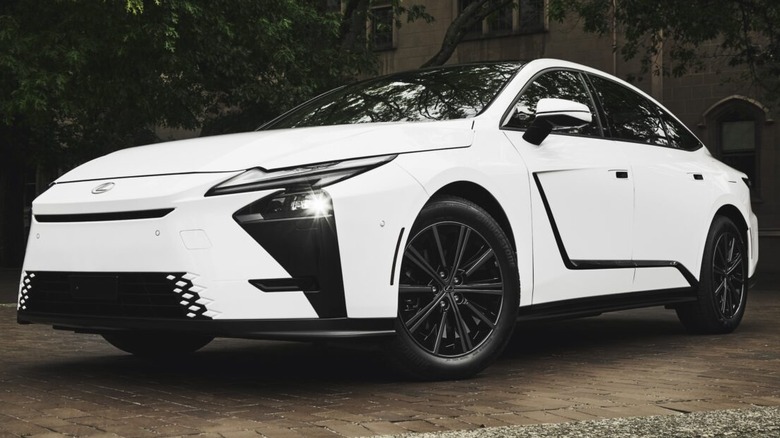
The Lexus ES 350h is a highly fuel-efficient unicorn in the luxury category. Based on the brand-new ES, which also spanned two EV variants, the ES hybrid brings an all-new design and is significantly bigger on the outside than the previous generation. As a result, it offers more room inside the cabin, particularly in the rear seats. As you'd expect from a Lexus, the cabin also boasts premium materials and feels more upscale than any other vehicle on this list.
Whether you choose a hybrid or EV, the 2026 Lexus ES is one of the most accessible luxury cars. The ES 350h hybrid starts at $51,095 and comes standard with a massive 14.0-inch infotainment screen, a 12.3-inch digital instrument cluster, and 10-speaker audio. The base model is also equipped with all the latest safety features, including adaptive cruise control and lane-keeping assist.
The ES 350h is powered by the automaker's sixth-gen hybrid system, consisting of a 2.5-liter four-cylinder engine and two electric motors, with an AWD model adding a third electric motor on the rear axle. Both versions are equipped with an e-CVT and produce combined 244 hp, with Lexus claiming a 0-60 time of 7.1 seconds for the AWD model.
Although it powers a big 202.4-inch-long sedan, the hybrid power train is highly efficient. The FWD model has a 46-mpg combined EPA rating (48 mpg city and 44 highway), while the AWD model is rated at 44 mpg combined, 47 city, and 42 highway.
2026 Honda Civic Hybrid (49 mpg combined)
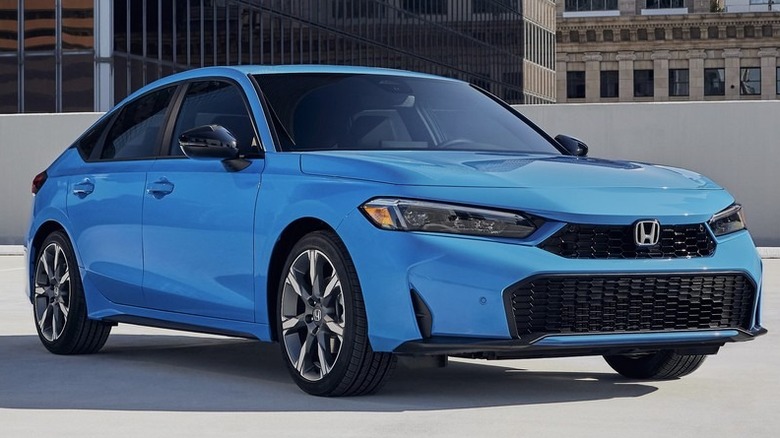
The 2026 Honda Civic Hybrid is one of the most affordable fuel-efficient cars on the market, with a base price of $30,590. And it's surprisingly quick. It packs a 2.0-liter four-cylinder engine with two electric motors for a combined output of 200 hp. According to Car and Driver, that's enough for a 0-60 sprint of only 6.1 seconds for the hatchback, or 6.2 seconds for the sedan. The combined EPA figures of 49 mpg for the sedan (50 city, 47 highway) and 48 for the hatchback (50 city, 45 highway) are highly impressive for the power on offer.
This outstanding price-to-performance-to-efficiency ratio already makes it the platonic ideal of economy cars, but the Civic Hybrid is also fun to drive, with particularly good cornering abilities. Yes, it has an eCVT, but Honda made it feel like a real automatic with faux gears, which further enhances the experience. But the Civic Hybrid isn't just sporty — it rides well, too.
Although it's a compact, the Civic offers plenty of space for four adults, and even manages to squeeze in well-sized storage bins. The 25-cubic-foot trunk in the practical hatchback is also impressive, while the sedan has a 15-cubic-foot trunk. The Civic's dashboard is also nicely laid out, and comes standard with a 7.0-inch infotainment (a 9.0-inch display is optional). The base model is equipped with adaptive cruise control, a feature you don't often see at the Civic's price.
2026 Toyota Corolla Hybrid (50 mpg combined)
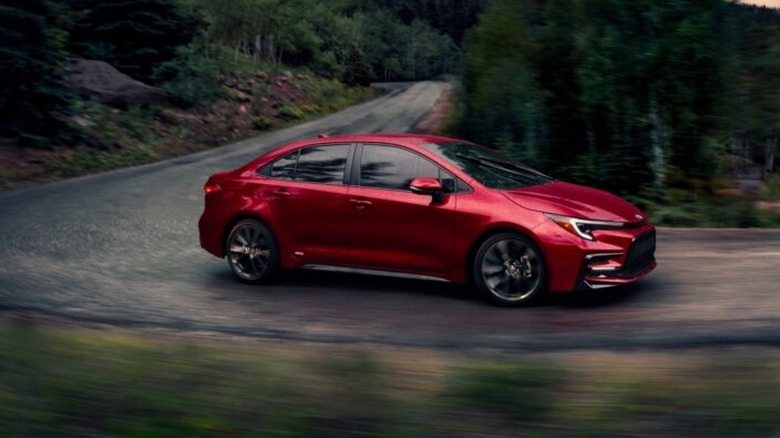
The 2026 Toyota Corolla Hybrid boasts an even higher 50-mpg combined rating than the Civic Hybrid, with 53 mpg city and 46 highway. Unlike the Civic, it's also available with AWD (electric motor on the rear axle), which cuts the EPA economy figure to still respectable 48 mpg combined, 51 city, and 44 highway.
However, the Corolla Hybrid is considerably less powerful. Its hybrid power train has a smaller 1.8-liter four-cylinder engine and produces only 138 hp and 105 lb-ft. As a result, the AWD model needs a considerable 9.7 seconds to reach 60 (via MotorTrend), with the FWD model even slower (10.3 seconds). The Corolla Hybrid is also only available in sedan form; the hatch is exclusively equipped with a 2.0-liter gas engine with 169 hp.
A saving grace for the Corolla Hybrid is the low $26,270 starting price. It also offers a comfortable ride, though its rivals offer more room for passengers. The 13.1-cubic-foot trunk is also smaller than Elantra's (14.2 cubic feet), Civic's (15), and Prius' (23.8).
On the other hand, Toyota didn't skimp on safety, despite the bargain prices. Every Corolla Hybrid comes with safety features that are only optional on other compact cars, like full-speed-range adaptive cruise control, blind-spot monitor, and rear cross-traffic alert.
2026 Honda Accord Hybrid (51 mpg combined)
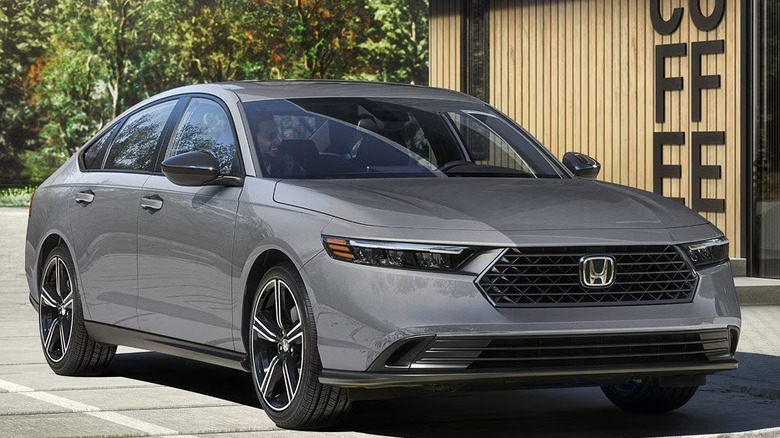
The 2026 Honda Accord Hybrid might be less luxurious than the Lexus ES 350h, but it's still an exceptionally good midsize sedan with refined on-road behavior, a comfortable interior, and a useful 16.7-cubic-foot cargo area. The $34,990 base hybrid model, the Accord Sport Hybrid, also comes standard with the larger 12.3-inch infotainment screen inside, alongside a 10.2-inch digital gauge cluster.
The Accord's standard safety equipment is also generous. Along with the customary lane-departure warning and automated emergency braking features, Honda's midsize sedan is equipped with adaptive cruise control and lane-keeping assist.
Accord's hybrid system consists of a 2.0-liter four-cylinder engine and two electric motors, good for 204 hp. It's only available with front-wheel drive, just like the regular 1.5-liter turbocharged model, and sprints to 60 in 6.7 seconds (via Car and Driver). The power train is highly economical: the EX-L Hybrid trim delivers EPA ratings of 51 mpg combined, 44 highway, and 48 city. The Sport Hybrid and Touring Hybrid models are rated at a lower 46 mpg combined, however.
2026 Toyota Camry (51 mpg combined)
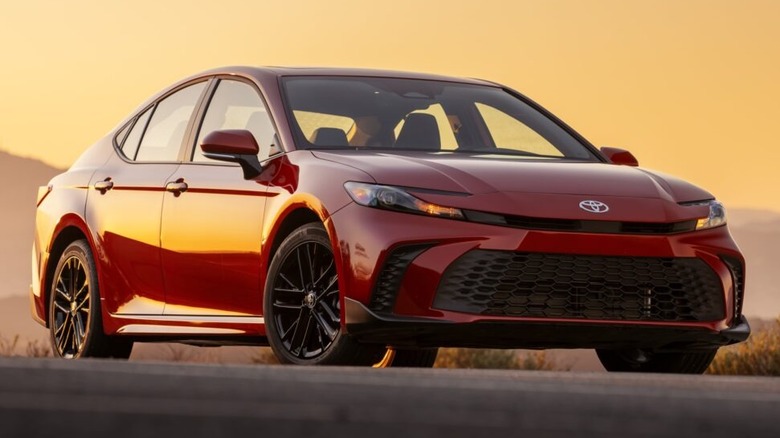
The Accord's greatest rival went hybrid only for the 2025 model year while bringing improvements across the table, like a re-engineered suspension and braking system for better comfort and handling. Unlike the Accord, though, Camry's fifth-gen 2.5-liter hybrid system is available in front-wheel drive (225 hp) and all-wheel drive (232 hp) form, with the latter using an electric motor on the rear axle. As a result, in Car and Driver's test, the Camry AWD sprinted to 60 in 6.8 seconds, or just a tenth slower than Honda's mid-size sedan.
They offer similar fuel economy, too. The base Camry LE model is EPA rated at 51 mpg combined, 52 city, and 49 highway. The AWD model cuts the combined figure to still impressive 50 mpg, while the SE and XLE trims are rated at 46 mpg combined. Still, with a starting price of $30,895, the base Camry is more affordable than the Accord. It also has similarly sized cabin that comfortably accommodates adults in both seating rows, though it's slightly short on trunk capacity (15 cubic feet vs. Accord's 16.7).
Alas, the Camry LE only comes with an 8.0-inch infotainment (a 12.3-inch unit is optional on the SE and standard on higher trimes), but the safety equipment is generous. All Camry models come with automated emergency braking with pedestrian and cyclist detection, lane-keeping assist, adaptive cruise control with lane-centering, blind spot monitors, and rear cross-traffic alert.
2026 Hyundai Sonata Hybrid (51 mpg combined)
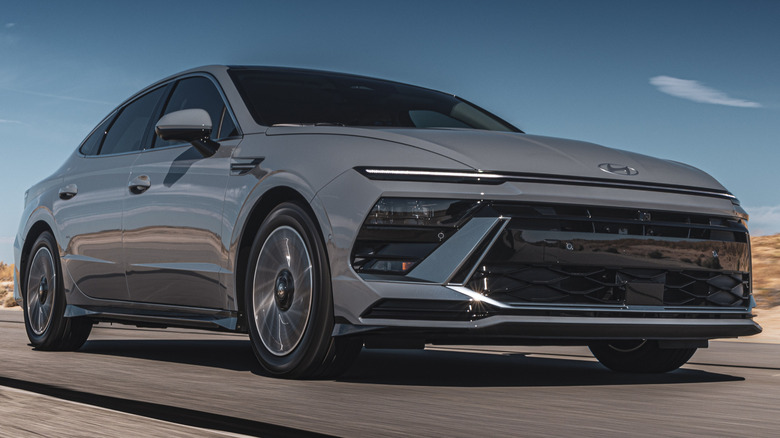
The 2026 Hyundai Sonata Hybrid is EPA-rated at 51 mpg combined, 47 city, and 56 highway. However, those figures are only for the Blue trim; all other trims are rated at 47 mpg combined, 44 city, and 51 highway. That would make the Sonata Hybrid a better long-distance cruiser than its rivals, as it has a higher highway mpg than both the Accord and the Camry. The Sonata Hybrid Blue is also the cheapest of the bunch, starting at attractive $30,445.
Sonata's hybrid system consists of a 2.0-liter four-cylinder engine and one electric motor for a combined output of 192 hp. It's exclusively mated to a six-speed automatic and sprints to 60 in 7.8 seconds (via Car and Driver), which is slower than the Camry and Accord Hybrid. Unfortunately, the Sonata Hybrid isn't available with all-wheel drive.
Sonata's interior is relatively spacious in the front, though the rear seats aren't as accommodating. The 16-cubic-foot trunk is good for the category, though. Also, the dashboard layout and materials look more upmarket than you'd expect at the price. The dual-screen layout with a 12.3-inch infotainment looks fresh, too, and you get it standard on all trims. And though it's one of the cheapest mid-size hybrid sedans, the Sonata Hybrid comes standard with adaptive cruise control, blind-spot monitoring, lane-keeping assist, and rear cross-traffic alert.
2026 Kia Niro Hybrid (53 mpg combined)
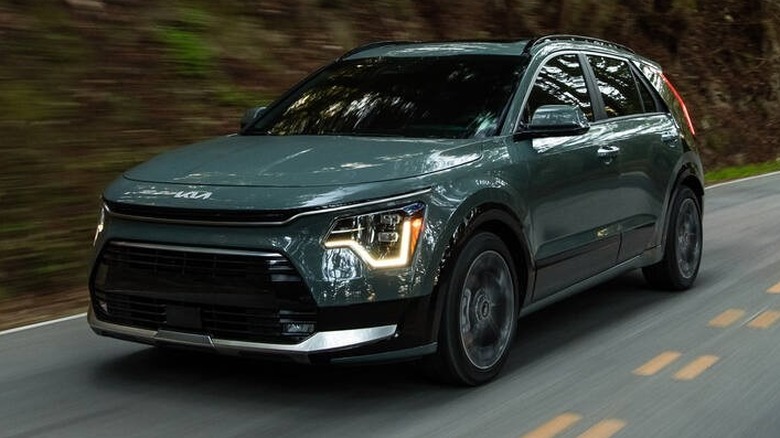
With a starting price of $28,885, the stylish 2026 Kia Niro Hybrid is one of the cheapest hybrids on the market. Still, it's mainly designed for urban driving and with 139 hp on tap, its 1.6-liter hybrid power train is underpowered compared to most rivals. According to Car and Driver, 0-60 takes 8.9 seconds with this combo. Also, while technically a crossover, the Niro Hybrid is only available with front-wheel drive. However, Kia's urban crossover also delivers excellent fuel economy with 53 mpg combined, 53 city, and 54 highway. Unlike most of its hybrid rivals, it isn't equipped with a CVT, but rather a six-speed dual-clutch gearbox.
The most surprising bit, though, is the interior. It's not luxurious, but Kia used a nice blend of recycled and natural materials to make it feel a bit more upmarket than the price suggests. The 10.3-inch infotainment that's standard on all but the base trim is also relatively big for the category, and there's even ambient low-intensity LED interior lighting. Alas, the Niro Hybrid isn't very spacious for passengers, though it has a useful 23-cubic-foot cargo area. As for safety, adaptive cruise control and lane centering are optional on the Niro Hybrid, though every model comes with automated emergency braking with pedestrian detection.
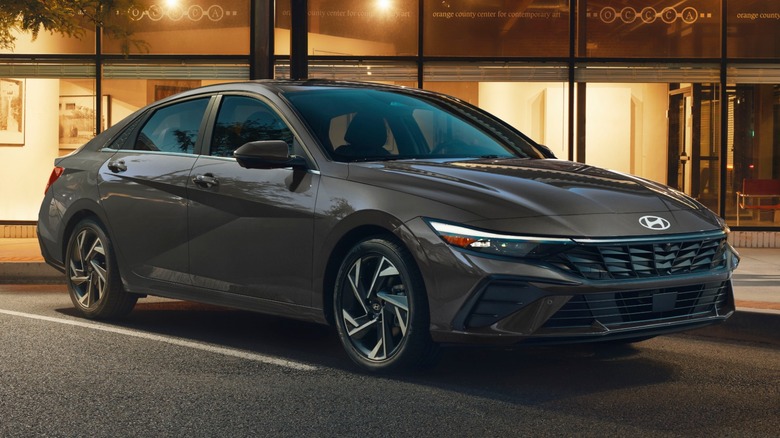
2026 Hyundai Elantra Hybrid (54 mpg combined)
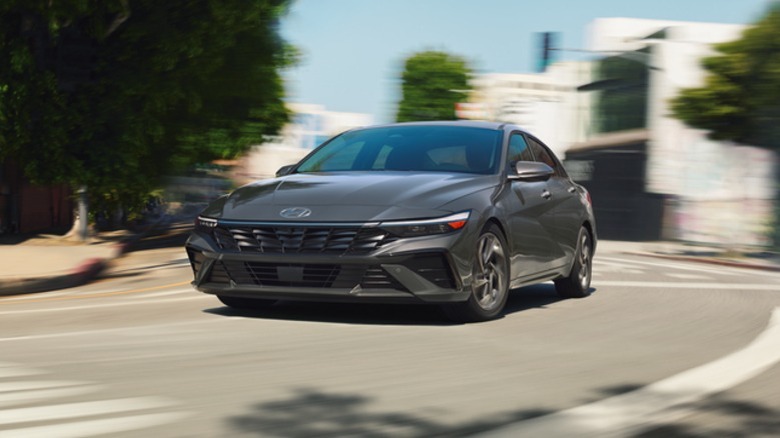
The Elantra Hybrid is one of the most fuel-efficient hybrids you can buy, and the one that's the closest to the Prius in EPA fuel economy ratings. The base Elantra Hybrid Blue, which starts at $26,695, delivers 54 mpg combined, 51 city, and 58 highway — impressive figures for a compact sedan. Other trims aren't rated as highly, though, and deliver 50 mpg combined, 49 city, and 52 highway.
Since Hyundai and Kia operate under the same roof, the Elantra Hybrid shares the 1.6-liter hybrid power train and six-speed dual-clutch automatic with the Niro Hybrid. With 139 hp on tap, the electrified power train propels the Elantra Hybrid to 60 in 8.4 seconds (via Car and Driver), which is significantly slower than the Civic Hybrid, but quicker than the Corolla Hybrid.
The Elantra Hybrid has a spacious cabin, with enough room for adults in both rows. The 14.2-cubic-foot cargo area is also larger than the Corolla's and close to the Civic's. The cabin feels a bit cheap at places, though the dual-screen setup in higher trims, combining 10.3-inch screens, makes it a bit more interesting. Sadly, Hyundai only offers adaptive cruise control and lane centering as an option; both are standard on the Civic and Corolla.