

How Rock's Most Volatile Drummer Showed Everyone Range Rovers Are Fantastic Off-Roaders
Sensational English drummer Peter Edward "Ginger" Baker, of supergroup Cream fame, was known for his psychedelic styling, aggressive mannerisms, and African-influenced percussive timing. The band burned hot and fast, making four iconic albums in under three years before breaking up in 1968. After bouncing around in a few other bands, including Blind Faith, Baker decided to follow his passions and open a recording studio in Nigeria.
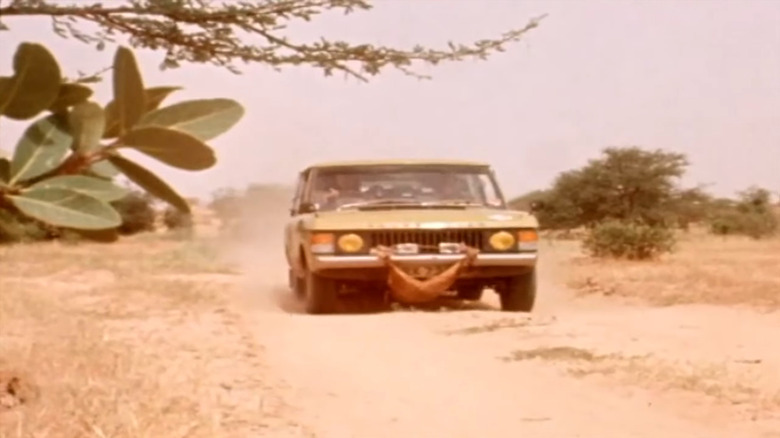
Always determined to take the most interesting path forward, Baker decided to drive to Lagos in his Range Rover, plotting a route from London through Algeria, Niger, and Nigeria across the Sahara desert. This little road trip, documented on film, predates the Paris-Dakar Rally by eight years.
If you have a spare hour to kill, this documentary is an incredible look at music, international travel, and off-roading culture in the early 1970s. While you might be able to manage the trip with modern infrastructure and capable vehicles today without too much fuss, traversing that 4,300-mile trip in 1971 was beyond the pale. It took someone completely bonkers to achieve, like Baker. The documentary largely covers the new friends Baker met along the way, the music he makes, and the studio he set up, while devolving into stringy soliloquies set to jaunty music about life and nature.
The Range Rover was still a new vehicle in 1971, having only been launched the year prior. It barely makes its presence known in the drummer's documentary, but that's what built the Range Rover lore. Because Baker and company needed to do hardly any work on the truck, save mending a few flat tires, it earned a reputation as the type of vehicle that conquers the African terrain. Baker's Bahama Gold example is among the first in a long line of legendary Rovers.
Range Rover history
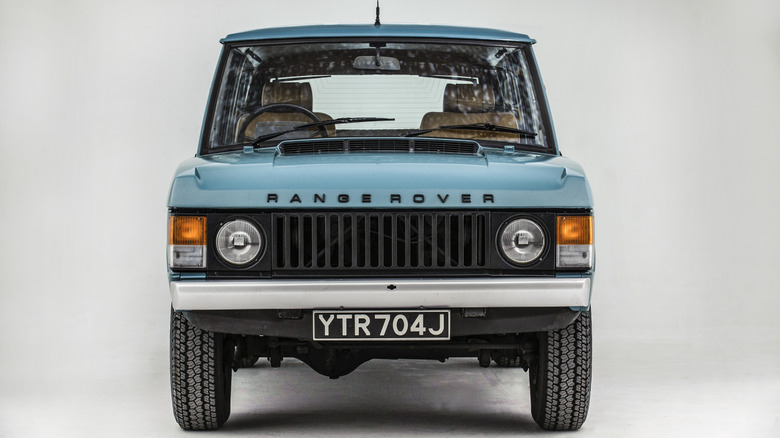
While the legendary British 4x4 is known more today for shuttling the well-heeled around their urban enclaves, Range Rover built a reputation for off-road prowess as one of the first four-wheel-drive machines that could be pressed into daily driver duty. For its first 11 years of production, it was only available as a two-door because of its intent as a sporting vehicle for hunters and a utility vehicle for farmers, as well as for the burgeoning recreational off-roader market. That two-door shell let the body maintain better chassis rigidity. Consider this the British answer to the International Scout, Ford Bronco, and Jeep Wagoneer. It was billed as the "car for all reasons."
In addition to Baker's African journey, Range Rover became synonymous with off-road adventure by becoming the first vehicle to traverse the Americas from north to south, including the dangerous Darién Gap, in 1972. It also went on to win the Dakar rally in 1979 and again in 1981, in largely stock form. Pretty much anything the terrain could throw at it, a Range Rover could tackle with aplomb. The Range Rover treated every new adventure as a test of its mettle, and every new trail traveled was proof of concept.
Designed around a 100-inch wheelbase, the Range Rover eschewed the leaf springs and drum brakes common on four-wheel drives of the day for modern and more comfortable coil springs and disc brakes to handle the big machine's weight. Power for the early Range Rovers came from the Buick-derived 215-cubic-inch aluminum small block V8, making a solid and reliable, but underwhelming, 135 horsepower. Special carburetors let them maintain fueling even when driving at the odd angles off-road driving often requires.
The music that inspired the trip
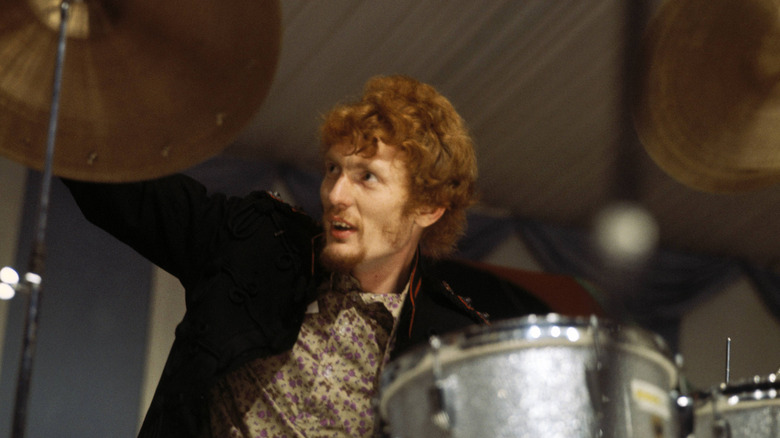
Across the 1970s, Baker's Batakota ARC Studios in Lagos was renowned for producing all kinds of experimental music, including Baker's own brand of jazz fusion and world music. Paul McCartney and Wings recorded part of the "Band on the Run" album there, and Baker produced a number of recording sessions with Nigerian musician and political activist Fela Kuti. The studio was at its peak in the mid-1970s, but ultimately petered out in the early 1980s and Baker moved on to other endeavors. Baker's life was as wild, unpredictable, and flamboyant as his on-stage performances might have suggested. He was your favorite drummer's favorite drummer.
Unlike his Range Rover, Baker was largely seen as unreliable and with a vicious temper. He lived the hard life of a 1960s rock star, having been hooked on heroin for over a decade. He noted in the documentary that crossing the Sahara required 65 gallons of canned fuel to avoid running out of gasoline. I am forced to wonder how large a supply of drugs he required in order to make the 12-day sojourn.
Years before the Dakar rally found its way to Africa, and decades before Ewan McGregor and Charlie Boorman rode the long way down, the trans-Sahara highway was far less traversible than it is today. Still, a rockstar drummer, a documentarian, and a Range Rover loaded down with supplies managed to make the trip with only a few hiccups. Do you think you have what it takes to follow in their wheel tracks?