

5 Signs Your Fuel Pressure Regulator Is Bad
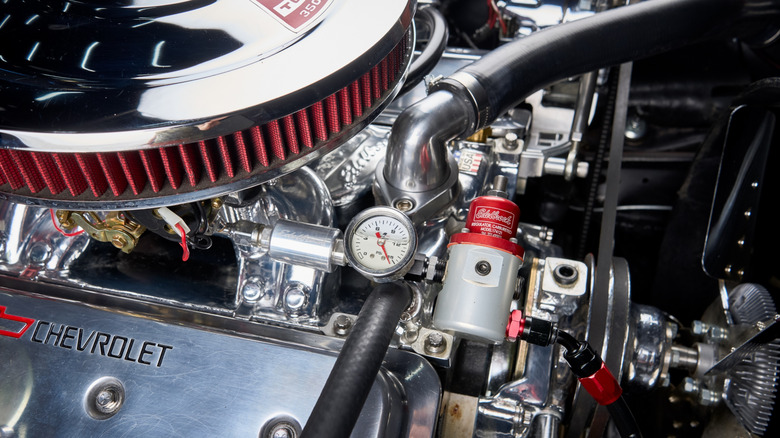
Accompanying any engine under the hood is a number of other key components that work together to ensure the car performs as it should. When one of these parts fails, it can disrupt how the car as a whole behaves. One such unit is the fuel pressure regulator.
When working properly the fuel pressure regulator feeds the fuel rail and injectors with a steady and stable supply of fuel. The steady supply ensures that the engine can maintain the correct air-fuel ratio it requires in order to run smoothly. The majority of gas-powered cars use a return-style system, in which excess fuel returns to the tank. Some systems also have a vacuum element, which enables pressure to change, depending on engine load.
Naturally, when the regulator fails, that steady supply is disrupted, and when that happens, there will be a number of tell-tale signs that drivers need to look out for. The most obvious sign of a failed regulator is gasoline in the vacuum hose of a vacuum-operated system, but there are many other red flags that drivers can spot behind the wheel, too.
These include rough running, black smoke from the exhaust, fouled spark plugs, and poor fuel economy, among other things. Yes, these can be symptoms of other issues, too, so here's a more detailed overview of signs that point toward a failed fuel pressure regulator.
Watch out for misfires
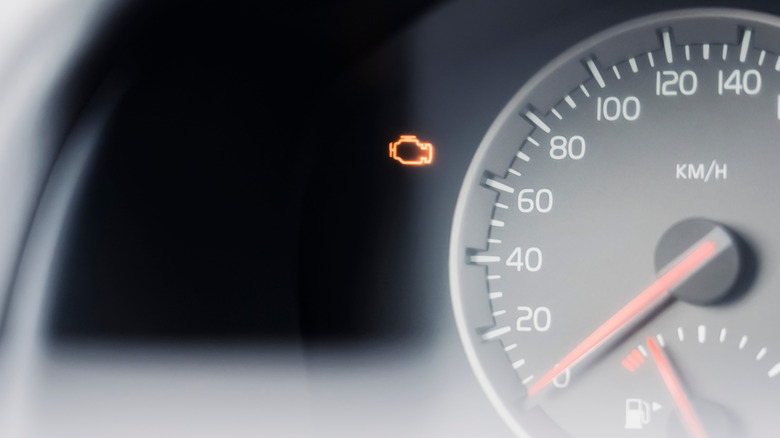
Many issues will result in a car misfiring, a bad fuel pressure regulator being just one of them. When the pressure is too high, the engine is likely to run rich and damage the spark plugs, whereas when the pressure is too low, the injectors won't receive enough fuel to perform as they should. Regardless of how the fuel pressure regulator is acting up, engine misfires can be a result.
This symptom won't highlight the regulator as being at fault on its own. However, if a check engine light also appears, owners can use an OBD-II scanner to read the code linked to the light, and when they research it, this code can reveal the source of the fault. For example, P0087 indicates that the pressure in the fuel rail is too low, which commonly leads to engine misfires or stalling. The presence of this code can direct owners or diagnosticians toward the pressure regulator and the associated systems, rather than the ignition side of things.
If no check engine light is present, or if the misfire affects only one cylinder, it's wise to check more common causes, like plugs and leads, before assuming the regulator is failing. See, the regulator controls the pressure across the entire rail, so if there's an issue here, the performance of all injectors will drop. However, if just one cylinder is misfiring, it suggests the others may still be receiving adequate pressure, potentially ruling out the regulator.
Black smoke from the exhaust is a red flag
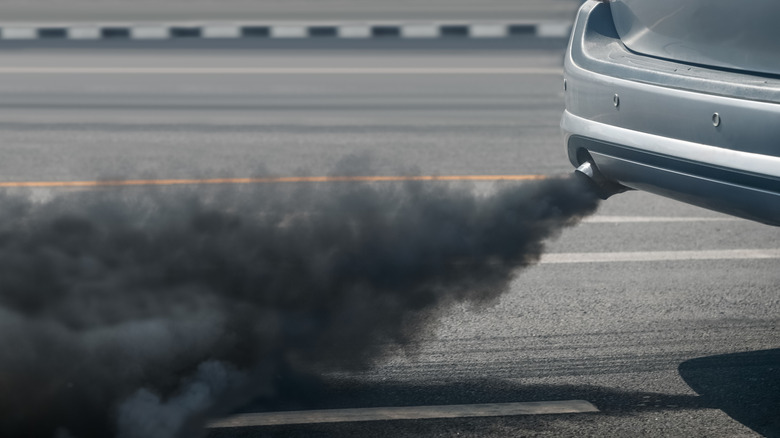
Again, black smoke pouring out of the exhaust does not always mean that the fuel pressure regulator has gone bad. What it does mean, though, is that the engine is consuming too much fuel and/or not getting enough air for proper combustion, which can be a result of many different faults.
For instance, a dirty air filter could be starving the engine of air, or perhaps a faulty injector that's stuck open or spraying incorrectly could be the culprit. Alternatively, the cause could be a fuel pressure regulator is stuck closed. If that happens, more fuel than the injectors can handle cleanly is delivered, and, as a result, black smoke appears from the exhaust.
An engine that's burning excess fuel will rarely do so without displaying other symptoms. As extra fuel is being burnt, drivers should be able to notice a drop in fuel efficiency, and there will likely be a strong smell of fuel, too. If this is occurring, it's best to address the issue sooner rather than later, as burning excess fuel can clog the catalytic converter, and the cost to replace the cat will far exceed the price of swapping out a bad fuel pressure regulator. Again, if a check engine light is also present, it's worth reading the code before making assumptions about what part is faulty.
A notable drop in fuel economy is a symptom
With gas prices sitting north of $4 right now, a random tanking in fuel economy is well worth investigating. Naturally, if the fuel pressure regulator is allowing too much fuel through, not only will this result in the aforementioned black smoke, but it will also cause gas mileage to drop.
It's worth noting that too little fuel passing through the regulator can also result in reduced mileage. Regardless of whether the pressure is too high or too low, signs of a failing regulator often remain the same, and drivers commonly experience reduced fuel consumption.
Now, a fuel pressure regulator going bad is likely to be quite sudden, resulting in an immediate drop in fuel economy, rather than a gradual decline. This should make it easier for drivers to spot, and when coupled with some of the aforementioned issues — notably a pronounced smell of fuel and black smoke — you should prioritize checking the pressure regulator.
Other faulty components in the fuel system can result in similar symptoms, such as a leaky injector, but it's often possible to differentiate between these issues. While a leaky injector will likely only affect one cylinder, a bad fuel pressure regulator will effect the whole rail. So, there's no need to go around swapping parts at random if any of these fuel-related symptoms appears — further diagnosis will likely reveal the culprit.
Trouble starting and strange noises

If the car has trouble starting, it could be regulator related. If fuel delivery is outside of the normal operating range, it can affect a car's starting performance. For example, a lack of pressure could lead to extended cranking time, whereas excessive fuel delivery may lead to over fueling and, therefore, inconsistent ignition.
One more tell-tale sign that something is wrong is when the car starts making unusual sounds. Both of these symptoms are pretty much impossible to ignore and, once again, can prove tricky to diagnose on their own.
However, if the sound seems to be coming from the fuel pump, this is a clue that the source of the issue could be the fuel pressure regulator. See, if the regulator fails to maintain an ideal fuel pressure, the pump may have to pick up the slack, and this additional strain may increase operating noise. Drivers who notice this should act fast, because, otherwise, they may be in for a fuel pump replacement before long.
Of course, fuel pump noise can be a symptom of fuel pump failure, too. For a more complete confirmation that the regulator is at fault, instead of anything else, a few more of the aforementioned symptoms would, ideally, be apparent, in addition to pump noise and trouble starting the car.
Gas in the vacuum hose is a sure sign of failure
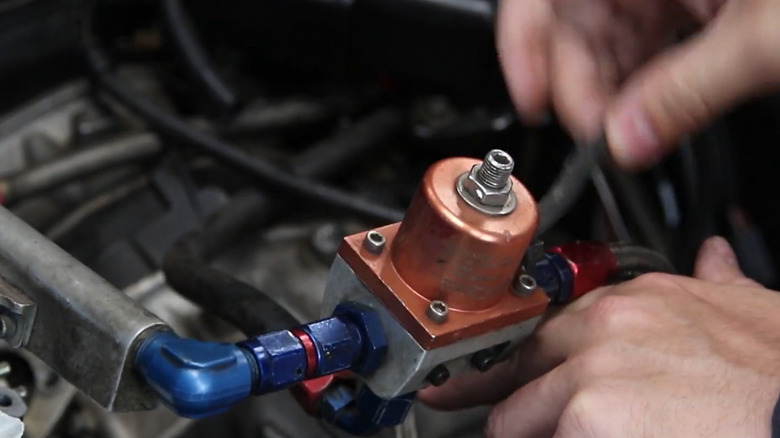
The other symptoms covered above can all point to a fuel pressure regulator going bad, but they can also all point toward a different failure altogether. That doesn't mean these symptoms are useless for someone trying to diagnose an issue — they are just a bit vague.
Thankfully, it's easy to determine for certain if a vacuum-operated fuel pressure regulator has failed, and you can do so by checking the vacuum hose for the presence of fuel. If you find fuel, this indicates that damage has affected the internal diaphragm. Now, not all systems will have this vacuum-operated return hose, so this won't be a suitable test for every car.
You can carry out a basic test when the engine is off and cool by simply detaching the vacuum line. If there is evidence of fuel here, or a strong fuel odor, then you can take this as a strong indication that the regulator's diaphragm has failed.
If fuel is present at the vacuum port or in the hose itself, it can be a sign that the regulator needs to be replaced. Replacement on most commuter-level cars comes in at under $500, including parts and labor, and for roughly a 10th of that, you can test the regulator prior to replacement to confirm the diagnosis.