

6 Harley-Davidsons With The Worst Reputations For Reliability
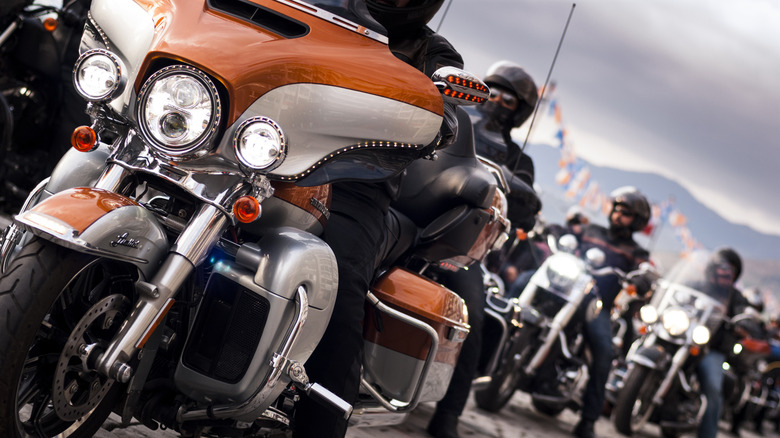
As a brand, Harley-Davidson exists in two completely different realities, depending on who you ask. To the true believers, the bar-and-shield is less a motorcycle badge than a birthright: American iron, big V-twins, highway mileage, and rough edges that can be chalked up to "character" without batting an eye. To the skeptics, Harleys represent a century-plus ode to style over substance, with the style part not always conceded. Oh, and there's all the merch. So, maybe there are three realities, depending on whether or not your search history has you being targeted for biker apparel and accessories.
The annoying truth is that each camp has a point. We're not here to defend Harley-Davidson today — there are plenty of people out there ready to do that. We're looking for the shortlist of bikes that could disappoint even the Harley faithful, or at least to understand what makes the riskier ones compelling enough to be worth the downsides. The company has clearly built some genuinely durable icons, not to mention some of the most iconic motorcycles of all time. But we're not here for those, at least not today. Today is about the engines, eras, and mechanical missteps that even die-hard riders approach with a level of caution usually reserved for Facebook Marketplace listings photographed at night. This is not a list of Harleys to avoid. It's just the ones with reliability reputations rough enough to stick.
The 1969 to 1981 AMF-Era Harley-Davidson Shovelhead Big Twins
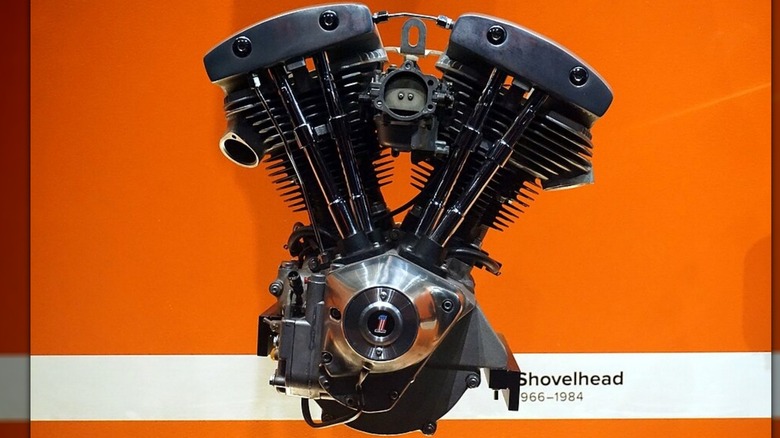
If there is one Harley era that both the faithful and the skeptics can usually agree on, it's the AMF years. American Machine and Foundry bought Harley-Davidson in 1969, and many of the bikes that resulted made "AMF era" synonymous with poor quality in the motorcycle world. High production demand and poor quality output came together to deliver some rough products bearing the Harley name. Some portion of that turmoil, though, could be attributed less to AMF specifically than to some growing pains with a new bike model.
Still, there's perhaps no engine that follows the AMF storyline like the Shovelhead Big Twin. It arrived on the scene just before the merger, meaning that its early issues couldn't be pinned on the new company. These problems included a strong propensity to run hot and a tendency for oil to end up where it didn't belong, leading to smoking and a severe loss of power. So, those AMF years were largely spent engineering and reengineering solutions to the bike's compounding mechanical issues, all the way through Harley-Davidson buying itself back out of the merger in 1981.
What's tricky is that some of these design changes helped reliability considerably. This means that different years can have reimagined intake manifolds, modified piston designs, or even different, modernized manufacturing processes, creating a bike where all model years -– even within the AMF-era –- aren't the same. We're not going to try and thread that needle for you, but somewhere out there is a Shovelhead guru who would probably be happy to help you pick one (because, honestly, they show up in some very cool bikes).
The 1999 to 2006 Harley-Davidson Twin Cam 88-Powered Models
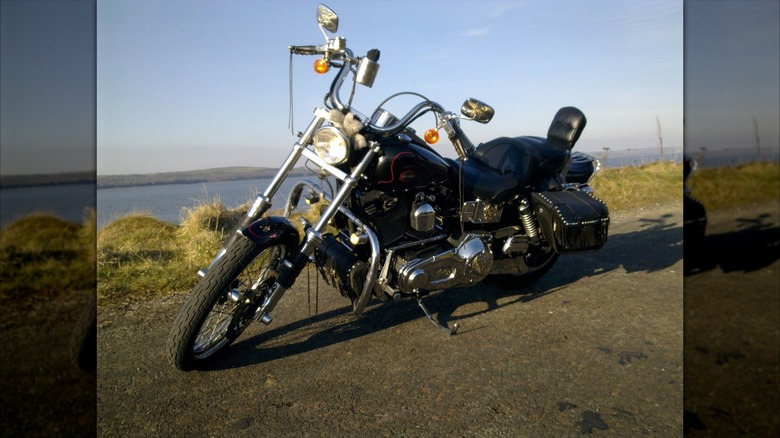
The current president may feel that emissions standards don't "mean a damn bit of difference for the environment," but the '90s were a simpler era. Such standards were becoming more of a thing at a time when Harley riders were demanding more power, and the company was inclined to find a way. It needed a new engine that could deliver without falling victim to the reliability shortfalls that often came with higher power output. The Twin Cam 88 was the answer when it arrived for the 1999 model year, and on paper, it looked like exactly the right kind of modernization: an 88.36-cubic-inch engine built around Harley's push for more power without giving up durability.
Unfortunately, the Twin Cam 88 also came with one of the most infamous maintenance caveats in modern Harley history. Early versions used spring-loaded cam-chain tensioners with plastic shoes that could wear badly over time. Once those shoes started coming apart, the debris could contaminate the oiling system, potentially starving the engine of oil and turning a wear item into a much more expensive problem. That doesn't mean that every Twin Cam 88-powered Harley is a grenade with saddlebags. It does mean service history matters, especially evidence that the tensioners have been inspected, replaced, or upgraded. A sorted Twin Cam bike can be a great used Harley. A neglected one can be a very expensive lesson in why "ran when parked" is not a phrase to hang your helmet on.
The 1957 to 1985 Harley-Davidson Ironhead Sportsters
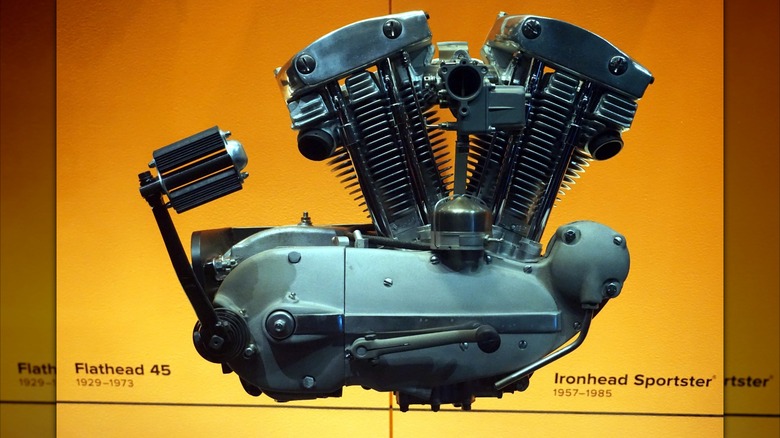
The Sportster did not start out as a cautionary Harley tale. The original XL arrived in 1957 with a 55-cubic-inch V-twin, and its iron cylinder heads gave the Ironhead generation its name. The basic idea was strong enough to become not just one of Harley-Davidson's longest-running nameplates, but one of the motorcycles with the longest production runs by any manufacturer. The trouble is that "long-running" can cut both ways. The Ironhead Sportster stayed in production through 1985, which means later examples were still carrying an older engine family right up to the eve of the Sportster Evolution era.
The reliability case here is not one magic failure point. It is the accumulation of old-bike obligations. Ironhead ownership means keeping up with two separate oil systems — one for the engine, another for the primary and transmission — while using oil suited to an old air-cooled motorcycle engine. Earlier Ironheads also bring points-and-condenser ignition into the picture, with point gap inspection and adjustment becoming part of the ownership rhythm rather than some theoretical shop-manual trivia.
The upkeep list doesn't stop there either: Valve-train adjustment, ignition timing, fuel-system work, electrical troubleshooting, and chain maintenance are all part of keeping an old Ironhead happy rather than merely keeping one parked. None of that means every Ironhead is a bad idea. It means an Ironhead is a vintage Harley in the fullest possible sense: cool, elemental, and absolutely not something to buy because you want a low-effort two-wheeled appliance.
The 2017 to 2019 Harley-Davidson Milwaukee-Eight Touring, CVO, Trike, Police, And Softail Models
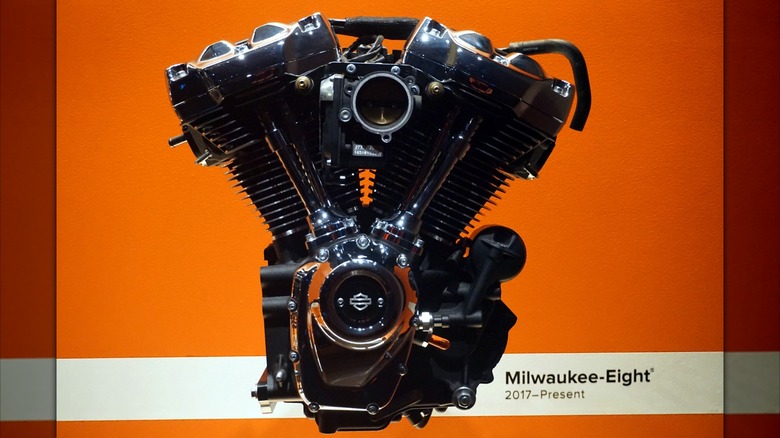
The Milwaukee-Eight was supposed to be the grownup answer to the Twin Cam's long run: more valves, more torque, better breathing, less vibration, and improved heat management. Harley pitched it as a stronger, smoother, cooler-running Big Twin, which made sense after years of riders asking big air-cooled motorcycles to make more power without cooking themselves or their owners. On paper, that was exactly what a modern Harley touring engine needed to be.
The early Harley-Davidson Milwaukee-Eight years still came with one unfortunate word attached: sumping, which is exactly as glamorous as it sounds. On certain 2017-to-2019 Touring, CVO, Trike, Touring Police, and 2018-to-2019 Softail models, oil could collect in the crankcase during extended high-rpm running or heavy engine load. Instead of spinning freely, the flywheel could end up churning through excess oil, creating symptoms like power loss and heavy engine braking, with possible engine-component damage if the condition continued. The fix path could include diagnosis through the crank-position-sensor port and replacement of the oil pump where appropriate. Ultimately it means that "has the oil pump been updated?" is not a nerd question. It's a buying question.
The mid-1970s Harley-Davidson SX250
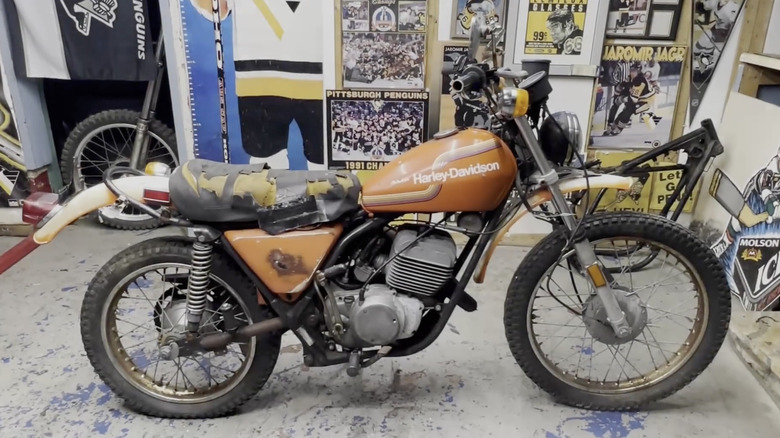
The SX250 is a reminder that Harley-Davidson's strangest reliability stories are not always about giant V-twins sweating themselves to death in traffic. In the 1970s, Harley was also selling lightweight two-stroke dual-purpose bikes through its Italian Aermacchi operation. Not familiar with the Harley-Davidson extended universe? Be sure to check out all the motorcycle brands owned by Harley-Davidson. In any case, the SX250 was supposed to give Harley a piece of the lightweight trail-bike market, while the company's big bikes held up the classic American cruiser mythology.
The ingredients were not hopeless. The 250cc two-stroke was the largest that it made at the time, the brakes were decent, and the bike could make sense as a small street scrambler. Then came the gearbox. In-period testing exposed a transmission not up to the bike's offroad promise. More importantly, the same test identified the transmission as the SX250's weak point, noting that the bike used the same gearbox as the SX175 and that the 250's added power was more than those gears could handle reliably. Harley's answer was a stronger Cima-built 'C-type' transmission that promised to address the issues.
Sorting out the provenance of a transmission from 50 years ago may or may not sound like your idea of a good time, but we're willing to bet that you don't want to pin your hopes of getting home from a trail ride on that due diligence. All that makes the SX250 a very cool collector oddity, especially if your plan is to look at it, talk about Aermacchi, and occasionally putter around. But as a dual-purpose bike meant to go bounce around off-road, its period resume suggests that you may want to let those cool knobby tires be more of an aesthetic than a dare.
The 2007 to 2010 Harley-Davidson Twin Cam 96-Powered Big Twins
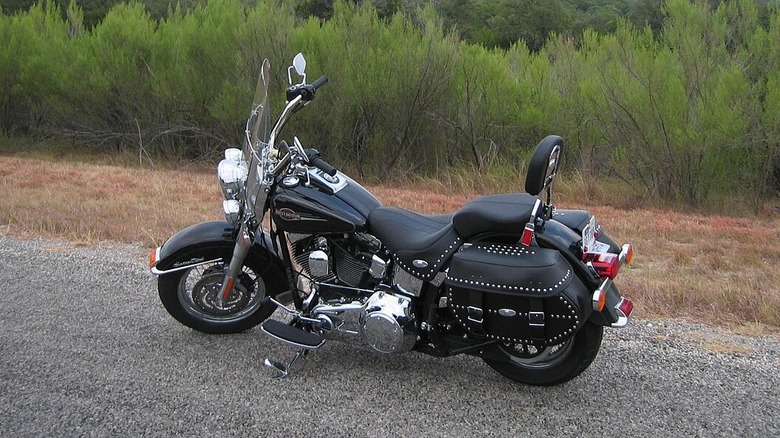
By the late 2000s, Harley had moved on from the Twin Cam 88's original spring-loaded cam-chain tensioner setup, but that did not mean that the next generation got to enjoy a clean reputation reset. The Twin Cam 96 arrived for the 2007 model year with more displacement and a six-speed transmission, which sounded like exactly the sort of sensible Big Twin progress riders should have been able to enjoy without opening a spreadsheet called "Potentially Expensive Noises." Instead, early Twin Cam 96-powered bikes developed their own very Harley-specific used-bike homework assignment: the compensator.
The compensator lives in the primary drive and helps cushion the engine's power pulses, especially during startup and shifting. When it wears badly, the bike can develop ugly primary-drive clunking and hard-start symptoms. In 2007-to-2010 models, that wear could also send harsh loads back through the starting system, potentially damaging the starter clutch, starter gear, and starter ring gear, eventually weakening the starter motor.
That makes this a fitting place to end, because the lesson is not that all Harleys are doomed or that every Big Twin is one cold start away from financial ruin. It's that reputation is only the beginning of the homework. A scary forum thread is one thing. A stack of service history receipts and a clear idea of what you're getting yourself into are quite another.