

How Hollywood's Fear Of VCRs Made It Harder For You To Work On Your Car
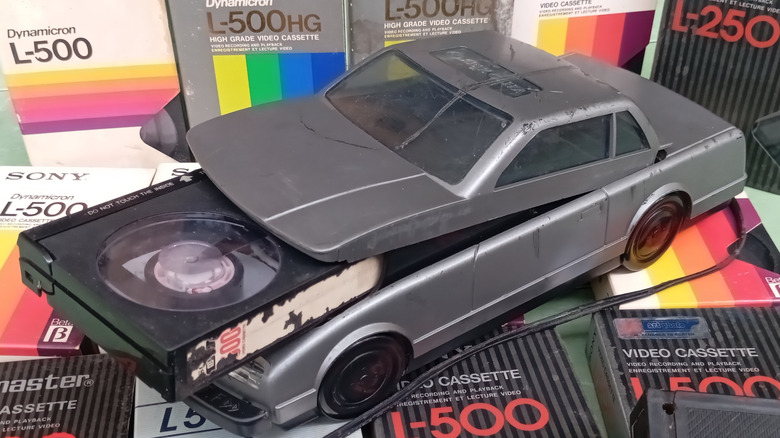
"The things you own end up owning you," said Tyler Durden in Fight Club. His rebuke of consumer culture could just as easily have come from someone with a line of project cars on their lawn, and no means of fixing them — or no right to fix them. In that vein, it's fitting that the ongoing right to repair legislation debate feels like a bizarre subplot pulled from a dystopian movie, because Hollywood's fear of VCRs made it harder for you to work on your car.
The hubbub over OEMs gate keeping software in cars to steer people toward authorized service centers (read: dealerships) is summarily about who can rightfully access the code inside the things you own. This treads into privacy waters, and modern digital rights management (DRM), which you may recognize from password-related media moments such as "Wait, they're not streaming that anymore?" and "Hey, where'd half my music library go?" And DRM leads right back to the copyright and fair use arguments at the core of Hollywood's beef with VCRs in the 1970s.
Film studios feared that Sony's new Betamax VCR technology would erode viewing control, stoke piracy, and stifle studio profits. Cue the lawyers and an attempt to stop VCR sales. The argument flopped in court, but it set off a chain reaction of legislation that evolved over the years. It now applies not only to music and film rights, but impacts a whole world of rapidly changing digital technology, like the software that runs the show in our cars.
Getting from VCRs to cars
We could not possibly cover all the intricacies of U.S. Copyright Law here, but a few key pieces of policy related to fair use take us from VCRs to car repair. The Copyright Act of 1976 established limits on exclusive rights for content creators, granting fair use of copies of their work for non-commercial things like news, criticism, teaching, and research. Film studios argued that recording TV shows at home was not fair use.
In 1984, the Supreme Court disagreed, forever changing the course of home media. In 1985, VHS format sales topped box office sales, while Hollywood sought technology to restrict unlawful duplication. Read-only DVDs landed in the U.S. in 1997, but the real game-changer in the Motion Picture Association of America's eyes was to lobby for the 1998 Digital Millennium Copyright Act (DMCA). And this is what brings us to fixing cars.
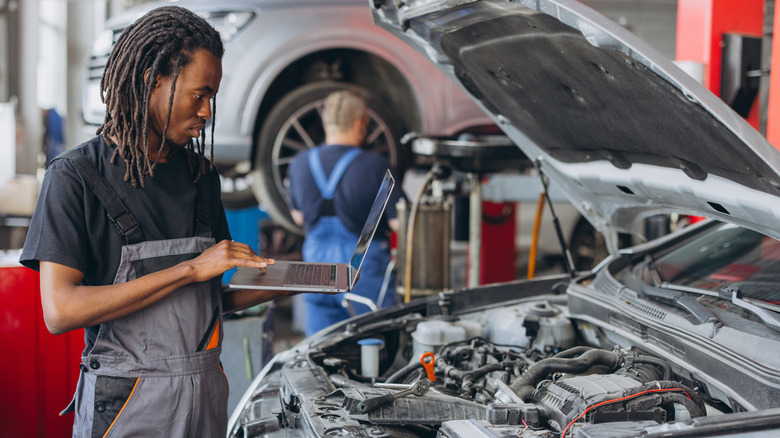
The DMCA includes critical anti-circumvention terminology — specifically, it's illegal to bypass technological protection measures, like passwords or codes, to access the copyrighted work or intellectual property stored in the software behind them. The thing about the software in new cars is, it's everywhere. Even the ancient art of changing a tire may require resetting the tire pressure monitoring system.
It's difficult to work on a modern car safely without accessing OEM software, and that requires OEMs to grant access. This is the crux of the REPAIR Act, along with certain DMCA vehicle repair exemptions — and a movement toward simpler vehicles, like repairable, no-tech tractors.
Stay tuned for more on the tech of tomorrow
Today we bring our entire entertainment library everywhere, cars included. Loads of "our" stuff lives in a tech company's cloud, which is ironically neither nimbus nor cumulus, but edifice. Ownership is really access in disguise. But for many of us, the convenience of streaming clears out some clutter, and the benefits of these innovations outweigh the compromises.
The same is true of tech in cars. Over-the-air updates can magically unlock hands-free driving assistance. When it's done right, we love the elegance of in-dash navigation, but we're haunted by the idea of in-car subscriptions. And we dig having endless roadtrip playlists at our command, but draw the line at unwanted pop-up ads on infotainment screens. Maybe it's too much. Maybe it's not enough. Maybe we just miss buttons.
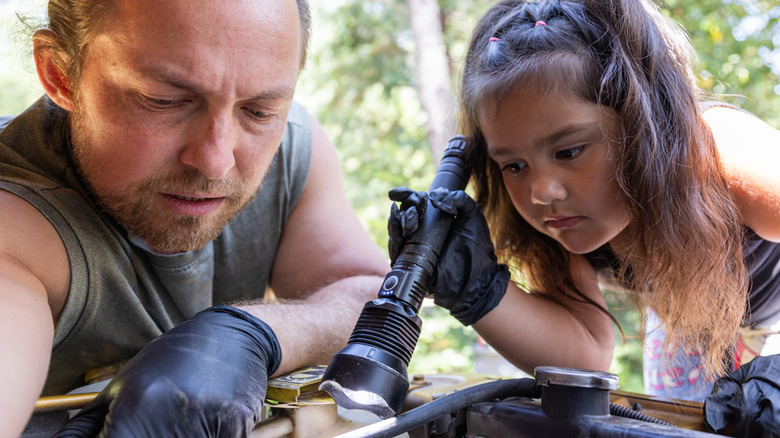
Meanwhile, 50 years on, the ripples of Hollywood's fear of VCRs continues to play out. Millions of ordinary people watch videos where and when they want. The VHS miracle of being able to follow workout tapes in the privacy of your own home has long since given way to robust platforms like Instagram and YouTube, which hobbyists and enthusiasts now rely on to share and learn how to fix and customize their vehicles — or teach their kids how to. Hopefully that will continue, and we will avoid a future where even DIY repairs are too expensive to be feasible, thanks to some devious plot twists by the factory.