

These Used Nissan Models Are Known For Their Unreliable CVTs
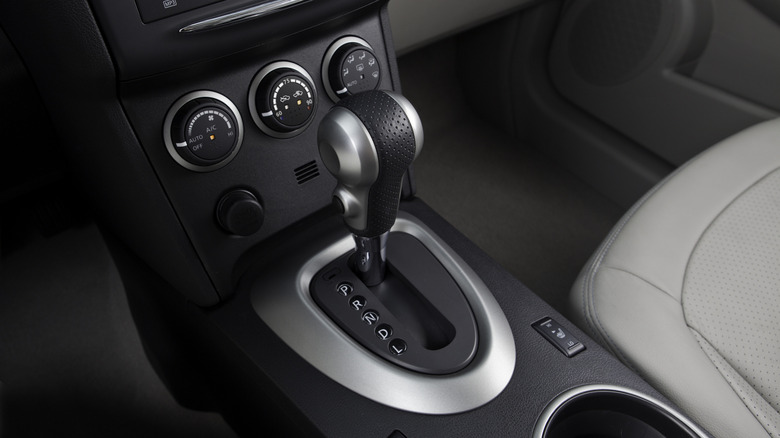
Continuously Variable Transmissions, or CVTs, became incredibly popular due to their ability to maximize both gear and fuel efficiency. A traditional transmission has a set number of gears, but there is technically a limitless number of ratios within a CVT, thanks to the pulley and belt/chain system operated within one.
That all sounds well and good, and in theory it absolutely is, which is why so many commuter-spec vehicles have adopted them. Among the many automakers going 'all-in' on CVTs is Nissan, and while that might seem like a positive for those looking to eke the most miles out of their pricey gas, there are some downsides.
Those downsides fall in the way of reliability issues. The durability of these transmissions has placed a big question mark over Nissan's reliability reputation in recent years, with Altima (2007-2018), Sentra (2007-2019), Maxima (2007-2019), Murano (2003-2019), Pathfinder (2013-2020), Quest (2011-2017), Rogue (2008-2019), and Versa (2007-2019) models taking most of the blame. As you can see, not every model year is at fault, but specialists highlighting this many models, ranging from 2003 through 2020, show how widespread problems are.
While timely maintenance is always essential, claims about these models' unreliable CVTs are backed by class-action lawsuits and warranty extensions, showing how it's not just the fault of drivers. For more evidence of the issue, just look at customer complaints. Both the NHSTA and CarComplaints log literally thousands of CVT-related complaints from Nissan owners.
Here's what goes wrong
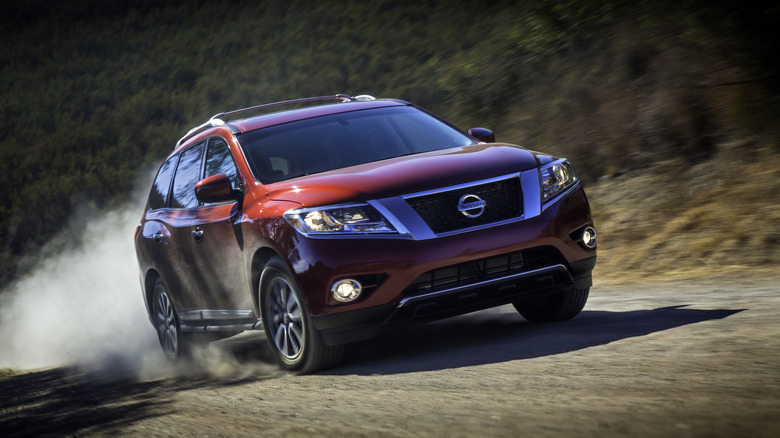
Numerous of the aforementioned models made our list of cars to avoid due to their transmission problems, but what exactly is going wrong with Nissan CVTs? Transmission specialists detail how the belt within the CVT begins to slip upon its pulley, which then scores (gouges, scratches) the pulley's surface, and then this only encourages more slipping. The driver typically feels a shuddering or jerking sensation, and this vicious cycle only continues to worsen as the slipping and scoring pattern carries on.
Other classic symptoms include overheating of the transmission, loss of power, and eventually complete transmission failure. Nissan extended the warranty coverage on certain models from 60,000 miles and 5 years to 84,000 miles and 7 years.
To give an idea of how much rectifying this issue could cost, CarComplaints informs us that, across 73 complaints from owners who have suffered CVT failure with a 2014 Altima, the average repair cost has been reported at $3,860. The average mileage of failure is cited at just 75,200.
Now, of course, not all CVT-equipped Nissans will be trouble, and some engineers have argued that CVT-hate in general is way overblown. It's also been suggested by specialists that, with certain habits such as timely maintenance and avoiding habits like aggressive acceleration, these transmissions can go on the crack 200,000 miles. Still, the issues are clearly present, and those after an easy ownership experience should probably look elsewhere.