

3 Of The Least Reliable Plug-In Hybrids Of 2026 Have Already Been Discontinued
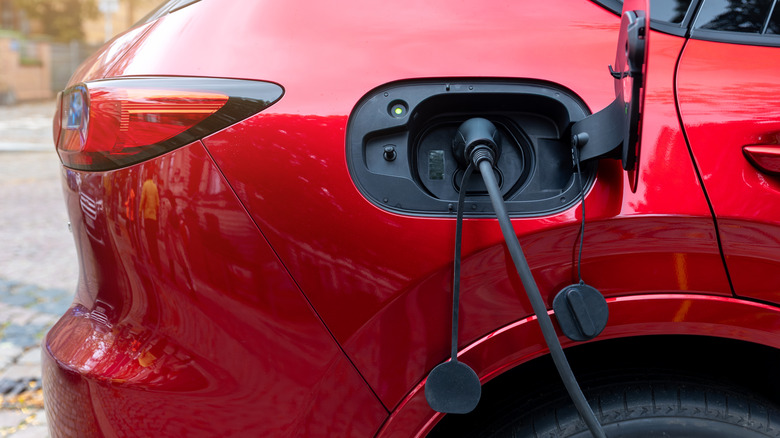
Plug-in hybrids sound like the perfect compromise. They have the battery range to handle daily commuting and running around, plus the option to tap into the convenience of switching over to traditional power fueled by dead dinosaurs. It's easy to assume that this represents perfect versatility in a car. However, while they seem like an easy win on paper, plug-in hybrids may be the worst of both worlds in practice. In fact, Consumer Reports recently published its "Least Reliable Plug-In Hybrids of 2026" list, and the vehicles included make a pretty strong case that adding a plug can also introduce complications.
According to recent reliability ratings from Consumer Reports, "traditional" (no plug) hybrids have 15% fewer reported issues than gas-only vehicles, whereas fully-electric vehicles and plug-in hybrids together have 80% more problems than their gas-only counterparts. Clearly, hybridization alone isn't the issue — old-school hybrids do just fine. Maybe the problem is the extra complexity of combining a gas engine, battery pack, charging hardware, electric motors, and the software required to make the whole thing behave like one coherent vehicle.
The Chevy Volt marked the beginning of plug-in hybrids coming from a mainstream manufacturer, and that was in 2011, whereas early hybrids like the Toyota Prius and the Honda Insight have been around since the '90s. Either way, survival is not a given. Less than 6 months after Consumer Reports published its list, three of the models featured have already been discontinued, including the Jeep Wrangler 4xe, Jeep Grand Cherokee 4xe, and Chrysler Pacifica Hybrid. That said, the remaining entries are still on the market at the time of this writing. So, let's look at what went wrong, what's still hanging on, and which PHEVs may not make it through the 2026 model year.
Jeep Wrangler 4xe
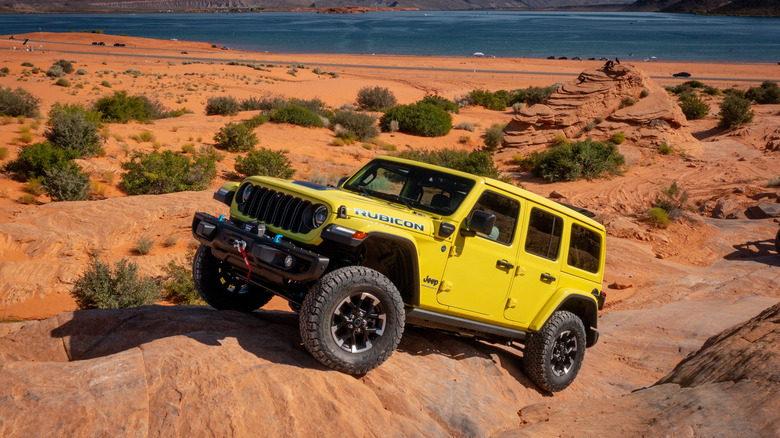
People buy a Ford Escape because they need transportation. They buy a Jeep Wrangler because they want a Jeep Wrangler. Spoiler alert: we'll talk about the Escape shortly. Generations of drop-top off-road enthusiasts might have been willing to put up with an awful lot under the banner of "It's a Jeep thing, you wouldn't understand." However, we find that coping mechanism to be better suited for putting up with a clumsy removable roof or lousy on-road handling than hearing that you should please park your Jeep outside and avoid charging it because it may burst into flames and burn your house down. The more-spontaneous-fire-than-you'd-prefer element isn't the only problem either. Jeep recently recalled the Wrangler 4xe (again) because sand in the engine is bad, and that refers to sand that the company managed to introduce during the manufacturing process, not the stuff you got everywhere at the beach. And don't forget last year's over-the-air software update that bricked a bunch of them.
It's been a rough ride, is what we're saying, and that isn't a reference to the Wrangler's on-pavement composure. In response, Stellantis seems to have reached the conclusion that someone who wants to buy into the love/hate Wrangler relationship should do so without the complication of the PHEV architecture, announcing that the Wrangler 4xe has reached the end of the road. Jeep has chalked this one up to a change in consumer demand, which perhaps makes the most sense when you consider that modern consumers typically demand that their 4x4s don't burst into flames or die after a bad software update.
Jeep Grand Cherokee 4xe
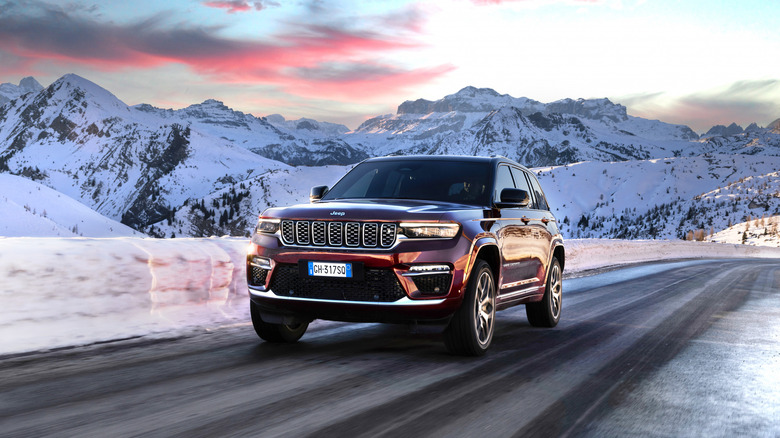
After the Trackhawk's retirement in 2021, the most powerful Jeep Grand Cherokee is a plug-in hybrid. At least, it used to be. The Grand Cherokee 4xe is what happens when the Wrangler 4xe's plug-in hybrid hardware moves into something less "doors off in Moab" and more "heated leather seats on the school run." That makes the problems feel different, even when some of the underlying issues sound familiar. The Grand Cherokee 4xe was supposed to give Jeep shoppers a more refined path to electrified off-road capability, with proper comfort, real cargo space, and the kind of price tag that makes "park outside and don't charge it" sound even less palatable than it does with the Wrangler.
Plagued by many of the same issues as our previous entry, the plug-in Grand Cherokee is done as of this year. For a vehicle meant to make PHEV ownership feel upscale and flexible, ending up on Consumer Reports' least-reliable list and then getting cut entirely is probably not what Jeep was hoping for when this one launched. Alternative versions of the Grand Cherokees are, of course, still available. Interested buyers can find something to meet their needs among remaining options, including the Laredo, Laredo X, Laredo Altitude, Limited, Limited Reserve, and Summit, plus three-row versions of all of the above. At least they don't have the 4xe cluttering up the lineup anymore. That could get confusing.
Chrysler Pacifica Hybrid
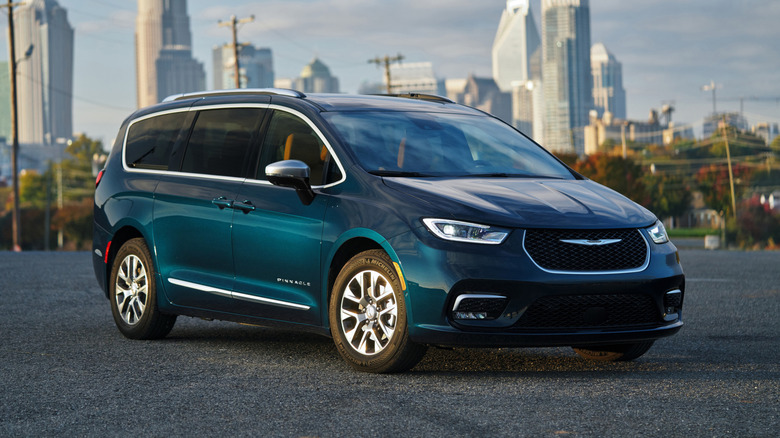
The Chrysler Pacifica Hybrid might have been the easiest plug-in hybrid on this list to root for. The Pacifica's pitch was almost painfully sensible: family-hauling space, sliding doors, three rows, and enough electric range to handle school runs, grocery trips, and the thousand other short errands that make up suburban life, all without burning gas every single time. Unfortunately, "sensible" gets harder to sell when owners are told to park outside and stop charging because the battery pack may cause a fire. Stellantis recalled about 24,000 Pacifica Hybrid minivans globally in 2024 over fire-risk concerns. A newer 2026 recall covers more than 17,000 2020-to-2022 Pacifica plug-in hybrids over another high-voltage battery defect –- this one capable of leading to something called "thermal runaway," where your car bursts into flames (even if it's off). It's not exactly an ideal possibility for your pragmatic, safety-conscious kid-hauler.
If you're playing along at home, yes, this is the third vehicle on the Consumer Reports list that isn't going to continue production, and, yes, that means that Stellantis is cancelling all of its plug-in hybrids for the 2026 model year. That leaves the rest of our list here living to fight another day, while all three doomed entries come from the same corporate family. Maybe that's coincidence. Or, maybe it says something that the company with half the models on this list decided that when it comes to plug-in hybrids, the only winning move is not to play.
Ford Escape Plug-In Hybrid
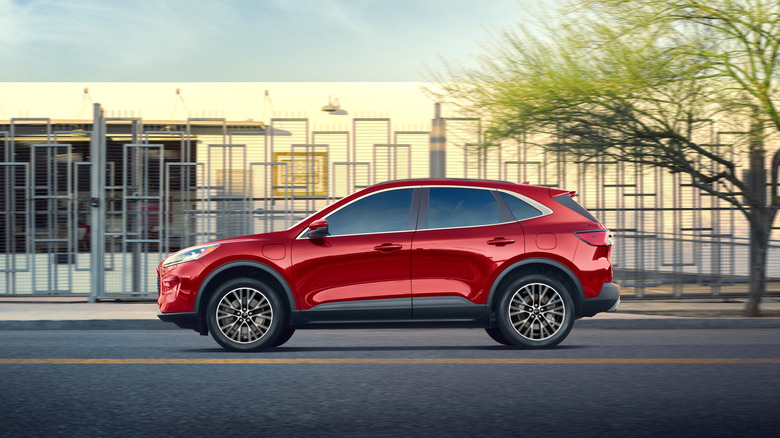
Even as Stellantis bows out of the segment, the competition is still making a go of it. Last year, we shared with you that the somehow still-around 2026 Ford Escape wouldn't be sold in six states, but the PHEV variant remains alive and well elsewhere in the country. The six-state thing is the result of state-level emissions stuff not related to our wider discussion here. In any case, the appeal of the Escape Plug-In Hybrid was its normalcy. This is a compact crossover aimed at commuters, small families, and anyone who wants the familiarity of a traditional SUV with lower fuel costs. With room for five passengers and about 37 miles of fully-electric range, it'll handle many daily drives without firing up the gas engine.
Of course, with a powertrain that earns a tech-spec salad of a name like 2.5-liter iVCT Atkinson Cycle I-4 plug-in hybrid, it'd be understandable if you started to feel a little uneasy about the complex technology and engineering making the whole thing work. Ford has issued a significant recall affecting Escape Plug-In Hybrids, addressing short-circuit battery defects that could lead to a loss of drive power or, in rare cases, a fire. It's the sort of issue that tends to overshadow any fuel-savings or electric convenience benefits. Even so, neither the recall nor its place on the Consumer Reports "Least Reliable Plug-in Hybrids of 2026" list has doomed the Escape just yet, with availability remaining for at least the 2026 model year.
Mazda CX-90 PHEV
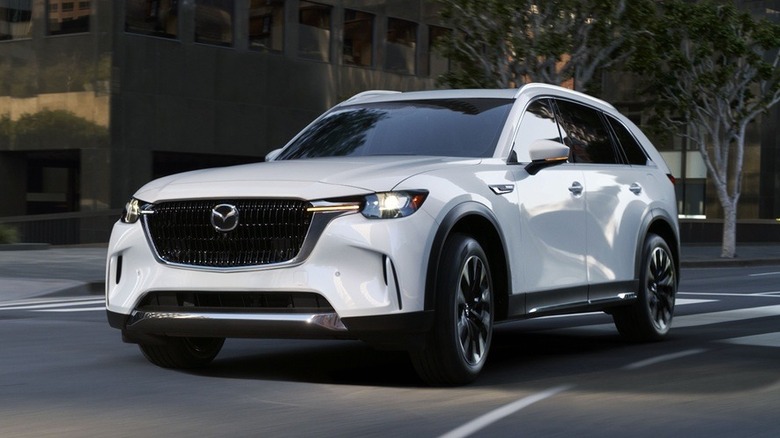
Mazda has spent years convincing buyers that it deserves to be mentioned alongside more expensive brands, and you may argue that the company pulled it off, as the Mazda CX-90 really does feel like a bona fide luxury SUV. The CX-90 PHEV is not a cheap commuter appliance with a plug. It's a handsome three-row vehicle with seating for up to seven passengers and the sort of cabin that makes some actual luxury automakers look like they've been phoning it in. The problem is that first impressions matter, and Mazda's big plug-in SUV has already had some issues that definitely feel like first-generation growing pains. The CX-90 had a significant recall related to electronic issues that trigger the failsafe mode, and certain plug-in variants had a similar issue with a different root cause. Regardless of the nature of the hiccup, the result was the same: sudden loss of power or a complete engine stall.
Unlike the plug-in Jeeps, though, the CX-90 PHEV has not been marched out behind the barn. There's still a fairly robust assortment of PHEV trims available, each with the 323-horsepower e-Skyactiv drivetrain. That doesn't make its place on Consumer Reports' list any prettier, but it does make the CX-90 one of the survivors here. Whether that turns into a redemption arc or just gives Mazda more time to send out recall notices remains to be seen.
Volvo XC60 Recharge
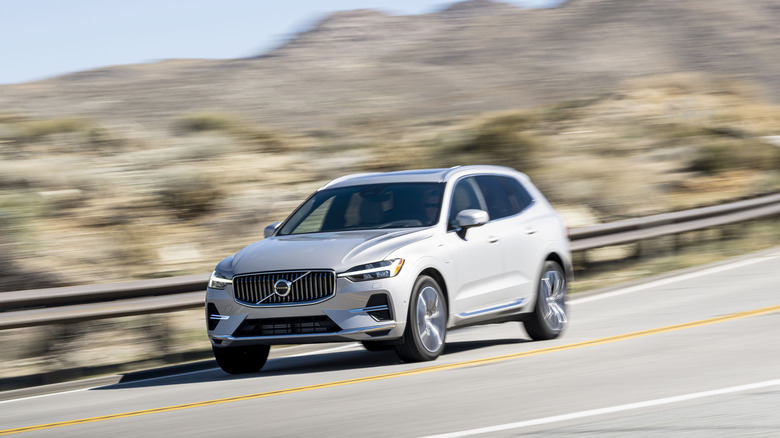
Volvo has never needed much help selling the idea of a sensible family crossover, but the Volvo XC60 Recharge adds a funny little complication to that image: It's properly fast. With 455 horsepower and a 0-to-60 time of 4.5 seconds, it's enough to instill some American pride when you learn that the XC60 is moving production to the U.S. But that's sort of neither here nor there, unfortunately, at least as far as this reliability discussion goes. On paper, we're talking about one of the more appealing vehicles on this list, mostly because it doesn't ask buyers to choose between responsible and ridiculous. In practice, though, that pitch falls apart a bit when the complicated electrified parts start acting, well ... complicated. Between high-voltage battery modules that can short circuit and present a fire risk and a pretty serious recall tied to regenerative braking software, there are reasons to think twice about Volvo's speedy little crossover.
Still, the XC60 Recharge lives to see another day, part of a broader lineup that includes mild hybrids, plug-in hybrids, and fully electric vehicles. That doesn't erase its place on Consumer Reports' least-reliable PHEV list, but unlike some of the entries here, the XC60's future doesn't appear to be in immediate danger. For now, Volvo still has a premium plug-in crossover to sell to buyers who want Swedish restraint, strong acceleration, and a moderate chance of wondering whether they should have just bought the (slower, lamer) mild hybrid one.