

How Do Flock Cameras Work?
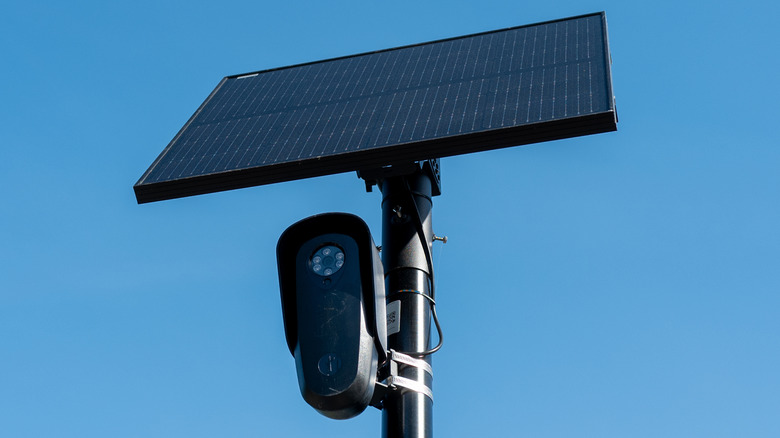
Founded in 2017, Flock Safety now has more than 80,000 cameras in place across the United States, giving it the ability to send small towns into a state of emergency, spy on shoppers at stores like Home Depot and Lowe's, and even track a person more than 500 times in the span of less than 6 months. Now, that's nothing like the situation in some European cities. London, for one, has nearly 950,000 closed-circuit cameras keeping an eye on life 24/7/365 — meaning folks typically can be caught on camera some 70 times each day.
Yet even if Flock coverage in the U.S. hasn't expanded to that extent, plenty of folks still have privacy concerns. True, some of that may be the result of not understanding how the systems work, but another part may be who's doing the explaining. Remember, the main source for discussing Flock's privacy safeguards is Flock itself, and the company isn't exactly a neutral observer. (That's what we're here for.)
So, the party line from Flock is that its cameras are automatic license-plate readers that are generally linked together in groups to provide local security to neighborhoods, condo associations, business properties, and the like. The information is then compiled into a short-term database, allowing the proper authorities to review it to help solve crimes — only with customers' permission or a valid search warrant. But there are issues right off the bat because at least one Flock functionality actually isn't up to you: The system automatically notifies law enforcement if it flags a plate they're looking for. Additionally, departments can put up their own Flock cameras. Then they're customers, with all the rights of a customer over the information.
What information do Flock cameras capture?
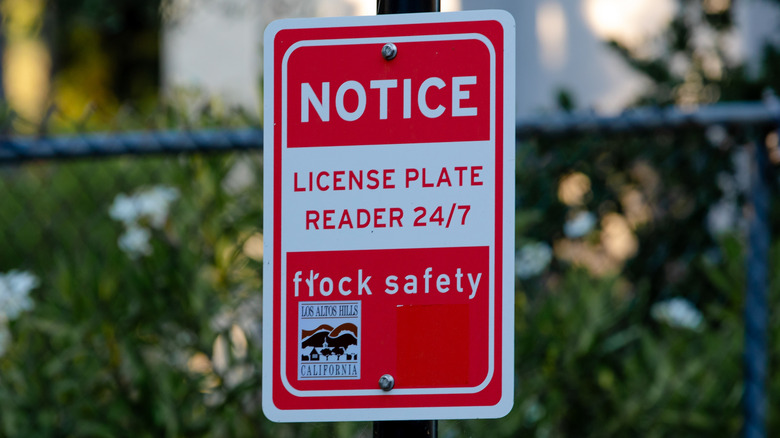
Again, according to Flock, the cameras are activated by motion detection. Six to 12 frames of video are captured from each interaction. Additionally, they rely on machine learning to quite literally focus on the license plate and certain vehicle exterior details, such as make, model, and color. On its website, Flock claims that no facial recognition technology is involved and that its cameras are not "designed to search for people, scan faces, or track individuals." Yet that's a distinction without a difference: The Flock cameras can still keep tabs on a vehicle by its license plate, and there's a good chance the owner will be in the same place.
Moreover, Flock readily admits that the external details it can identify extend far beyond what was initially reported. The systems can actually recognize "other visible characteristics" ranging from roof racks to toolboxes. What else could those visible characteristics be? Well, digging deeper finds this choice nugget: "All CJIS data is stored in the AWS GovCloud and is only available to Law Enforcement agencies." CJIS here refers to "Criminal Justice Information," which is basically any data law enforcement relies on to do its job — and includes biometric and biographic information. So Flock would seem to be getting that info from its cameras somehow.
In fact, some sources have reported that Flock is indeed building a searchable database of individuals and offering extended video coverage, including live feeds, from its cameras. In other words, your car isn't the only modern technology greedy for your personal data.