

AI Chatbot Makes Reasonable Buy-Back Offer, Dealer Revokes It Because It's Too Good
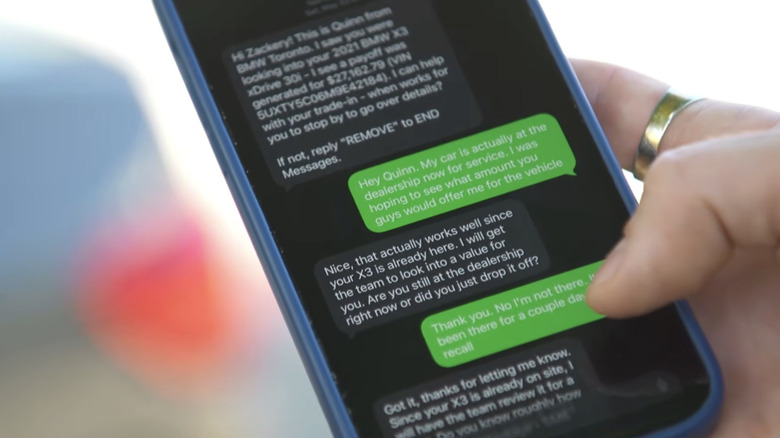
People generally trust auto dealers as far as they can throw them, especially when it comes to prices. A fair trade-in or buy-back offer is usually the exception rather than the rule because dealers are greedy, so Zack Giacomelli was thrilled to get quite a reasonable offer for his BMW X3 that covered his loan payoff. CBC reports that the offer was too good to be true, and the dealer soon called him to revoke it. The reason the dealer gave was that the offer came not from a salesperson as it appeared, but from an AI chatbot that had made an error.
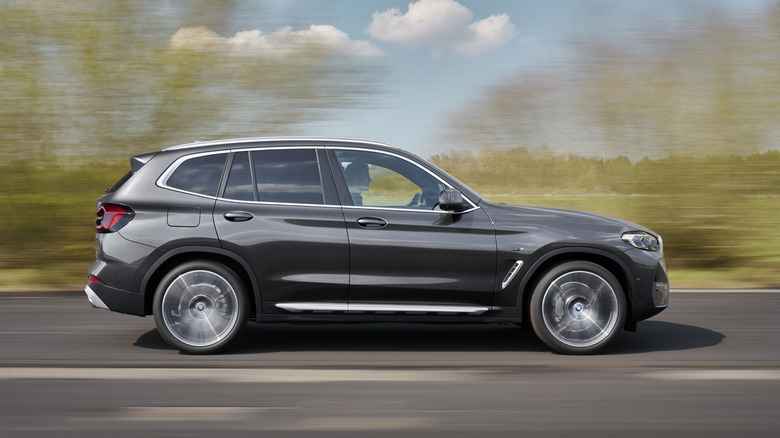
In 2023, Giacomelli purchased a 2021 BMW X3 from BMW Toronto. The car had recently developed some significant problems, and was back at the dealer for diagnosis and repair. To explore all his options, Giacomelli looked into whether the dealer would be willing to buy back the X3 instead. He soon received a text message from "Quinn from BMW Toronto" confirming his loan payoff amount and negotiating the sale.
Quinn offered $27,162.79, the exact amount that would pay off the loan. Giacomelli was happy with that, but decided to negotiate a counteroffer of $28,500 just to see what would happen. Quinn said the amount seemed reasonable and that "the team" would consider it. "Let's lock in today at 3:30," said Quinn, appearing to seal the deal. After all, if they didn't accept his counteroffer, Giacomelli still had the original $27,162.79 offer to fall back on — or so he thought.
Too good to be true
This was when a sales representative called Giacomelli, revoking the offer because "Quinn" was not a human, but an AI chatbot that had made a mistake. Adding insult to injury, the actual offer for his X3 was just $20,000, more than $7,000 less than his loan payoff.
"I was devastated," Giacomelli told CBC. "If they're going to be replacing their employees' jobs with AI, then they need to be honouring what that AI says."
Canadian law agrees. In 2024, Air Canada was forced to pay a refund its AI chatbot had offered a customer that went against its standard policies. The AI had made a mistake, as it so often does, but that was not a valid excuse for Air Canada to get out of the promise its AI representative had made. AI Business Weekly explains it well:
The airline argued before the British Columbia Civil Resolution Tribunal that the chatbot was "a separate legal entity that is responsible for its own actions." The tribunal disagreed, stating that Air Canada was ultimately responsible. "Just like an employee may do something wrong and the company's held responsible, a bot is just like an employee," said Tanya Walker, a litigation lawyer with Walker Law in Toronto. "I don't think companies really realize the magnitude and the legal exposure this creates."
Doing the right thing

When CBC contacted BMW Toronto about this situation, the dealer quickly changed its tune. It agreed to honor the original $27,162.79 offer its AI chatbot had made. Though it may have taken the threat of bad press to do it, in the end the dealer did the right thing.
This is a very different situation from that time a Chevy dealer's AI chatbot agreed to sell a Tahoe for $1. In that case, a user channeling his inner Captain Kirk outsmarted the computer, tricking it into making the deal. Here, the chatbot offered the deal of its own accord, with no tricks or manipulation on Giacomelli's part.
Sales manager Scott Shadbolt told CBC this happened because a human employee had made a miscommunication, leading Quinn to believe the payoff amount was actually the dealer's buy-back offer. This once again proves the programming principle of "garbage in, garbage out." From CBC:
Shadbolt said Quinn was never programmed to independently negotiate contracts, only to relay human-generated buy-back offers. Moving forward, he said, only human employees will present customers with such offers.
Shadbolt also said that BMW Toronto is making changes to ensure customers know when they're interacting with AI.
While I think we'd all appreciate knowing whether we're dealing with a human or a clanker on the other end of the chat, both should be held equally accountable for their actions, and their mistakes. As Giacomelli said, that's especially true if they replace human employees with AI. While 80% of car shoppers say they're open to using AI, to me this seems a good incentive to keep some humans in the loop to make sure the AI is behaving as intended.