

9 Prototype Cars Everyone Thought Were Lost, But Turned Up Safe And Sound
Like an automotive thriller story? One that involves a civil war, stealing, hiding, and even a suicide? You're in the right place, because this is the story of the lost and found prototypes. Cars that were hidden, forgotten, and even destroyed, but are still somehow alive today. More than anything, it's a story about enthusiasts. People who defied higher-ups and even committed crimes to save an automotive masterpiece. Folks who love cars. Like you and us.
That sounds like an over-the-top movie trailer voiceover, but these prototypes' backgrounds are truly fascinating. Each car has a unique story to tell, be it about its life, design, or engineering. And they're automotive eye candy, whether you're into American cars, Italian failures, forgotten JDM legends, French wartime rebels, or German EV pioneers. All the cars on this list are captivating — the fact that they were lost for so long, only to turn up safe and sound later, is just the cherry on top.
1963 Ford Mustang III Shorty Factory Prototype
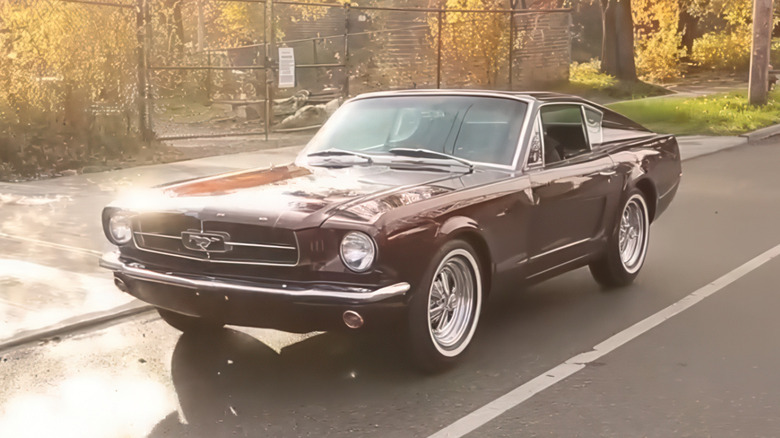
A short-wheelbase two-seater Ford Mustang sports car? Honestly, where do we sign up? Sorry, not possible. The 1963 Ford Mustang III "Shorty" Fastback is a one-off prototype currently under the ownership of collectors Howard and Roz Kroplick.
Had it not been for Vince Gardner, though, this compact Mustang wouldn't have been alive today. Gardner penned the prototype as a freelance designer, while the Dearborn Steel Tubing Company (DST) was tasked with building it. The Shorty was part of Ford's pilot run for the first-gen Mustang, created specifically as an exhibition model used in the Ford Custom Car Caravan.
Ultimately, Ford decided against building a production version and ordered its destruction. But Gardner had no intention of letting Ford crush his masterpiece. So he stole the prototype from DST's workshop and hid it in Mucha's Metal Shaping Company in Detroit. Six months later, a DST worker reported seeing it, and police recovered it, then turned it over to the Aetna insurance company, which had paid Ford's theft claim. An Aetna worker then purchased the Mustang III Shorty and registered it so it could be driven on the road.
Frankly, we're glad Gardner committed a "crime" and rescued Shorty. It has a significantly shorter 90-inch wheelbase than the regular first-gen Mustang, giving it a sportier look. Lighter fiberglass panels were installed, too. Under the bonnet, the "Shorty" has a 4.9-liter V8 (a bored-out version of Ford's 4.3-liter V8), equipped with three two-barrel Holley carburetors. If Ford had actually greenlit this thing, we're willing to bet it would've topped your list of favorite Ford Mustangs.
1960 Plymouth XNR
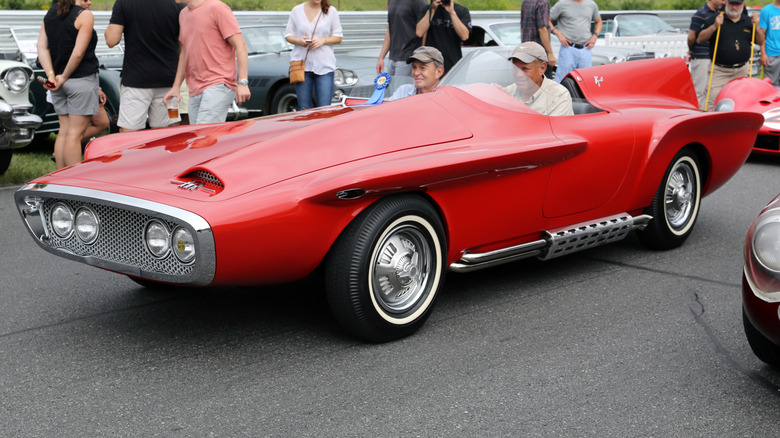
Most classic cars face the threat of rust or neglect. The 1960 Plymouth XNR faced a literal civil war. Built in Italy by Carrozzeria Ghia, this futuristic-looking prototype was the brainchild of Virgil Exner, Chrysler's design chief at the time. He wanted to build a compact, sporty roadster two-seater, but with modern design features. So the XNR had integrated bumpers, giving it a more harmonious look. Meanwhile, the sculpted, dynamic-looking bulge on the driver's side gives it a futuristic Jetsons vibe.
You must be expecting a V8 under the hood. However, because it was based on the Valiant platform, the Plymouth XNR was actually equipped with Chrysler's tilted and reliable slant-6 engine. Fortunately, engineers upgraded the 2.8-liter inline-6 to NASCAR specs, so it produced up to 250 horsepower and had a redline of 9,000 rpm! Thanks to its streamlined body, it could reach 152 mph, a respectable figure for the era.
Once this intriguing prototype made its show run across the globe, Chrysler returned it to Ghia. "My dad wanted to buy it," Exner's son Virgil Jr. told Sotheby's, "but if it had stayed in the U.S., it would have to have been destroyed." Ghia instead sold it to a Swiss man who later sold it to Mohammad Reza Pahlevi, then the shah of Iran. Sotheby's says the car was eventually sold into Kuwait, then hidden in an underground garage in Lebanon at the start of that country's civil war.
Finally, Karim Edde, a Lebanese collector, found it in his vicinity, bought it, and restored it in Canada. The Plymouth XNR was even shown at the 2011 Amelia Island Concours d'Elegance, rounding out its fantastic voyage.
1964 Shelby Cobra Daytona Coupe (chassis CSX2287)
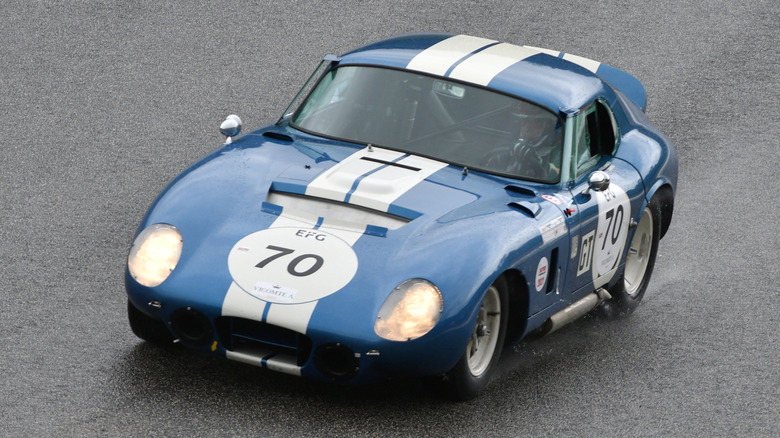
The Daytona Coupe is one of the coolest Carroll Shelby cars, designed specifically for racing. Unlike its roadster sibling, it had a more aerodynamic body, drafted by Peter Brock, which allowed higher top speeds. So despite using Cobra's 4.7-liter V8, it set new records at Daytona and Sebring.
So the Daytona Coupe has an unusual story, but its first prototype, chassis CSX2287, had the most eventful life. As the only American-built prototype of the breed, it served as Shelby's relentless 1964 workhorse. Chassis CSX2287 also overcame a dramatic pit lane fire to capture the model's historic first GT class victory at Sebring before enduring a roller coaster of heartbreaks across European racing circuits. Its final track outing was at the 1965 24 Hours of Le Mans, where it was retired due to a blown head gasket. Later, Goodyear even used it for speed record attempts.
In 1966, it was sold to Jim Russell, owner of slot car maker Russkits. He toned down the V8's thunderous noise and installed carpets inside to make it more comfortable on the road. A year later, Russell sold the CSX2287 to music producer Phil Spector. But the car proved to be a speeding-ticket magnet for him, so on his lawyer's advice he sold it to his bodyguard, George Brand.
And that's not even the wildest part. In 1971, Brand, along with his daughter Donna and her husband, John O'Hara, locked chassis CSX2287 away in a storage garage, where it remained untouched for the next three decades. The prototype finally appeared again in 2001, after Donna O'Hara died by suicide. It's now in Philadelphia's Simeone Foundation Automotive Museum.
If you or someone you know is struggling or in crisis, help is available. Call or text 988 or chat 988lifeline.org
1979 Aston Martin Bulldog (project DP K901)
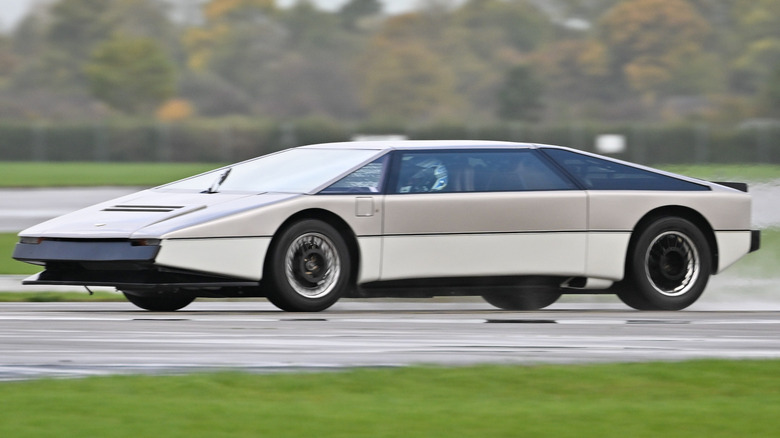
Back in 1979, Aston Martin developed a futuristic supercar that would've outgunned its Italian competition by hitting a top speed of 237 mph. But the Project DP K901 Bulldog proved to be unfinished homework. Aston Martin only brought it to 192 mph — more than its rivals, but short of the lofty promises.
Still, the Bulldog stole headlines with its design. The angular, geometric body was a complete breakaway from the traditional "James Bond" Aston Martin lines. It was heavy on futurism, rather than heritage. So the Bulldog had gullwing doors, a low 43-inch height, sleek headlights, and a 0.34 drag coefficient. The interior doubled down on the futuristic theme with LED lights and touch-sensitive controls. In the middle, the Bulldog was equipped with a twin-turbo version of the Tadek Marek 5.3-liter V8 with 600 hp.
But an economic downturn killed the project, so Aston Martin couldn't produce the planned 15 to 25 cars. Mercifully, Aston Martin never considered destroying the Bulldog and sold it to a Saudi prince for 130,000 pounds – equivalent to about $1.25 million today. He didn't enjoy it for long, though, as the engine blew up on his first drive.
He later sold it in the U.S., with the Bulldog ending up in the possession of car collector Philip Saforim. This is where the story finally gets its positive turn. Saforim got help with restoration from Richard Gauntlett, whose father, Victor Gauntlett, had owned Aston Martin when the project was sacked. The restoration, at Britain's Classic Motor Cars Ltd., proved incredibly successful. With three-time Le Mans winner Darren Turner behind the wheel, the Aston Martin Bulldog hit 205.4 mph in 2023.
1955 General Motors Chevrolet Biscayne (the Warhoops survivor)
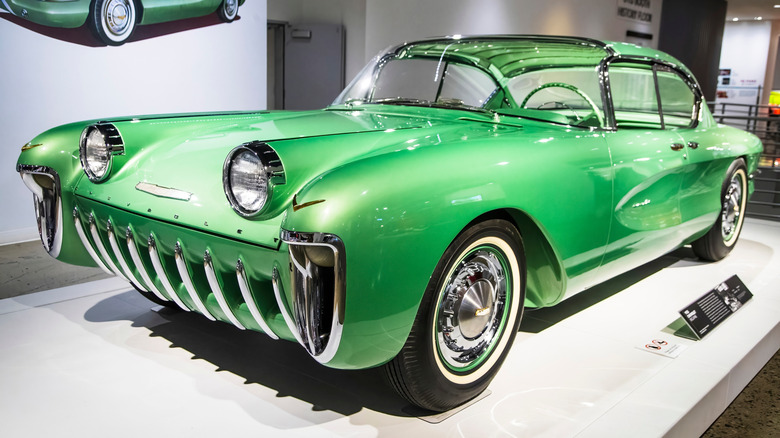
The saga of the 1955 Chevrolet Biscayne concept can only be characterized as automotive gore. See, GM didn't just order the destruction of this stunning prototype but finished the job. It happened at a malicious Christmastime in 1958, when a GM executive didn't even watch the Biscayne being smashed into pieces at the Warhoops Junkyard in Sterling Heights, Michigan, because he wanted to be home on time for dinner.
Fortunately, Harry Warholak Sr., the junkyard's owner, didn't have that corporate ruthlessness in him. So he cut the Biscayne concept just enough to satisfy his customer and then scattered the remaining pieces around the junkyard. For three decades, the dismembered Biscayne sat there, until Joe Bortz recovered it in the late 1980s.
Bortz, a Chicago-based restaurateur, wanted to revive as many 1950s and 1960s design gems as he could. So he contacted the junkyard and took all the parts, with the hope that he could solve this automotive jigsaw puzzle. He contacted a fiberglass expert, who glued all the body parts together, but couldn't finish the job because he didn't have the original chassis blueprints. Then, 50 years after building the Biscayne concept, GM forwarded the blueprints to Bortz, helping him finally bring it back to its original glory.
Kudos to Bortz. The Biscayne concept is one of the most visually striking cars of the GM Motorama showcase, and one of the best jet-age designs, period. It's sleek and elegant, thanks to its low stance and pillarless doors, while its aggressive front end gives it a sporty vibe. Yup, the Corvette also borrowed its side scoop cutout from the Biscayne concept.
1939 Citroën 2CV TPV (Très Petite Voiture) prototypes
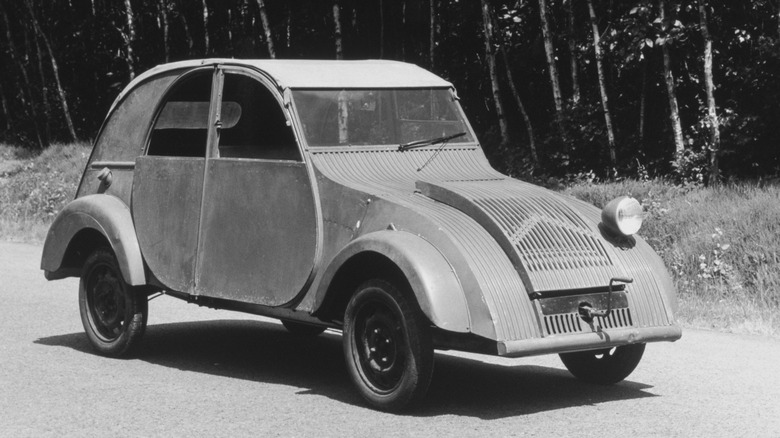
The Citroën 2CV was a sensation when it was introduced in 1948. Cheap and cheerful, with a suspension soft enough to tackle unpaved rural roads, the 2CV was an immediate sales success.
A brainchild of Michelin, which owned Citroën at the time, the 2CV was intelligently engineered, with a unique suspension that linked the front leading arms and rear trailing arms to keep the car level on uneven terrain. Aiming for a lower price, the first 2CV had a 0.375-liter boxer engine that made just 9 hp, though Citroën introduced larger engines later. Economizing also led to it having a single headlight and taillight, since French law required only one of each.
What makes this story different from the others is that Citroën had to hide the project from Nazi Germany during World War II. The 2CV had started its journey in 1936 as the Très Petite Voiture (TPV), French for "very small car." From its beginnings, it was imagined as a car that could carry four people and 110 pounds of cargo, but it was exotic in some ways, with an aluminum/magnesium body and engine, as Citroën expected aluminum to become cheaper with time.
By 1939, Citroën had built 47 prototypes and even built 250 pre-production vehicles. But Germany's invasion of France the following year stalled the project. In fact, Citroën ordered the destruction of most prototypes, as they didn't want the Nazis to get hold of them. Fortunately, one of the original 1939 prototypes survived, alongside a pickup prototype. Three other prototypes were also uncovered in a barn at the Bureau d'Etudes at la Ferté-Vidame in 1995.
1970 Mazda RX500 Concept
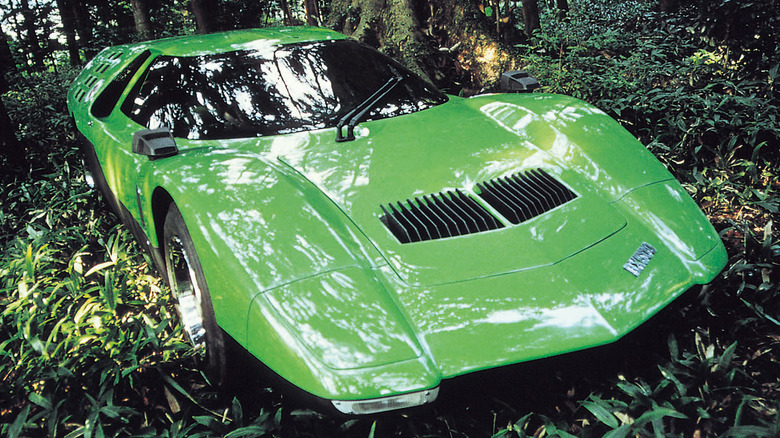
The 1970 Mazda RX500 was one of the best examples of Japan's 1970s techno optimism. A mid-engine rotary rocket, it featured a highly futuristic design that drew inspiration from Stanley Kubrick's sci-fi masterpiece "2001: A Space Odyssey." Its massive wraparound windshield, striking side profile, and see-through rear grille with "Powered by ROTARY" imprinted on a thick red stripe scream performance and eccentricity.
Even the taillights were futuristic: The large cluster featured multiple colored indicators that indicated whether the car was braking (red), accelerating (green), or cruising (orange). Oh, and the engine bay was accessed via gullwing doors, while Mazda implemented butterfly doors for the cabin.
The two-rotor 10A Wankel rotary engine was no less impressive. It had a capacity of only 982 cubic centimeters, yet it produced a whopping 247 hp and revved to 15,000 rpm! Mazda nestled it inside an incredibly light body made from a steel tube frame and fiberglass body panels, resulting in an overall curb weight of only 1,874 pounds. As a result, the RX500 prototype could reach 150 mph; not bad for a sub-1-liter car.
The RX500 was introduced at the 1970 Tokyo Motor Show. Later, Mazda showed the prototype at other shows globally but painted in different colors. Because of this, people speculated that Mazda has built a few different RX500 prototypes, most of which were hidden from the public. The truth is, there has always been only one.
There have been many Matchbox copies of the RX500, though. The futuristic design of the 1:59 scale diecast model proved incredibly successful among kids, with the orange Matchbox RX500 becoming a global bestseller. But the original remains on display at the Numaji Transportation Museum in Hiroshima, Japan.
1898 Porsche P1 (Egger-Lohner C.2 Phaeton electric vehicle)
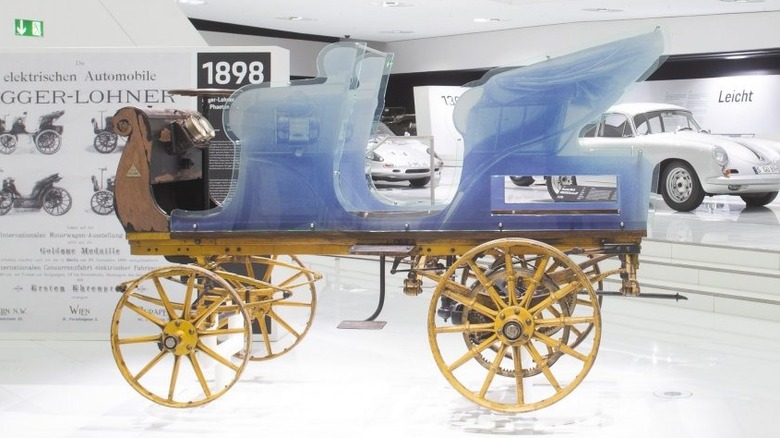
The excellent Porsche Taycan EV made purists uncomfortable. After all, Porsche is a company known for its rear-engine flat-6 911, right? Well, here's your daily trivia dose — the oldest still-existing car designed by the company's founder, Ferdinand Porsche, was actually an EV. Introduced in 1898, the Egger-Lohner C2 Phaeton had an octagon electric motor that weighed just 287 pounds and produced up to 5 hp. It was enough to carry the carriage-like chassis, produced by Ludwig Lohner, to a top speed of 15.5 mph. Meanwhile, the battery pack allowed a range of around 55 miles.
The concept proved very successful. The P1 won an 1899 Berlin road race, finishing 18 minutes ahead of the second-place car — and thanks to the power train's excellent energy efficiency, it also consumed the least energy. Driven by the success, Porsche launched an all-wheel-drive version a year later, which had a higher top speed of 23 mph. For comparison, the 1898 Benz Velo had a 1.0-liter single-cylinder gas engine with 1 hp and a top speed of only 12 mph. Yup, EVs dominated performance metrics during that time.
However, the whereabouts of the first Egger-Lohner C.2 prototype weren't known for over a century. It was stored in an Austrian garage in 1902, and sat there for 112 years! It was finally recovered in 2014 and now resides at the Porsche Museum in Stuttgart. Unofficially, the car carries the Porsche P1 moniker. The car was produced by Lohner, a carriage manufacturer, but Ferdinand Porsche left no doubt about his authorship, stamping P1 (Porsche, Number 1) into every vital component.
1974 Maserati Quattroporte II Bertone Prototype (chassis AM123.002 & AM123.008 )
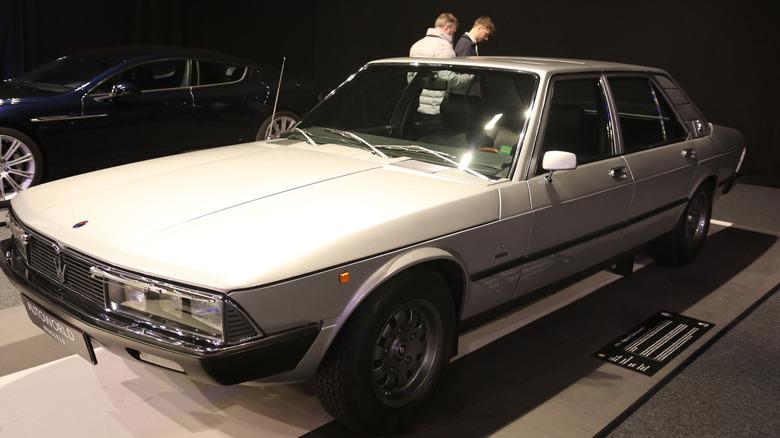
The first-gen Maserati Quattroporte redefined the performance sedan category when it was launched in 1964. Powered by a 4.7-liter V8 engine with 260 hp, it became the fastest four-door production car in the world, reaching a top speed of 143 mph.
However, everything changed after Citroën acquired Maserati in 1968. The first car launched under the newly formed alliance was the Citroën SM, a grand tourer with hydropneumatic suspension and a Maserati 2.7-liter V6 engine. Then Maserati borrowed the same recipe for the Quattroporte II, perhaps too literally. Namely, like its predecessor, the Quattroporte II was a front-wheel-drive car, and it even used Citroën's hydropneumatic suspension. As for the engine, Maserati bored out the SM's V6 to 3.2 liters, but it was still a far cry from the first Quattroporte's V8. Maserati planned a new 4.0-liter V8 down the line, but the Quattroporte II never reached that point, as it was a commercial failure.
A few prototypes were made, though, with chassis AM123.008 spending decades hidden away from the world. It was later uncovered that this particular prototype was one of six delivered to Spain, and was later sold to someone in France. AM123.008 was even undocumented at first, with Maserati stating a production number of 12 units initially, though now we know there are 13 prototypes.
The AM123.002 prototype was also lost to history for three decades. After a stint as a company vehicle in Spain, a late-1980s engine failure sidelined it, forcing it into a long hibernation inside an apartment complex parking lot. It eventually ended up in the hands of a Maserati collector in Belgium.