

How Little Sea Creatures Could Keep Oil Scarce Long After The Strait Of Hormuz Reopens
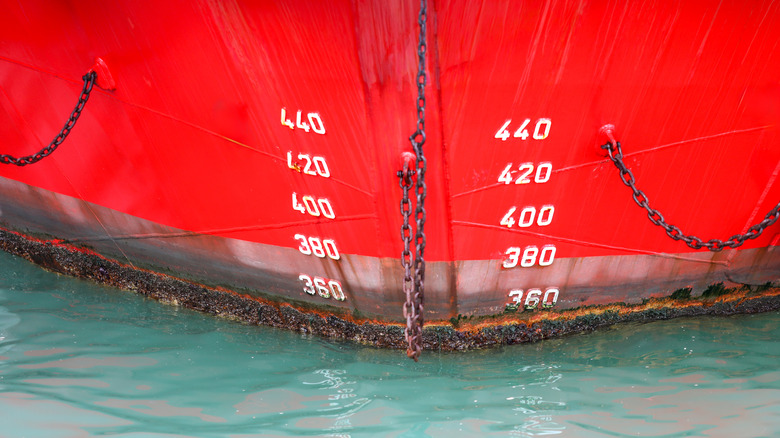
The United States and Israel's war on Iran has caused a shortage of oil and high gas prices, as ships loaded with crude have languished in a blockaded Strait of Hormuz. Everyone involved, on all sides, have hoped that the eventual reopening of the strait will mean a return to free-flowing petroleum, but it turns out the situation is more complicated than that. Ships that have been stuck in the strait for this time will likely take a good deal longer to actually reach their destinations, and the reason is an unexpected one: Barnacles.
A new report from The DeepDraft, a maritime trade publication, shines a light on how "biofouling" — ships fouled by biological contaminants like barnacles — can cause a whole host of issues for tankers leaving the Strait of Hormuz. Issues include an inability to reach top speeds, excessive fuel consumption trying to get there, and even risks of being blocked from ports upon arrival.
Don't expect instant drops in fuel costs

Lower speeds and higher fuel consumption are major problems for these ships, their crews, and the shipping companies that manage both, but they aren't the biggest problems. Tankers like these use seawater to cool their engines, and biofouling can constrict the passages used to pump that seawater — potentially starving engines of coolant, and risking mechanical failure.
Perhaps the biggest issue, though, will be a race for nearby ports at which ships can be inspected and cleaned. Ports around the world have gotten stricter and stricter about ships that carry invasive species, and biofouling is a perfect way for critters to latch onto a boat in one location and be taken somewhere that lacks natural predators. As such, many biofouled ships simply won't be allowed to dock at their final destinations, and will instead have to be inspected and cleaned elsewhere — inside and out, until they're cleared to approach the shore.
Ships that leave the Strait of Hormuz won't be unusable, according to The DeepDraft, but they're unlikely to reach their destinations in an uneventful and timely manner either. Even if the strait were to reopen tomorrow, it may still be some time before we see the normal flow of oil restored — and before gas prices start to look like they did last year.