

Trucks Are Just Driving The Oil Across The Arabian Desert To Avoid The Straight Of Hormuz
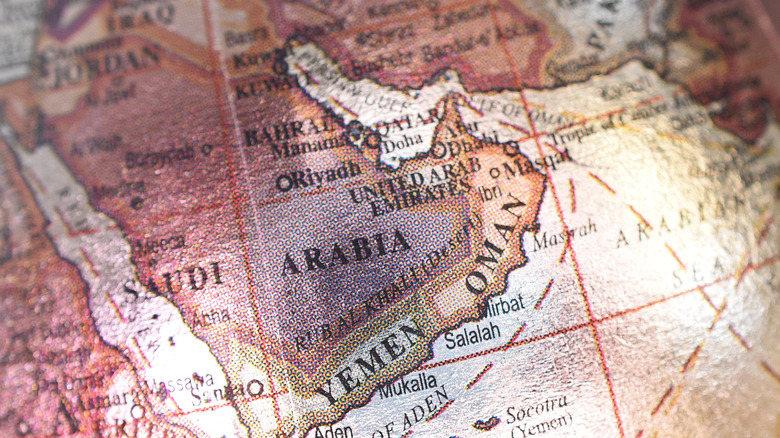
Long before the dawn of the modern industrial era, humans discovered a little trick for moving people, food, and other goods with incredible efficiency — water routes. All they had to do was load their cargo onto boats, and suddenly, everything got way easier. Even as technology has advanced, that's largely remained true, even today. And yet, Trump's war in Iran has gone so badly, the Wall Street Journal reports some companies in the Middle East have given up on the Strait of Hormuz and turned to convoys of trucks driving across the Arabian Desert.
Driving products across the desert may be slow and expensive, but now that Iran controls the Strait of Hormuz and decides how much it costs to get through, the bad option has now reportedly become the least-worst option for many companies. And it already sounds like a pretty serious operation. For example, the WSJ spoke with Bob Wilt, the CEO of Maaden, a state-controlled Saudi mining company, who's currently using a combination of trains and trucks to move fertilizer to ports Iran doesn't control.
In an attempt to make up for how much less efficient land routes are, Maaden is reportedly running thousands of trucks across the desert, essentially 24/7. "Six hundred became 1,600, became 2,000; now we've got 3,500 trucks running from the Gulf to the Red Sea," Wilt told the WSJ. Allegedly, it's actually working, too, and Wilt told the newspaper that spinning up the desert convoy would likely allow Maaden to clear out its backlog of unshipped fertilizer by the end of the months.
No other option
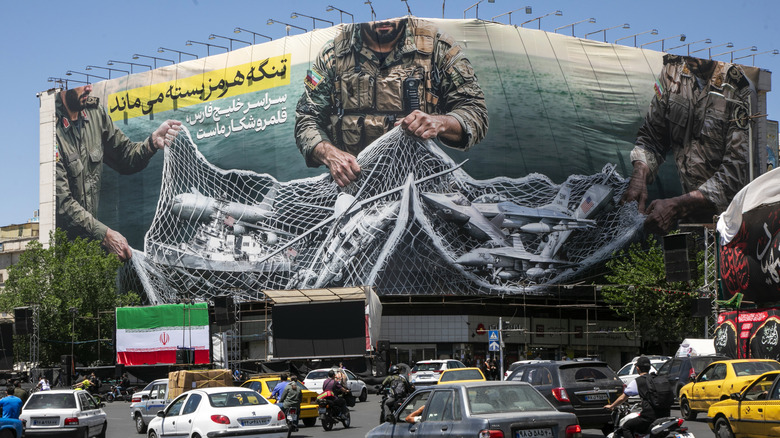
But just because Maaden has avoided a total disaster so far doesn't mean it or any other company enjoys running convoys across the desert. It doesn't not work, but it's kind of like telling the kitchen to start cutting french fries by hand after the slicer breaks. Or, as the WSJ put it:
Shipping companies including MSC and Maersk are trucking goods across the Arabian peninsula. The mobilization can't replace the capacity of shipping or compete on cost, nor can it avert shortages of jet fuel and other energy products. Still, it has become a shock absorber in some key markets, sustaining trade and helping contain global inflation.
U.A.E. supermarket chain Spinneys sent trucks loaded with British foods—including potato chips, porridge oats and children's snacks—on a 16-day journey from Kent in the U.K. through Western Europe and then Egypt and Saudi Arabia to Dubai.
Yeah, that's probably not going to be great for shareholders, but what choice do they have? Trump and Netanyahu started a completely unnecessary war, handed over control of one of the most important maritime chokepoints in the world, and then bungled the war so badly, he may not be able to convince Iran to give up Hormuz without a massive, incredibly expensive land invasion that would likely cause untold suffering and death. Even if it hurts profits, funding a desert caravan at least keeps these companies from going under.
Just kidding, the corporations always win and it's just us regular working people who pay the price. As Wilt told the WSJ, the drastic jump in commodity prices makes up for the higher transportation costs. Wonderful.