

What's The Difference Between A Class A And Class B CDL?
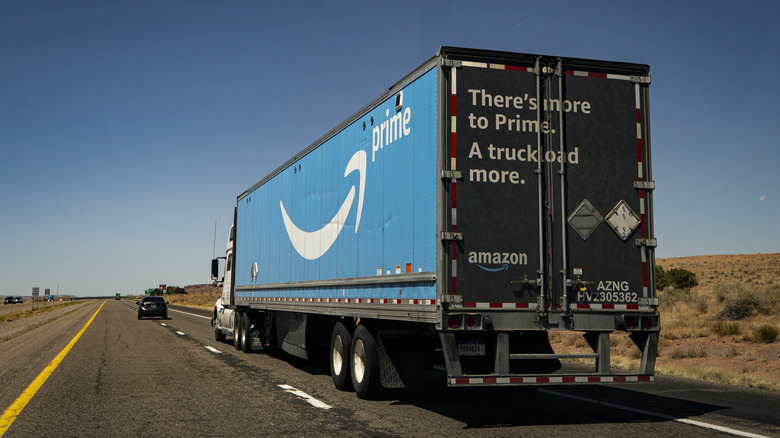
Depending on who you ask, getting into the truck driving business is either a lucrative and stable career, or one that will squeeze you for everything you're worth and push you into a spiral of near-indentured servitude. There are promises of high wages and the freedom of "being your own boss," but the cost of trucking can be extremely high, too. Either way, truck driving is one of the last middle-class, blue-collar jobs left that doesn't require a college education. If, however, you've weighed the pros and cons, you still want to get your Commercial Driver License (CDL) and get behind the wheel of a big truck, you're going to need to know the difference between a Class A, Class B, and Class C.
Let's start with the easiest license to obtain first—the Class C CDL. This license is explicitly for smaller vehicles with a gross vehicle weight rating of 26,000 pounds or less (some rental vehicles squeak in right under the 26,000-pound limit), designed to transport 16 people or more. This is usually intended for party buses, school buses, and large vans. This is also required for anyone wishing to carry hazardous materials. In order to be eligible for a Class C, you must be at least 18 years old to drive within your state, and 21 years old to cross state lines.
If you want to jump up in size a bit and carry larger loads for a living, you can get a Class B license. This one allows you to pilot large vehicles with GVWR in excess of 26,000 pounds, but your trailer can't be more than 10,000 pounds. This class of license is mostly intended for large box trucks, straight trucks, large buses—including school buses, city buses, and tourist buses—and dump trucks. This kind of license is typically for local delivery or specific routes, generally without a big trailer being pulled behind you.
Hitting The Open Road With A Class A CDL
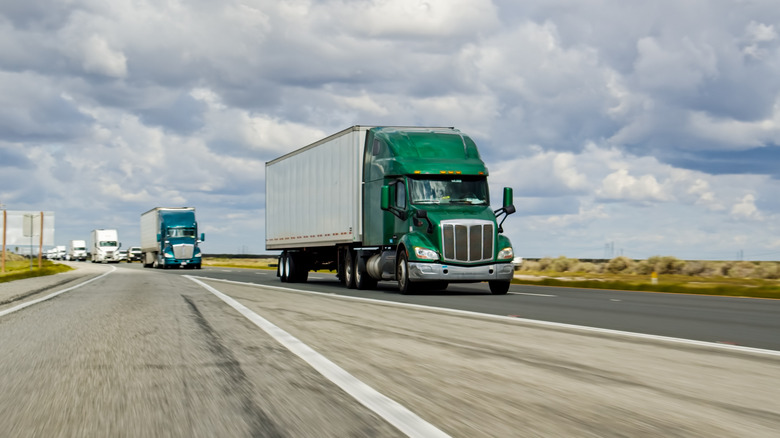
If you've been dreaming about taking on the open road and grabbing gears behind the wheel of an old Peterbilt or Kenworth, playing a little C.W. McCall along the way, you're going to need a Class A CDL for sure. The Class A is basically the top of the commercial license heap, and it allows the holder to operate almost any vehicle on the road. It's also the hardest to get and the most expensive. With a Class A, you can drive a vehicle with a GVWR of over 26,001 pounds while towing a trailer that weighs more than 10,000 pounds.
The good news is that once you have your Class A, you are also eligible to drive any commercial vehicle that falls under the Class B rank as well. From there, you can get a series of endorsements to drive even more vehicles. An H endorsement allows you to carry hazmat, N to haul a liquid tanker, T for double or triple trailer rigs, and X for all of the above.
In order to get your CDL, you'll have to pass a background check that spans the last 10 years of your driving record in all 50 states, and show that you're medically qualified. Then, you'll need to complete federally-mandated Entry-Level Driver Training at a certified school on the Training Provider Registry in your area. Once you've passed your written and skills tests, you can get a Commercial Learner's Permit. You can only be eligible for the final skills test after you've had your CLP for 14 days. Some states will give you a CDL right then and there, after you pass the tests, while others will mail it to you. Congratulations, you're now capable of driving around in a 13-ton, 18-wheeled machine. 10-4, good buddy!