

Before License Plates Were Standardized, People Had To Get Creative
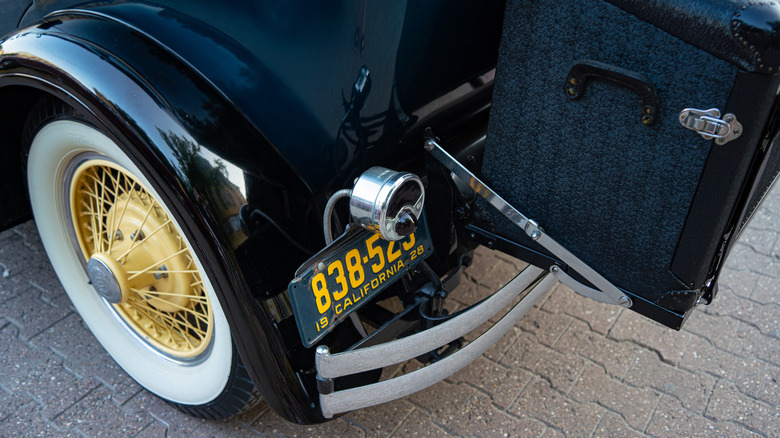
License plates have been firmly entrenched in the American cultural zeitgeist for nearly as long as cars themselves. You can easily find old plates hanging around countless, traditionally non-car-centric spaces like dive bars, antique stores, frat houses, and even the hallowed halls of the Smithsonian. Over the years, license plates have come to paradoxically embody both freedom and regulation, art and conformity, and — depending on your taste in what constitutes the best vanity plates – elegant wordplay and butt jokes.
Needless to say, these stamped-metal rectangles are one of the most common sights in the U.S., both on and off of the country's highways and byways. But back in the day, license plates were way wilder and more varied in design. Different shapes, colors, materials, and production methods –- as well as disparate regulatory bodies — were the norm in the early-to-mid 20th century. It was truly the Wild West era of plates, and this period gave birth to some truly weird and wonderful creations, including a super-rare license plate worth more than the average new car.
Alas, as more and more vehicles began to hit the streets, these often-DIY license plates began to disappear. By 1957, the 12-by-6-inch plates we all know today effectively became the national standard.
The DIY mindset of early license plate production
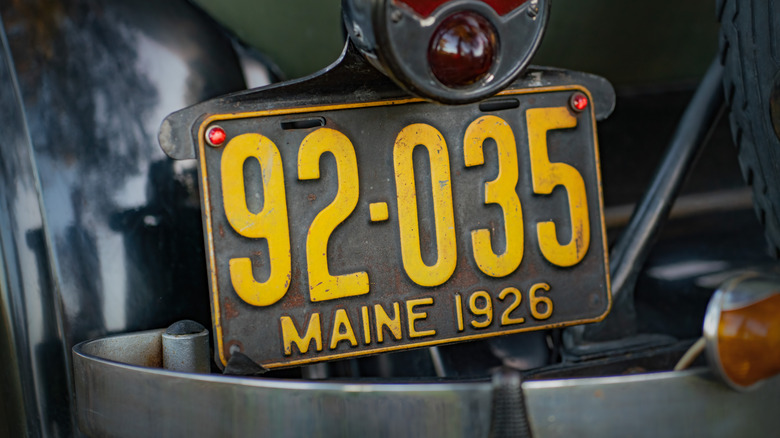
License plates, in some form or another, have been used on cars since the late 19th century. However, these early versions were usually overseen by city- or town-level governing bodies and often amounted to nothing more than a leather pad with porcelain numerals tacked on. It wasn't until 1903 that licenses were issued at the state level, with Massachusetts becoming the first state to mandate automobile license plates. By the early 1920s, all 48 states (plus then-territories Alaska and Hawaii) would require state- or territory-specific plates in their respective jurisdictions.
The 1920s through the early 1950s were perhaps the golden era of "weird" license plates. While state license plates were becoming more uniform as mass manufacturing became the primary means of production, many states would still take liberties with shape, size, and production materials. Tin, copper, cardboard, and other materials were utilized, with varying degrees of longevity and durability.
Uniquely shaped license plates were also quite common. In 1928, Idahoans could get them shaped like the state's famous, starchy export. Other states, like conveniently square-shaped Kansas and Tennessee, would offer plates in the shape of their respective state borders.
When metal shortages struck during World War II, license plates were manufactured using even stranger stuff. Soybean meal, plastic, wood, and even sugarcane fiber were used as alternatives to metal, along with cardboard and leather.
Party's over: The standardization of plates
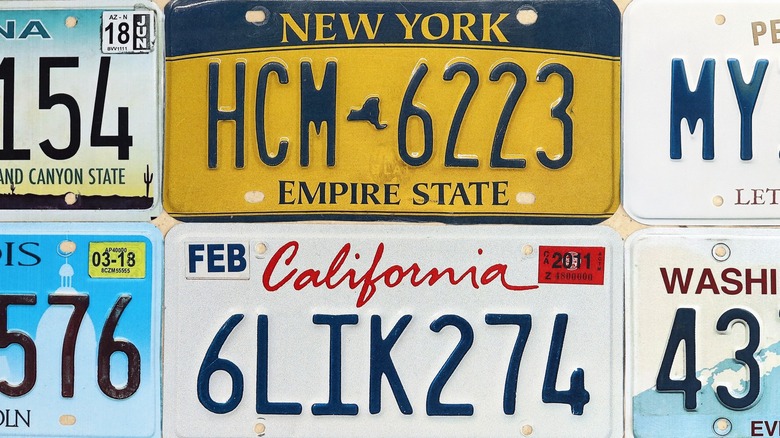
By the mid-1950s, virtually every new license plate produced in the U.S. adhered to the shape-and-size standard we know today. Why was this system adopted? According to History, license plate guru Eric Tanner explains: "Size standardization was solely the effort of the [American Association of Motor Vehicle Administrators] which aimed to develop a uniform size and shape so that car manufacturers could design auto bodies more efficiently to accommodate them, especially with recessed mountings and lighting for the rear plate."
And with that, by October 1957, the off-kilter, non-standard plates of yesteryear were all but eliminated from U.S. streets. Although plenty of states allow the use of non-standard plates for historic vehicles, good luck getting away with hand-chiseling your own bespoke, Flapper-era license plate for the family minivan.
Even with today's standard shape and size, plate designs continually change, and some believe America's old license plates were way cooler than today's.