

Ferrari Insists New $640,000 Luce EV Is A Serious Car, Not An Elaborate Prank Like You All Assume
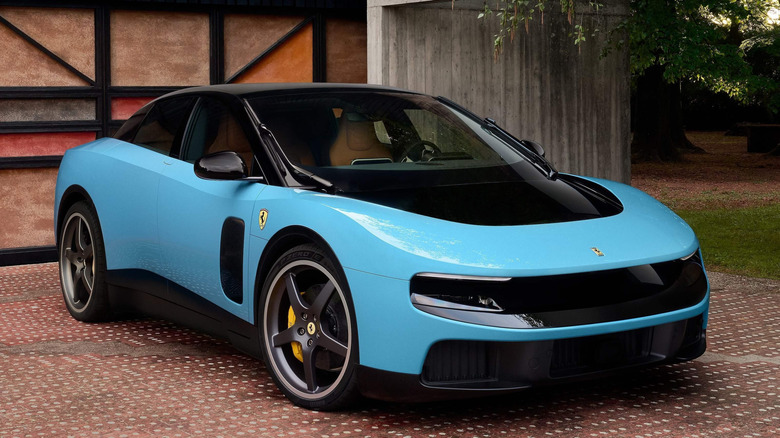
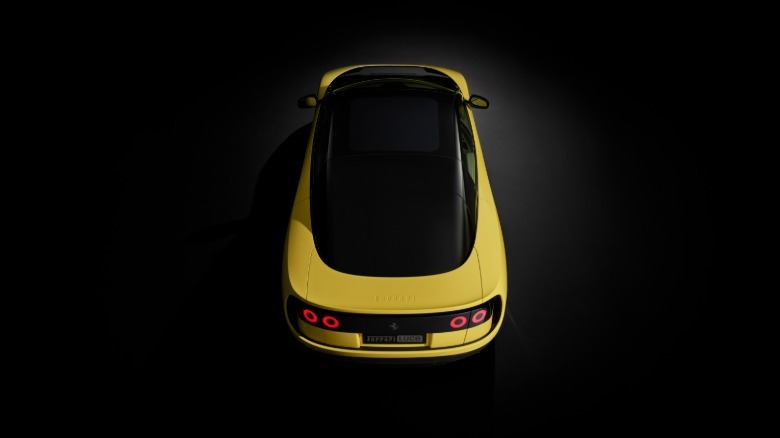
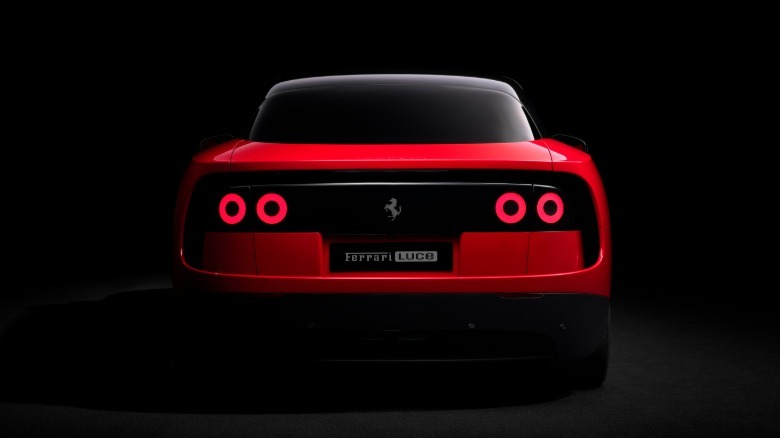
No, your eyes aren't deceiving you. Jaguar did not just reveal a surprise redesign of the I-Pace that we all assumed was long-dead. Some Chinese phone company has not revealed a new 'Ring-conquering robotaxi. The car you see here is real, and when it goes on sale, it will be sold as the Ferrari Luce, a five-seat electric vehicle with plenty of Ferrari badges and a design penned by none other than LoveFrom, the design firm led by legendary iPhone designer Jony Ive himself and Marc Newson. As you've probably seen already, the reaction has, uh, not been especially positive.
The people do not like the crossover-ish electric Ferrari, and they especially don't like that it looks like a rejected design for the hopefully now-dead Apple Car. Almost every single one of those people is far too poor to afford a house that costs Ferrari EV money, much less the Ferrari EV itself, but it's not like Ferrari's customer base is completely immune to public opinion. They can afford to buy anything they want; they still have to want it, though. And while the specs are solid enough, and Ferrari threw every bit of tech in that it could, that's still the rub.
 Ferrari
In a pre-EV world, the Ferrari Luce's specs would have been mindblowing. It uses a motor on each wheel to make a total of 1,035 horsepower and 730 pound-feet of torque, and despite weighing in at just a hair under 5,000 pounds, Ferrari claims the Luce will hit 60 mph in less than 2.5 seconds and only needs 6.8 seconds to hit 124 mph, and it has a top speed of 193 mph. Ferrari also squeezed in a 122-kWh battery pack that's still good for a claimed 330 miles on the European WLTP test cycle. Converting that to more American-friendly units, we're probably looking at about 280 miles of range once the EPA gets its hands on the Luce.
While a sub-300-mile range doesn't sound especially impressive, Ferrari claims it invested an absurd amount of time and resources into making the Luce as aerodynamic as physically possible, though with a drag coefficient of 0.254, it's less aerodynamic than SUVs like the BMW iX3, Lucid Gravity and Porsche Cayenne Electric. It also had to charge quickly, coming in with a 350 kW charging speed and the ability to fill more than half the battery in 20 minutes. But it still had to drive like a Ferrari, too, even with all-wheel drive. Instead of sticking the same motor at all four corners, engineers went with a set of rear motors that together make 831 hp and 524 lb-ft, while the front motors make 282 hp and 207 lb-ft of torque.
Ferrari nailed the cabin
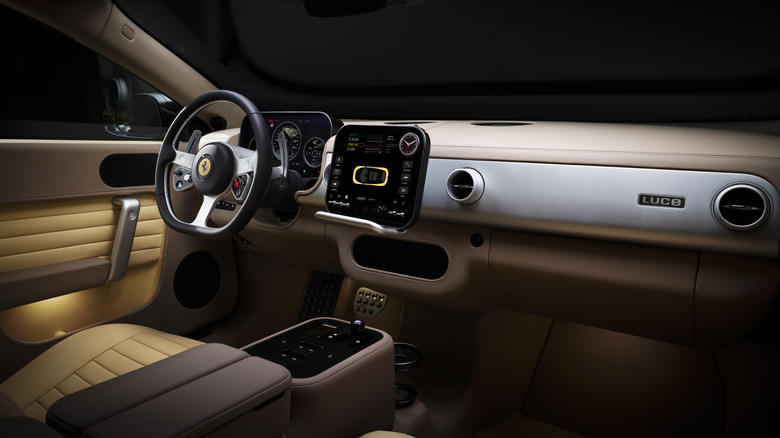
Regardless of what you think of the exterior styling, the cabin itself looks absolutely delightful. That's not exactly a surprise, since Ferrari already showed off the interior a while ago, but I still like it. Ive did an outstanding job preserving as much of Ferrari's heritage and brand identity as possible, while still bringing the cabin into the modern era. I also wouldn't be surprised if a big part of why some people looked at those photos and decided it looked cheap did so because we aren't used to seeing actual high-end materials used in a design like this. Allegedly, the pieces that look like metal are actually made out of metal, and you just know that leather smells incredible.
 Ferrari
Of course, I'll never be allowed anywhere near a Luce, at least if Ferrari has anything to say about it, so I can't and likely won't ever be able to tell you how much better or worse the cabin feels in person. If you ever do get a chance to poke around inside one, please report back. I bet every material feels far nicer to the touch than it looks in photos, but I'm also open to being wrong. I mean, with a starting price of about $640,000 at current conversion rates, you better get some incredibly high-end materials to go along with your 280 miles of range and acceleration that isn't that much quicker than a Hyundai Ioniq 5 N.
Like the Ioniq 5 N, those paddles you see aren't ornamental, either. They don't simulate a dual-clutch transmission, though, instead giving you the option to control regen and overall power output. So "downshifting" ups how hard the regenerative braking slows you down while also cutting torque, and "upshifting" does the opposite, increasing the amount of torque on tap. We'd have to actually drive the Luce to tell you how intuitive and useful that feature is, but after learning our lesson with the Ioniq 5 N's simulated shifting, I'll at least say don't judge this book by its "fake" cover.
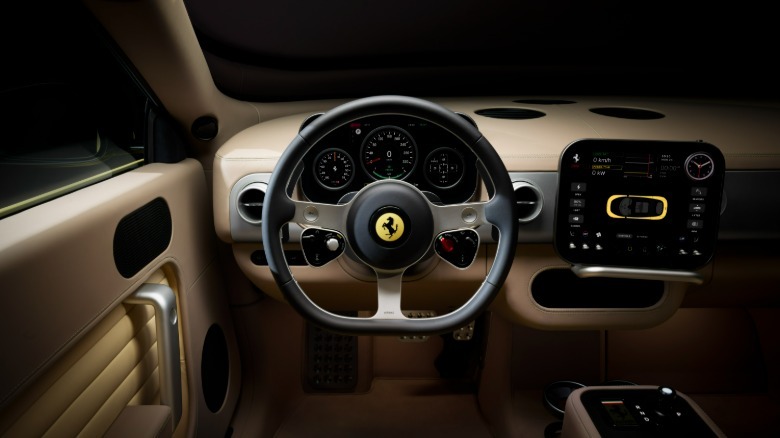 Ferrari
Ferrari says it also went to great lengths to pack as much performance-enhancing software into the Luce as possible, promising that its computers can sort out the complexities of driving a quad-motor EV with more than 1,000 hp, and combined with the latest ultra-high-end 48-volt suspension that Multimatic could provide, as well as rear-wheel steering and advanced torque vectoring, expect a car that drives far better than any of the design haters can currently imagine. The sounds the Luce makes are also real, at least if you don't take issue with Ferrari using electronics to amplify the mechanical noises the electric motors already make, in a similar solution to how an electric guitar amp works.
Different is always good, right?
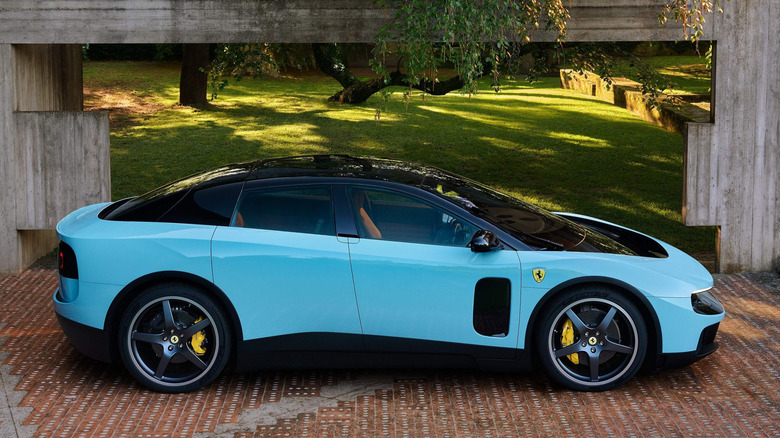
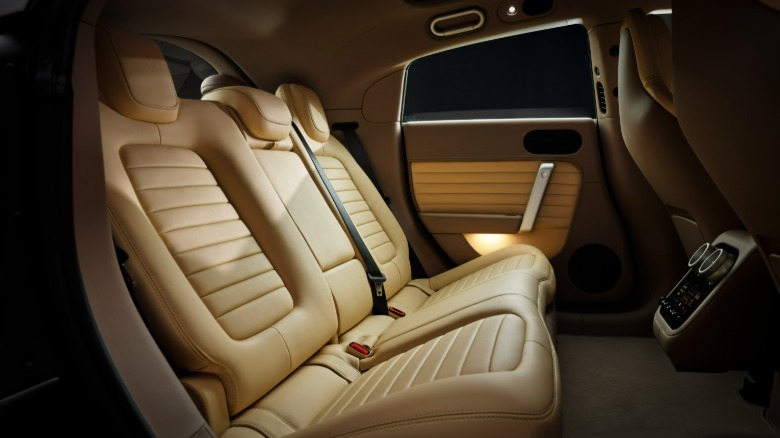
As someone who desperately wants to see more automakers swing for the fences, I'm torn here. Ferrari certainly didn't play it safe with the Luce's design, even adding a fifth seat in the second row since there's no transmission tunnel to work around (making this Ferrari's first five-seater). It probably drives better than any EV someone's ever tossed me the keys to, and going with a more minimalist design feels like an especially big risk for an automaker such as Ferrari, which has typically erred on the side of being more brash than classically beautiful. Especially in recent years.
So why does it still feel like a compromise? Part of the problem might be that switching to a more minimalist design language feels like Ferrari's looking more to the past than the future. The original iPhone was a hit not just because Apple figured out how to build a personal digital assistant that could make phone calls and send text messages. It was a completely different design that the phone world had never seen before. Back in 2007, minimalism felt new and fresh, and so did minimalist designs.
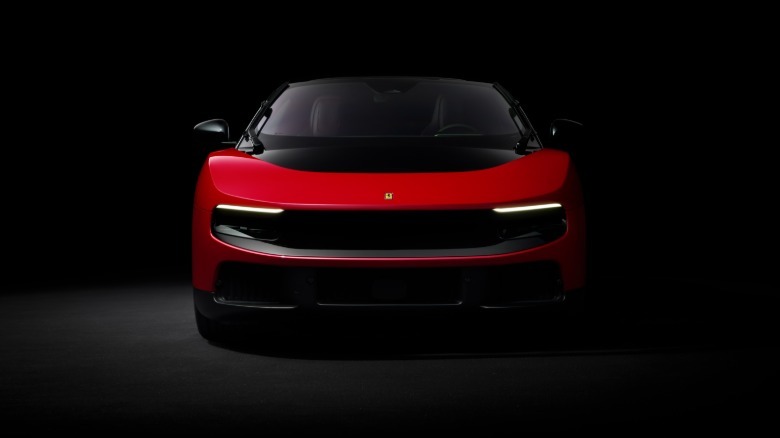 Ferrari
Fast forward to 2026, though, and most of us are sick of minimalism. Mercedes has been simplifying its exterior designs for years now, but it's at least been refreshing to see design trends move away from the corporate-enforced minimalism we got from all the internet startups that promised to deliver luxury goods at affordable prices by cutting out those pesky middlemen. "Less is more" may be true in some ways, but after hearing it repeated for nearly two decades, it's natural to want something else. Oh, and BMW already did the "this car looks like it's pooping out another car" thing back when it introduced the i8.
Unfortunately for those of us who love a bold, daring car design, Physics is also a cruel mistress who insists all of the most aerodynamic cars look pretty much the same. Before anyone knew what a wind tunnel or an MPG were, designers could draw whatever shapes they wanted, as long as they still accommodated the people inside and still had enough room for the powertrain. Once you start caring about miles per kilowatt hour, though, you have to play by the rules of fluid dynamics, and that's how electric crossovers all end up looking like crabs increasingly similar.
Take me back
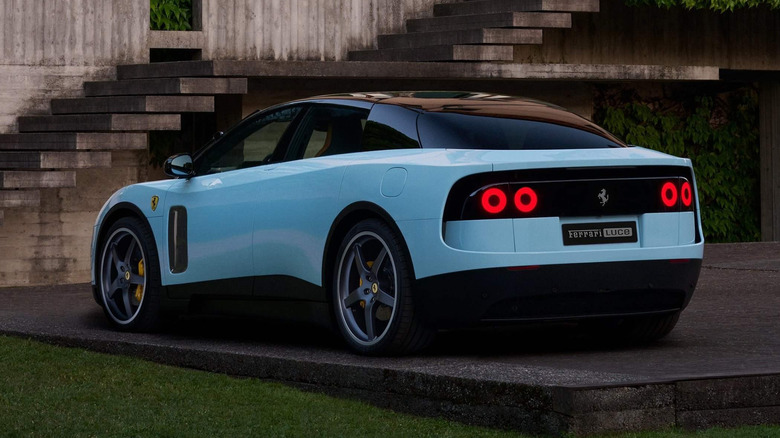
Of course, it's entirely possible the Luce was never meant to be a real car, at least the way you or I think about it. Ferrari wants to keep building cars with gas engines that aren't exactly known for sipping fuel, and its business model makes Rolex look fair and affordable in comparison. I don't see any thinly veiled threats in the press release, but I wouldn't be surprised if anyone who wants an allocation for the more desirable combustion-powered Ferraris already knows they're expected to buy a Luce as a sign of good faith. You help Ferrari bring down its average fleet emissions, and Ferrari puts you on its list of good boys and girls who deserve the long-rumored new manual Ferrari that may or may not be legit.
 Ferrari
Or maybe I'm completely wrong here, and wealthy Ferrari buyers really are just itching for an electric crossover that reminds them of how much more optimistic they were about the future back when they got their first iPhone. Middle-class GenX-ers obsessed with hoseposting and millennials who still only watch "The Office" aren't the only ones prone to the nostalgia trap. Maybe Ive and the team at LoveFrom are more tuned into what the wealthy actually want than a car blogger whose high school was across the street from a cow pasture. The design still isn't for me, but that's also fine, because it was never meant for me in the first place.