

10 Of The Most Tuner-Friendly Cars For Optimizing Performance
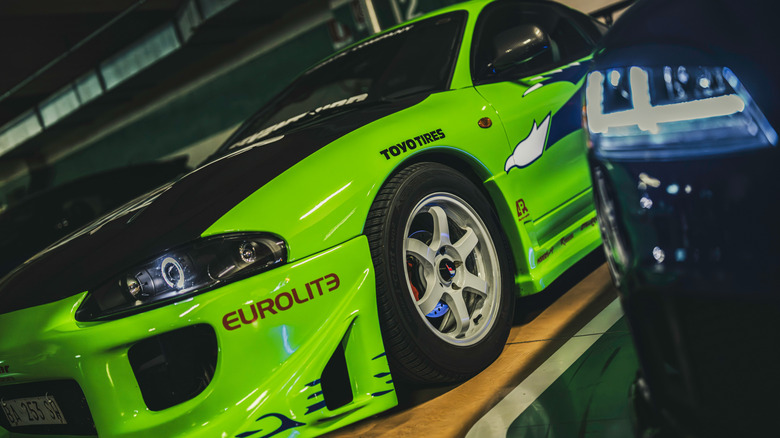
There are plenty of cars out there that deserve a tuner following and will regrettably never come anywhere close to having one. Of course, it's fun to imagine a Volvo C30 worthy of being a background extra in a "Fast & Furious" movie, but even if that bulbous Swedish hatch somehow landed the cameo, it's not like you could leave the theater excited to order a bunch of bolt-on Volvo mods like you were buying T66 turbos and NOS from Harry. And if you're thinking about running Spoon engines, forget about it.
Ultimately, what makes a tuner car isn't just a high-potential chassis and a bit of enthusiast appeal. It requires at least some alignment between accessibility, community enthusiasm, and aftermarket support. Couple that with the decline of the sedans, coupes, and compact sports cars that traditionally formed the backbone of tuning culture, and it's no surprise that so much enthusiast energy has consolidated around a relatively small number of platforms.
As for this list? It's some of them, not all of them. This isn't an objective top 10, and these aren't presented in any particular order. So, if your favorite tuner platform didn't make the cut, feel free to yell about it in the comments.
Toyota Supra
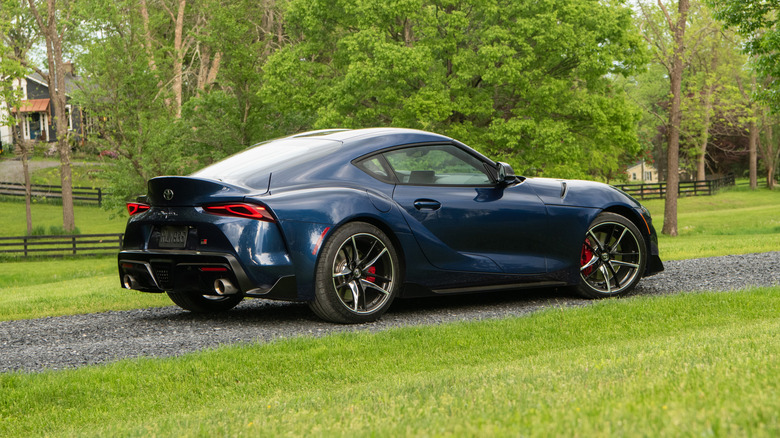
The Toyota Supra is a legend now but began as a glorified Celica, and it's one of those tuner cars that has become almost impossible to discuss rationally. The broad shape of the mythology starts with the fourth-generation car, which arrived in the U.S. for 1993 with a twin-turbocharged inline-six making 320 horsepower and an available six-speed manual transmission. Over time, the Supra's 2JZ engine developed a reputation for handling huge increases in boost and power, helping transform it into one of the defining vehicles of modern tuner culture. That reputation only grew during the "Fast & Furious" era, when the Mk IV Supra became one of the defining symbols of 2000s import tuning.
All of this also means that the modern GR Supra has an almost impossible assignment. Early reactions to the revived Supra were skeptical, particularly among enthusiasts unhappy about the car's close relationship with the BMW Z4. But the new car gradually won over much of the tuning world because it turned out to be very mod-friendly anyway. The turbocharged B58 inline-six quickly attracted ECU tuning and aftermarket support, while tuners started extracting significantly more power from the platform without sacrificing its street manners.
Honda Civic Si or Type R
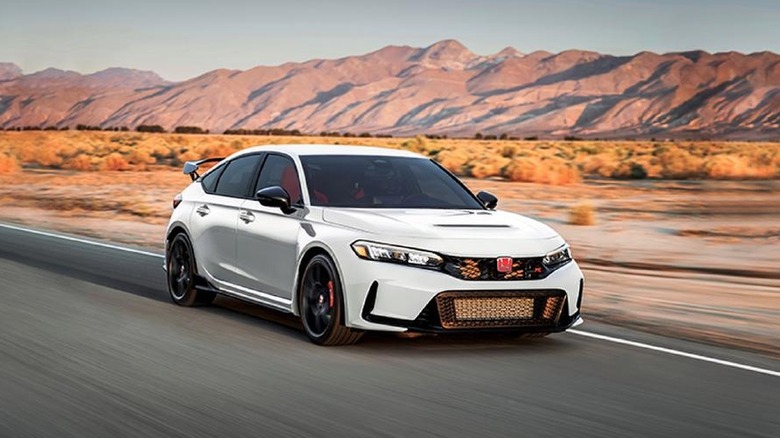
The Honda Civic's tuner reputation grew out of the 1990s import-tuning boom, when affordable Japanese compact cars helped push a once-underground modification scene into the mainstream. The 1999 Civic Si is still the cleanest shorthand for that era: it offered a high-revving 1.6-liter VTEC four-cylinder with 160 horsepower, a five-speed manual, four-wheel disc brakes, and suspension upgrades that made it feel like more than basic economy-car transportation. It also helped establish the Civic as the kind of car people could realistically buy, modify, break, fix, and modify again. That accessibility matters, because tuner culture is not just about what a car can do — it is about how many people can actually get their hands on one.
The modern Civic Type R keeps the same basic argument alive, just with a much higher factory ceiling. When Honda finally brought the Type R badge to the U.S. for 2017, it arrived with a turbocharged 2.0-liter inline-four making 306 horsepower, a six-speed manual, and front-wheel-drive performance serious enough to embarrass plenty of pricier machinery. More importantly for this list, it stayed deeply mod-friendly. Compatibility with off-the-shelf ECU tuning and data logging includes calibrations for higher-octane fuel and higher boost levels. The Civic has changed, but the premise survived: Buy the Honda, make it yours, and then argue online forever about whether you did it correctly. Of course, with that said, you're going to hate how much the 2026 Honda Civic Type R costs.
Subaru WRX STI
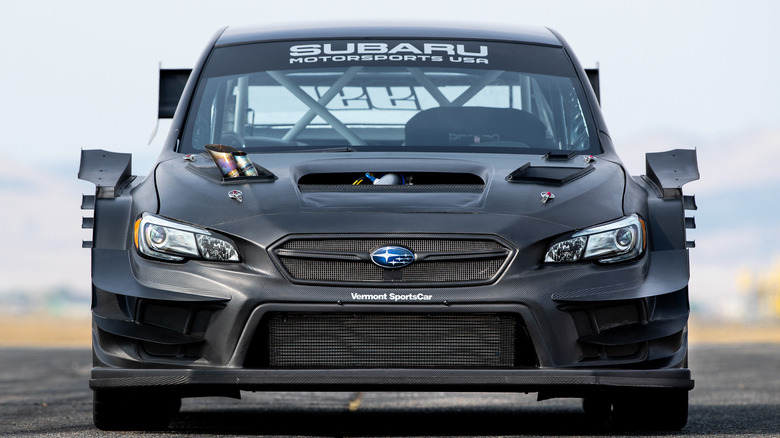
The Subaru WRX STI built its tuner reputation by turning rally-inspired hardware into something ordinary enthusiasts could actually buy, modify, daily drive, and occasionally send skittering around that one bend on the dirt lane across town. When the 2004 WRX STI came to the U.S., it brought a turbocharged 2.5-liter flat-four making 300 horsepower, a six-speed manual transmission, all-wheel drive, and a driver-controlled center differential. That combination helped make the STI feel less like a dressed-up compact sedan and more like a road-going homologation special. Just as importantly, the WRX STI quickly became deeply embedded in the aftermarket world, where ECU tunes, bigger turbochargers, suspension upgrades, and Cobb Accessports became almost expected parts of ownership.
The painful part is that the STI's current story is mostly one of absence. Subaru announced in 2022 that it would not build a next-generation WRX STI based on the current WRX platform. Even before that, though, the WRX and STI had already evolved away from the stripped-down feel that helped make earlier generations tuner icons. Later models became larger, more refined, and more practical, even if the aftermarket never stopped treating them like blank canvases for questionable financial decisions. The STI may be on its way to becoming a nostalgic memory, but Subaru spent decades building one of the strongest and most recognizable tuner communities on earth. And yes, the Subaru WRX STI S210 is real but limited to 500 units.
Volkswagen GTI
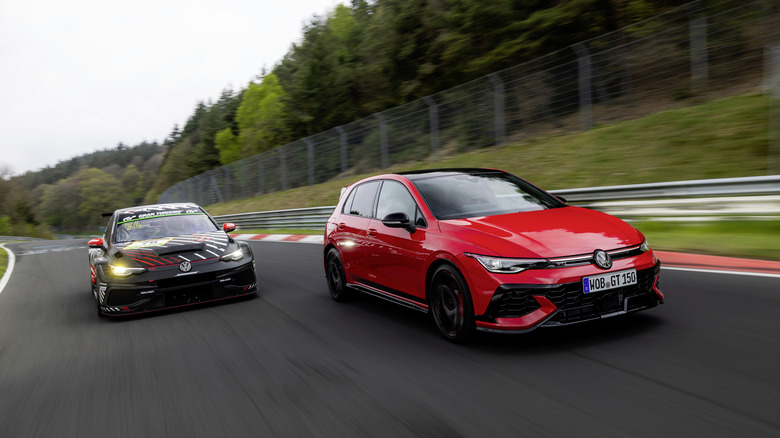
The Volkswagen GTI is a tuner car because it made the hot hatch formula feel both practical and slightly mischievous. When the U.S.-market Rabbit GTI arrived for 1983, it paired economy-car usefulness with a 1.8-liter fuel-injected four-cylinder, 90 horsepower, a five-speed manual, sportier suspension tuning, and enough personality to become the performance econobox people kept trying to improve. That basic idea carried through decades of GTIs: front-wheel drive, compact packaging, everyday usability, and a huge owner base willing to chase more speed from a car that still had room for groceries.
The modern GTI is more polished than rebellious, but it still understands the assignment. The 2025 Golf GTI makes 241 horsepower and 273 pound-feet of torque from a turbocharged 2.0-liter four-cylinder, while keeping front-wheel drive and a standard front limited-slip differential. More importantly for tuners, the EA888-era GTI responds dramatically to software, with APR's Stage 1 ECU upgrade for the 2.0T EA888 Gen 3 IS20 platform advertising up to 290 to 337 horsepower, depending on fuel and calibration. Yes, we wanted to sneak a couple of engine family code and tuning jargon into this article for the true believers. But only a little, as a treat.
The GTI may now come with more screens, more refinement, and fewer rough edges than old-school Volkswagen people sometimes want, but the core pitch survived: it's useful, quick, and very easy to make it quicker. Still, it's probably not surprising that there are plenty of enthusiasts who are having trouble finding something better than their old GTI.
Mazda Miata
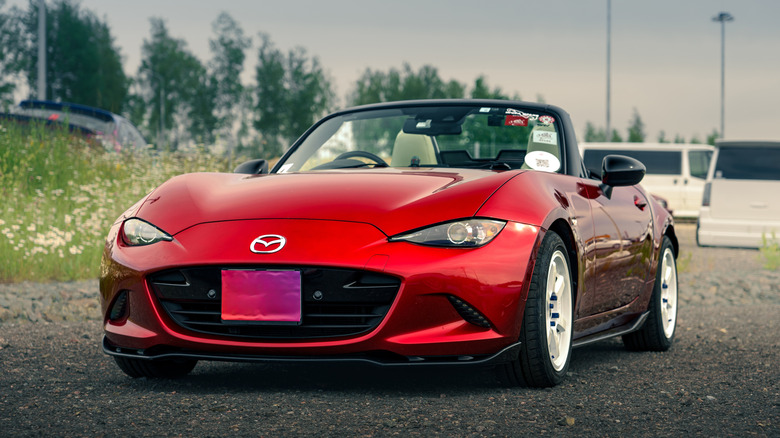
Everyone should drive a Miata at least once. It's among the purest tuner cars that we're talking about today because its entire identity revolves around lightweight simplicity and the idea that driving enjoyment matters more than brute force. When the original NA Miata arrived for 1990, it paired a naturally aspirated 1.6-liter four-cylinder with rear-wheel drive, a five-speed manual transmission, and curb weight barely over 2,100 pounds. More importantly, the Miata gave enthusiasts an affordable sports car they could actually use, modify, race, crash, repair, and modify again without completely destroying themselves financially. That combination helped turn the MX-5 into one of the defining cars of grassroots motorsports, eventually spawning massive autocross, track-day, and Spec Miata racing communities.
The remarkable thing is that Mazda never completely abandoned the formula. The current ND-generation Miata still comes with rear-wheel drive, a standard manual transmission, and a curb weight under 2,400 pounds, depending on trim. Even now, the aftermarket continues treating the Miata like a blank canvas for suspension tuning, turbo kits, track builds, and engine swaps, including modern emissions-legal forced-induction setups from companies like Flyin' Miata. The Miata might have become more refined over time, but it still feels engineered around the same basic idea: a lightweight car, a manual transmission, and endless opportunities to start messing with it.
Ford Mustang GT
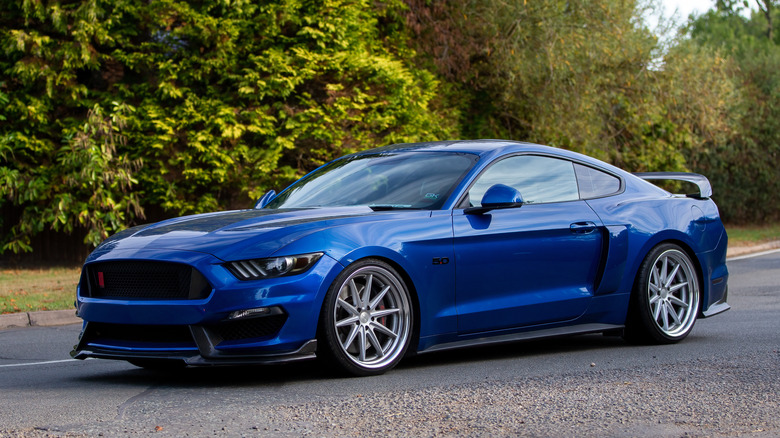
Our roundup of your favorite Ford Mustangs is proof that the platform has generational staying power, and part of the reason it survived while rivals disappeared is because Ford spent decades nurturing one of the largest aftermarket performance ecosystems in the industry. Mustang tuning culture stretches back decades, but the modern story really starts with the return of the 5.0-liter Coyote V8 for 2011, when the Mustang GT arrived with 412 horsepower, dual overhead cams, and an engine platform that quickly became one of the biggest stars of the modern aftermarket. That accessibility matters. The Mustang GT is not some exotic, fragile performance machine — it is a mass-produced V8 coupe with enormous aftermarket support, huge enthusiast communities, and enough available parts to make adding horsepower feel less like engineering and more like assembling a shopping cart.
That basic formula still defines the Mustang GT today. The current car continues to pair rear-wheel drive with a naturally aspirated 5.0-liter V8, while Ford itself now offers dealer-installed Whipple supercharger packages capable of pushing modern Mustangs to 800-plus horsepower. The aftermarket ecosystem surrounding the Coyote platform is now so massive that complete engine swaps, crate motors, forced-induction kits, suspension packages, and drag-racing builds have become routine parts of Mustang ownership. The Mustang GT might have grown larger and more refined over the years, but it still revolves around one very old-fashioned idea: buy a V8, make it louder, and repeat as necessary.
Nissan 350Z/370Z
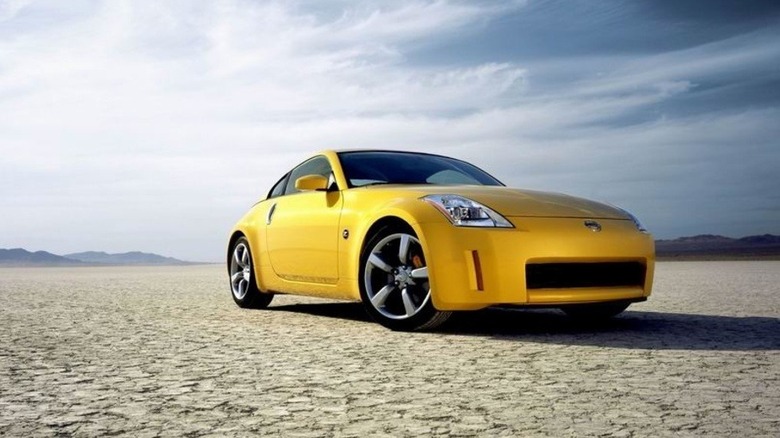
The Nissan 350Z arrived at exactly the right moment. Nissan showed up with a rear-wheel-drive coupe, a naturally aspirated V6, available six-speed manual transmission, and enough performance to immediately become a blank canvas for an entirely new generation of enthusiasts. More importantly, the 350Z quickly became one of those platforms people adapted for everything. Drift cars, track-day builds, autocross projects, street cars, engine swaps, questionable body kits, and eventually full V8 conversions all became familiar parts of Z-car culture.
The 370Z largely carried the same formula forward, just with more power and a slightly sharper factory package. Nissan's long-running successor eventually settled around a 332-horsepower naturally aspirated 3.7-liter V6 with rear-wheel drive and an available six-speed manual transmission. Even after the platform itself started getting old, the aftermarket never really stopped supporting it. Companies like Z1 Motorsports still sell enormous catalogs of suspension components, forced-induction kits, engine upgrades, drivetrain parts, and track-focused hardware for both the 350Z and 370Z.
The Z cars might never have achieved the mythology of the Supra, but they earned something arguably more important for tuner culture: They stayed attainable long enough for people to actually build them. Oh, and some of these are getting pretty cheap, so there may be no time like the present to find out what happens when you put a V8 in a Nissan 350Z.
Mitsubishi Lancer Evolution
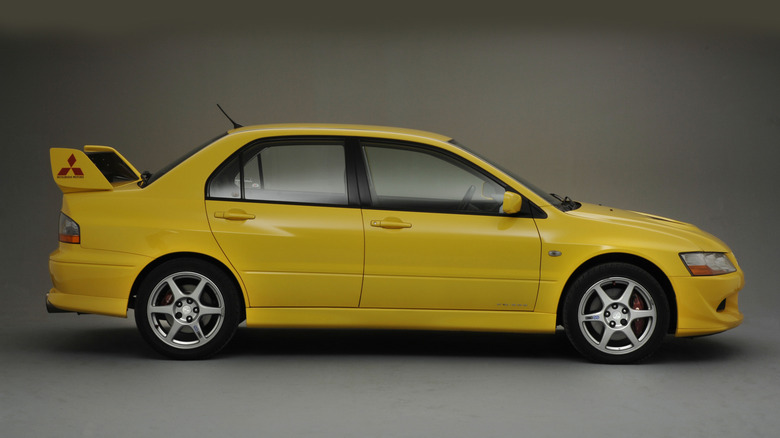
The Mitsubishi Lancer Evolution felt like somebody turned a rally car into a compact sedan and then decided to sell it to the public anyway. By the time the Evo VIII arrived in the United States for 2003, Mitsubishi's turbocharged, all-wheel-drive sport sedan had already built a reputation around rally-derived engineering and aggressive performance. The U.S.-market Evo VIII brought a turbocharged 2.0-liter four-cylinder making 271 horsepower and 273 pound-feet of torque, paired with all-wheel drive and a five-speed manual transmission. More importantly, the Evolution quickly earned a reputation for delivering enormous tuning potential from a platform that already felt intense and slightly unhinged from the factory.
That same combination of turbocharged power, all-wheel-drive traction, and rally-inspired engineering helped make the Evolution one of the most influential tuner platforms of the 2000s. The aftermarket still supports the platform with extensive catalogs of engine internals, turbo system components, fueling upgrades, and other performance hardware. The painful part is that the Evolution's modern story is mostly nostalgia now. Mitsubishi eventually discontinued both the Lancer and Lancer Evolution, leaving enthusiasts to spend the past several years wondering why one of the most recognizable tuner cars of its era disappeared entirely. As for the old ones? Don't even bother looking for the Mitsubishi Lancer Evolution VIII and IX anymore (unless you want to pay an uncomfortable amount of money, of course).
BMW 3 Series E36/E46
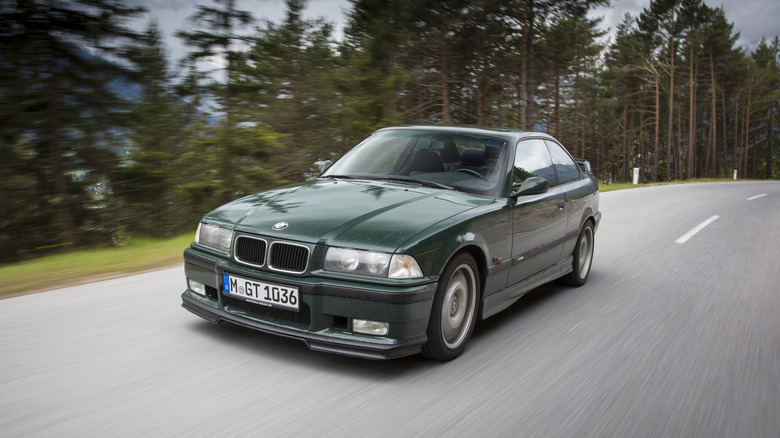
The E36 and E46 generations of the BMW 3 Series became tuner favorites because they offered rear-wheel drive, available manual transmissions, inline-six power, and chassis balance that enthusiasts adapted for track and drift builds. The E46 330i, for example, paired a 225-horsepower 3.0-liter inline-six with a five-speed manual and the kind of balanced handling that helped define BMW's sport-sedan reputation. The appeal was never just straight-line speed. These cars earned loyal followings because they responded well to suspension tuning, chassis setup, and driver involvement.
That same enthusiast appeal helped build a massive aftermarket ecosystem around the E36 and E46. Drift-focused companies still build steering-angle kits, suspension packages, adjustable control arms, and other chassis hardware specifically for these cars. Shops continue selling extensive aftermarket support for the E36 platform as well. That is also part of what cemented the E36 and E46 as tuner platforms in the first place: People were willing to actually use them hard. So, for a lot of us, our favorite BMW 3 Series is one with the rear bumper zip-tied back together in a paddock somewhere.
Toyota GR86/Subaru BRZ
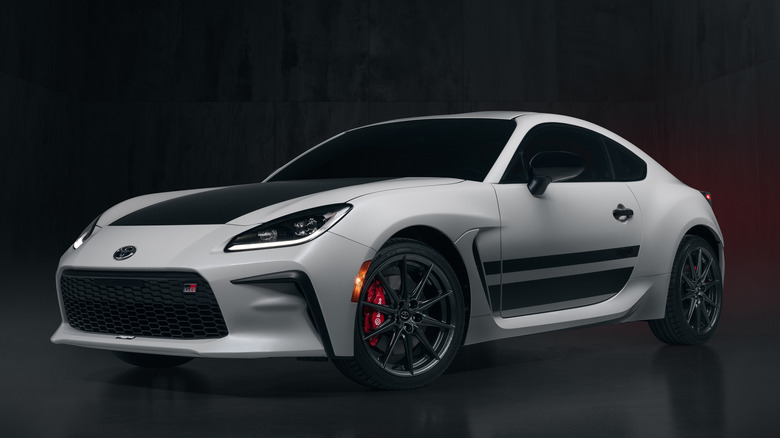
The Toyota 86 and Subaru BRZ became tuner favorites because they combined rear-wheel drive, lightweight construction, available manual transmissions, and a strong focus on chassis balance at a relatively attainable price point. When the original BRZ and GR86 arrived, they immediately attracted the kind of grassroots enthusiasm that tends to create long-term tuner communities. Track-day builds, suspension setups, drift cars, wheel-and-tire packages, and, eventually, turbocharged and supercharged projects all became familiar parts of the platform almost immediately. The appeal was never huge factory horsepower. These cars earned loyal followings because they emphasized balance, sharp handling, and driver involvement over outright speed.
The second-generation GR86 and BRZ largely kept the same formula intact while addressing one of the biggest complaints about the original cars: power. The modern GR86 now makes 228 horsepower from a naturally aspirated 2.4-liter flat-four while retaining rear-wheel drive, a low curb weight, and an available manual transmission. The aftermarket responded quickly as well. Grassroots Motorsports has documented forced-induction and track-focused tuning developments for the platform, while companies already offer tuning support for both the older FA20 and newer FA24-powered cars.
The GR86 and BRZ may never dominate conversations about huge horsepower numbers, but that was never really the point. It's not the point with a lot of this list, at least not until you get to the extreme edge of each platform. You can (and presumably will) take issue with our selections, but there's beauty in a world where a better driving experience is often just a mod or two away.