

What Are The Biggest Differences Between Rally And Circuit Racing?
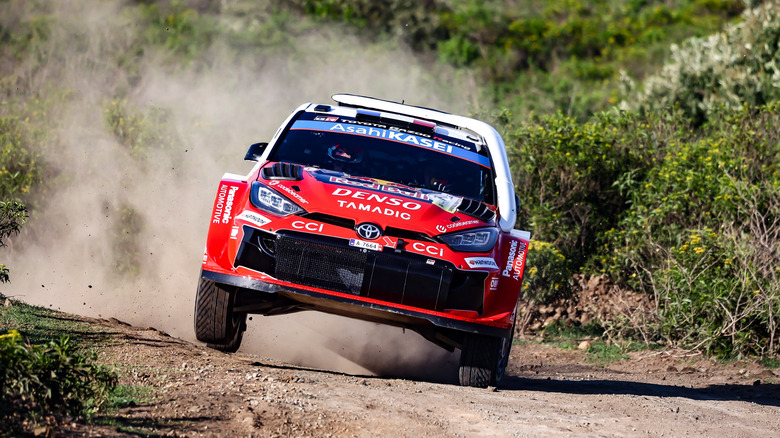
While rallying and circuit racing may seem similar to some car enthusiasts, there are many individual differences between the two, starting from their objectives. In rallying, you're essentially racing against the clock. The event itself is typically broken down into various stages and lasts for multiple days, with drivers racing to go from point A to point B in each stage as quickly as possible — and not necessarily racing against each other wheel-to-wheel. The winner is the driver who covers all the stages in the least amount of total time.
Meanwhile, circuit racing is usually a one-day affair on a smoothly surfaced closed track — and by closed, we mean it generally connects at the ends, rather than being a squiggly line like a rally stage. In this form of motorsports, the checkered flag goes to whoever completes a set number of miles first –such as in Formula One — or in endurance racing, whoever covers the most distance in a set time — such as in Le Mans.
Drag racing is its own thing, too. Sure, it shares the same kind of timing aspects as rallying, but it's strictly in a straight line, with the focus being on speed. In fact, the fastest drag run ever saw Shawn Langdon reach 345 mph on his way to covering the 1,000-foot strip in a blistering 3.724 seconds.
Different horses for different kinds of courses
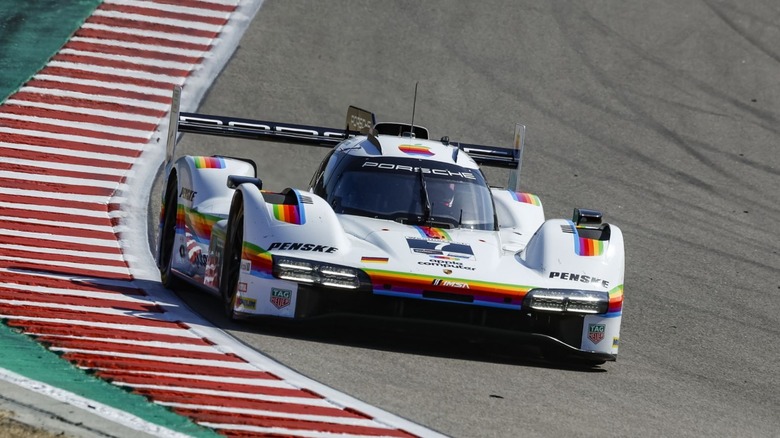
You can also think of rallying routes as obstacle courses in which the terrain itself provides most of the obstacles. Rallies can have some pavement stages that include public roads – which are closed for the race — but they mostly feature rugged trails, loose gravel, and desert sand. The difficult terrain shines a spotlight on a few further differences between rallying and circuit racing.
For instance, consider their approaches to driver assistance, but not the kind Tesla wrongly calls "Full Self Driving." What we mean is situations such as a racecar breaking down during the event. When it happens on a rally stage, drivers are pretty much on their own. Many circuit racing events, in contrast, let you pull in for a pit stop for repairs and then get back in action. Moreover, rally drivers aren't literally on their own in most cases. Co-drivers are along for the ride to help the drivers navigate.
The race cars themselves are very different as well. Rally cars are usually race versions of real road cars and feature four-wheel drive. But other than that, it's hard to lay down cut-and-dry rules. For example, while most rally racers have unique suspensions to handle air time during jumps, much the same can be said about the Stadium Super Truck circuit-racing series, which our readers listed among the driving competitions that deserve more attention. Nor should you be fooled into thinking circuit racers only make left turns. Even NASCAR runs the occasional road course, despite the fact that its superstar drivers keep getting embarrassed on them.