

You Don't Necessarily Need To Buy Or Install A Complicated, Expensive Home Charger To Drive An EV
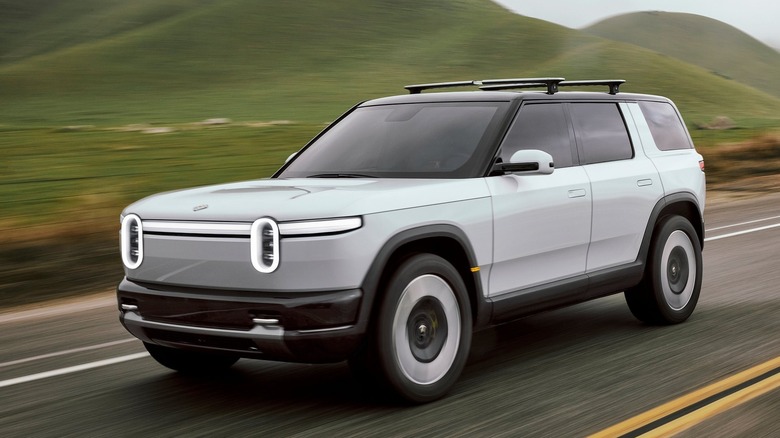
Normal people are so weird about EVs, y'all. Not because they're all asthma-loving jerks but because — much like cars with manual transmissions — very few of them know anyone who owns one, and there's no telling where they get their information about EVs and their impact. People who have never even sat in the back of a Model Y Uber will say the craziest things about charging, and, as best as I can tell, they don't even realize how wrong their misgivings are.
Will your car charge faster if you pay to install a fancy Level 2 charger? Sure. If you drive way more than the average American or don't sleep at home very often, it may be worth the cost, but it isn't strictly necessary. As long as you have the necessary cable, you can plug your car into the wall like it's a Playstation controller, phone, robot vacuum, or one of those fountains that tricks cats into drinking water. It'll add a few miles of range per hour (often between 2 and 4 miles of range added per hour). No annoying charger installation or laundry room plug needed.
Now, I don't think most people completely fail to grasp the concept of a charging cable. I just don't think they realize how much range you can get when you plug your EV in at home, via a typical three-prong, 120-volt (Level 1), charging cable overnight. It, of course, varies from car to car, but you can gain 50-60 miles to your range if you plug in when you get home in the evening and unplug before you drive to work — even more if the location where you work has a plug available, too.
Maybe 50 miles of driving every day doesn't sound like enough, but check your math. If you drive 15,000 miles a year (with an equal amount of driving all 365 of the year), that's about 41 miles a day. And it's not like you can't drive more than 50 or 60 miles if you need to. That's what the rest of your 250-plus mile range is for. And don't forget, you can always swing by a fast charger or plug in at a store while you shop. Charge at your girlfriend's house. Plug in when you get to Grandma's. If the cable reaches, any regular modern wall outlet will do.
A little information goes a long way
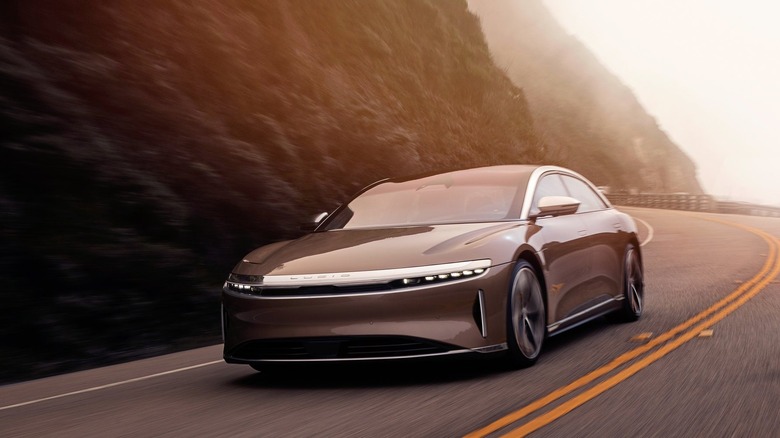
If you're an EV owner, what you just read probably sounded too obvious to even mention. But that's part of the problem. Knowledge surrounding EVs and how easy they are to live with for most lifestyles is still a mystery to a lot of car shoppers.
Personally, I blame the excessive focus on faster charging speeds and public charging infrastructure for some of the information gap. Or, more accurately, I blame whatever part of human nature makes it so hard for us to walk and chew bubble gum at the same time. The more we hear something repeated, the more important we tend to assume it is, and sometimes that means dropping the ball on something else. What's more, EV's had a rough start in the United States with an infrastructure that dragged behind the vehicle innovation curve.
A decade ago, the lack of fast chargers and abundance of broken chargers made road trips difficult, and that was a real problem that needed to be solved. Today, that's isn't nearly as much of an issue as it used to be, with more chargers being built and reliability increasing. And really, how many 300-plus-mile road trips do you really take in a month? A small percentage of people would say "several," but most won't. So perception of our own needs can be a bit off as well. It really is a shame that we've let so many regular people miss the fact that (as long as their car comes with, or they order the necessary cable) you don't necessarily need to pay to install a Level 2 charger before you can buy an EV.
Do I think this one little piece of basic information will magically quintuple EV sales overnight? Not at all. But I'd at least love it if people knew all the relevant information before they decide an EV would or wouldn't work for them, especially as gas prices continue to rise. Maybe you need a home charger. Maybe you don't. Maybe an EV just wouldn't work for you, period. But it's still important to make sure people know they don't automatically need a special charger to live with an EV.