

Why Builders Create Hybrid Turbos (That Have Nothing To Do With Hybrid Powertrains)
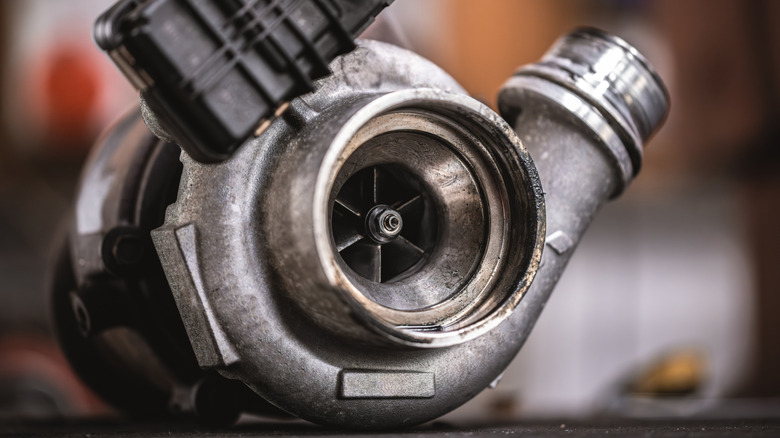
We all know that turbocharging has its fair share of pros and cons, but that hasn't stopped the car community from embracing the idea and figuring out creative ways to improve the system. Let's say your stock turbo setup feels lackluster, and you're now thinking of upgrading to a bigger unit. Aside from potential packaging concerns, a bigger turbocharger will usually mean more turbo lag. But what if you could reap some of the benefits of an upgraded turbo without any of the compatibility issues? Enter hybrid turbos.
In modern lingo, a hybrid turbocharger is one that uses the original manufacturer (OEM) snail housing but with upgraded internals, often bigger turbine or compressor wheels, redesigned bearings, and appropriate re-profiling to accommodate those changes. Originally, however, it was simply about improving performance by swapping parts from different configurations into the same turbocharger. Depending on the various stages, you may see everything from lightly modified systems to heavily reworked turbo setups, each offering its own level of performance — all while maintaining the original fit intended by the manufacturer.
It's worth pointing out that, sometimes, the term hybrid turbo is used to describe the concept of electric turbos, which is an entirely different thing. In our context, hybrid turbos have no form of electrical assistance and are typically an aftermarket solution, which also means that the idea of hybrid turbos has nothing to do with hybrid powertrains. Electric or e-turbos, on the other hand, are increasingly being used in certain hybrid cars like the latest crop of Porsche 911 Turbo S and GTS models.
The pros and cons of hybrid turbos
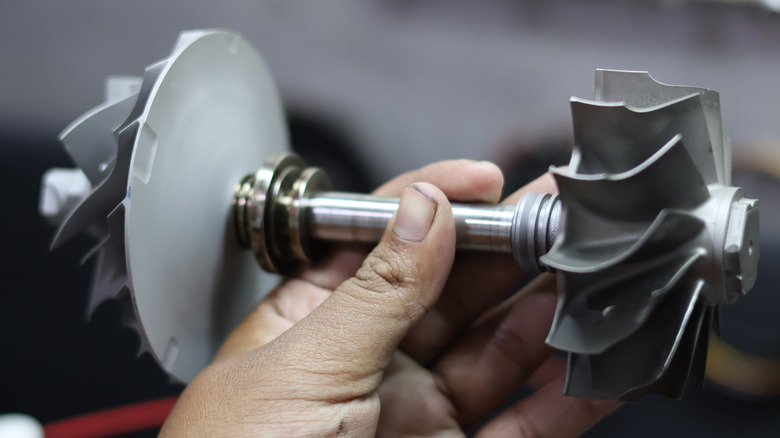
Hybrid turbos are not without their flaws. For starters, this is not a cheap exercise, which shouldn't be a surprise since you're reprofiling your turbo's internals by either shipping it to these specialist shops or buying a new hybrid turbo outright. That said, hybrid turbos tend to be a less expensive alternative to a full turbo upgrade, owing to the lack of additional plumbing, labor, and extra parts.
As you may know by now, hybrid turbochargers can unlock better airflow with the potential for developing more boost pressure. Naturally, this means more power. The sort of performance gains or the driving characteristics you get largely depend on the design of the turbine and compressor. However, you're unlikely to get the most out of your turbo upgrade without an Engine Control Unit (ECU) remap, as the additional airflow will have to be paired with more fuel for the upgrade to make sense, and this often requires reprogramming the car's ECU.
There is, however, a practical limit to boost pressure. Keep that in mind, especially if the engine is a bit worn down, as the internals may not reliably let you enjoy the additional power. Plus, to make the most out of your build, you may also need to invest in a free-flow exhaust for reduced backpressure and an upgraded induction system to let the engine breathe better, all of which will push the costs even further. At the end of the day, the decision to run hybrid turbos or not depends on your power goals, budget, and how important it is to keep things as OEM as possible.