

The Pros And Cons Of Turbocharging Vs. Supercharging
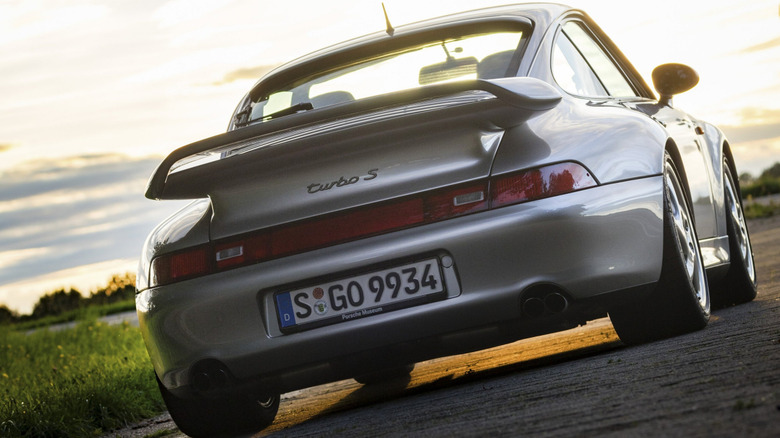
Who doesn't like naturally aspirated engines? Their surgical throttle response, linear power delivery, and outstanding sound will always resonate with enthusiasts. But what if your goal is to extract every bit of power? Forced induction simply has no equal. Heck, people are pushing Supra 3.0-liter 2JZs to 3,000 horsepower — a figure that is virtually unattainable in a naturally aspirated engine. So, unsurprisingly, those that want more speed prefer forced induction.
There is another divide in the forced induction community — the turbocharger versus supercharger debate, which has been brewing for over a century. Now, both camps have valid arguments, and both technologies have their merits. Ultimately, it's about what you prefer as a driver. However, turbochargers dominate the new car market. Apart from select sports cars, most new "boosted' vehicles are equipped with turbocharged engines. This trend is set to continue, with turbos on track to overtake naturally aspirated engines within the decade.
So let's have a closer look at the pros and cons of superchargers and turbochargers, along with electric turbochargers, which aim to solve many of the limitations of both systems.
The parallel evolution of forced induction
Gottlieb Daimler patented his grandfather clock engine in collaboration with Wilhelm Maybach in 1885. The engine was a single-cylinder design, aided by a pumping chamber, which forced air inside the combustion chamber to boost power. In other words, forced induction is almost as old as the internal combustion engine itself.
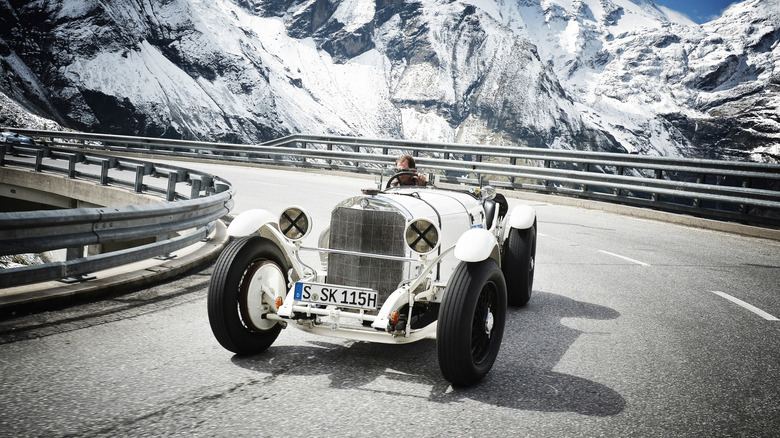
Still, it wasn't until 1902 that a true supercharger was used, and by none other than Louis Renault. The Renault co-founder's supercharger was centrifugal, and directly powered by the engine. Meanwhile, roots-style superchargers were already used in industrial applications, and quickly found their place in the automotive industry. In fact, most 1920s performance cars had roots-type superchargers for higher power outputs. Notably, the 1928 Mercedes-Benz SSK packed a 7.1-liter supercharged inline-6 good for 200 hp!
Patented in 1905 by Swiss engineer Alfred Büchi, the turbocharger boosted the power output in a slightly different way. Instead of using the crankshaft's rotation, Büchi's idea utilized the engine's exhaust gases with a turbine attached to the exhaust manifold. That turbine was connected by a shaft to the turbo compressor, which compressed the intake air to boost efficiency.
However, Büchi's turbocharger was mainly intended for diesel engines. It was first used in the two-stroke diesel VT402 locomotive and then in marine applications. It took until 1962 for the turbocharger to be implemented in a production car. The Oldsmobile Jetfire became the first, with the Chevrolet Corvair Monza Spyder following shortly after.
Turbochargers offer superior thermal efficiency
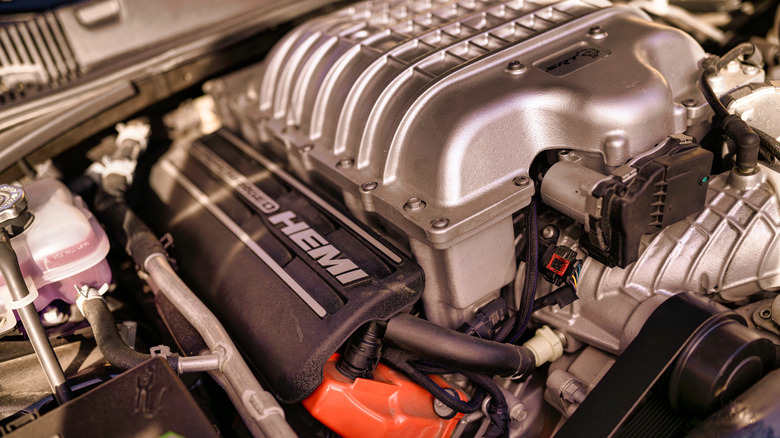
Yes, superchargers are less efficient at making power than turbochargers. But why? Well, with superchargers, you are paying the "crankshaft tax." The supercharger is connected directly to the crankshaft, creating mechanical drag. It draws power from the engine, so the net gain it produces isn't free. The supercharger does that even when you don't need power, like at idling.
Automakers have tried to circumvent this with various engineering solutions. Modern superchargers have bypass valves, which prevent pressure buildup and let them spin more freely. Mercedes-Benz has also used electromagnetic clutches, which engaged/disengaged the supercharger depending on load. Nevertheless, once engaged, the supercharger still creates parasitic losses.
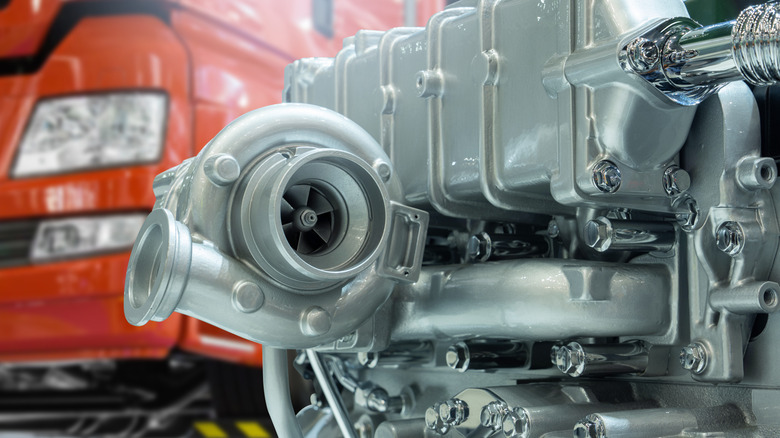
Turbochargers, on the other hand, utilize the thermal and kinetic energy of exhaust gases. Some would call this "free energy" because it captures what would otherwise disappear out the tailpipe as heat or sound — that's the main reason naturally aspirated engines sound better than turbocharged ones. This makes turbochargers more efficient than superchargers — they require less fuel for the same amount of power. Accordingly, modern "downsized engines" often use turbochargers to achieve better thermal efficiency, while delivering more power and torque.
Don't let the idea of "free energy" mislead you into thinking that turbochargers are 100% efficient, though. The exhaust pipes and exhaust turbine still create losses and backpressure, which reduces engine power. That's why tuners sometimes limit the losses by installing large-diameter catless donwpipes.
Lag vs. linear power delivery
If efficiency is a top priority in engine design, why do automakers still use superchargers? It's because of the dreaded turbo lag. See, because they are connected directly to the engine, superchargers create power immediately, without any delay.
Doing that with turbochargers is a bit trickier. Turbochargers do indeed spin whenever the engine is on, even when idling. However, they don't produce boost at lower rpm — you need to spool them up. For that to happen, you need to ramp up the revolutions of the internal combustion engine. So, you press the pedal to the metal, and nothing happens — it feels almost as if the engine stalled. That's because the exhaust gases need time to accelerate the turbocharger's blades to higher rpm. Because these blades have mass and inertia, that doesn't happen instantaneously. On the intake side, the compressor also ramps up the pressure slowly. Once the turbocharger arrives on boost, though, you'll feel an immediate surge of power, almost like you were kicked in the back.
Although it's present even in modern turbocharged engines, turbo lag is becoming less of an issue. Some automakers are using variable geometry turbochargers. These have variable blade angles, which are positioned more aggressively at lower rpm to allow quicker ramp up in revolutions. Meanwhile, twin-scroll turbochargers have two separate gas inlets, with each controlling half of the engine's cylinders to spool up faster. Sequential and parallel twin-turbo setups are also used to reduce turbo lag.
Turbochargers need more cooling
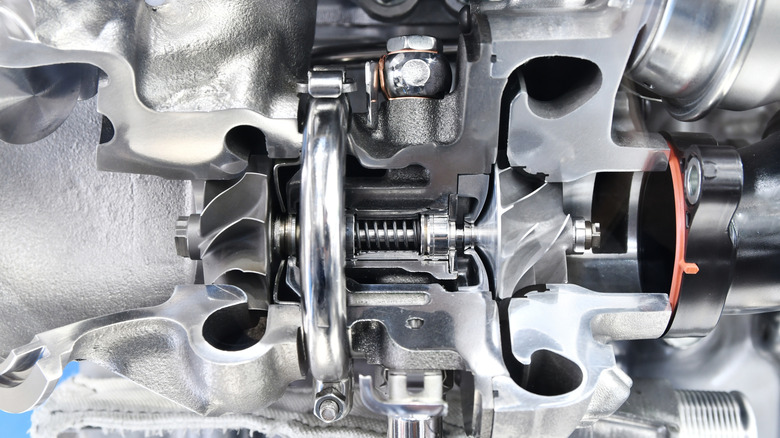
The gases that propel the turbocharger don't just carry mass and momentum — they are also very hot. Hardly surprising, as they are essentially the waste produced by the combustion process. And it can get really hot in the combustion chamber, too, with temperatures reaching up to 3,600 degrees Fahrenheit (2,000 degrees Celsius).
The heat stresses the turbine components and could lead to material fatigue, while also degrading the oil. Crucially, it can also increase the temperature of other engine components. This is called heat soak and it can negatively affect performance by raising intake temperature or reducing the intercooler's efficiency. Higher intake temperature also increases the risk of engine knocking, which reduces power and can even damage the engine.
For all those reasons, cooling a turbocharger usually requires more intricate solutions. Most turbochargers are cooled by the lubricating oil, but water-cooled turbochargers are becoming more common. The vast majority of modern turbocharged engines also have intercoolers, which cool the intake air to make it denser, leading to more power. Turbochargers also require special oil and are usually more sensitive to oil quality.
Now, the truth is that superchargers also suffer from heat soak, though to a lesser extent. Superchargers don't need to deal with exhaust gases, but they still compress air, which increases its temperature. Like in turbocharged solutions, this hurts performance and efficiency, so supercharged engines also have intercoolers.
Superchargers are more expensive
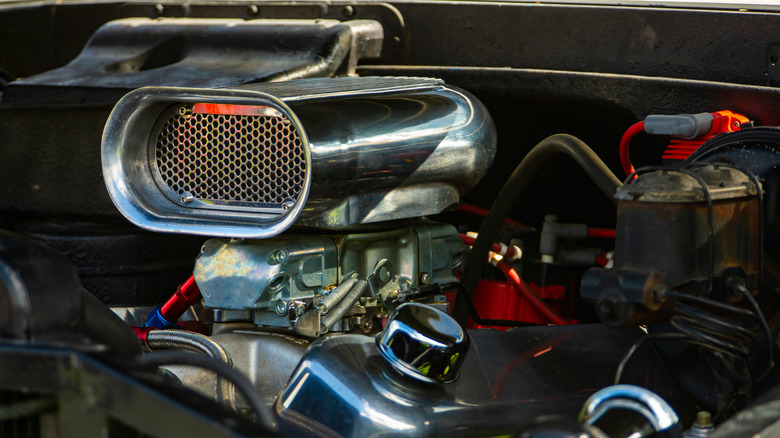
Turbochargers are used on different types of vehicles, from economy hatchbacks to semi-trucks, and pretty much every diesel-powered vehicle. Superchargers, on the other hand, have become boutique performance hardware and are mainly used in a few performance-oriented vehicles, like the eye-wateringly expensive Ford Mustang GTD or the Lotus Emira V6.
Thanks to economies of scale, turbochargers are cheaper than superchargers. They also provide more horsepower per dollar and better fuel efficiency, allowing manufacturers to meet strict fuel economy standards while still delivering high output. This economy-to-power ratio is perhaps the main reason they're so popular today.
As for long-term costs, superchargers put additional load on the crankshaft, particularly the bearings, because they are directly connected to it via a belt. Because they increase the cylinder pressure, superchargers also put additional stress on the pistons, rods, and bearings. The same is true for turbochargers, but they don't put as much stress on the crankshaft. Still, don't forget about the turbocharger's heat soak issue, which can affect the reliability of other engine parts. Also, turbochargers share the engine's oil and could potentially degrade it faster.
Turbochargers require complex integration
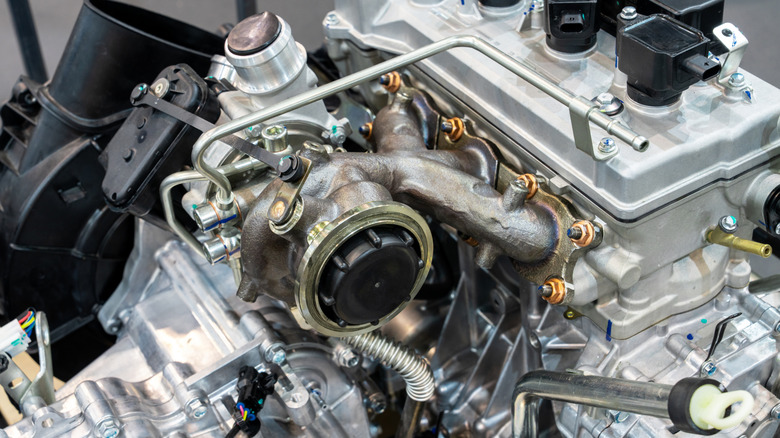
Turbochargers might be cheaper for automakers, but the opposite is true for tuners and tinkerers. See, installing a turbocharger on a naturally aspirated engine can be a nightmare. It requires intricate plumbing on the exhaust and intake end, with new manifolds made from tougher materials. In many turbo builds, this means relocating other components under the hood just so the plumbing fits.
Furthermore, you'll need to connect the turbocharger to the engine's oil and coolant lines. Again, this requires new plumbing, coolers, and pumps. Because turbochargers are a massive heat source, thermal shielding and coating is also necessary to keep other components from heat damage.
Meanwhile, superchargers usually require bolt-on installation. Yes, they still come with plumbing on the intake side, but you won't need to make any changes to the exhaust. In some cases, though, connecting the supercharger to the belt drive can be challenging, especially if there is not much space in the engine bay.
Because they don't come with as many parts, on average, supercharging kits are cheaper than turbocharging kits. And because installation is more complex, shops might charge you significantly more for installing a turbo kit.
The rise of electric supercharging and twin-charging
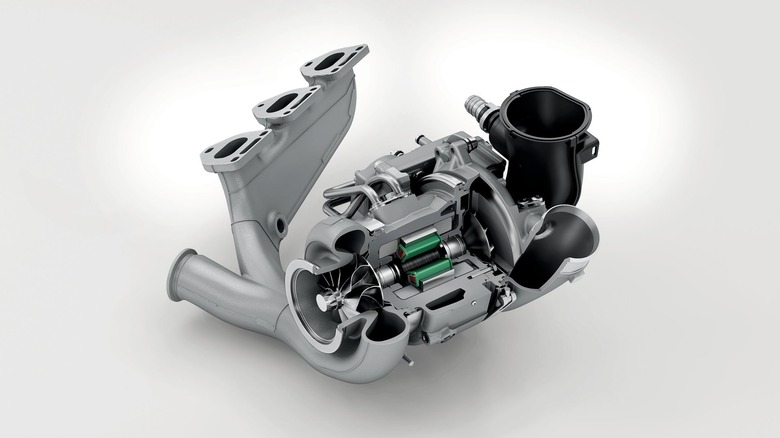
Turbochargers are laggy, and superchargers aren't very efficient. The solution? Electric superchargers. First conceived in Formula 1, the tech quickly found its footing in street-legal sports cars. Mercedes-AMG was the first to implement such a solution in the One hypercar, and Porsche followed suit with its T-Hybrid system in the latest 911 GTS and 911 Turbo S.
The idea is very straightforward. Instead of using a belt or exhaust gases, the turbocharger is initially turned using electricity. Unlike turbochargers, this system can provide immediate boost, eliminating lag. Oh, and because there are no parasitic loses, it's more efficient than a supercharger. The only downside is that electric superchargers need a high-voltage battery to function.
Still, as we learned from Jalopnik's Porsche 911 Carrera GTS T-Hybrid review, the system provides immediate response and outstanding torque, similar to a high-capacity engine. Because the system only spools up the turbocharger, with the exhaust gases taking over at higher rpm, it can also put power back into the battery. This makes it more efficient than a turbocharger, as the energy that would've otherwise been wasted is captured.
Audi took a slightly different approach with its 4.0-liter twin-turbo TDI diesel engine launched in the 2016 Audi SQ7 TDI. That engine uses sequential turbocharging, with one smaller for low rpm and a larger one for high rpm. For instantaneous torque off the line, there is an additional electric supercharger. This twin-charging solution is more complex and hasn't been used in the latest electric-turbo systems. It extracted an astonishing 435 hp and 663 lb-ft of torque from the 4.0-liter diesel.