

Here's How Hybrid Cars Charge While Driving
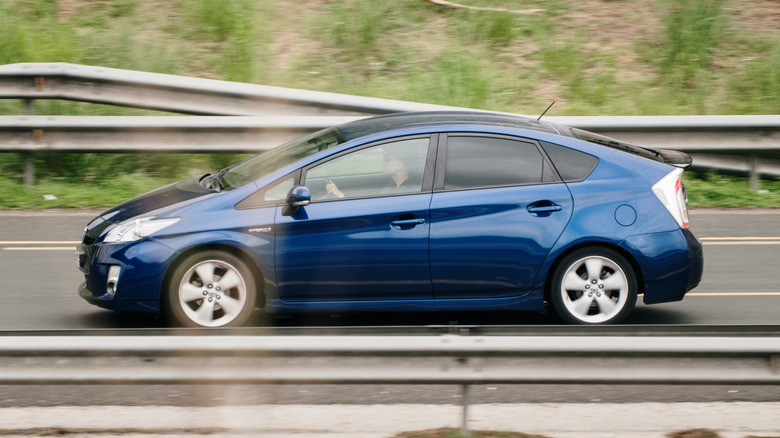
Before we get into the hybrid charging jamboree, let's first clear some misconceptions on hybrid cars, how they work, and what sets them apart from your internal combustion engine cars. Hybrid cars also use an internal combustion engine (ICE), but it's usually a smaller, more efficient mill. Aside from that, hybrid systems feature two other main components: an electric motor and a battery pack.
The goal of a hybrid car is to keep the engine in its sweet spot -– a narrow RPM range where it runs most efficiently. When you need more power than the "sweet spot" provides, the electric motor kicks in, filling in the performance gap. When the combustion engine produces more power than is needed to move the car, such as when you are coasting or slowing down, the hybrid system stores that surplus energy in the battery pack — a phenomenon we know as charging.
The most basic way a hybrid system charges its batteries is by regenerative braking. When you lift off the throttle or hit the brakes, the system reverses the electric motor's polarity. Instead of consuming electricity to turn the wheels, the motor becomes a generator, using the momentum of your car's wheels to generate electricity. This creates magnetic resistance, which slows down the car, while the generated current is sent back and stored in the battery.
How mild hybrids work
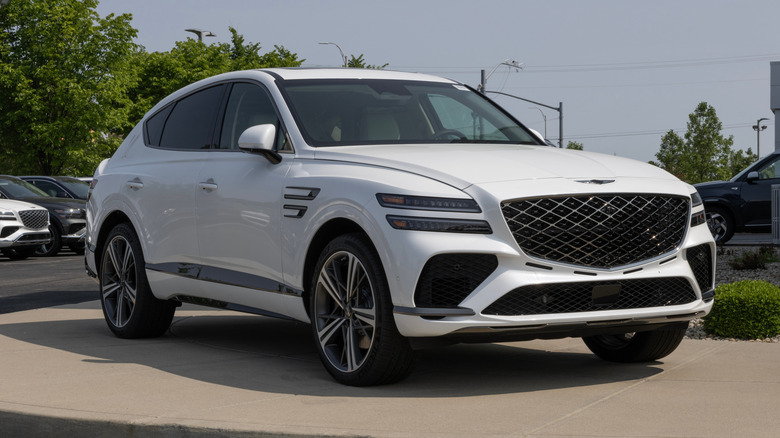
Mild hybrids are the entry-level tier of hybrid vehicles and differ from your full and plug-in hybrid cars. These cars usually rely on a 48-volt hybrid system, which includes a separate battery and an integrated starter generator (ISG) instead of the traditional starter motor and alternator. While this system is too small to power the car on its own, it still works in other ways to improve your car's efficiency.
This 48-volt system charges through a process of constant scavenging. The ISG can be connected directly to the engine or via a belt pulley system. As you cruise, the ISG acts like a high-efficiency generator to keep a small lithium-ion battery fully charged. This stored energy is used to power systems such as electric power steering, water pumps, air conditioning compressors, turbocharger compressors, and even electric anti-sway bars, ensuring the combustion engine doesn't have to waste additional fuel instead.
In most cars, these 48-volt systems also provide a "torque fill" — an instant burst of electric power that supplements the engine's performance, such as when accelerating, ensuring that the combustion engine does not have to work harder and lose fuel efficiency. The 48-volt hybrid architecture is the middle ground between a standard 12-volt car electrical system and a high-voltage hybrid system. It allows for a much higher energy recuperation than your standard car's 12-volt system, without the weight and cost of a massive battery. No wonder the 2026 Ram 1500 brought back the Hemi V-8 with a mild hybrid system.
Parallel hybrids keep the engine under load
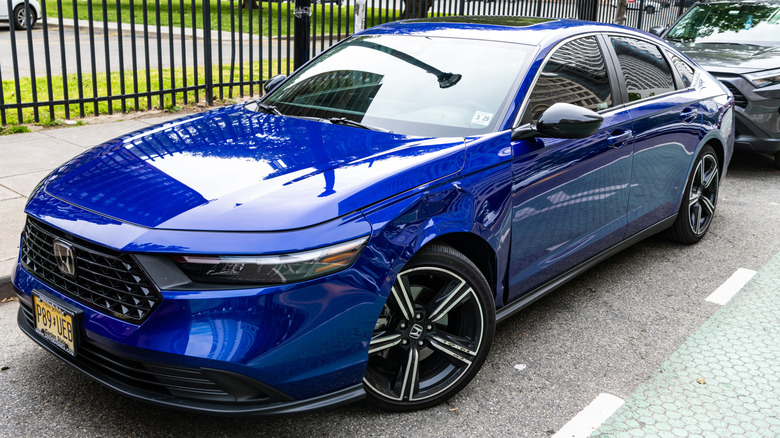
In a full parallel hybrid car like the Honda Accord or Toyota Prius, the gasoline engine and electric motor are physically joined , typically through a Power Split Device — a planetary gearset that allows the engine and/or the electric motor to drive the wheels, or have the engine seamlessly charge the batteries. The genius of the parallel system lies in its ability to load the engine to maximize the amount of efficient work it's doing. Internal combustion engines are most efficient when they are under a specific amount of load. Running an engine with a light foot results in it being underutilized, while keeping it in its optimal power band maximizes fuel economy.
A parallel hybrid can have two electric motors that also act as a generator. One motor-generator helps convert power from the engine to charge the batteries, while also offering supplementary power to the engine. The second, larger motor-generator is usually used for more demanding tasks, such as powering the car in EV-only mode. The power split device acts like a coordinator between the engine, the electric motor-generators, and the wheels. Both of these motor-generators can recharge the batteries by using brake regeneration.
When power demand is low, such as when cruising, the motor acts as an alternator, using the engine to help recharge the batteries. This architecture is particularly effective for suburban driving where speeds vary, allowing the engine to cycle on and off, while the battery supplements the energy needs of the vehicle. By using the generator as a load balancer, the system ensures the gasoline engine is rarely running in its least efficient zone.
How a series hybrid works
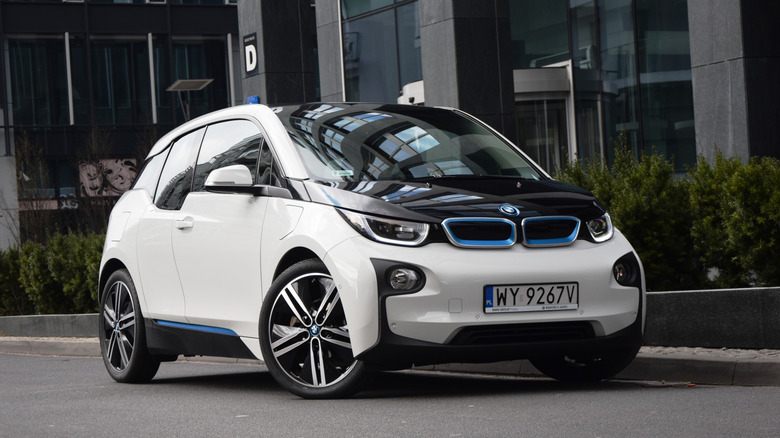
In a series hybrid car like the BMW i3 Range Extender or Nissan's e-Power cars, the combustion engine does not directly power the vehicle; it is merely there as a generator to charge the batteries. There is no mechanical linkage, like a gearbox or driveshaft, between the engine and the wheels. In this configuration, the car is 100% electric-driven. The engine's only job is to spin a high-output generator. When the battery pack's charge level drops below a fixed buffer level, the engine fires up and runs at a fixed optimized RPM to charge the batteries. It shuts off when the battery is optimally charged.
Since the engine does not have to deal with varying loads, such as climbing hills or rapid acceleration, it can run on a highly efficient Atkinson combustion cycle. Think of it as a miniaturized version of the diesel-electric locomotive. The drawback of this system is that it isn't as efficient at highway speeds, where the constant charge depletion and relatively low chances of battery regeneration increase the frequency of the engine firing up to charge the batteries. However, it is fantastic for city driving where the combustion engine does not need to worry about stop-and-go demands, which results in high fuel efficiency.
PHEV: the brute charge method
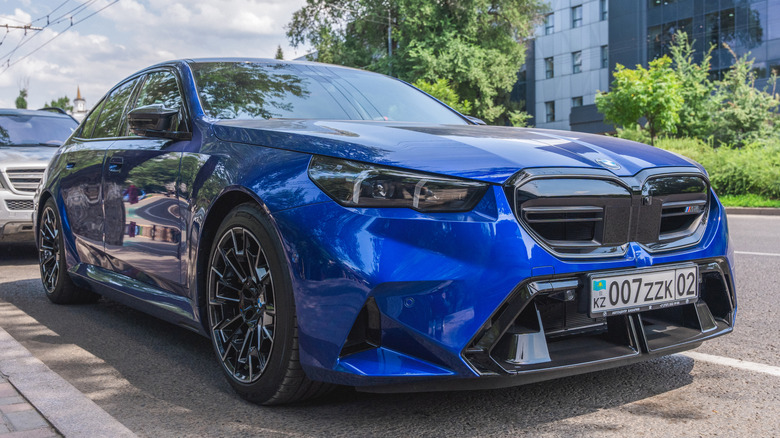
Plug-in Hybrids (PHEV) carry massive batteries that are designed to be charged from a socket. So how do you "charge" your PHEV car when you are on a 500-mile road trip and have depleted your 50 miles of all-electric range? Most modern PHEVs use the power generated by the primary combustion engine to incrementally charge the battery. This is done either automatically or when the driver presses a dedicated charge button.
This brute force method of charging divides the combustion engine's primary task from propelling the car to also recharging the batteries. Some PHEVs — such as the BMW i3 REx — use series hybrid systems as well, where the gasoline engine acts as a generator, charging the battery, which in turn runs the electric motor to drive the car.
PHEVs are also strategically important. Most European cities have zero-emission zones where internal combustion vehicles are banned or heavily taxed. With your PHEV, you can charge your car batteries using your primary gasoline engine and drive it in the emission-free city center in pure EV mode.
The inverter and PCU are the brains behind the hybrid operation
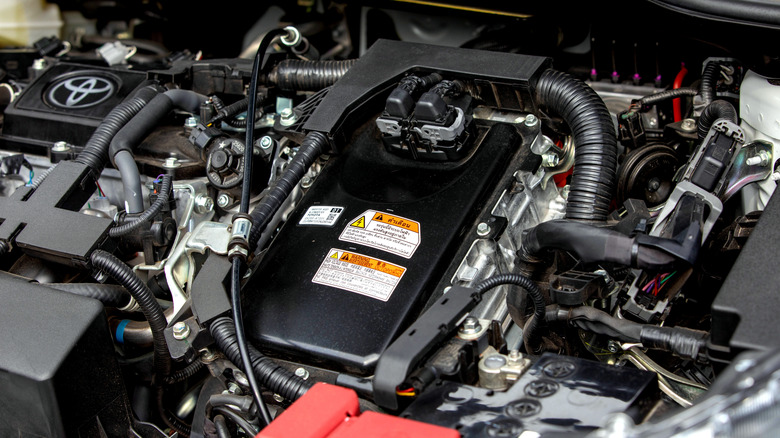
Now that we have understood the different charging methods, let's delve into the parts that make the whole operation possible. Your battery stores Direct Current (DC) electricity, but the high-output electric motors in hybrid cars almost always run on three-phase Alternating Current (AC). Every time your hybrid car switches from spending energy to recuperating it, the inverter has to flip AC to DC and manage the voltage in real time. This isn't a simple switch: it's a high-frequency operation that generates significant heat and its own dedicated cooling system.
As you drive your hybrid car, its Power Control Unit is the brain of the system which takes care of delivering power to the wheels as well as helping recover battery power through brake regeneration. If the battery is too cold, the PCU limits the charging rate from the generator to prevent damage to the battery cells. The PCU also decides how much power to pull, and from which source. It can decide to pull 10 kilowatts from the battery and 40 kilowatts from the engine, based on efficiency algorithms stored in its memory. Without this digital brain, none of the transition from ICE to electric motor would be possible.