

These Mopar Muscle Wagons Pack 426 Hemis, But How They Got Them Is Even More Interesting
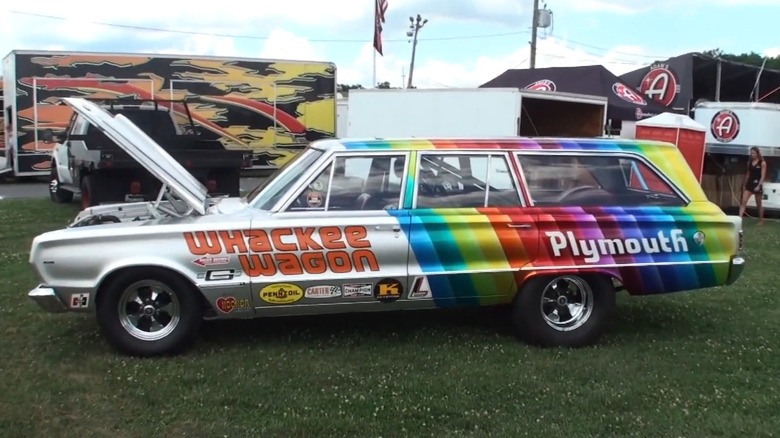
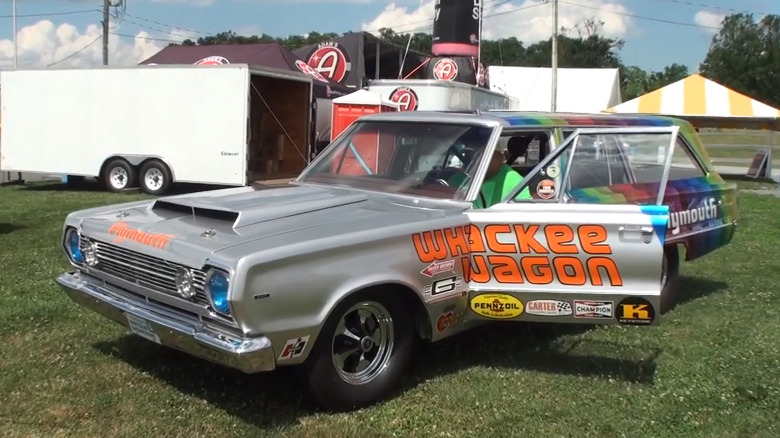
We've looked at every Dodge that packs a 426 Hemi in the past, and that list includes some real icons. While Chargers and Coronets are all well and good, though, it's some seldom-spotted Hemi-powered Belvedere wagons that are stealing the limelight here. See, a few Hemi-powered Plymouth Belvedere wagons made their way to the surface in the mid 1960s, but how they did so is actually more complicated than it first appears. While some enthusiasts point to two 1964 Belvedere wagons reportedly ordered for drag racing purposes, others instead look to the 1966 "Whackee Wagon" campaigned by racer Lee Smith later in the decade. Each of these wagons takes motivation from a 426 Hemi, but while the former were dealer-backed, the latter was entirely custom.
The dealer-backed Hemi wagons arrived courtesy of Kansas Chrysler-Plymouth dealer Harry Baker. He ordered two cars, one being the wagon under the spotlight here, specifically with drag racing in mind, with his teenage son Tim Baker lined up to pilot it. The Bakers knew only too well the important role motorsport could play as an advertising tool back then, and such a bizarre concoction of Mopar madness was surely an excellent way to stir up some attention.
On the other hand, the later '66 Belvedere wagon associated with the legendary Whackee Wagon name never actually left the factory with 426 Hemi-power installed. Instead, it was converted from far-more humble beginnings, after being delivered with a 273 V8 under the hood.
How these modified Belvederes came to be
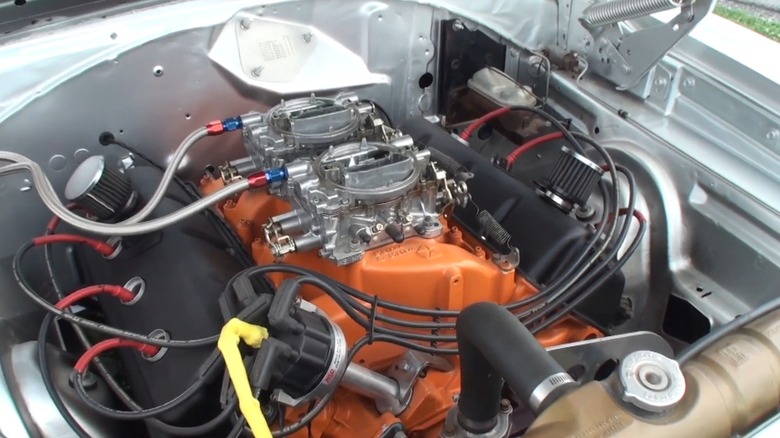
The 426 is one of the most ferocious engines to hail from the golden era of muscle car manufacturing, earning itself the nickname 'Elephant' due to its dominating size, weight, and, indeed, grunt. This 7.0-liter motor threw a full 425 horses at the rear wheels — enough to impress today, even alongside the most powerful Dodge engines of all time.
For both Harry Baker and Lee Smith, this proved irresistible. While they both went about obtaining two of the greatest muscle wagons in different ways, they shared a common goal — building strange and almost entirely unique creations that could dominate the strip and steal the audience's gaze while doing so.
In many ways, the '64 car campaigned by the Bakers is the simpler story, built with direct assistance from Chrysler as both a competitive racer and a promotional tool for the Kansas dealership. The Whackee Wagon's different path is really where things get a little more complex. Instead of building the Belvedere in cahoots with Chrysler, Lee Smith sourced a plain white 1966 Belvedere wagon fitted with a modest 273-cubic-inch V8 and managed the transformation himself.
He did receive assistance from Chrysler in terms of parts supply, and rather than just dropping the engine in and calling it a day, Smith really went to town on building his ideal racer. Weight was shifted to the rear for improved traction, the engine was blueprinted on the recommendation of Chrysler's own race engineers, and the transmission was beefed up to ensure it could withstand the intended abuse.
One still exists today
Considering only small handful were ever made, and a good 6 decades have passed, you would be forgiven for assuming these relics of muscle are now long gone. But, thankfully, you would also be completely wrong.
While enthusiast reports suggest Harry Baker's car is long gone, the aptly named Whackee Wagon is still very much alive and kicking. For sure, it's lived a wild life, after being sold new with a 273 V8 under the hood, only to have it soon ripped out and replaced with the almighty 426 — in addition to a whole host of other drag-specific parts, courtesy of direct assistance from Chrysler. After struggling with drivetrain failures in Super Stock trim, Smith eventually reworked the car into a more competitive Modified Production setup, later fitting tunnel-ram induction and dual Holley Dominator carburetors as the wagon evolved. Running in the NHRA's 'C' Modified Production class, Smith found some good success with the Belvedere.
Later on in the 1970s, Smith sold the Plymouth, it lost the 426, and the sands of time took their toll. Until 2006, that is, when Mopar enthusiast Fred Engelhart purchased and restored the car back to its Whackee Wagon condition, 426 included. It's since been sold again, but still rocks the strip like it's back in the '60s, performing 9-second runs.
According to an interview with DodgeGarage, Fred says "Lee Smith did such a great job building the car," and he finds it amazing that "it's never been hacked, butchered or cut up."