

Science Shows Breaking In New Tires Isn't Just An Urban Legend
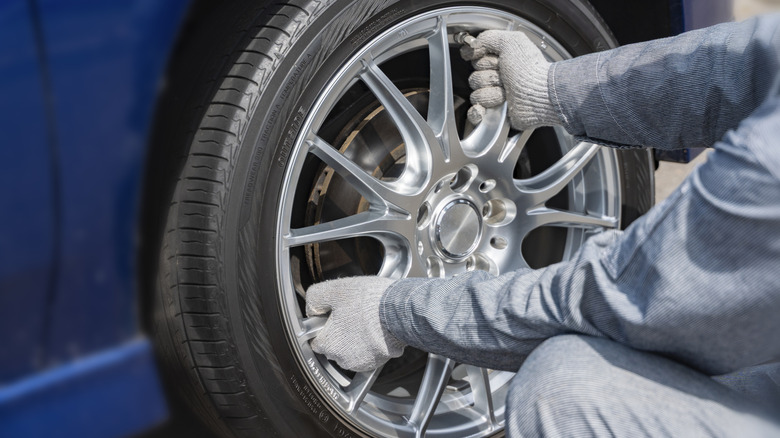
Tires and car engines are not alike, but they both have a break-in period. For instance, rebuilt vintage car engines require periodic oil changes for the first 50, 500, 1,500, and 4,000 miles during break-in. Modern cars, too, have a break-in period, with Ford prescribing that 2022 Bronco owners avoid speeding, towing, heavy braking, and ham-fisted driving for the first 1,000 miles. As it turns out, it's the same deal with new tires, as fresh rubber needs breaking in to unleash the highest levels of comfort, handling, traction, and stability.
General Tire recommends a break-in period of "a few hundred miles" for new tires. Nokian Tyres, a maker of reliable winter tires and highly-rated all-season rubber, suggests gentle driving for the first 300-500 miles. And it's not just for cars, as Michelin endorses breaking in new bicycle tires for at least the first 31 miles. It all boils down to science and the tire manufacturing process, as each tire that leaves the factory mold needs to shed a few millimeters of tread to be truly ready for the road or track.
Tire manufacturers apply lubricants, antioxidants, and parting agents to molds when curing new tires. When the tires are cooked and ready to go, the anti-stick chemicals are literally baked into each new tire, affecting traction and grip until the lubricants wear away. And the easiest way to get rid of them is to just drive around for a while. This breaks down those agents and disperses them, eventually allowing the tires to work like normal — but you'll need to take it easy before putting the pedal to the metal.
Breaking in new tires is easy peasy
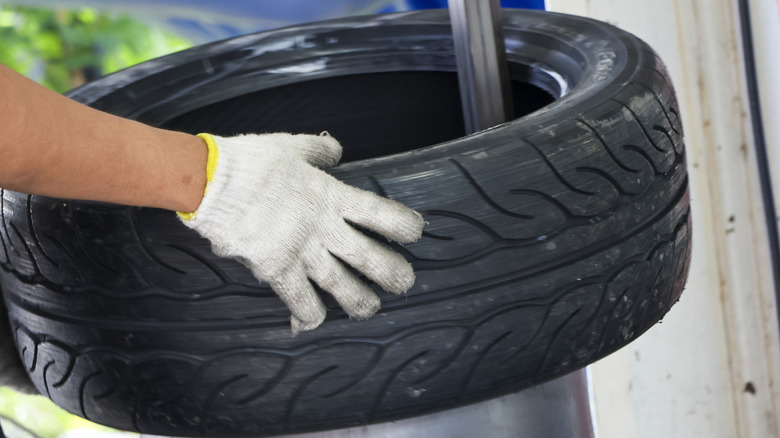
The procedures for breaking in new tires are remarkably similar to those of a new or rebuilt engine (minus the oil changes, of course). Since new tires have residual coatings that could affect all-weather traction, it's best to drive gently, avoid jackrabbit starts, and abstain from aggressive braking. With that in mind, driving below the speed limit is preferable during the break-in period, and it's better to avoid tailgating or following too closely to prevent accidents.
Meanwhile, nothing could help new tires more during the break-in period than to maintain the correct air pressure. New tires that are under- or overinflated could prematurely wear unevenly and potentially overheat, which could drastically shorten their service life. Check the air pressure at least once a week, especially during the first 500 miles after installing them. An added safety measure is to retorque the lug nuts within 30-60 miles after installing new tires, to ensure that the nuts are tight as the tires settle in their new home.
Do winter tires need breaking in?
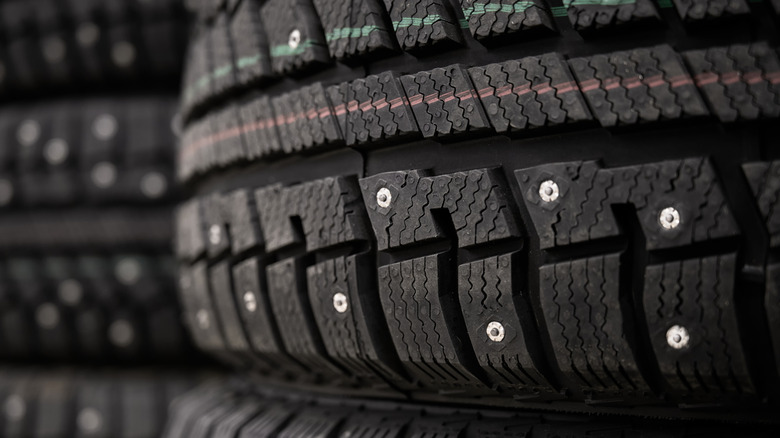
The 500-mile break-in period applies to all new tires, including all-season tires, summer tires, off-road tires, and all-weather tires. Winter tires, particularly studded winter rubber, need to be broken in like new shoes to ensure the tread rubber adapts to the studs. Since studded rubber is not for high-speed driving, breaking them in means not exceeding 31 mph for the first 62 miles. That should be enough time for the mold chemicals to wear off and for the studs to fit properly within the treads. After that, you're clear.
Tires are expensive. Doing everything to make them last ensures you get the most out of your purchase, and this includes breaking them in properly. Apart from that, ensuring the tires and wheels are balanced and rotated accordingly will extend their service life. Steering vibrations and uneven wear are just a few warning signs that your tires need balancing. Rotating the tires every other oil change, or roughly between 5,000 and 7,000 miles, increases tread life and helps maintain consistent performance.