

These Are The Best Winter And Snow Tires, Per Consumer Reports
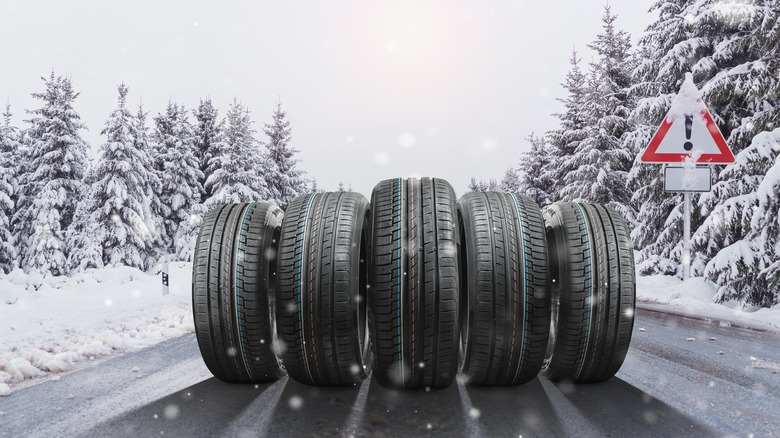
Winter's freezing temperatures often mean tougher, more stressful moments on the road. Your driving skills are put to test as tires could lose traction during acceleration and braking. But you can swap out your summer tires for winter or snow tires and brace for the harsh driving conditions. In fact, choosing the right tires is an unbreakable winter driving rule that contributes a lot to your car's performance and safety.
You'll find two common options in a store near you: winter and snow tires as well as all-season tires, each with its own set of considerations and advantages. All-season tires are best in areas that get a small amount of snow or in rainy weather, especially during fall and spring. Meanwhile, winter and snow tires are specifically designed to withstand constant temperature drops to below 45 degrees. Their specialized deep tread patterns are designed to channel away slush and snow, enhancing traction and letting the rubber compounds grip the road surface efficiently.
It can be challenging to narrow things down to the best winter or snow tires. Fortunately, Consumer Reports offers a list of tested tires engineered to tackle snow and icy road conditions.
1. Nokian Hakkapeliitta R5
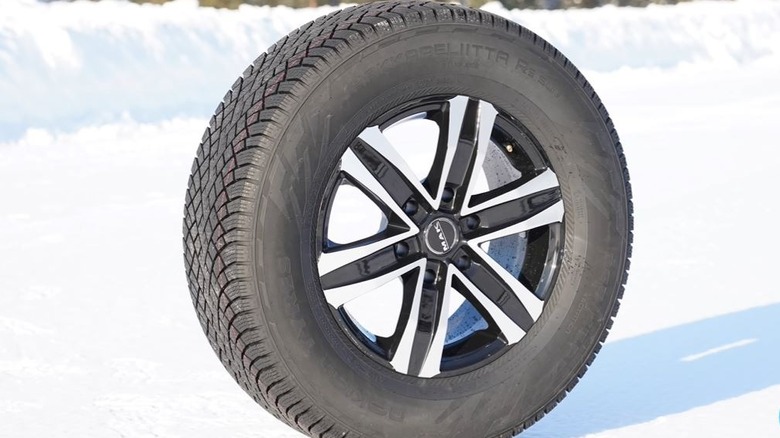
After massive success with the world's first winter tire, the Kelirengas, Nokian Tyres decided to develop the first winter tire for passenger vehicles in 1936. This new invention was the Lumi-Hakkapeliitta (Snow Hakkapeliitta), a name inspired by the Hakkapeliittas, the renowned Finnish cavalrymen of the 17th century. Among Nokian's modern iterations is the Hakkapeliitta R5 available in three categories: the standard snowproof R5 for passenger cars, the R5 SUV for sport utility and crossover vehicles, and the R5 EV for hybrid and fully electric vehicles.
The Nokian Hekkapeliita R5 tops the Consumer Reports list, which is based on owner satisfaction, expert lab tests, and the drivers' reliability ratings. Many drivers who used Hakkapeliitta R5 winter and snow tires expressed their satisfaction with both handling frozen paved roads and the price tag.
Nokian Hakkapeliitta R5 tires feature arctic grip crystals and a double block grip design. The arctic microscopic crystals mixed with treads work like built-in tire studs, Nokian says, delivering tough grip edges and a grip reserve as the tire wears down. And while noise can be a nuisance to driving comfort, Hakkapeliitta R5 adds a silent-touch tread design meant to distribute noise peaks evenly to achieve a quiet interior, and add driving comfort and smooth rolling on icy roads.
2. Continental VikingContact 7
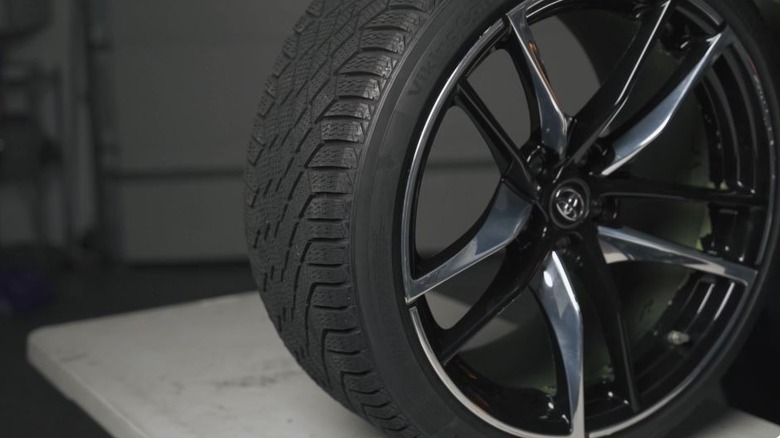
Continental VikingContact 7 winter tires use German technology that combines a Nordic compound combining canola oil (rapeseed) with active-grip silica. While the silica enhances the tires grip on wet and icy surfaces, the canola oil ensures the rubber stays soft and responsive in freezing temperatures. These materials give the tire the flexibility needed for traction and stability in extreme cold. According to Consumer Reports, the Continental VikingContact 7 balances solid snow grip with confident braking on icy surfaces. This performance makes it effective on typical winter roads where drivers encounter both snow-packed and icy surfaces.
Also, a three-dimensional tread pattern on VikingContact 7 tires keeps the tread flexible in extreme low temperatures while channeling slush and water away from the tire's center. Continental took a step further by creating interlocked block bridges that ensure precise steering response and stability. That design translates to steadier cornering and better control when winter roads start to get unpredictable.
Whether you are driving a sedan, SUV, or minivan, the VikingContact 7 comes in a wide range of rim sizes, from 15- to 22-inch tires. These tires were designed with moderate rolling resistance so it won't significantly affect fuel efficiency in cold conditions. Their structures also reduce road noise for a more comfortable ride through the winter months.
3. Michelin X Ice Snow
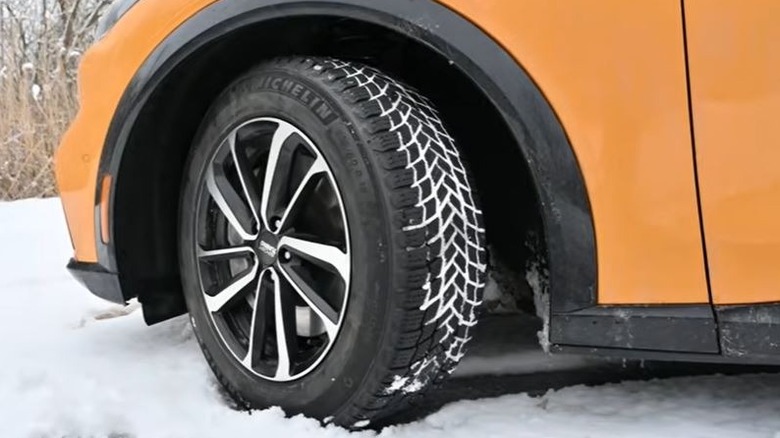
The Michelin X-Ice Snow is a studless winter tire built for drivers who demand safety and reliable traction in the face of long, icy seasons. It's also worth noting that Consumer Reports says the tires deliver very low rolling resistance that improves fuel consumption. This means the tire meets less friction as it rolls, so the engine doesn't have to work as hard to keep the vehicle moving. And with less energy needed to overcome that resistance, fuel consumption drops.
Additionally, Michelin designed the X-Ice Snow with a next-generation winter compound that keeps the rubber soft in the cold. In turn the tire stays flexible enough to grip packed snow and polished ice. The silica-based compound also uses microscopic polymers (small grip-enhancing structures built into the rubber) to create better surface contact, for smoother control when the temperature drops.
With deep interlocking 3D full-depth sipes, it channels slush and water away from the tire's surface, to prevent sliding and maintain traction on ice. Tire sipes are tiny zigzag cuts that run through the entire tread and open slightly to create biting edges that claw onto snow from multiple angles. They keep the tread blocks stable during brakes and turns.
Finally, Tyres Review notes Michelin designed this tire for drivers who value comfort with a soft hum at highway speeds. Unlike most tires in its category, its treads cut down on the pattern noises, thus reducing the growl sound common with heavy snow treads. The tire's flexible build cushions vehicles from potholes or frost heaves for a more relaxed drive. Such a feature makes it a go-to when buying a winter tire — as you should for daily commuting and long trips in the severe snowy weather.