

These States Build The Most Vehicles

We're not sure what comes to mind when you think of American vehicle manufacturing, but the days of it being as simple as the Big Three cranking out steel from an epicenter in Detroit are long gone. Jalopnik's list of the most American-made cars you can buy includes a whole lot of Japanese carmakers and exactly zero Fords, showing that while some quintessentially American vehicles are screwed together in another country, plenty of so-called foreign cars are made right here in the States.
So, maybe when you look at a Mercedes-Benz GLE, you aren't picturing the assembly line full of Alabama factory workers in Tuscaloosa that built it, and you'd be forgiven for not realizing your Chrysler Pacifica came from a bunch of toque-wearing Canadians in Ontario. All that said, American vehicle manufacturing is still very much a thing, even if it doesn't look exactly like it used to. While Michigan still leads the pack, it's no longer the entire center of the American automotive universe when it comes to manufacturing. So, we'll start in the Midwest and move outward, because the conversation absolutely doesn't end there, with serious vehicle production having taken root in a handful of significant regions across the country.
Keep in mind that this article uses publicly available vehicle-assembly output when manufacturers or state industry sources publish it. Where exact current statewide output is not publicly disclosed, we're using available plant capacity figures and other general indicators of volume and output. We're not trying to declare a definitive ranking or pin down the exact number of vehicles built in each state today, but you'll get the idea.
Michigan
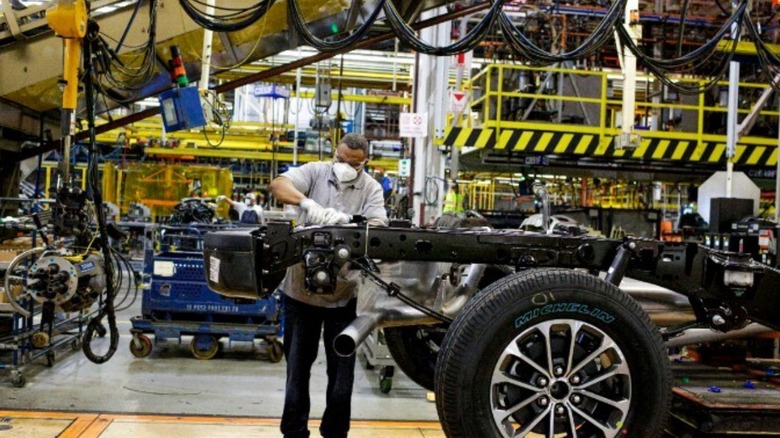
When you hear old-timers wax poetic about Detroit as the epicenter of carmaking in the U.S., you may think that Michigan's share of American auto manufacturing was approximately "all of it" and that this reflected some vaguely post-war boom in the industry. Really, though, Michigan's automotive manufacturing peaked when 35% of all light vehicles made in the U.S. came from the state, and the year was 1982. Of course, it's worth noting that, by non-romanticized standards, it's wildly significant to build over a third of just about anything in what is essentially one spot, let alone cars. And while the years that followed included the beginning of imports as proper competition in the marketplace, Michigan continues to hold its own as the top state for automotive manufacturing in the country with 19% of all U.S. auto production, anchored by Ford, General Motors, and Stellantis.
If that dominance looks different today, it's because Michigan's production isn't just about sheer volume anymore — it's about what's being built and how. Ford's Dearborn Truck Plant still turns out F-150s, and General Motors builds heavy-duty Chevrolet Silverado and GMC Sierra pickups in Flint. But meanwhile, Factory ZERO in Detroit is a flagship EV assembly plant, while the Stellantis Sterling Heights Assembly Plant continues to anchor Ram 1500 production in the state. The mix of legacy truck plants, modernized assembly lines, and new EV investment means Michigan isn't just holding onto its place in the industry. It's actively reshaping what American auto manufacturing looks like in real time, even if that reshaping sometimes just means finally getting around to tearing down the largest abandoned factory in the world. (RIP Packard.)
Ohio
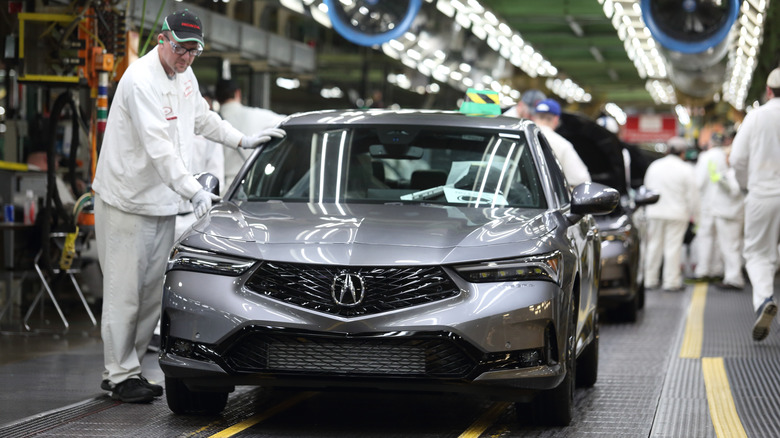
Moving from Michigan to its next-door Rust Belt neighbor Ohio, the center of gravity shifts away from the Big Three and toward the import story that started turning the tide in the 1980s. Honda's Marysville and East Liberty plants have made the state one of the most important non-Detroit hubs for vehicle production in the U.S., and Honda's footprint explains most of the story. Marysville builds the Accord, Accord Hybrid, and Acura Integra with annual production capacity of 220,000 vehicles, while East Liberty builds the CR-V, CR-V Hybrid, Acura RDX, and Acura MDX with annual production capacity of 240,000 vehicles. That makes Ohio feel less like a footnote to Michigan than a very different version of the same idea –— a Midwestern state where car making became part of the landscape, just with Honda badges instead of Detroit ones.
The future-facing part of Ohio's case is also Honda shaped. The company says its EV Hub includes the Marysville Auto Plant, East Liberty Auto Plant, and Anna Engine Plant, with more than $1 billion invested to let those Ohio operations produce gas-powered, hybrid, and battery-electric vehicles on the same lines in a flexible way . That doesn't exactly make Ohio the new Michigan — because nothing does without starting a fight about college football — but it does make the state one of the clearest examples of how American vehicle manufacturing kept spreading after the old Detroit map stopped being enough. And honestly, we don't hate it. Mid-Ohio's old-school charm is hard to beat, and it's about time the state got its due on the automotive front.
Kentucky
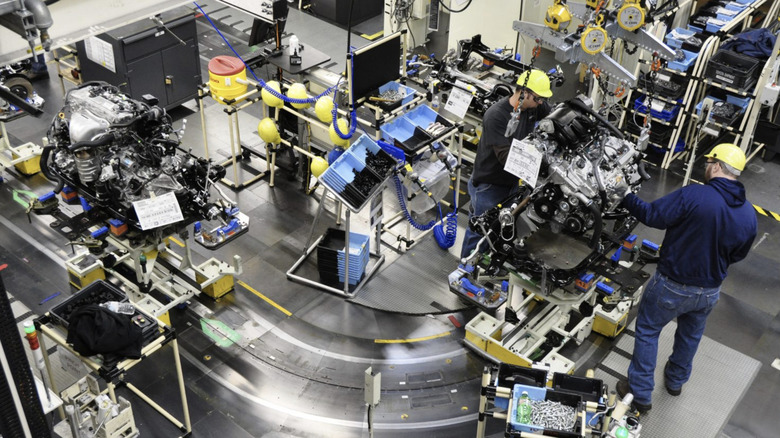
Continuing south from Ohio into Kentucky, the story stays rooted in international investment but starts to look a lot more balanced, with both Toyota and Ford anchoring one of the most productive vehicle-building states in the country. Toyota's Georgetown plant — not just a major presence in Kentucky but the largest Toyota factory in the world — produced 444,414 vehicles in 2025. Ford's Kentucky Truck Plant adds another major layer of output, building everything from the F-Series Super Duty lineup to the Expedition and Lincoln Navigator. Meanwhile, the Louisville Assembly Plant is retooling for a mid-sized electric pickup. Together, they make Kentucky feel less like an extension of the Rust Belt and more like a fully realized manufacturing hub in its own right.
That scale shows up not just in volume, but in variety. Toyota builds the Camry, Camry Hybrid, and RAV4 Hybrid in Georgetown. Ford's Kentucky operations span both passenger vehicles and heavy-duty trucks, including the Super Duty line that remains one of the most important products in the company's lineup . It's a mix that mirrors the broader American market, as sedans, crossovers, hybrids, and work trucks all come out of the same state. It's also a reminder that by the time you get this far south, the old boundaries between "domestic" and "foreign" manufacturing have pretty much stopped meaning anything at all.
Indiana
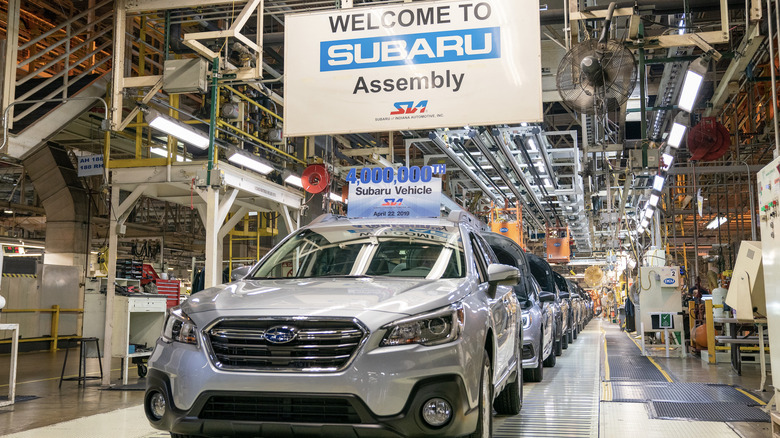
Moving north into Indiana, the pattern starts to look less like a two-company story and more like a full-on manufacturing cluster, with Toyota, Subaru, and Honda all maintaining major assembly operations across the state. Toyota's Princeton plant produced 427,844 vehicles in 2025 , while Subaru's Lafayette plant builds models like the Outback, Ascent, and Legacy, and Honda's Greensburg plant adds the Civic and CR-V to the mix . Taken together, that footprint makes Indiana one of the clearest examples of how deeply international automakers have embedded themselves in the American manufacturing landscape.
What makes Indiana stand out isn't just the number of vehicles it produces, but how varied that production is across brands and segments. Toyota's Princeton plant delivers variety from across its lineup, including the Highlander (and Grand Highlander), Lexus TX, and Sienna Hybrid. Subaru's Lafayette facility remains central to the brand's U.S. lineup , and Honda's Greensburg plant continues to turn out high-volume compact cars and crossovers. It's a mix that feels less like a single manufacturing identity and more like a crossroads, where multiple global automakers have converged to build cars for the same American market.
South Carolina
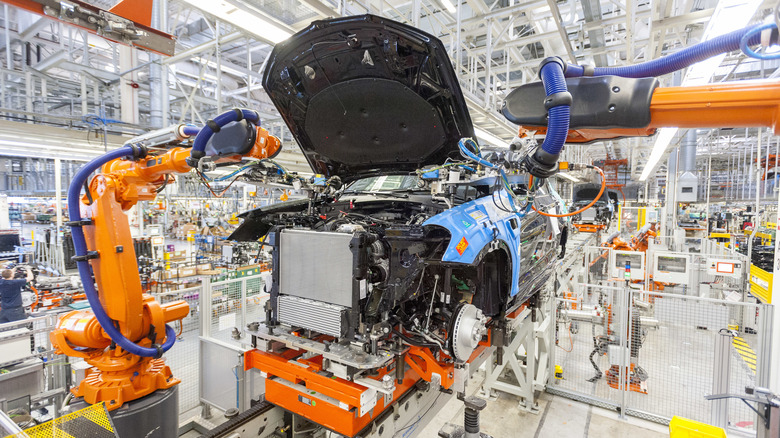
Moving further south, it's time to hop into your luxury performance German SUV (or, perhaps, Volvo EX90) and head to South Carolina, where the American auto industry starts to look less like a collection of domestic strongholds and more like a global export operation. The state's auto sector has grown so quickly that South Carolina needs a lot more more auto workers, and BMW's massive Spartanburg plant is the clearest example of why. The facility has annual production capacity of up to 450,000 vehicles and produces a range of SUVs including the X3, X5, X6, and X7, many of which are exported to markets around the world. Volvo adds another layer to the state's manufacturing footprint with its Ridgeville plant, which builds vehicles like the EX90 and reinforces South Carolina's role as a hub for international automakers.
What sets South Carolina apart isn't just the scale of its production, but where those vehicles end up. As this point, BMW is a properly gigantic automotive exporter building and shipping from the United States, meaning a significant share of what's built there doesn't stay in the country at all. That gives the state a very different role from the Midwest hubs — less about supplying the domestic market and more about building cars in America for the rest of the world. It's the kind of place that makes the idea of "American-made" feel a lot less straightforward than it used to.
Tennessee
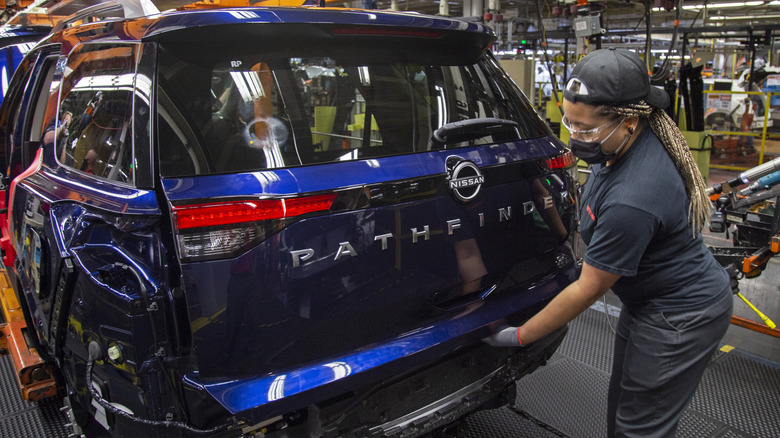
Continuing west into Tennessee, the Southern manufacturing corridor steadily starts to look more and more like a full-scale production backbone. The state's own freight plan names Nissan, Volkswagen, and General Motors as Tennessee's three major automotive manufacturers, which gives the state a cleaner three-part identity than some of its neighbors. Nissan's Smyrna plant is the old anchor here, with Nissan saying it was Tennessee's first auto assembly plant, and it currently builds the LEAF, Murano, Pathfinder, Rogue, and INFINITI QX60 there. Volkswagen's Chattanooga plant adds Atlas production to the mix, with VW saying the plant will prioritize the launch of the all-new Atlas after U.S. ID.4 assembly concludes (no doubt with regrets extended to fans of the Volkswagen ID.4, the perfect EV for technophobes).
That leaves Tennessee looking less like a one-company state and more like a place where multiple versions of American manufacturing overlap at once. Nissan gives it long-running volume, Volkswagen gives it a more recent Southern transplant story, and GM's Spring Hill facility ties the state back to an older domestic automaker while also pushing into EVs, with GM saying Cadillac Lyriq production began at Spring Hill in 2022. It's not as neatly branded as BMW in South Carolina or Toyota in Kentucky, but that's part of the point. Tennessee's role is messier and broader — a state where legacy manufacturing, international investment, and the industry's awkward electric transition are all happening at the same time.
Mississippi
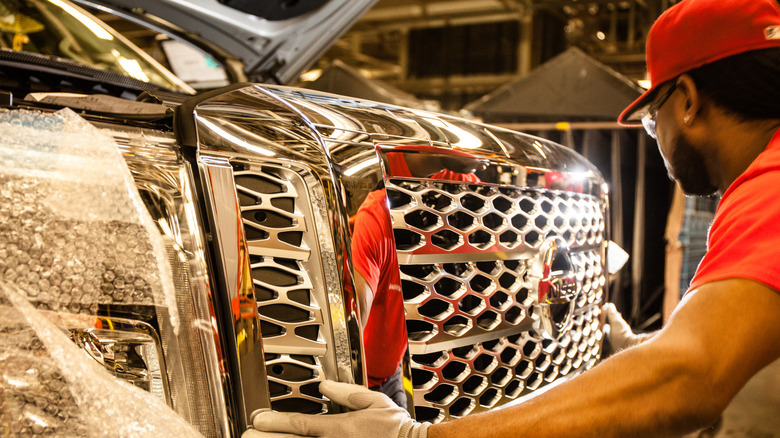
Heading further south into Mississippi, the manufacturing footprint narrows compared to some of its neighbors, but it remains firmly rooted in high-volume, high-consistency production, with Toyota and Nissan carrying most of the load. Toyota's Blue Springs plant produced 188,543 Corollas in 2025, while Nissan's Canton plant adds a second major assembly operation in the state, building the Altima and the Frontier with an eye ahead to an EV. It's not the most complex industrial mix on this list, but it's a durable one, built around models that have quietly anchored the American market for years.
That role is defined less by variety and more by consistency. Toyota has centered its Mississippi operation around the Corolla, while Nissan's Canton plant continues to handle steady production of core models for the U.S. market. There's no flash to it, and that's kind of the point. Mississippi's plants aren't chasing trends or headline-grabbing halo cars — they're building the kinds of vehicles that sell in huge numbers year after year. In a modern auto industry that increasingly swings between boom-and-bust product cycles, that kind of steady output is arguably more valuable than ever.
Alabama
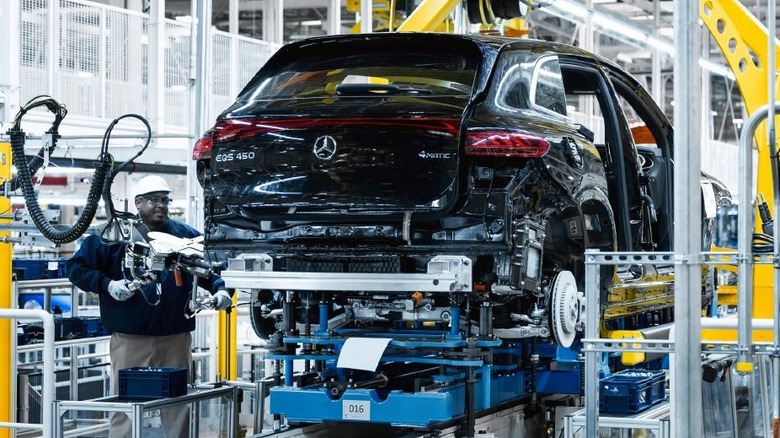
Moving east into Alabama, the Southern manufacturing story starts to scale up again, with a deeper bench of automakers and a broader mix of vehicles coming out of the state. Mercedes-Benz's Tuscaloosa plant anchors the luxury end of that spectrum, building SUVs like the GLE and GLS, while Honda's Lincoln plant adds high-volume production of models like the Odyssey, Pilot, Passport, and Ridgeline. A Toyota/Mazda joint venture in Huntsville rounds out the picture, opened to produce the Corolla Cross and the Mazda CX-50, reinforcing the state's role as a magnet for international investment.
What sets Alabama apart is how complete that manufacturing mix feels. Between Mercedes-Benz's Tuscaloosa plant building luxury SUVs, Honda's Lincoln plant producing high-volume models like the Pilot and Ridgeline, and Mazda Toyota Manufacturing's Huntsville facility assembling crossovers like the CX-50, the state spans everything from premium vehicles to mainstream crossovers and light trucks at significant scale. Honda lists an annual capacity of 340,000 vehicles at its Alabama plant, Mercedes has expanded its EV production footprint in Tuscaloosa, and Hyundai has a facility in Montgomery can produce up to 400,000 vehicles per year.
This kind of breadth makes Alabama feel less like an emerging player and more like a fully mature part of the American auto industry, even if that maturity came a lot faster than anyone would have expected a few decades ago.
Texas
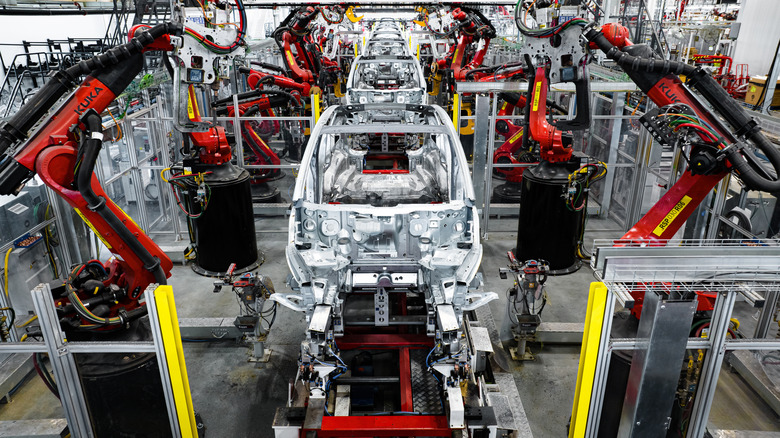
Moving further west into Texas, the manufacturing story shifts again, this time toward scale, spectacle, and a pair of plants that loom larger than almost anything else on this list. Toyota's San Antonio plant produced 197,506 vehicles in 2025, building the Sequoia HEV and Tundra for the American truck market, while Tesla's Gigafactory Texas outside Austin represents a very different kind of industrial presence, handling production for the Model Y, Cybertruck, and (allegedly) the Cybercab. Together, they make Texas feel less like a factory hub and more like a place where the present and future of the auto industry are colliding in real time — or where tech bro fraud culture collides with traditional American manufacturing. Your call.
That contrast is what defines Texas' role in the broader landscape. Toyota's operation is steady, truck-focused, and deeply tied to the existing U.S. market, while Tesla's Gigafactory is still scaling, maybe, with the company pushing/claiming to expand production capacity and output at a pace few traditional automakers attempt, as evidenced by Tesla wanting a $775 million expansion to its Texas facility. Whether that pace is sustainable is an open question, but it does make Texas one of the few places where the industry's most established playbook and its most disruptive one are operating side by side.
California
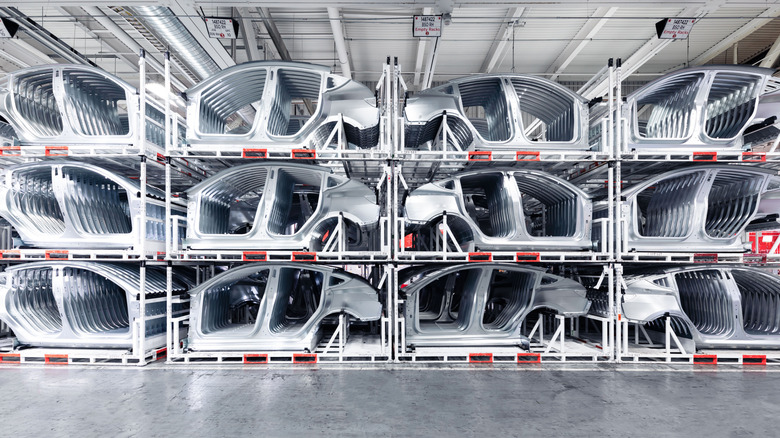
Finally, heading all the way west to California, the story simplifies dramatically, because for all intents and purposes, this is purely Tesla country. The company's Fremont factory has production for models including the Model S, Model 3, Model X, and Model Y. It's enough to give the state an outsized role in the national manufacturing conversation despite having far fewer major assembly plants than most of the other states on this list. California isn't a broad ecosystem like Michigan, Alabama, or Tennessee — it is more like one enormous exception wearing a Tesla badge.
That exception is useful, but it is also weird. Unlike the multi-manufacturer states we've been moving through, California's vehicle output is concentrated around a single automaker with a habit of making the normal rules of the car business feel optional. Still, it's a lot of manufacturing eggs to have in one basket, especially considering Tesla's long-term attention span that can sometimes seem to be pointed elsewhere, up to and including the company reportedly killing the Model S and Model X so the factory can make Optimus robots. That makes California feel less like a traditional auto state and more like an outlier — one where the future of American vehicle production is being tested in real time. And in a lot of ways, that's what the rest of this map has been pointing toward: there isn't one version of American manufacturing anymore, just a collection of places doing it differently. California just happens to be the place where that reality is hardest to ignore.