

New Cars In The USA Cost Nearly Twice As Much As They Do In China
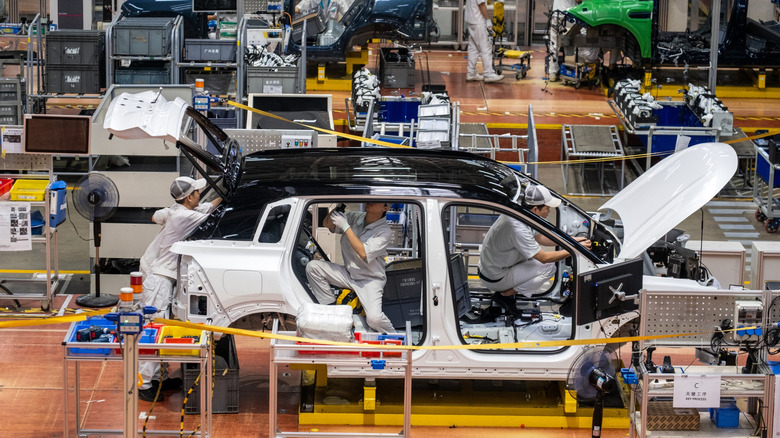
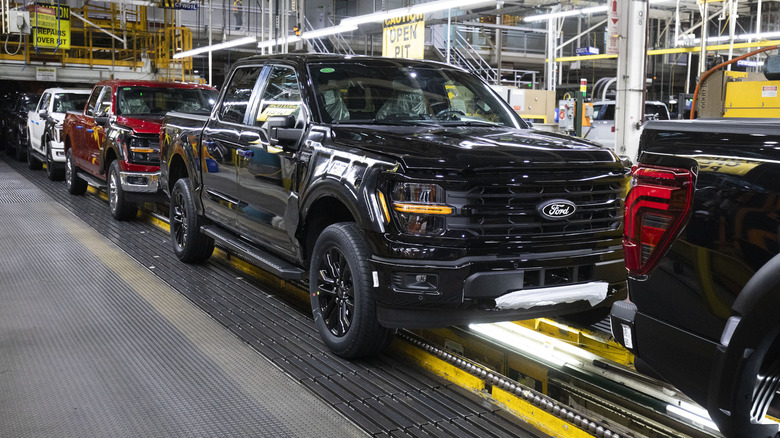
The average price of a new car sold in the U.S. currently hovers around $50,000, peaking in December of 2025 and cooling by a few percentage points since. With the destruction of the sub-$20,000 car market, tariff-induced inflation, pushes for larger and more luxurious crossovers, and the decline of middle-class American purchasing power, it seems cars will only continue to get more expensive as time goes on. The U.S. market is increasingly cooked. In China, meanwhile, average new car transaction prices are also trending upward. Earlier this year, the average increased to 180,000 CNY, which is about $26,325 in U.S. dollars.
There are only a handful of cars remaining on U.S. lots that can even be purchased for the average price of a new car in China, since cheap cars like the Mitsubishi Mirage and Nissan Versa have both reached their sunset. With hundreds more options available, and a buying populace with an appetite for smaller cars, it makes sense that the competitive end of the market is toward the bottom rather than escalating at the top. Some cars in China are available for under the equivalent of $10,000.
The Chinese market for vehicles recently experienced downward pressure on pricing, thanks to rapidly expanding production capacity and intense competition. Some 34 million cars were moved from China's new car lots in 2025 as competition drove down profit for the sake of volume. The government has since cracked down on price dumping to squeeze out market competition, and the market has since corrected back upward, jumping 10% over last year. Further, Chinese consumers have quickly evolved from looking for just a car to drive to buying a good car, pushing automakers to increase quality. Even with significant price inflation across the Chinese auto market so far in 2026, the country enjoys a competitive group of cars at the bottom of the market.
Bigger and more expensive
Chinese drivers are increasingly choosing to purchase electric vehicles with much lower operating costs and fewer failures than their gasoline-powered counterparts. Not only has China pushed for electric vehicle adoption with state-sponsored incentives, but it also leads the world in clean and inexpensive energy production, making charging cheaper as well. At residential rates, the current electricity rates in China come in at under 8 cents per kilowatt hour, while the average American pays more than double that at 17.5 cents.
Many American automakers have voiced a desire for continued protectionist action from the federal government to block the import of Chinese-built cars, or saddling them with tariffs. Without tariffs, these Chinese cars could be capable of undercutting the market and restoring options under $20,000 for the American car buying public. As the Chinese automakers continue their expansion into the Global South, driving global market share growth, the Big Three have seemingly retreated to only focus on the high-priced, high-margin U.S. market consumer. It is unclear how much longer this customer will be willing to bear the burden.
Not only is China building much better cars today than its automakers were capable of a decade ago, but they're also building cars that compete on spec with much more expensive cars for much less money. If the U.S. car market continues to increase the average price of a new car, financing continues to push for longer terms and higher rates, and more consumers are debt laden, it will cost the American economy dearly. As Canada opens its borders to Chinese imported automobiles, it's definitely time to ask why the U.S. won't. Your phone is made in China, your clothes are made in China, your computers are made in China, why not your car?