

If You Get A Dashcam For Insurance Reasons, Don't Forget They're Not Always A Plus
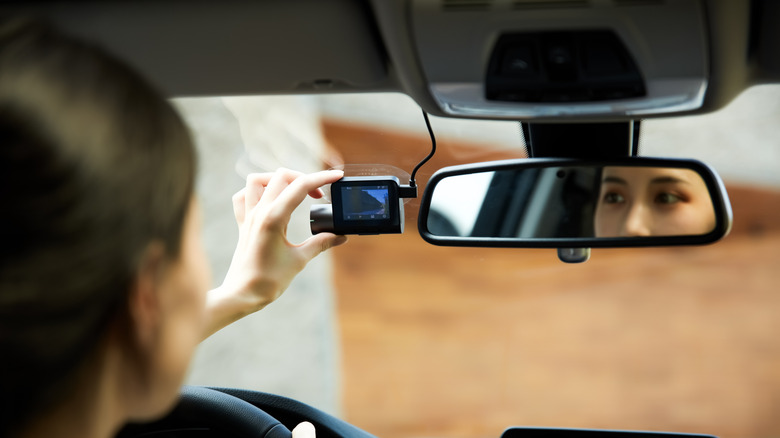
The roads are seemingly full of careless drivers these days, so it makes perfect sense that you would wish to install a dashcam. If someone pulls out in front of you or reverses into your vehicle outside of Walmart, you want to be able to capture their license plate and then demonstrate that it absolutely wasn't you who was at fault to your insurance company.
It all sounds perfectly logical, yet here we are telling you that a dashcam won't automatically solve your insurance problems. Note that we aren't saying buying a dashcam is a bad idea. It's just that they aren't the saving grace people seem to think they are when it comes to making insurance claims.
First of all, while a dashcam may indeed be used when making a claim, the footage can equally be used to point out flaws in your own driving, too. Secondly, if the dashcam you've purchased isn't the highest quality, you might find the footage to be too blurry or grainy to use, effectively rendering your purchase useless — so ensure you avoid cheap dashcams. The same is true if the camera isn't angled correctly, and it ends up missing a key part of the accident. Oh, and even if you do have one of the best dashcams on the market, there's still little chance that it will help reduce your insurance premiums.
A deeper dive into the flaws of dashcams
Looking deeper into the matter of discounts, numerous sources online — such as those that specialize in insurance services and financial services — tell us that having a dashcam installed doesn't affect your policy cost one way or another, and that no U.S. car insurance providers currently offer discounts for those who use them.
In other countries, such as the United Kingdom, insurers do typically offer discounts between 5% and 15% for having one installed. In the U.S., the only financial benefit you may receive from fitting one is indirect. In other words, if having a dashcam winds up proving you weren't liable in a claim, then yes, it may effectively end up saving you the increase in premium that could have otherwise been coming your way.
Elsewhere online — in places such as Reddit – some users have shared reasons why their insurers don't offer discounts. These include the argument that simply owning a dashcam doesn't guarantee drivers will remember to use it, install a memory card, or know how to retrieve and submit the footage to their insurer.
Also, do dashcams actually make you a better driver? It's easy to understand how such a device could distract drivers when they're trying to adjust the angle or messing with certain functions while behind the wheel. No wonder some car brands are rethinking touchscreens and bringing back physical buttons.
It's not all doom and gloom
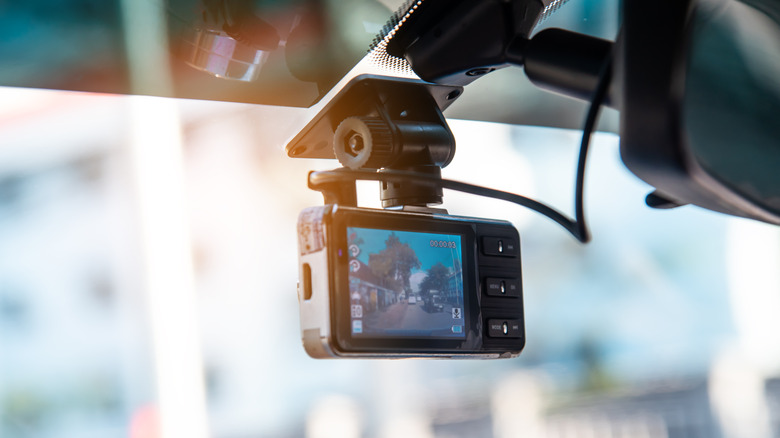
Of course, buying a dashcam is largely considered a worthwhile investment. Just avoid the temptation of buying a cheap one that won't serve any purpose, install it correctly, and remember to put that memory card in place.
With that being said, remember to manage your expectations before buying a dashcam. Don't expect a discount from your insurer, although by all means discuss it with them first to see if it is something they can offer. And be realistic with what you can expect from a dashcam, even if it's a high-quality one. It will only capture what you angle it at, so consider a rear-facing one too if you want to cover all bases in the event of an accident.
Regardless of their flaws, dashcams can certainly help you out with a claim, particularly if the other party has attempted a "crash-for-cash" scam and wants to pin the blame on you.