

Automakers Are Eating Nearly $8,000 In Incentives On Their EVs Just To Sell Them
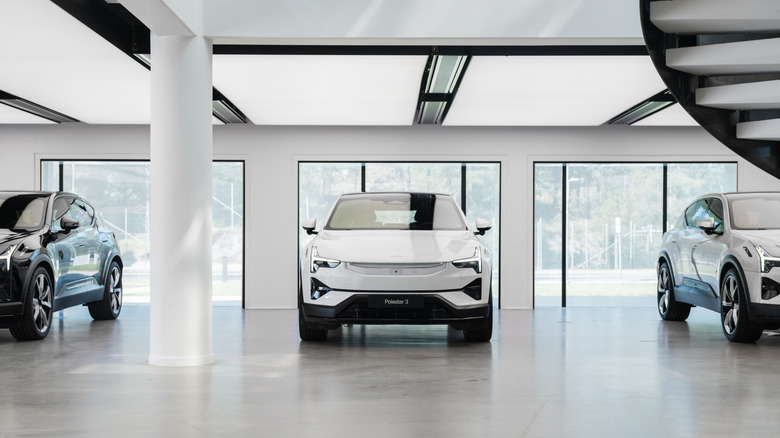
The price gap between electric vehicles and their gas-powered counterparts just hit its lowest levels ever as March's average EV transaction price dropped to just a tick over $54,500. That's good news for you, me, and whoever else is looking to get into the gas-free lifestyle — especially as fuel prices remain elevated — but this pricing progress doesn't come without significant concessions from automakers.
March marked the third straight month of decline for EV average transaction prices, as they fell 2.8% to $54,508, according to data from Cox Automotive. That brought prices just a bit closer to the ATP of internal combustion-powered vehicles, which hit $49,275 in March — up 3.5% year-over-year. That means there's only about a $5,800 difference between EVs and ICE vehicles at this point. The issue is, in order to hit these prices and get sales moving, automakers had to slap extra large incentives on their EVs. In March, the average incentive for a new EV hit 14.6% of the ATP, which works out to be nearly $8,000.
While 14.6% off on incentives is only a slight tick-up from the 14.2% EVs were getting in February, $8,000 of cash on the hood represents nearly twice the industry average. During the same period last year, when the $7,500 federal EV tax credit was still intact, the average incentive package for a new EV was 12.9% of the APT, Cox Auto says.
Industry movement
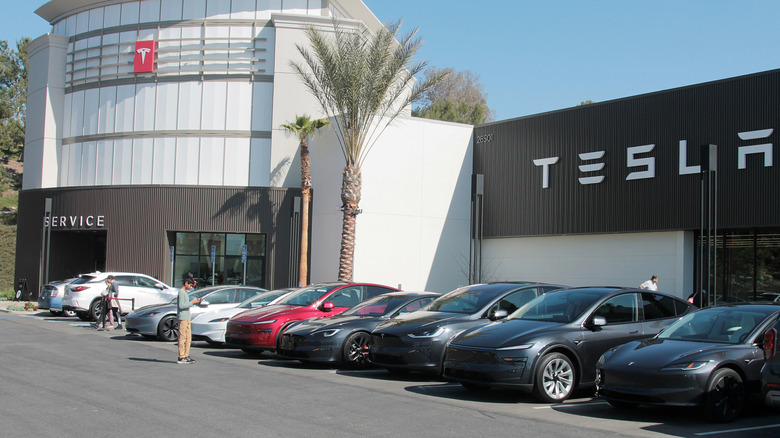
A big driver of the lower average prices of EVs was, as you may have expected, Tesla. The company has been all over the place with pricing lately, throwing all sorts of incentives on its vehicles to drum up demand. In March, its ATP was $53,421 — 2.6% lower than the same month in 2025, and 1.2% lower than it was in February. Incentives also increased to 12.3% of ATP during the month, Cox Automotive reports. Surely the sunsetting of the higher-priced Model S and Model X contributed to the lower prices, but it's not like those sold in high numbers anyway. The lower prices didn't do much to help things for the Austin, Texas-based automaker, anyway, as sales declined 8.4% year over year in March.
While Tesla has been dealing with that, the industry as a whole has been contending with stubbornly high MSRPs — which you may know as the "asking price." Sure, transaction prices are under $50,000, but average MSRPs are still north of 50 grand. March's $51,456 average MSRP marked the 12th consecutive month with an average above $50,000, and it represented a 3.9% year-over-year increase as well as a 0.1% increase from February.
Every segment has seen average transaction prices rise over the last year, according to Cox Automotive. The midsize SUV and full-size pickup truck segments saw prices rise 2.8% to $49,853 and $65,964, respectively. Compact SUVs are up 2.1% to $37,055. Subcompact SUVs were up 2.2% to $30,612. Even the humble "compact car" saw a 1.1% year-over-year increase to $27,469
Unfortunately, I don't see this trend changing anytime soon, especially as supply chains continue to be upended, the U.S. and Israel's war with Iran bleeds on, and Donald Trump's tariff costs get passed onto the consumer in greater numbers.