

How (And When) To Use A Spark Plug Thread Chaser
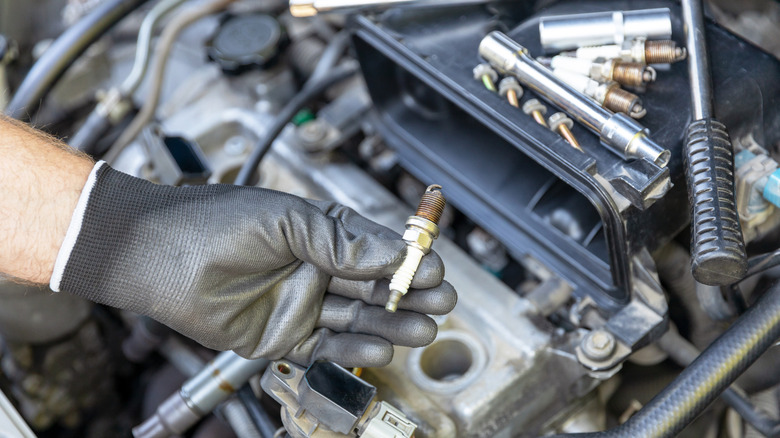
A healthy ignition system is key to a car's overall efficiency and power output. If any of the components that have a hand in lighting off the air/fuel ratio are damaged or worn out, it could mean a drop in fuel economy, poor running conditions — such as misfires — and a significant lack of power. The spark plugs are the most important ignition components, myths about them aside; they're what light off that air/fuel mixture.
But spark plugs live in harsh environments. Not only do they see massive changes in temperature, but schmutz tends to accumulate under the hood, including on the top side of the cylinder head where they live. This is due to dirt and road grime getting up in there during everyday driving. Not only that, but carbon buildup often sticks to them inside the combustion chamber. And it doesn't help that the metal they screw into is often a softer metal, like aluminum, on most modern engines.
What do all of these have in common? It's a good idea to prep the spark plug holes' threads before installing new ones. Here's how (and when) to use a spark plug thread chaser.
Remember: thread chaser, not tap and dye
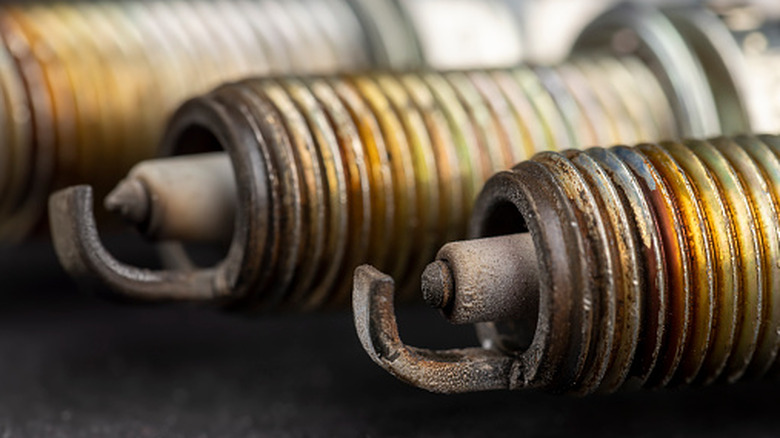
Any tiny bit of carbon, rust, or dirt can quickly turn a very simple spark plug replacement into a stressful situation. Spark plug thread chasers clean out the cylinder head's threads before you install fresh new plugs. If any form of debris gets in there, it could mess up the threads and cause the plug to not screw in properly.
Stripped threads mean the plug won't screw in as it should, which could lead to running issues or even the spark plug popping out. This would require using a tap to cut new threads, and nobody wants to deal with getting the leftover shavings out of the cylinder.
To properly use a spark plug thread chaser — because chasers are meant to simply clean and realign threads, not cut into the metal — first clean the area around the spark plug, ensuring nothing from the outside goes inside the combustion chamber. Then carefully remove the spark plug: Crack it loose with a spark plug socket wrench, long extension, and ratchet; remove the ratchet; and twist the plug out by hand. Too much pressure could mess up the threads.
Next, lubricate the chaser with grease, insert it into the spark plug hole, and ensure it will thread in straight. If it's not straight, it will damage the threads. Then, slowly run it in by hand. Once it stops, simply unscrew it. The grease is there to catch debris and prevent it from dropping into the cylinder. It's a good idea to finally follow up with cleaning the threads with a shop towel, as you don't want leftover grease affecting the plugs' torque settings.
Other methods and notes on removal
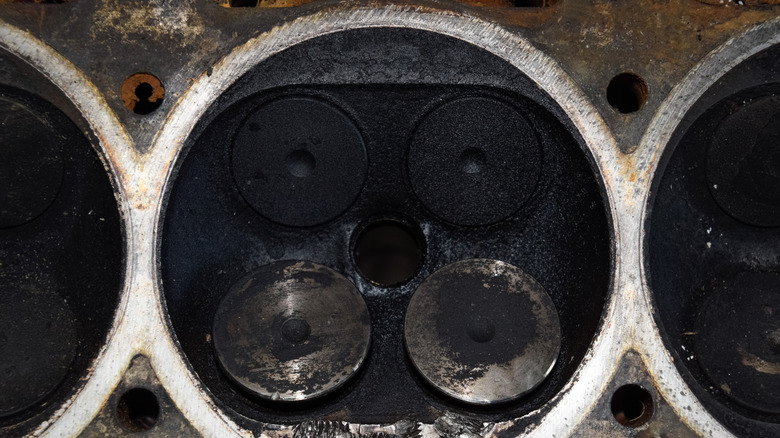
There are other ways to clean out a spark plug hole's threads. ProToolReviews says you can make your own chaser by cutting grooves into an old spark plug, 90 degrees apart, and using it in the same way. Just ensure your creation is free of any loose debris/old metal material before threading it in.
Then, there's the method used by Goss' Garage, which involves cracking the plugs loose an eighth of a turn, reinstalling the spark plug wires or coilpacks, then briefly firing up the engine and giving it a quick rev. Any carbon that's built up on the spark plug will break loose, and help ensure that carbon is blown out through the exhaust valves rather than dragged through the threads.
Then, if the plug becomes difficult to unscrew: loosen, then slightly tighten, loosen, then slightly tighten, and repeat until it's smoothly removed. Using a lot of force will risk stripping the spark plug hole's threads.
Removing and installing spark plugs can be a quick and easy DIY job. However, it's good to exercise a little prep before installation. Knowing how and when to use a spark plug chaser ensures the cylinder head's threads stay nice and healthy.