

Gross, Net, Peak, Continuous: How Engine Horsepower Turned Into Marketing Soup
The word "horsepower" has been used as a marketing tool since the Steam Age. James Watt formalized the term as a way of getting a client's attention for his new steam engine, using "horsepower" to measure — and show off — how much more work it could do, relying on the same amount of fuel, than its top rival at the time: This was especially important since Watt and his partner, Matthew Boulton, were paid based directly on that advantage.
The word played roughly the same role when the modern auto industry got into gear. What better way was there to prove the benefits of a horseless carriage than by comparing its power to that of a horse? By 1903, Winton was advertising that its cars could go like the wind thanks to their 20-horsepower motors, while 1904 ads for the Reliance Motor Car Co. touted 16 horses — "and lots to spare."
But as time went on, a problem developed. While Watt fine-tuned the idea that it took a single horse a minute to lift a weight of 33,000 pounds one foot off the ground, there wasn't a standard way to apply that formula to cars. You could measure the horsepower of the engine alone, but that wouldn't reflect how much was left over for driving after some of the horses were used to run the car's accessories. On the other hand, measuring output with the accessories attached can't give an accurate account of what's in the motor. So unless everyone measures horsepower the same way, which isn't historically the case, your marketing soup contains both apples and oranges.
Gross horsepower vs. net horsepower
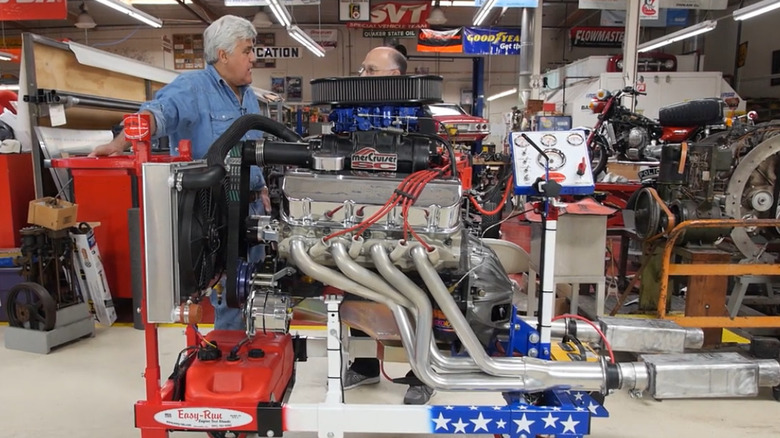
First up is our example from above: The horsepower of the engine alone, also called a bare engine, is known as gross horsepower. It's the standard for how many horses the engine can produce when all conditions are perfect, with even the ambient temperature and air pressure taken into account and corrected for. Moreover, the engine is run with optimized ignition timing and stripped of all accessories that would otherwise lead to parasitic horsepower losses. For instance, water pumps — often driven by a belt turned by the engine — are removed. Also gone are the exhaust system's usual restrictions, such as mufflers. (Remember, parasitic losses are different from the parasitic drains that can kill your car battery.)
Gross horsepower is an interesting number to know, and it can represent an impressive feat of engineering that sounds great in advertising. Additionally, it can be helpful if you're going to modify an engine and want a general idea of what the motor can do when not compromised by its factory configuration. But it means next to nothing to the typical owner, who tends to be more interested in driving's real-world aspects. Which, to be clear, you don't exactly get from net horsepower, either. Here the motor is tested with accessories onboard and using stock ignition timing/exhaust systems, yet it's still mounted on an engine stand instead of installed in the car.
Another variable pops up when you drill down into the specifics of the test methodology. The United States follows Society of Automotive Engineers (SAE) standards for both gross and net horsepower — built on the foundation of the imperial measurement system — while the rest of the world has mostly gone metric. And yes, metric and imperial horsepower are also different.
Peak vs. continuous horsepower
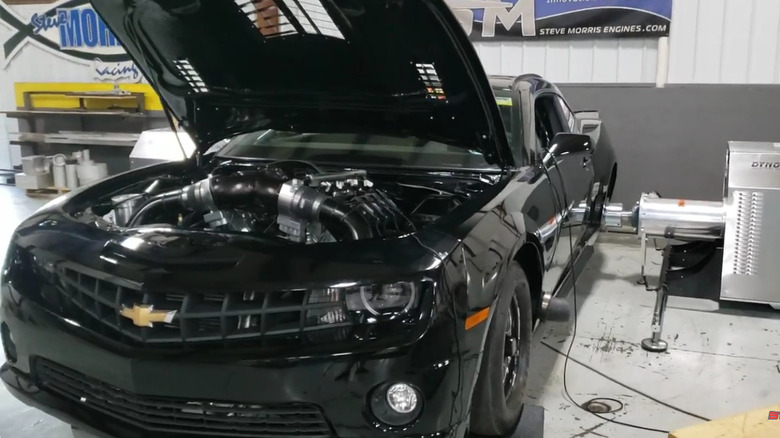
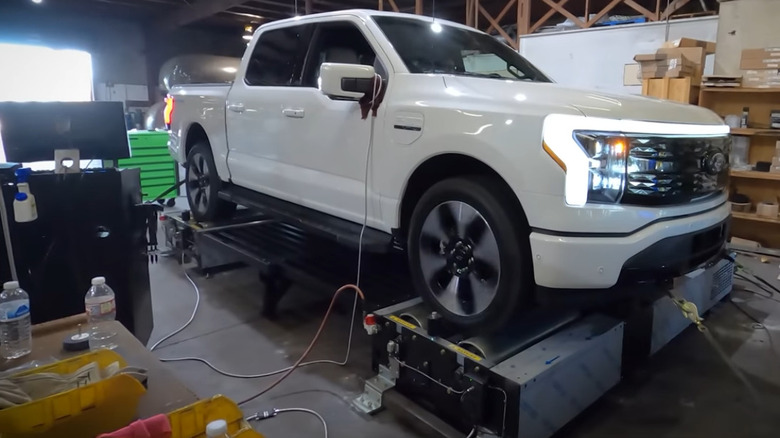
At this point, you may be wondering how SAE's gross and net horsepower ratings apply to EVs. Well, they really don't. There's an entirely separate SAE standard for calculating horsepower for electric vehicles, and it relies on chassis and wheel-hub dynamometers, not somehow connecting the dyno directly to the electric power train. This may seem like it would be comparable to a net-horsepower test, but it's not. Checking horsepower at a vehicle's wheels doesn't take into account engine power lost to moving the drivetrain components.
Perhaps more relevant here is that the SAE explicitly says the new standard is for maximum power ratings, which, again, may not matter that much to typical EV drivers. A car like the Lucid Gravity — three seconds quicker to 150 mph than a Corvette Z06 — may be publicized as having 1,070 peak horsepower, but that high point is only available for a limited period before the power train may begin to overheat. When EVs get too hot, whether because of the high temps or heavy loads, their heat-management systems can automatically reduce power to prevent damage.
This is fine if you're running off a few blisteringly quick sprints and then giving the car a rest, but if you're focused on daily driving, you shouldn't be hooked by seeing high levels of peak horsepower mentioned in an EV marketing campaign.
You don't want to overwork gas engines either, of course, but that can be harder to do. After all, they have multi-gear transmissions that can reduce the motor's workload as you reach higher speeds. Most EVs, in contrast, rely on single-speed transmissions so they can only go faster by having their motors turn faster.
True horsepower vs. manufacturer horsepower
Automakers and their marketing departments also have a long history of just outright lying about horsepower — although perhaps not the way you may think. Sure, there have no doubt been cases when car companies have been overly optimistic about their output numbers, which is why many muscle cars showcased gross horsepower, not net. But underrating engines has been a common practice as well in some situations.
A case in point was when the muscle-car pendulum seemed to have swung too far to the performance side of things. Facing pushback, automakers began to purposely underestimate how much output was on tap in some cars to help lessen both the perception that they supported dangerous driving and drivers' cost of insurance. It was similar to the gentlemen's agreement that capped motorcycle speed or the decision of Japanese automakers to limit cars to 276 horsepower for a time. A further example was General Motors' onetime internal policy of restricting passenger vehicles to no more than 1 gross horsepower per every 10 pounds of curb weight — except in the case of the Corvette, naturally. At the same time, underrating output could be good for the people doing the racing, as cars were often sorted into classes based on advertised horsepower.
A major step in straightening out the horsepower mess finally came when California mandated that, to help ease shopper confusion, beginning in 1972 any mention of horsepower in advertisement, brochures, and whatnot could only use the SAE net horsepower ratings. But then, California used to be on the cutting edge of consumer protection in a lot of ways before the Trump administration began trying to roll back those efforts.