

2026 Is Already Shaping Up To Be A Weird Year For Automakers
Good morning! It's Friday, April 3, 2026, and this is The Morning Shift, your daily roundup of the top automotive headlines from around the world, in one place. This is where you'll find the most important stories that are shaping the way Americans drive and get around.
In this morning's edition, 2026 is already looking like it's going to be a weird year for automakers, Rivian is having a good time, Toyota is ready to bring in its "Tesla Killer" EVs to the U.S. and Teals wants to be Japan's most-imported automaker.
1st Gear: Q1 shows just how strange 2026 is going to be
Last year was not particularly kind to the automotive industry, and things are already shaping up to be just as brutal in 2026. With the first quarter under our belt, we're getting a better understanding of where things are heading, and the results are, well, inconsistent, to say the least. Affordability, surging gas prices, a meh job market and lackluster consumer confidence all really pulled down on the auto market during the first three months of the year. Lest we forget, there was no federal tax credit helping EV sales, either.
U.S. consumers are trapped in sort sort of medieval ass-kicking device. Just think about it. Car prices are up. Ass kick. Interest rates are up. Ass kick. Insurance is up. Ass kick. Now, gas prices are up. Ass kick. Oh, and don't you for a second lose focus on the fact you could lose your job tomorrow and be replaced by a robot. Double ass kick. There's also a war that doesn't seem like it's ending anytime soon. Triple ass kick.
It's hard to buy a car when there are multiple size 12 boots taking turns reminding you who's the boss all day long, and now it would seem that most (but not all) automaker are joining all of us in the ass-kicking device. From Automotive News:
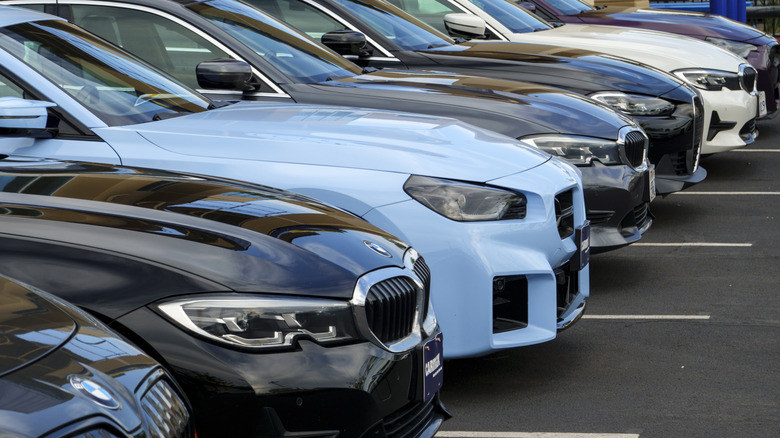
First-quarter deliveries fell at most of the biggest automakers ― General Motors, Toyota Motor Corp., Ford Motor Co., Honda Motor Co. and Nissan Motor Co. But it was the sixth consecutive quarter of growth for Hyundai-Kia and the third straight for Stellantis.
At Toyota, Lexus posted its first quarterly decline in more than three years, offsetting a slight gain for the company's mass-market brand.
[...]
Sales have fallen for two consecutive quarters at General Motors but executives say the automaker can weather more headwinds.
[...]
Some of the biggest first-quarter declines occurred at smaller automakers, including those more dependent on imports. Sales fell 14 percent at Mazda and 15 percent at Mitsubishi.
At Subaru, volume dropped for an eighth straight month, down 24 percent in March and 15 percent for the quarter.
[...]
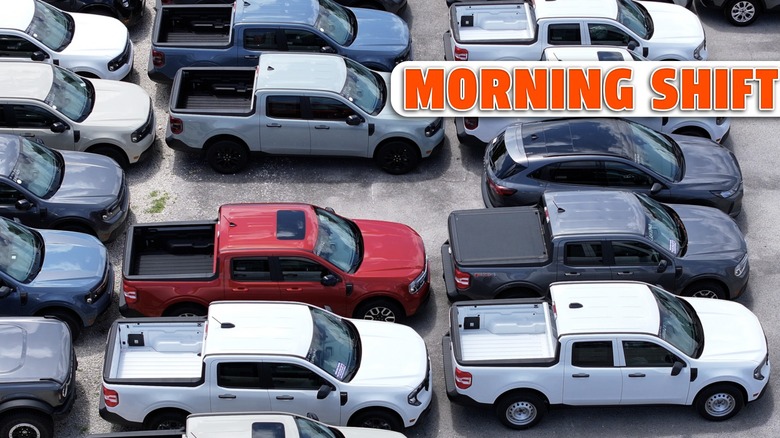
Ford, after discontinuing one of its least-expensive models, the Escape, hopes to entice shoppers into other utility vehicles, notably the Bronco Sport, which set a first quarter sales record of 35,021, up 5 percent. Entry-level trims of the Maverick, Ranger and Bronco Sport rose 8.4 percent, Ford said.
Like I said, though, not everyone is getting in on the ass-kicking device. I wasn't aware that was an option, to be honest.
First-quarter deliveries rose 1 percent at Hyundai, to 205,388, and 4.1 percent at Kia, to 207,015, both marking all-time highs. The two Korean brands expect to boost sales further this year after each set a record in 2025, even if the broader market is flat or lower, as many analysts predict.
[...]
Kia said first-quarter hybrid models rose 73 percent and overall electrified models advanced 30 percent.
Stellantis appears to be finding its stride after years of market-share losses.
The automaker's U.S. sales rose 4.1 percent in the first quarter on gains at Ram, Jeep and Dodge.
Under new CEO Antonio Filosa, the automaker is working to end a streak of annual sales declines that has stretched to seven years in a row.
Stellantis received a boost from the redesigned Jeep Cherokee and the freshened Grand Wagoneer.
Ram sales jumped 20 percent, marking its best first quarter since 2023, with sales of the 1500 pickup surging 27 percent. The company revived its 5.7-liter Hemi V-8 engine on the 2026 Ram 1500 last year after dropping it from the previous year's model.
If we've learned anything over the past year or so, it's that things can change on a dime. So, I wouldn't be terribly surprised if the economic state we find ourselves in at the end of Q2 is far different than the one we're in now. Note how I didn't say "better." I just said "different," because I'm very aware of how much worse things are likely to get.
2nd Gear: At least Rivian is having fun
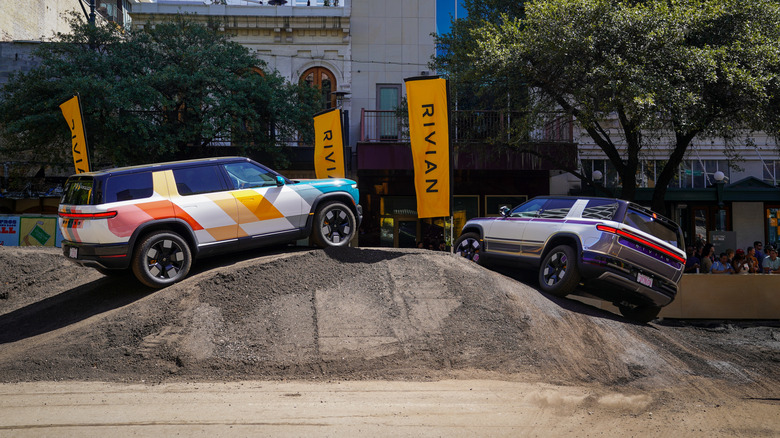
Rivian, a company that has had a bit tumultuous financial past, managed to spare itself from the Q1 ass kicking by actually exceeding analysts' expectations for deliveries. It clearly shows that demand for the R1S and R1T has stabilized after declining a bit following the death of the federal EV tax credit. From Reuters:
Rivian's sales had fallen in the December quarter after a $7,500 U.S. federal EV tax credit expired in September, pushing up prices and removing an incentive that had long drawn buyers.
Rivian produced 10,236 vehicles in the March quarter, compared with estimates of 9,852.
[...]
Higher volumes bode well for Rivian ahead of its new, cheaper R2 model, which will start deliveries this spring. The cheapest R2 variant, starting at around $45,000, is expected to launch next year.
"Solid deliveries in the quarter encouragingly suggest the upcoming R2 launch is not materially cannibalizing R1 demand," BNP Paribas Equity Research senior analyst, James Picariello said.
Rivian expects the new model to significantly broaden its customer base and take on Tesla's best-selling Model Y Premium, priced from $44,990.
It also struck a long-term partnership with Uber last month, under which the ride-hailing firm will invest up to $1.25 billion in the EV maker and deploy Rivian's fully autonomous R2 SUVs as robotaxis from 2028.
The Irvine, California-based automaker delivered 10,365 vehicles in the first three months of 2026, which handily surpassed the 9,678 vehicles analysts expected it to deliver. It also doubled down on its full-year delivery forecast of 62,000 to 67,000 (67!) vehicles. That would be a new record for the company. Previously, the most vehicles it ever delivered in a single year was 51,579 in 2024.
3rd Gear: Toyota is ready to bring in its Tesla killer
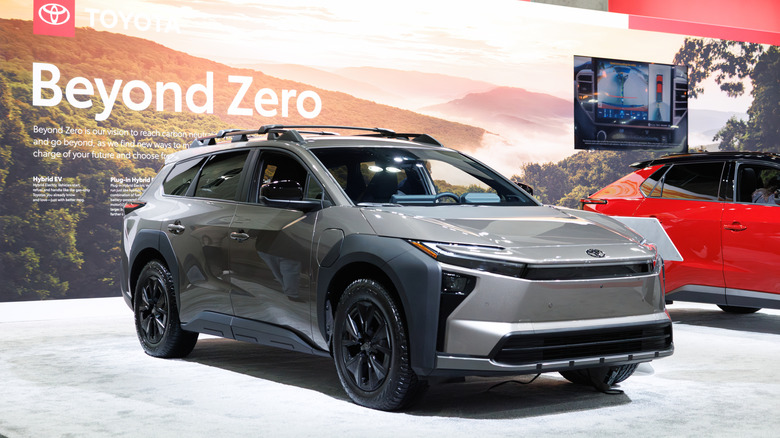
Despite the fact the U.S. electric vehicle market has contracted significantly, Toyota is undeterred and feels Americans are ready for the "Tesla killer" EVs its been cooking up. It currently offers four imported EVs, and a fifth is coming this month. On top of that, production on a new U.S.-built EV is slated to begin at its plant in Kentucky later this year, and another model is set to follow in 2027. In total, Toyota will have seven EVs in the U.S. when all is said and done.
It's an interesting plan, for sure. Because of timing, Toyota looks to join a rapidly emptying field of EVs as other automakers pull out to focus on hybrids. Honda, General Motors, Ford, Stellantis and the VW Group have all reined in their EV plans, and it actually leaves a gap for Toyota to spread in the market. Hell, even Tesla is cutting its offerings down, but Toyota is undeterred. From Bloomberg:
"We'll probably see what I call boomerang customers, people who loved Prius for being the greenest car in the industry that maybe went to a Tesla — and then we get those people back," [vice president and chief operating officer of Toyota North America Mark] Templin said in an interview. "Two weeks ago in Japan, I drove three of our future battery electric cars. They're fantastic. And I think they're going to be Tesla killers."
It remains unclear whether demand will be strong enough to support the full lineup of electric models. After peaking at 10.5% of US new car sales in the third quarter of last year, EVs made up only 5.8% of the market as of the end of 2025, according to Cox Automotive.
[...]
Sales of the bZ and its sister Lexus model, the RZ, more than doubled last month and the bZ has outsold the Prius for the first three months of the year.
[...]
Long criticized for its slower embrace of EVs as part of a so-called "multipathway approach," Toyota is ramping up. In addition to the bZ and RZ compact battery-electric crossovers, Toyota sells the C-HR subcompact EV, an all-terrain fully electric SUV called the bZ Woodland and, starting this month, the electric-powered Lexus ES midsize sedan.
For its first US-made EV, Toyota took the nameplate of a vehicle that was sold as a gasoline or hybrid model — the Highlander — and reimagined it as an EV. That three-row, seven-seat SUV will be built starting later this year at an existing factory in Georgetown, Kentucky, alongside other non-EV models. Its powertrain will be supplied by Toyota's new $14 billion lithium-ion battery plant in North Carolina. A second, as-yet-unnamed all-electric SUV, will be added from 2027.
In March, 55% of Toyota's sales were either hybrids or EVs — up from 49% a year ago. The company says the percentage would have been even higher if there weren't limits on the number of vehicles it can physically supply to dealers. In fact, buyers for some of their most popular hybrid have to deal with months-long waiting lists, and Templin says the company could probably make twice as many hybrids and still sell them.
Talk about a flex.
4th Gear: Tesla wants the import crown in Japan
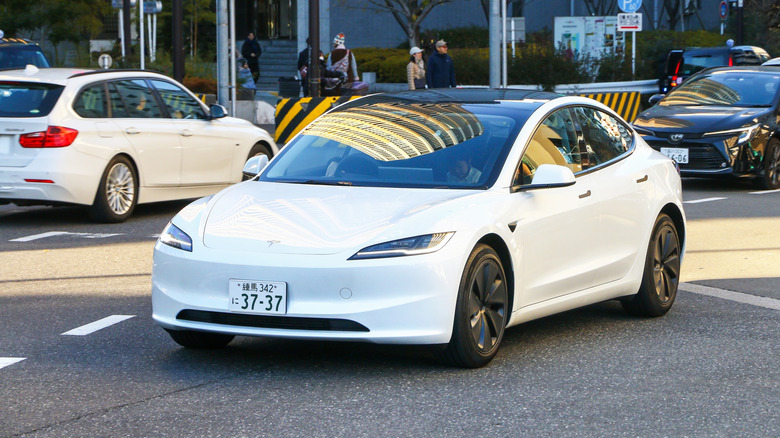
Like everyone who wants to be cool on a global scale, Tesla yearns to be a bigger deal in Japan, and that's why the automaker is planning to expand its footprint in the country to at least 60 stores. It's all in an effort to become Japan's biggest imported brand by as early as next year. From Reuters:
Expanded store and service centre coverage and investment in training over the past two years have helped drive Tesla's sales growth in Japan, said country manager Richi Hashimoto, even as electric-vehicle adoption in the country remains modest.
The Elon Musk-led company's expansion in Japan comes as battery-powered car sales have slowed heavily in the U.S. and other key markets globally, increasing the importance of regions where electric vehicle penetration remains low.
"We want to aim to become the number one imported car brand, possibly as early as next year," Hashimoto said at an event to mark the launch of Model Y L in Japan, outlining the company's mid- to long-term goals in the country.
The U.S. EV maker, which sold just over 10,000 vehicles in the country last year, began taking orders on Friday in Japan for the Model Y L, a six-seater geared toward families, as it seeks to broaden its appeal beyond early adopters.
Tesla currently has 13 stories and 14 service centers on the island country. Along with the aforementioned 60 stories, it wants to double its service network to about 30 locations.
Currently, Mercedes-Benz is the top-selling foreign brand in Japan, having moved about 51,000 cars there in 2025. It was followed by BMW, Volkswagen and Audi. Tesla will certainly have its work cut out for it, considering Japan has been a bit slow on the whole EV uptake thing, preferring to stick with hybrids, instead.
Reverse: Robert Ford, that coward
 History.com
Listen, Jesse James wasn't a good dude, but Robert Ford is a straight up loser for what he did, and I'm glad that's how history remembers him. I suppose today is the perfect time for my rewatch of that wonderful movie, too. If you want to learn more about the assassination of Jesse James by the coward Robert Ford, head over to History.com.
The Fuel Up
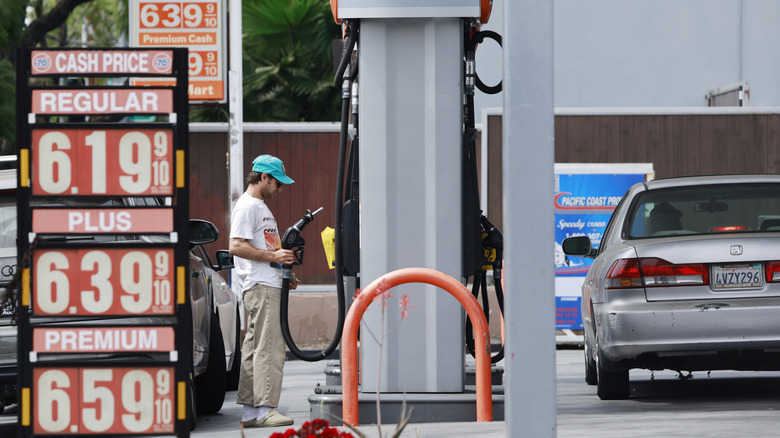
As the the U.S. and Israel's war with Iran drags into its second week, gas prices show few signs of relenting. The fact that WTI Crude Oil futures and Brent Crude are both still hovering around the $110 mark isn't much of a promising sign that things will get better anytime soon, either.
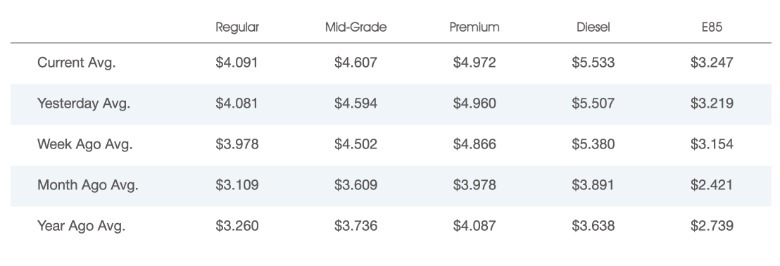
So, it'll come as no surprise to learn that the average price of a gallon of gas ticked up again overnight by a cent — going from $4.08 to $4.09, according to AAA. That number is sure to excite some Penn State fans (either as a joke or for real if you're somehow cool with JoePa), but will be met with groans from everybody else.
For those keeping track, the last time gas was over $4.09 was back in July of 2022, according to data from the Energy Information Administration, and the average price of a gallon of gas is now up $1.11 — or about 31.4% — since the war first broke out on February 28, when it was $2.98.
Even more worryingly for our wallets may be the price of diesel, though. About a week before the war broke out, the average gallon of diesel costs $3.81. Today, it sits at $5.53 — a 36.8% increase.
Here's where national average prices stand right now, according to AAA:
 AAA
AAA
On the radio: Steely Dan - 'Time Out Of Mind'
I don't know, man. I'm in a Dan mood today. It's Friday. You gotta let the groove just take over — maybe listen to all of Gaucho if you're feeling wild. I don't know if you'll enjoy it, but you'll definitely feel something.