

Does The Difference Between 87 And 88 Octane Even Matter?
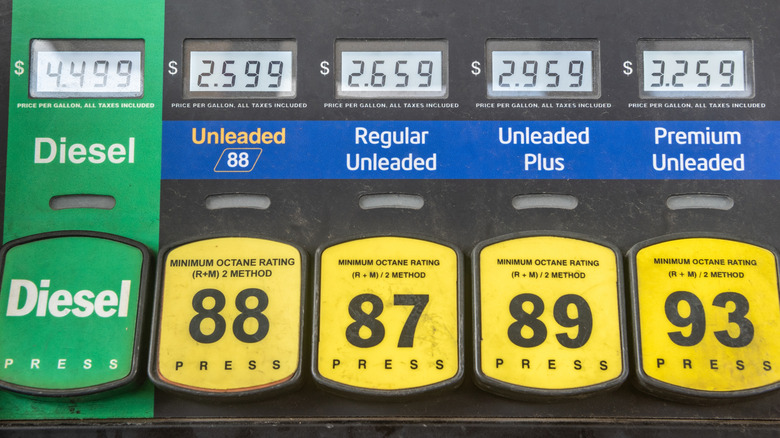
For a change, let's answer the headline's question with another question: Would fuel makers insist on naming 87 and 88 octane fuel differently if it wouldn't really matter? Before going over the differences, let's cover some basics. Motorists would most likely encounter different gasoline blends when filling at the pump. There's regular 87 octane gas, mid-grade 89 or 90 octane (which is kind of useless for most car owners), and 91 octane "premium" gas. Some pumps also Top Tier fuel that, although pricier, is worth its weight in maintaining a cleaner-running engine.
However, some gas stations are peddling 88 octane unleaded gas, and it's quite enticing to try it out since it costs a bit less than regular 87 octane fuel (something to consider amidst sky-high oil prices, which, sadly, could stay that way for a while). Actual pricing may vary by state, but 88 octane is typically as much as 30 cents cheaper per gallon on average.
The difference between unleaded 87 and 88 is the ethanol blend. 87 octane gas contains 10% ethanol and 90% gasoline, while unleaded 88 has 15% ethanol and 85% gasoline. It's also why 88 octane gas is sometimes referred to as E15, connoting its 15% ethanol content in the same wind that 87 octane is also called E10. After laying out the facts, the next best question is whether the extra 5% of ethanol matters. As it turns out, it does, and it goes beyond saving money at the pumps. It also does wonders not just for your emissions, but for your engine's power output, too.
What can 88 octane do for my car's engine?
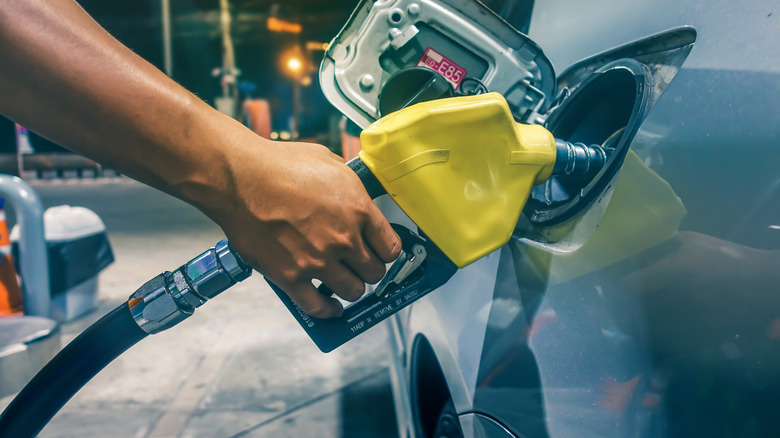
That extra 5% of ethanol means you're doing the environment a huge favor. Studies from the Iowa Renewable Fuels Association (IRFA) have proven that ethanol in gasoline reduces greenhouse gas emissions by 43%. In addition, ethanol is a solvent and fuel detergent that keeps your engine clean while ridding it of existing gum, varnish, and carbon deposits. And since ethanol molecules pack some oxygen, it burns cleaner when mixed with gas, and it leads to cleaner combustion and fewer tailpipe emissions. According to Ethanol Producer Magazine (EPM), using E15 reduces overall emissions by 12%, with hydrocarbons being reduced by as much as 6%.
Best of all, 88 octane can potentially add more horsepower by creating increases in pressure. Some engines might see little to no change in performance, but NASCAR engines run on an exclusive diet of Sunoco Green E15 (the same 15% ethanol blend as unleaded 88, but NASCAR fuel is 98 octane). In other words, this higher ethanol blend is proven to win races.
If you want to focus more on the environmental benefits, ethanol is derived from corn, and the states of Iowa and Nebraska are two of the largest producers of ethanol in North America. Squeezing ethanol from corn yields essential byproducts like grains and corn gluten for livestock feed. Filling up with 88 octane E15 means supporting local farmers and the sustainability of the related ecosystems. Ultimately, 88 octane will benefit your engine as much as it benefits the environment.
Are there drawbacks to 88 octane gas?

88 octane's "drawbacks" are more about compatibility. The IRFA notes unleaded 88 as safe to use in all 2001 and newer cars, SUVs, and trucks. You can fill up now and switch from 87 to 88 octane without fear of damaging your motor; manufacturers like General Motors and Ford have even been recommending it since 2012 and 2013, respectively. Moreover, 88 octane is compatible with flexible-fuel vehicles that can run on E85 gasoline, which is fuel that contains 51%-85% ethanol.
On the other hand, the Environmental Protection Agency does not recommend the use of 88 octane in boats, snowmobiles, lawn mowers, chain saws, motorcycles, heavy-duty vehicles (buses, delivery trucks, etc.), and vehicles manufactured before 2001. The rule of thumb is to avoid downgrading fuel grades. If your car requires 91 octane, stick with it and avoid using cheaper fuel just to save on gas, since the potential drawbacks might cost more than what you saved.
On the other hand, if your car requires unleaded 87 octane, you won't feel any adverse effects by upgrading to 88 octane, and you can enjoy lower emissions and more fuel savings. As long as your car is from 2001 or later, you're in the clear. Some reports suggest that using E15 gas might drop your car's fuel economy, but studies reported by EPM have revealed that E15 will only cause a 1% decrease, which is quite negligible and inconsequential. When in doubt, consult your car's owner's manual to determine its compatibility with E15 fuel.