

Dodge Charger Vs. Challenger: Which Muscle Car Depreciates Faster?
Buying a muscle car is a goal shared by many of us gearheads, but thanks to both the soaring prices of new cars and the shrinking muscle segment, it might have to remain little more than a dream for the majority. It's a shame, of course, but for those not available to head out and buy a brand-new muscle car (if any really exist still, that is), there is another option: To buy a used one, of course.
Sure, you'll miss out on that new-car smell and fancy photo opportunity at the dealership. But not only does buying used allow you to get the car you want rather than settling for something else, you'll be able to secure it for a reduced price, too. That's thanks to the magic of depreciation, as pretty much every new car drops significantly in price within the first few years of ownership.
With that in mind, we can take a look at just which of Dodge's iconic muscle car choices will be the wiser financial move in 2026 by comparing how both the Challenger and Charger have depreciated over the last three years. According to Kelley Blue Book, a 2023 Challenger will have dropped 35% of its value in this time, whereas a same-year Charger sheds a whopping 45% over those same years. However, the story isn't quite as simple as that.
A closer look at Dodge muscle car depreciation rates
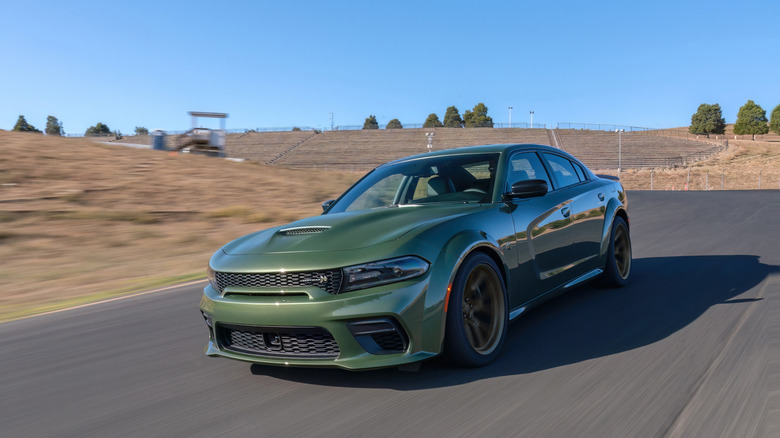
Kelley Blue Book also lists the original MSRPs of these two models as $36,920 for the Charger and $34,395 for the Challenger, which equates to this comparison being based on entry-level, V6-powered SXT models. They're hardly the cream of the crop in muscle car worlds, so it's worth delving a little deeper to see how more desirable iterations have stood the test of time. Focusing instead on the more muscle-appropriate side of things, the flagship trims for both of these models in '23 was the Scat Pack, or Scat Pack Widebody. The Challenger's Scat Pack trims were priced at $50,860 for the standard model and $58,855 for the Widebody, while the Charger was set at $53,520 and $59,515 respectively.
Fast-forward to today, and these cars are still immensely desirable as some of the last truly hot-blooded muscle cars to ever grace U.S. roads. Thus, the depreciation picture is very different to that of a sleepy SXT. The thing is, everyone knew the muscle car scene was winding down, so many of these high-end trims have been kept as collectibles, amassing hardly any miles. Therefore, they still command strong money. It's not unusual to see very low or even delivery-mile examples still commanding around $40,000.
Isolated sales might suggest it's the more-door Charger which has held its value better. One example with 7,000 miles on the clock sold at auction last year for just north of $45,000, whereas a comparable Charger with just 1,100 miles couldn't crack the $40,000 barrier. Although, the Charger was a few thousand more expensive in the first place. In truth, there is very little depreciation between the two cars at this end of the spectrum.
So, which Dodge really has more value?
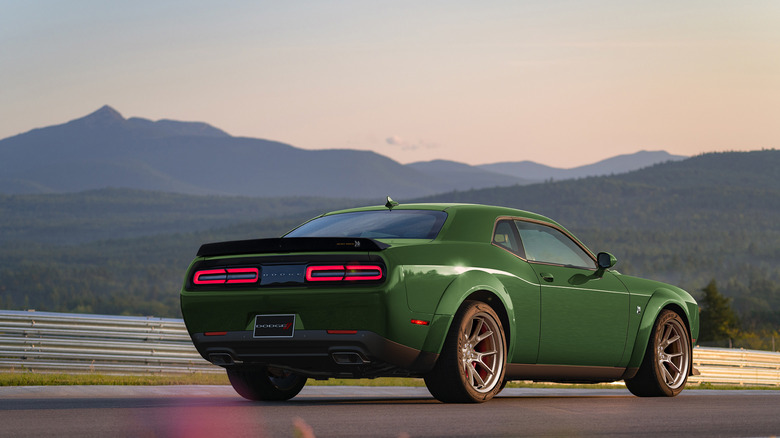
The frustrating summary of which model is best is, simply, it depends. Should you be shopping for a lowly V6-powered ride, then a Charger will absolutely be the cheaper model, having depreciated an extra 10% above what the two-door Challenger has over the last three years. However, if it's a flagship Scat Pack model that takes your fancy, you essentially have free reign to choose from the two without depreciation factoring very much into your decision.
What likely helps here is that both models appeal to slightly different segments. Sure, they both share many similarities — most prominently power train specs — but key differences ensure they never compete too closely. The Charger, a four-door sedan, will certainly appeal more to muscle enthusiasts who have a family to cart around, while the Challenger would better suit as a second car that could escape the family duties. If they both crossed over in this space, it's possible that depreciation would more clearly favor one over the other, but that just isn't the case.