

9 Cool Cars Powered By GM's Legendary 3800 V6
Even among the great V8s this country has designed and developed, the Buick/GM 3.8-liter V6 is one of the greatest production engines ever created. Its story begins in the 1960s with the "Fireball" V6, which made the rounds among GM's subsidiaries for years before being sold to Kaiser-Jeep. However, when stricter emissions regulations in the mid-1970s forced the industry to reconsider smaller, more efficient engines, GM made the unusual decision to buy the engine back and engineers began to experiment with displacement increases — it grew from 3.2 liters to 3.8 liters — as well as implementing an even-firing pattern to tame its notorious vibrations.
By 1988, the 3.8-liter V6 had received a balance shaft, fuel injection, and a modern ignition system that allowed it to compete with downsized engines across the world. It also got a new name — the 3800. From there, the V6 became a pillar of reliability for another two decades, powering more than 25 million vehicles from 1975 up until it was discontinued in 2008. And to this day, the GM 3800 still has a huge following.
However, the 3800 was more than a one-trick, econobox pony. In addition to its more basic applications, the V6 dabbled heavily in the performance space, experimenting in forced induction and powering some genuinely interesting automobiles throughout its run. So, instead of a long history lesson about the 3800, let's look at its coolest gigs. Starting in 1988, when it first got the iconic 3800 designation, we're going to list some of our favorite 3.8-powered cars — including a few that you may not know.
Pontiac Grand Prix GTP (1997-2005)
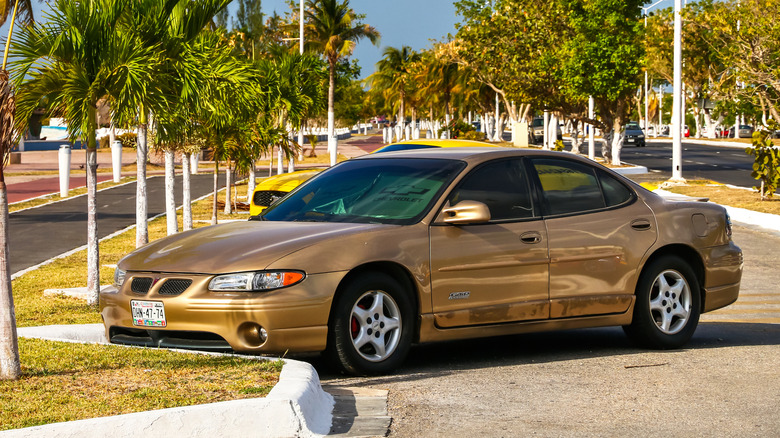
While the GTO and Firebird Trans Am are iconic Pontiac muscle cars, the Grand Prix actually predates both. It debuted for the 1962 model year and was a competitor to the Ford Thunderbird in the up-and-coming personal luxury car segment. By the 1990s the Grand Prix had transitioned into a front-wheel drive mid-size sedan and coupe. Right around this time, the 3800 V6 also underwent a major overhaul. General Motors gave the V6 bigger valves, a lower deck height, larger cylinder heads, and more compression, in addition to several other changes.
This updated 3800 was called the Series II, replacing the Series I 3800 that arrived in 1988. Three trims were available that year – the base 160-horsepower SE (3.1L V6), the GT, which used a naturally aspirated 195-hp version of the 3800 V6, and, of course, the GTP, which used the Series II 3800, but with an Eaton supercharger strapped to it. In addition to its 240-hp, 280-pound-foot output, the GTP also received slightly stiffer springs, a wider track at the front and rear, and a stronger four-speed automatic transmission than its lesser trims.
The Pontiac's handling was inspiring for a front-drive car, but didn't quite hit its benchmark, the BMW 3-Series. By 2004, the GTP received the Series III 3800 with improved fuel injection, a new intake manifold, and throttle by wire, which helped it make 260 horsepower. Sadly, as cool as a 260-horse, supercharged sedan was at the time, it wasn't enough to save the GTP. It was killed off in 2005, just three years before the 3800 was pulled from production as well.
Chevrolet Monte Carlo SS (6th-Gen)
Somewhat serendipitously, 1988 marked both the introduction of the 3800 Series I engine and the discontinuation of one of GM's most iconic nameplates — the Monte Carlo. Even more interesting is that the growing downsize-and-front-drive philosophy of GM that brought the 3800 into existence is one of the main reasons behind the retirement of the rear-wheel-drive Monte Carlo. So who could have predicted that years later, the engine that marked its death would help bring the Chevy Monte Carlo SS back to life?
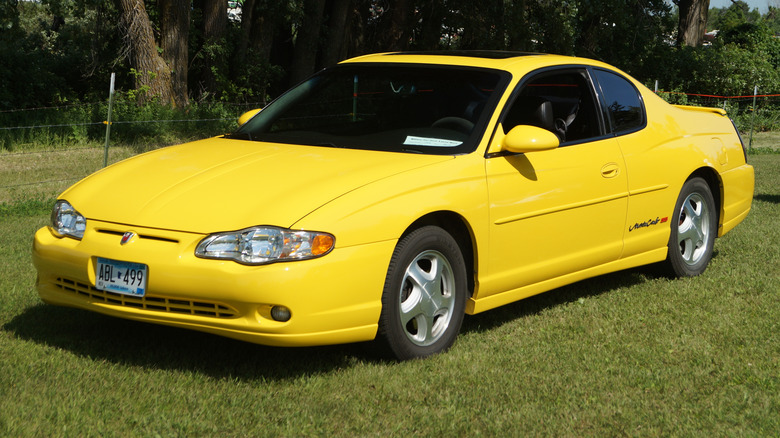
In 1995, the Monte Carlo was finally back for its fifth generation, now sitting on the W-body chassis and essentially taking over the role of the two-door Lumina. At the time, Chevy didn't bestow any real performance upon the SS version, settling for a 210-horsepower 3.4-liter V6. The 3800 would eventually show up in the fifth-gen car, but would stay naturally aspirated until the sixth-gen Monte Carlo arrived in 2000.
At first, the performance trim SS variant used a 200-horsepower, naturally aspirated version of the 3800 V6, connected to a four-speed automatic, but by 2004, GM had finally come to its senses and put the supercharged motor under the hood. Now with 240 horsepower, 280 pound-feet of torque, and a respectable 0-60 mph time of 6.5 seconds, the SS had newfound purpose. Its sticky Goodyear tires and stiffer suspension also helped it create a praise-worthy handling experience alongside a feeling of quality and stability that journalists enjoyed at the time. However, this only lasted until the end of 2005, when the top-trim blown V6 was replaced by a 303-horsepower 5.3-liter V8 — the first V8-powered SS since 1988.
Buick Riviera (1995-1999)
By the 1990s, the powerful body-on-frame coupe Buick Riviera was long gone. After all, the 1980s and 1990s were a time of, let's face it, survival in the face of changing consumer demands for efficient cars and the general phasing out of the massive cars American automakers were known for. When the seventh-generation Riviera's somewhat mainstream 1980s styling failed to meet expectations, Buick needed to self-inject a bit of flair to keep the personal luxury coupe brand alive.
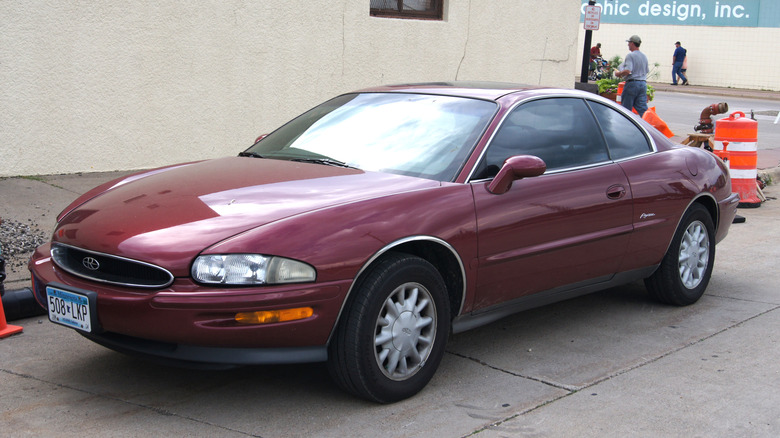
Enter the eighth-generation Riviera. While the seventh-gen car had featured the 3800 engine in naturally aspirated form since 1988, we're talking bout "cool" cars here, aren't we? So, to follow our own logic and morals, we've instead picked the 1995 and later Buick Riviera, as it sported the slightly more advanced and better boosted later model 3800 V6. For 1995, the full-size G-body-based Riviera went all in on the bubble aesthetic. Not a single right angle exists on the exterior of this car — a truly defining feature for a car of the '90s. In its first year, the top-trim Riviera produced 225 horsepower and 275 pound-feet of torque, all driven through a four-speed automatic.
By 1996, the Riviera was using the new supercharged Series II 3800 V6, now capable of the familiar 240 horsepower and 280 pound-feet of torque. Despite its sheer power and torque, the eight-generation Riviera still retained the measured and controlled chassis dynamics it had promised since the mid-century era. But in the end, shrinking demand for luxury coupes and competition from arguably better-tempered Japanese and German rivals would spell the end for the Riviera in 1999.
Chevrolet Camaro (1995-2002)
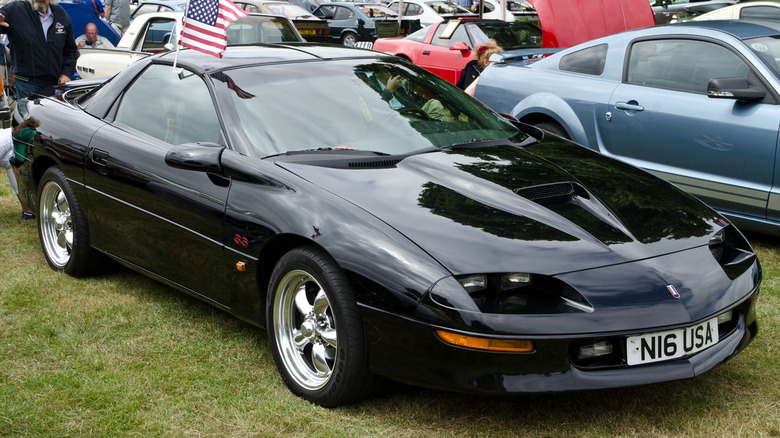
You've all seen or heard the V6-powered Camaro slander either in real life or on the internet. For many muscle car folks, if you're not working with eight cylinders, they don't want to hear it. At Jalopnik, we aren't that stiff, plus, the Buick Grand National/GNX exist along with highly capable modern V6 or turbo-four-powered muscle cars. Then there's the Camaro, which in its fourth generation came with our beloved 3800 V6.
For the first few years of the fourth-generation Chevy Camaro, its base package included a 3.4-liter, 160-horsepower V6 paired with either a four-speed 4L60 automatic transmission or a five-speed manual. But in 1995, General Motors singled out its California market, and offered a state-exclusive Series II 3800 V6 option, which was good for 200 horsepower.
Evidently, the muscle car connotation of the Camaro nameplate won fans over, because from 1996 and on, the 3.8-liter Buick replaced the 3.4 and continued as the sole base-model V6 option until the fourth-gen Camaro was discontinued in 2002. Of course, we wish that Chevy could have offered a boosted version of the base engine – perhaps a supercharged, 240-horsepower 3800 — but either way, still love the catfish Camaro, even in 3800 V6 form.
Buick Regal GS (4th-Gen)
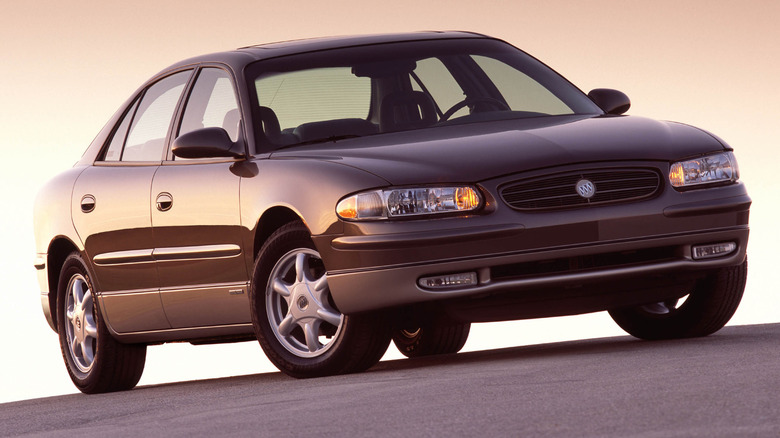
Aside from possibly the Monte Carlo, the Buick Regal underwent the biggest philosophical shift in the late 1980s. What was once a platform that housed the Grand National and GNX, both incredibly wacky, fast, and unique sports cars, became a fairly standard 1990s luxury car, with quieter design language and a front-wheel drive powertrain.
The third-generation Regal came out in 1988 and sat on the new W-body platform. Instead of debuting with the Series I 3800, the third-gen Regal started with a 130-horsepower 2.8-liter V6 and a four-speed automatic transmission. By the early 1990s, the naturally aspirated 3800 was finally available as an option with drastically increased performance up to 170 hp before being bumped once again to 205 horsepower by the end of its run in 1996.
The new-for-1997 fourth-generation Regal brought the real muscle with the GS trim, now featuring that same supercharged Series II 3800 V6 we've seen before with its 240 horsepower output. On paper, the GS was very similar to the Grand Prix GTP, but because Buick was GM's more comfort-forward brand compared to Pontiac, the Regal GS got rubber bushings between the rear sub-frame and body whereas the Grand Prix was bolted directly together. It also received softer front suspension bushings and more forgiving spring rates. In addition to the upgraded 3800 V6, the GS models came with leather seats, GS-exclusive trim pieces, and larger 16-inch wheels. The 2004 model year, however, marked the end of the fourth-gen and the nameplate until it returned in 2011.
Buick Park Avenue Ultra
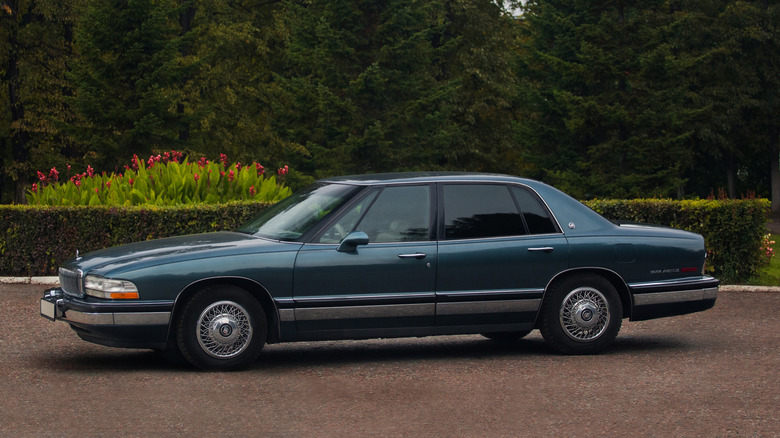
Introduced as its own standalone model in 1991, the Park Avenue was Buick's top-of-the-line flagship sedan based on the full-size C-body platform. Its design was restrained yet elegant, which isn't surprising when compared to the gorgeous Buick Essence concept car it was based on. Sitting at the top of the pile was the Park Avenue Ultra, although this segment leader didn't initially offer many upgrades in the power department.
The sole 1991 offering was the naturally aspirated Series I 3800, rated at 170 horsepower and 220 pound-feet of torque and paired with a four-speed automatic. The Ultra trim differentiated itself from the lower trim primarily with creature comforts like dual-zone climate control, leather seats and steering wheel, smoked-out rear taillights, power-adjusted front seats, and rear-seat vanity mirrors. Thankfully, it didn't take long before Buick gave the Ultra an exclusive powertrain. In 1992, the supercharged 3800 V6 was installed, delivering an improved 205 hp and 260 pound-feet of torque.
It only got better from there. In 1994, Buick updated the 3800 for 225 hp and 275 pound-feet of torque. Two years later, Buick would once again shove more power under the hood for the last year of the first generation (1996), when the 3800 reached 240 hp and 280 pound-feet of torque. Contemporary reviews praised the plush interior and brawny engine output, while the handling of the full-size Buick was "less than Ultra," as Car and Driver put it. Still, we consider the Park Avenue Ultra a quintessential American executive sleeper sedan. The big Buick continued sporting the 3800 until its ultimate demise in 2005.
Pontiac Bonneville SSEi (2000-2003)
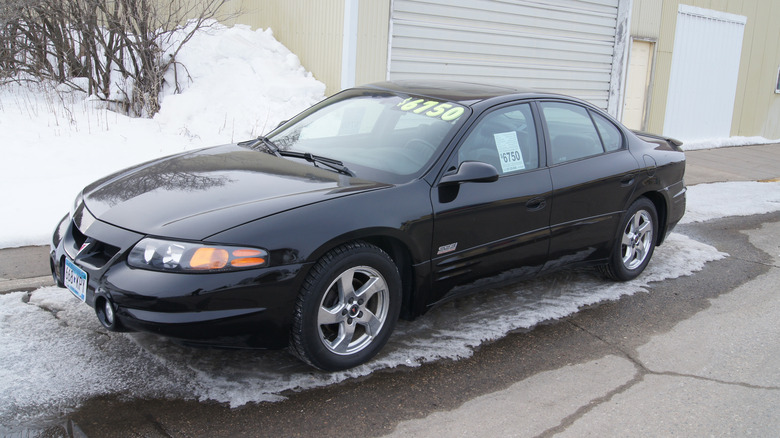
The Pontiac Bonneville was one of Pontiac's longest continuously running models, with a run that started in 1958 and continued until 2005. Considering the model's enormous history, we can't say that the specific 2000-2003 models we've chosen are the coolest Bonnevilles of all time — a late 1960s Bonneville station wagon would probably take the cake — but as far as the 3800-powered cars go, these would be our picks.
The Bonneville followed a similar path to the Buick Park Avenue in the later decades of the 20th century. It first used the Series I 3800 in relatively weak naturally aspirated form, but by 1992, it received the supercharged, 205-horsepower variant for the top-tier SSEi models. Then, in 1994, just like the Buick, the SSEi's output was bumped to 225 hp, and later to 240 hp in 1996. But we've decided on the 2000-2003 SSEi models because, while the previous generation cars shared the blown 3800 powerplant, they were not as dynamic as the later cars.
Its suspension was widened and stiffened, aerodynamics improved, steering sharpened, and transmission programming made much snappier — no wonder that GM told Car and Driver that the Bonneville was the most performance-oriented G-platform vehicle in its lineup. The supercharged 3800 V6 remained the most potent engine in the fun-to-drive SSEi until 2004, when a V8 option finally showed up on brochures. The 4.6-liter Northstar V8 made better noises and better power, so by default, we couldn't say the remaining 2004 and 2005 models qualified as the coolest 3800-powered cars.
Buick Reatta
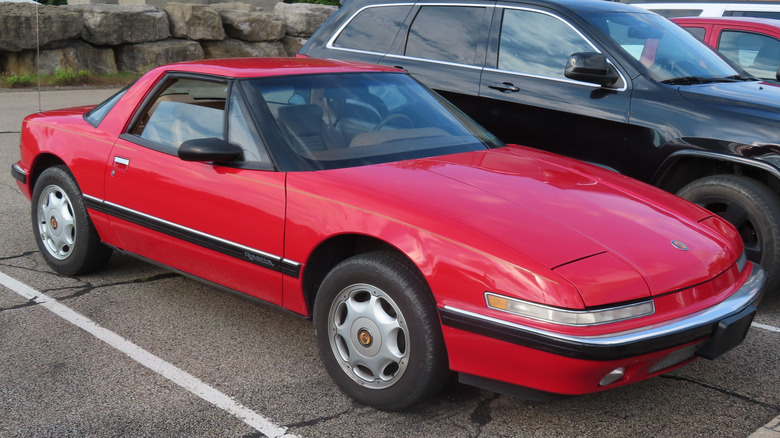
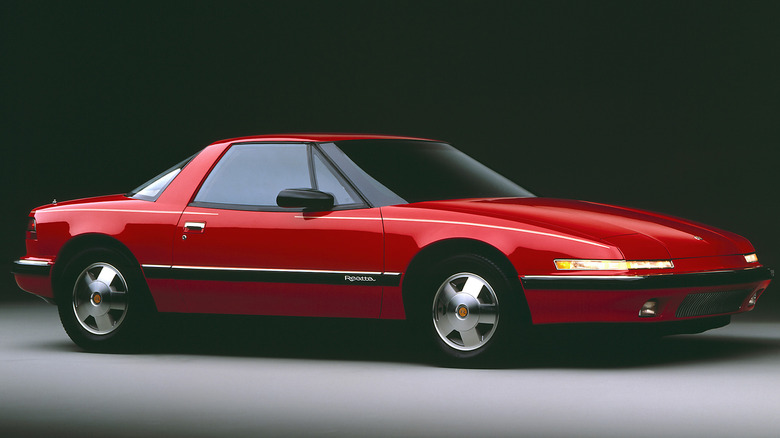
The Reatta was originally conceived to fill a hole in Buick's image. It still had the Riviera, but the lineup needed a halo car to draw attention to itself. However, the designers were forced to settle on a two-door coupe body style after GM gave the high-profile convertible idea to Cadillac for the Allanté. The Reatta would eventually gain a drop-top body style in 1990, although before that it had to prove itself as a sporty but not too rigid, comfortable but not too slow, and spacious without being too big.
What Buick ended up with was essentially a grand touring coupe that competed with the Mercedes 380SL. The Reatta came from the factory with independent suspension at both ends, four-wheel ABS, a digital gauge cluster, and even a CRT touchscreen center unit that controlled other interior functions — fairly impressive tech in 1988. Under the hood, drivers found the new Series I 3800 V6 powering the front wheels. It produced 165 horsepower — later 170 hp — but never got the chance to run a supercharged variant.
Why not? Well, it's the same reason we, and probably you too, forgot about the Reatta. This halo Buick was only in production until 1991, for a total of just four years. As such, the first supercharged Series I 3800 wasn't even ready by the time the Reatta was axed. Over those four short years, the car was overshadowed by other great luxury coupes of the time, especially those from Europe, and all told just about 21,000 total units were ever built.
Pontiac Firebird (1995-2002)
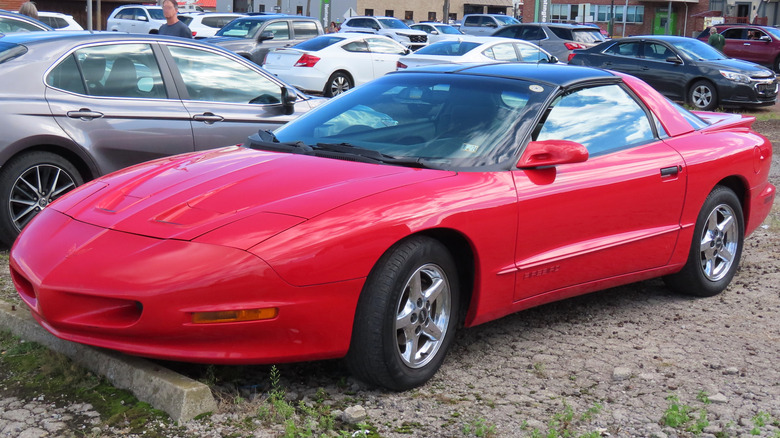
Several of these picks shared their GM underpinnings at least at one point during their 3800-powered production runs, and the Pontiac Firebird was no different. Just like the Camaro, the fourth-generation Firebird originally came with the 3.4-liter V6 in base form for the 1993 and 1994 model years, but would offer the naturally aspirated, 200 horsepower 3800 V6 in 1995 as an option above the existing 3.4-liter.
As with the Camaro, 1995 was the final year of the 3.4-liter engine in these two cars, and from then on, the 3800 would serve as the Firebird's sole base V6 option until it was discontinued in 2002. The primary distinction between the Firebird, the Camaro, and the rest of our picks is that they were among the few rear-wheel-drive 3800-powered cars, meaning those two, along with others like the Australian Holden Commodore, received the longitudinal version of the 3800, as opposed to the front-drive design used in most of our other entries.
The Firebird ends our list, so it's as good of a time as any to reflect on the legacy of the 3800. This was not only a legendary motor used in many of the base model versions of the top-trim cars we've mentioned, it also powered unique and memorable cars like the Firebird and Camaro. The 3800 helped GM survive the boom of reliable and efficient Japanese cars throughout this era, all while managing to deliver some proper flair along the way.