

Jack Nicholson Drove A Hydrogen-Powered Car Before Green Energy Was Cool
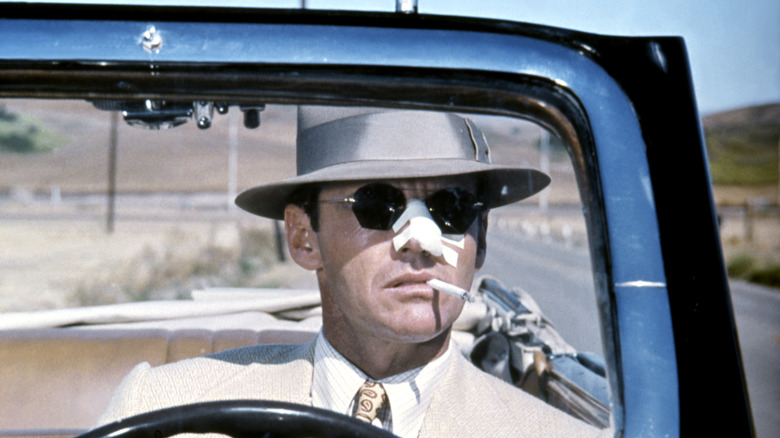
Celebrity endorsement is nothing new, and it certainly hasn't gone away. 2024 had Dua Lipa promoting the new electric Porsche Macan, after all. But back in the late 1970s, Jack Nicholson was taking things to the next level. Not only was he keen on promoting a new piece of automotive technology, but he was more than willing to put his money where his mouth was, investing his own money into the venture.
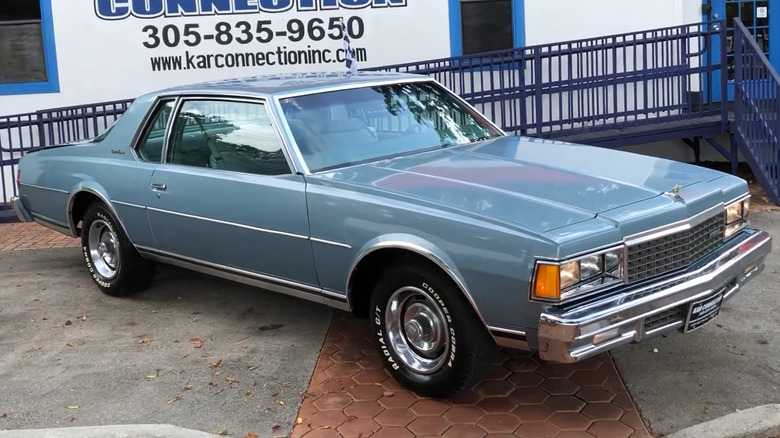
In '78, Nicholson appeared on TV driving the 'H2-4 Chevy,' an Impala converted to run solely on hydrogen power. Pretty revolutionary stuff, and the promises were certainly intriguing. In a clip provided by CBC, Nicholson stated that making the switch could cut "58% of the air pollution out of every city in the world," and he predicted major changes in both the oil markets and political landscape as a result of this technology.
In theory, the tech was quite simple. A fuel line takes hydrogen into the carburetor, which would be almost identical to a typical unit, although its internals have been adapted for hydrogen gas rather than gas-gas. From the exhaust comes a thin mist of steam; white smoke from your tailpipe is normally a red flag, but in Nicholson's '78 Impala, not so much. He even felt comfortable inhaling the steam directly from the tailpipe. As we now know, the tech never took off — not in a big way, at least — although it is still possible to go about your daily business in a hydrogen-powered vehicle, especially for the eco-minded in California.
Hydrogen travel in 2026
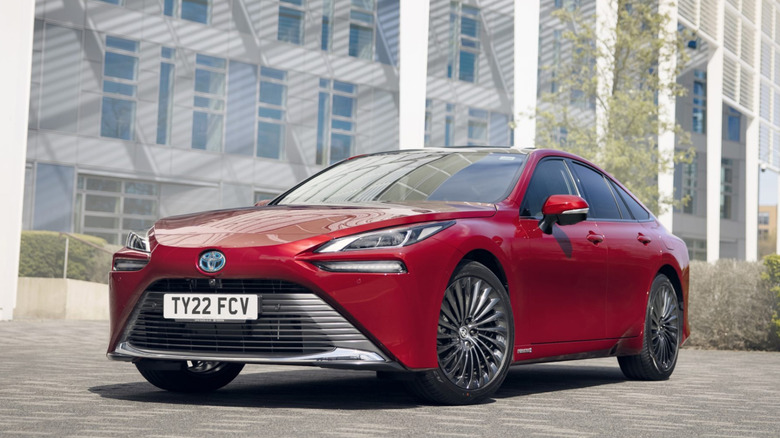
Sure, you could set about converting an old Chevy Impala for hydrogen travel, and that might be the coolest way to go about it, but it certainly isn't the simplest. Numerous mainstream automakers now offer factory models which make the most of hydrogen technology. Among the most popular is the Toyota Mirai. It retails for $51,795, subject to dealer and destination fees, and brings hydrogen fuel-cell technology to the mass market. Much like Jack Nicholson's old Chevy, it spits only water out of the tailpipe, making it a perfect solution for the greenest commuters among us. A 402-mile range makes it a perfect EV alternative, as well, and it comes with an eight-year or 100,000-mile warranty in case you aren't too confident on its capabilities.
There are limitations, though. It's difficult to get your hands on one if you're outside of California, it's not exactly cheap, filling stations are few and far between, and the Mirai in particular has a seriously steep depreciation curve. Owners feel they were oversold and are now suing Toyota as a result, so Mirai ownership has proven to be far from the zero emissions dream many felt it would be. Similarly, things didn't end so sweetly for the folks behind Nicholson's nifty Impala, which is perhaps why it's a seldom-discussed chapter of both Jack's and the hydrogen automobile's history.
Here's what happened to the Nicholson-endorsed firm
The firm behind the tech, Consumers Solar Electric Power Corp., had all the answers. It claimed hydrogen-fueled cars would typically be priced at 25-50% of what an equivalent gas model would command, and future plans included the development of hydrogen filling stations. Next to no pollutants were promised, in addition to the fact that any engine would be able to be converted to accept the new fuel, which is great news for anyone who wasn't quite taken by the '78 Impala like Nicholson was. In short, the company promised the future, but it was never delivered.
The firm's downfall wasn't simply due to a lack of funding or interest. Instead, it was plagued with scandal. The company was accused of selling over 11 million shares of stock without going through the correct procedures, totaling around $3.9 million in loans payable to shareholders. A settlement was agreed between the firm and the Securities and Exchange Commission in 1981, but the tale of success pretty much ends here.
In fact, just the very following year, the directors of this company were found guilty for committing mail fraud. The fraud in question used to help acquire those aforementioned funds, including $150,000 from Jack Nicholson. In short, this was far from the technological breakthrough it promised to be, and it's possible that the bad press could have put further investment into hydrogen onto the back burner. Who knows what the streets could look like today if hydrogen tech had hit the mainstream before EVs.