

200,000 Immigrant Truck Drivers Are Officially Losing Their CDLs Which Will Almost Certainly Make Everything Even More Expensive
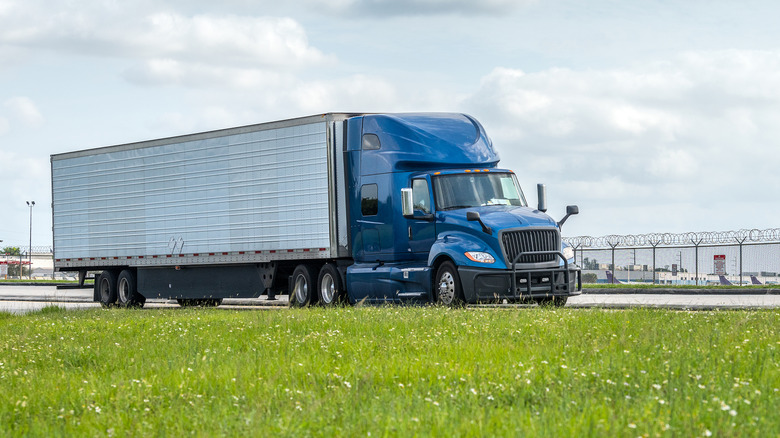
President Donald Trump has scored another victory for himself and his base that is sure to hurt people of color and those who were already struggling to afford daily necessities. About 200,000 immigrant truck drivers are losing their commercial driver's licenses, thanks to a new rule from the Trump administration that takes effect March 16. It's sure to put the already-struggling trucking industry in an even more dire situation as energy costs surge thanks to the President's ill-advised war with Iran that he cosigned with Israel. Things are bleak, friends.
The rule is just about as nonsensical as nonsensical gets. It bars immigrants who are asylum seekers, refugees or Deferred Action for Childhood Arrivals (DACA) recipients from obtaining a CDL, according to The Washington Post. That's right, people who are here legally are barred from getting a license to drive a semi-truck because of, well, racism. Those who currently have a valid CDL will lose their privileges as their licenses expire, not immediately.
The Trump administration will point to high-profile fatal crashes involving immigrant truck drivers last summer as a reason for the ban, but that's really a load of dogshit at the end of the day. Show me one immigrant-related (legal status be damned) truck crash, and I'm sure there are dozens — if not hundreds or thousands — of REAL PATRIOT truck drivers who have done something similar on the road. In a vile statement, Transportation Secretary Sean Duffy said, "For far too long, America has allowed dangerous foreign drivers to abuse our truck licensing systems — wreaking havoc on our roadways." Of course, a lawyer who is leading a lawsuit against the rule contends that even the Trump administration has conceded that there's no empirical relationship between a person's nationality and their safety behind the wheel.
The human effect
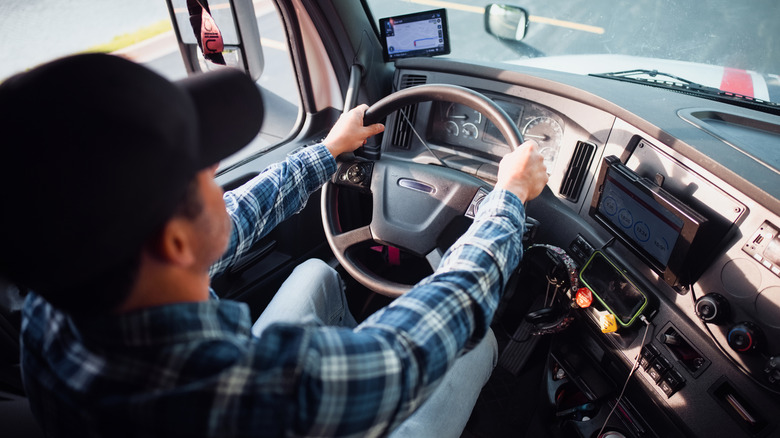
Those 200,000 drivers make up about 5% of all commercial vehicle licenses, according to The Washington Post. Because of long hours, low pay, dangerous road conditions and extended periods away from home, there's a ton of turnover in the industry. As Americans leave, immigrants have moved in and found worsening working conditions and deregulation.
WaPo spoke with Aleksei Semenovskii, a long-haul trucker from Pennsylvania who has been on the road since 2020. He's now set to lose his license in September despite having no accidents or violations on his record.
"They're roasting me under open fire for not having anything done illegal," the 41-year-old Russian asylum seeker told the Post.
Semenovskii is incredibly nervous over what this new rule means for his ability to support his wife and 14-year-old daughter. Semenovskii — a lawyer by trade — and his family fled Russia for the U.S. in 2019 with three suitcases after he faced threats of a fabricated criminal case related to his opposition to Vladimir Putin's government. During the Pandemic, he took out a near-$200,000 loan for a tractor and a trailer that he's still working to pay back, the outlet reports. For the past four years, he's been transporting heavy machinery, building materials, food and Amazon merchandise across all the Lower 48 states.
"This [rule] is devastating for my family," said Semenovskii, breaking down in tears. "I've built this small business relying on my driving privileges. I didn't think anyone could take this away from me for just being an immigrant."
NPR spoke to Jorge Rivera, who, after being a commercial trucker in the U.S. for over a decade, found out he couldn't renew his CDL. Riviera was brought to the U.S. illegally from Mexico when he was just two years old and is enrolled in the DACA program. It gave him the ability to get his CDL in 2014 and start his own trucking company.
"It was like a slap in the face, because I've done everything the right way," Rivera said. "I've stayed out of trouble. I've been a law-abiding noncitizen, is what I like to say."
[...]
"At this point, I'm just pretty much bracing for the worst," he said.
He told NPR that he doesn't really know what he'll do without a trucking license, saying he's even got his company name tattooed on his body.
As we reported last year, Trump signed an executive order that required truck drivers to speak English... even though it was already a law. Later that summer, cops ticketed two truck drivers for not speaking English at a traffic stop. Now, nearly a year after the executive order, thousands of immigrant drivers have lost their right to drive and about 3,000 driver training centers have had their accreditation revoked for failing to meet these new federal standards.
Paying the cost
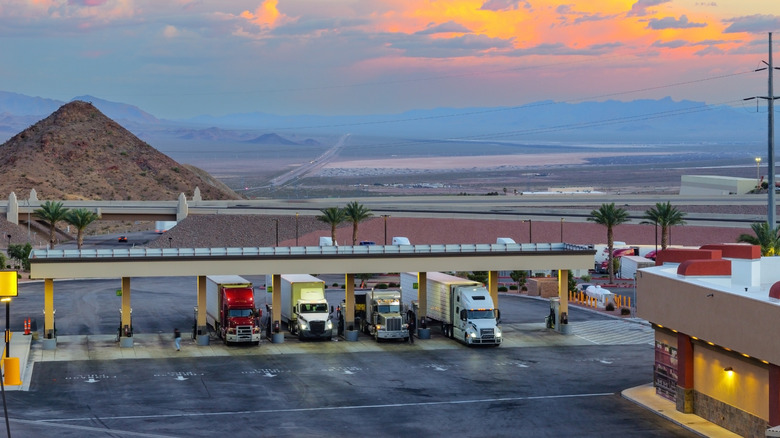
What might get lost in all of this is the simple fact that having fewer truckers on the road means that the price of everybody's goods is only going to continue to increase. Of course, that's something Trump vigorously campaigned against — not that his supporters will care much. The Post spoke with transportation experts, and, while they don't expect the new rules to have much of an impact on the industry or safety, they could lead to companies charging higher rates as the workforce shrinks. Do you know who ends up footing that bill? You and me, buddy.
"I have not heard any concerns about labor shortages or significant disruption to the supply chain or transportation industry, but this change will be reflected in the cost of doing business," said Gregory Reed, a transportation attorney who specializes in regulatory issues.
When you add in the fact that the average price of a gallon of diesel is now $4.99, according to AAA, things are definitely not going to get cheaper, to say the least. Now, filling up a 300-gallon fuel tank on a tractor-trailer can cost nearly $1,500. Just a month ago, when the average gallon of diesel cost $3.65, that same full tank cost about $1,100.
I'm not really sure how this all ends for immigrant truckers, the Trump administration or for people who rely on the trucking industry (read: everybody in the U.S.), but I do have a real bad feeling that things are going to get much worse before they can get better, and there are going to be a lot of people going without a lot of necessities very soon.