

Is It A Bad Idea To Change Your Oil Filter Without Changing Your Oil?
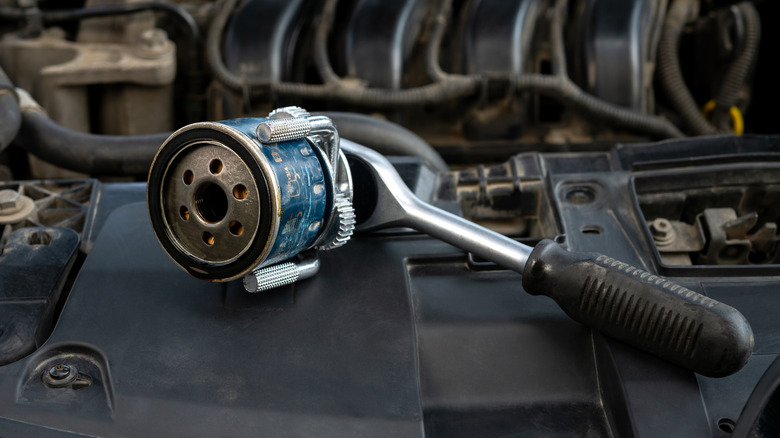
We can only think of one scenario in which you'd think about changing the oil filter of your car's engine without changing the oil. Routine servicing will typically entail changing the oil and oil filter, since it's practically useless to skip one or the other. For starters, engine oil turns black when it starts degrading, specifically after it absorbs dust, dirt, and contaminants that can harm the engine. It's for that reason that periodic oil changes are a must, and you should consider both time and mileage between service intervals to maintain a smooth, clean-burning, and efficient motor.
As the oil degrades, so does the oil filter. Inside a typical oil filter are cellulose or synthetic fibers that trap dirt and metal shavings, preventing the nasty stuff from recirculating in the oil pan and inside the engine. Clearly, you could just change the oil filter and let the oil in the crankcase remain untouched, but it depends on the condition of the oil. If the oil is dirty or has been sitting for months or years (oil can go bad even if you don't drive the car), it's prudent to change it along with the oil filter.
However, what if you forgot to buy a new oil filter after finally convincing yourself to do a DIY oil change, and you already filled the engine with fresh oil? In that case, you can change the oil filter later without draining all the oil. Then again, that's not the only thing you need to do, since missing a crucial step might increase the wear and tear inside your car's motor.
How to change the oil filter without draining the oil
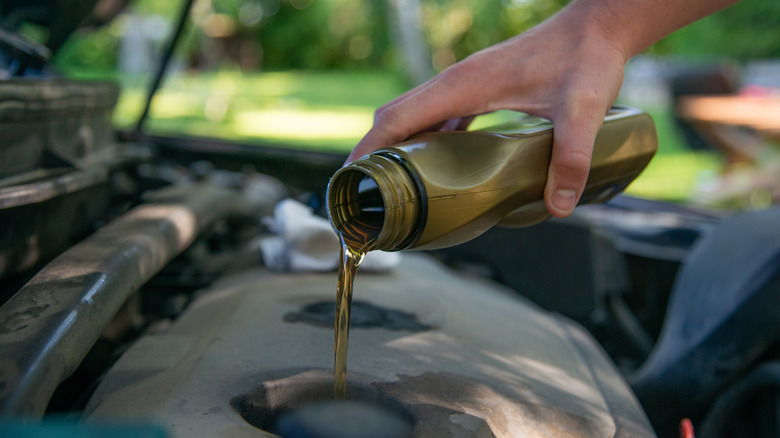
Changing the oil filter without draining the oil is better than not changing the filter at all, and you won't make too much of a mess while doing so. The oil sits in the oil pan, and removing the drain plug is necessary to drain the oil. On the other hand, the oil filter sits in a different location, and removing it won't drain the oil.
However, while replacing the oil filter will not significantly affect the oil level, you can expect to drain about half a quart or up to a quart of oil when removing the old filter. The oil that leaks or drains when removing the filter is not from the oil pan, but rather from the bypass valve and oil galleries. Therefore, the engine loses a bit of oil if you remove the filter, and topping off the oil level ensures the oil pressure remains steady to lubricate all the engine's moving parts.
After installing the new oil filter, make sure you check and double-check the oil level by inspecting the dipstick. If the oil is a bit low, add a quarter or half a quart of oil and check again. When convenient, we recommend pre-filling the new filter with oil before installing, as it replenishes some of the lost oil while helping establish the ideal oil pressure after starting the engine.