

This Is What Goes Into Building An Armored Vehicle (And What It Costs)
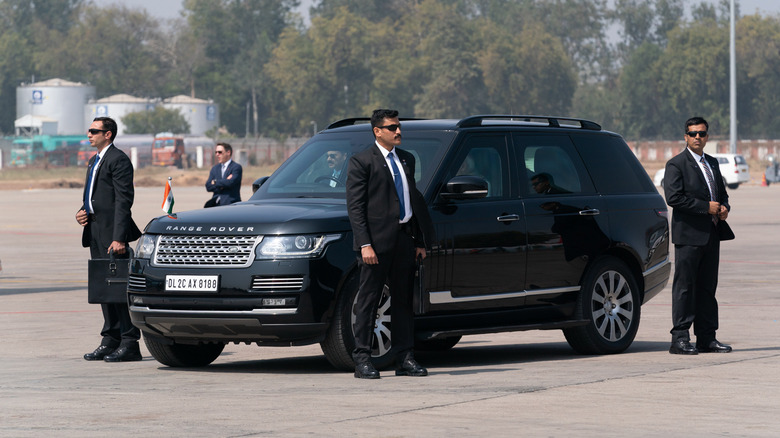
Do you frequently drive through active war zones? Are you a paranoid survivalist who anticipates an imminent "Red Dawn" type of scenario? Do you just want to challenge yourself, push your vehicle's limits, and make it as indestructible as possible? If so, you might want to turn your car into an armored vehicle. Then you can drive around like the president of the United States or Al Capone.
A lot of work is required to convert a car into an armored vehicle. You can't just glue some bullet-proof vests onto the doors and call it a day. Well, you could, but once the bullets start flying, you'll find it to be a very short day, if you catch my meaning.
It's possible to fortify all of your car's weak spots to make it armored and protected against bullets, land mines, and other forms of attack, but these modifications don't come cheap. With that in mind, let's take a deep dive into what it takes to turn your regular car into a fully armored vehicle. Then, at the end, we'll tally up the cost so you can see if it's in your budget to turn your jalopy into a mobile fortress.
Step one: Layered armor systems
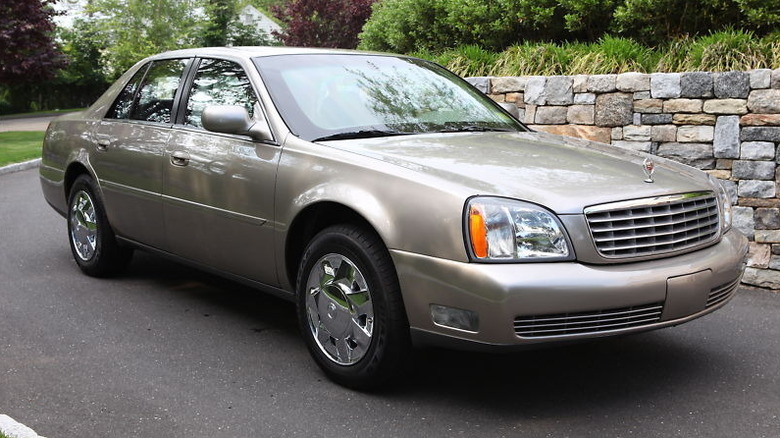
In the movies, cops get into shootouts with bad guys and hide behind open car doors, using them as cover. In real life, most bullets have more than enough penetrating power to pass through a car door and injure anyone on the other side. In real-life firefights, smart combatants hide behind the hood instead, since the engine block is actually thick enough to stop the average bullet.
If someone opens fire on your vehicle while you're inside, however, you're a sitting duck, including if you're in one of Elon Musk's garish Cybertrucks. That is, unless you've made an effort to armor up. Armoring your car is a complex process that invokes "Composite Armor Philosophy." A single bulletproof steel plate might deflect a bullet if you're lucky, but it won't help against the impact of said bullet. Layered armor uses multiple types of materials to reduce damage, absorb kinetic impact, and mitigate an attack's effect on a vehicle.
The first layer, the "strike face," is made of hard ceramics that catch and fragment a bullet. Additional layers distribute the fragments, spreading — and thereby minimizing — the attack's effect. These middle layers are made of metals and sturdy composites. Finally, the "backing layer" is like a final safety net that catches projectiles weakened by the previous layers. This layer is made of materials like Kevlar or ultra-high-molecular-weight polyethylene. Together, all of these layers combine to form what is known as armor, and it can be applied throughout your car's body without compromising its "civilian chic" aesthetic.
Step two: Ballistic glass
At this point, your car's body is fully armored. Great. Unfortunately, the hypothetical goons shooting at you aren't aiming at the door or the hood. They're shooting at the glass of your windshield, side windows, and rear windows to get at the juicy target inside: you. To bring things back to Elon Musk's goofy Cybertruck, even if it were bulletproof (which it isn't), you'd still be doomed if you came under fire because a Cybertruck's glass isn't bullet-resistant at all.
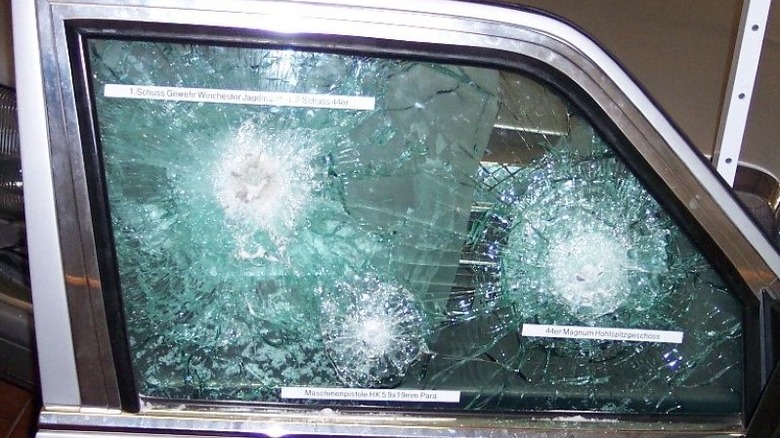
Indeed, composite armor on your car's body is just the first step. Next, you have to replace all the windows with "bulletproof" ballistic glass, which is much heavier, but also offers much more protection. "Bulletproof glass" actually is a misnomer. There's no such thing as a truly bulletproof material. If someone has enough bullets of sufficient caliber, they will slowly break down your defenses. As a result, it's more commonly known as "bullet-resistant glass." Still, if there are enough attackers, the glass will eventually give way.
Outfitting your entire vehicle with ballistic glass might be impractical depending on the car, since ballistic glass can be as much as 3.5 inches thick and add hundreds of pounds of weight to your vehicle. Also, you might have to replace your car doors with ones that can accommodate thicker glass. But if you're expecting to go up against legions of bad guys armed with high-powered rifles, thinner glass won't suffice.
Step three: Run-flat tires
Thanks to its armored body and panes of ballistic glass, your car is as close to bulletproof as it can possibly be. You're driving through a field of bad guys with machine guns and you feel fine. Uh-oh. They shot out your tires. Now you can't drive. You'd better hope help arrives before they find you in what now amounts to a heavily armored coffin.
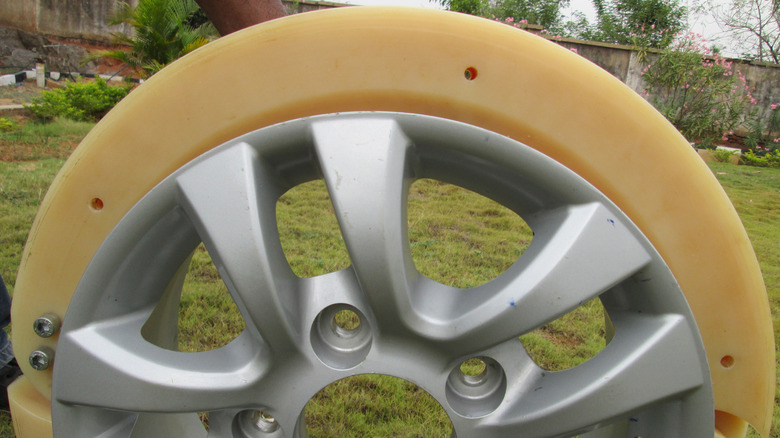
The solution to this scenario is run-flat tires. As the name suggests, they can keep your car rolling down the road even if they've been punctured by gunfire or shrapnel or caltrops or other nefarious means.
The name "run-flat" is actually a bit misleading, since the tire doesn't actually flatten like regular tires, at least not right away. They use integrated technology such as thick rubber and internal rings to keep from going flat following a puncture. On a good set of "run-flat" tires, you can drive about 50 miles, give or take, depending on your speed. Provided all of your tires don't get absolutely shredded by a nonstop hailstorm of bullets, you should be able to escape the immediate area of danger, all thanks to "run-flat" technology.
Step four: Bomb-blanket floor
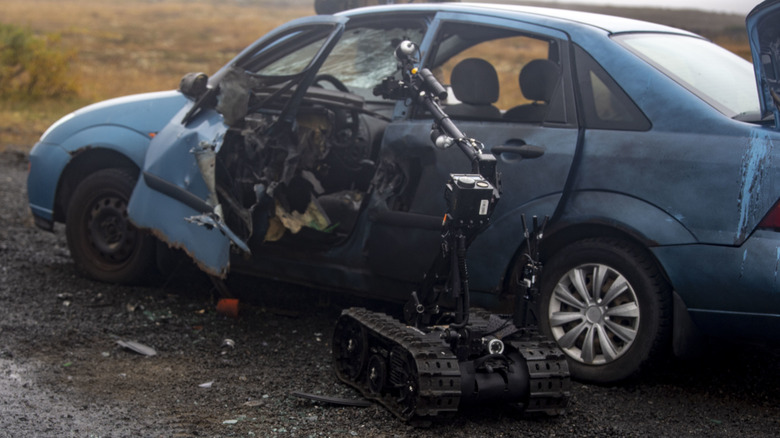
Okay, you have to be ready now, right? Your car's body is protected by armor, the windows have all been replaced with inches-thick bulletproof glass, and your tires have been replaced with cutting-edge run-flat variants. Alas, it seems someone's thrown a grenade, and it's rolled right underneath the car! And you've also driven over a land mine! I hope you remembered to invest in a "bomb blanket" floor.
Fragmentation blankets can be built into your vehicle's flooring, and they provide considerable protection against attacks from underneath. In a war zone littered with improvised explosive devices and land mines, it can be a lifesaver. These blankets are made from armor materials like Kevlar, which is woven into a type of fabric. This mesh is designed to absorb impact and catch shrapnel before it can penetrate the interior of the vehicle and the soft targets within. Even if the blast manages to disable the vehicle, the exterior armor will buy you some time for help to arrive.
How much does all this stuff cost?
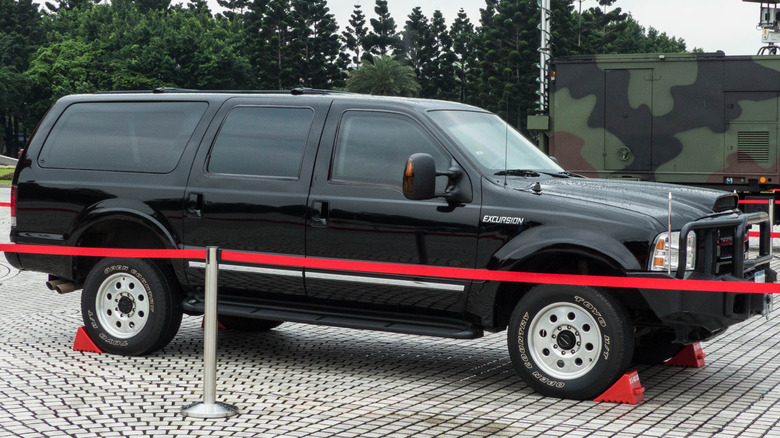
At this point, your car is fully armored. It's protected from attacks from all directions, even below. One question remains: how much does all of this cost? The quick answer is, "a lot." The long answer is more nuanced. If you want to buy a fully armored civilian luxury car off the shelf, you're going to pay a huge premium. For example, the Mercedes-Benz S 680 4MATIC Guard VR10 will set you back almost $900,000, while the Audi A8 L Security costs over $760,000.
You might have more luck approaching a company like Armormax or Texas Armoring Corporation to convert your car into an armored vehicle. They completely strip its interior to replace components with armored variants. The process can make your car between 1,650 and 2,250 pounds heavier, and the suspension is modified to accommodate the extra weight.
Prices for these services can vary wildly, but range somewhere between $25,000 and $150,000 depending on the car's size and degree of armoring. Armor and ballistic glass are charged by the square footage of materials required, so bigger cars mean bigger prices. In any case, armoring your vehicle isn't cheap, and it's up to each consumer to decide if the luxury of an armored vehicle, and the peace of mind that comes with it, is worth the substantial price of admission.