

12 Popular Cars That Weren't Meant To Be Full Models, At First
Manufacturers' plans, meticulously schemed as they are, don't always work out. The Ford Edsel sub-brand was supposed to be America's new standard of motoring, but ended up being one of history's biggest automotive flops after only three years of production. The original Acura NSX was supposed to be a Senna-tuned, Japanese wrecking ball to Ferrari's sales, and it fell short. The Porsche 928 was supposed to be a full-fledged replacement for the flagship 911, but all it did was help Porsche inch closer to bankruptcy in the 1990s.
The point is: the industry is unpredictable in its ways. Big money projects, with hundreds of millions or even billions of dollars behind them, can simply cease to generate returns. But there is a flipside. Sometimes, a seemingly ordinary nameplate or trim level — with no prior intentions of becoming culturally or economically important in the industry — does just that.
In some cases, these cars began life as already popular trim levels with a solid foundation for growth, but many, as you'll soon see, started as nothing more than a fancy interior package for a more prolific model. Regardless of origin, though, the 12 cars that we're covering today all have one major characteristic in common — they became much more important than they were ever meant to be.
Toyota Supra
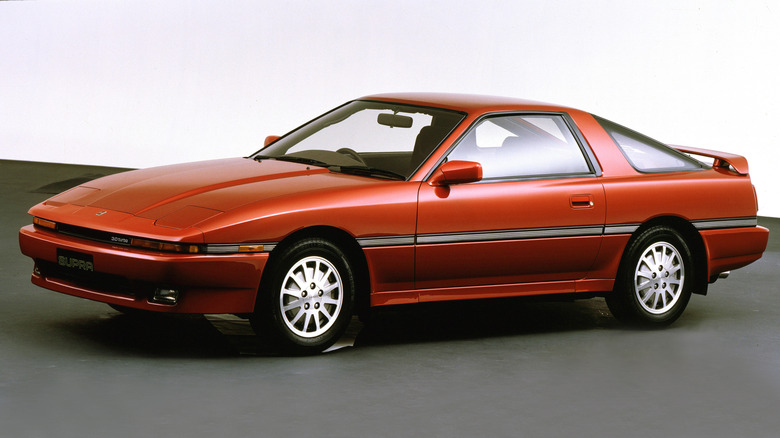
The Toyota Supra may be among the most poignant examples of this concept we'll cover today. Thanks in no small part to "The Fast and the Furious" franchise, its legendary 2JZ straight-six engine, and the proliferation of Japanese car culture in general, the Supra has garnered community and adoration reaching far beyond the bounds of Toyota as a company. If it were us on the executive board, the Supra nameplate would have been its own sub-brand long ago. Still, what this badge has accomplished over the last few decades is a perfect example of the trim-to-triumph topic.
But before the iconic body shape of the fourth-gen car, and long prior to the current (and soon to be discontinued) A90 generation, the Supra began as a trim variant of another beloved Toyota model — the Celica. Plainly named the Celica Supra, it served as the range-topping sporty alternative to the four-cylinder-powered lower trims. This is where the straight-six legacy was born, as the Celica Supra was the only trim equipped with more than an inline-four engine.
In addition to its original 110-horsepower 2.6-liter straight-six and five-speed manual, the Supra was a whopping 5.1 inches longer than the car it was based on. Over two generations, from 1979 to 1986, the Celica Supra gained additional power and some serious cachet among journalists who enjoyed its nimble chassis. Finally, in 1987, or technically the 1986.5 model year, the Supra broke away from the Celica name, as the Celica would now be front-wheel drive only, leaving the sporty rear-drive slot solely to the Supra.
Pontiac GTO
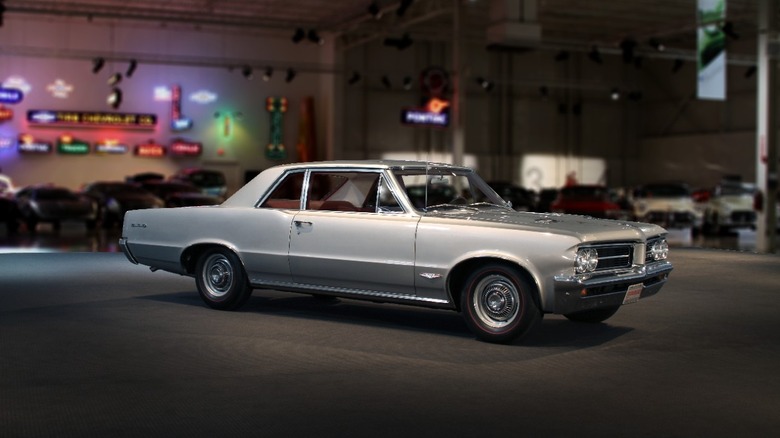
What's considered the very first muscle car is often debated, but many would point to the Pontiac GTO as the original blueprint. Its origin story starts with General Motors' ban on factory racing in early 1963, and engineers like the legendary John DeLorean finding ways to essentially bypass that rule. If GM wouldn't let them race, they'd build a street machine just as well.
It began with secret meetings between DeLorean and other Pontiac engineers like Russ Gee and Bill Collins. One of these meetings resulted in them taking the smaller V8 out of an early prototype 1964 Pontiac Tempest-LeMans and sticking a larger 389-cubic-inch Pontiac V8 under the hood. They gave it a tri-power carburetor/intake setup and stuck a four-speed stick in the thing. Safe to say, nobody wanted to stop driving it.
Eventually, the engineers convinced the upper brass that, because it would only be an option on the Pontiac LeMans, it wouldn't violate GM's rule of big engines as base options. Not long after, at the tail end of 1963, the Pontiac LeMans GTO was unveiled, and orders came rushing in. Evidently, Pontiac's foresight to debut the GTO would soon mirror the public's demand for muscle cars, as just two years after the GTO trim was in production, it would spin off as its very own model in 1966. It kept the 389-cubic-inch V8 option, but would offer bigger engines like the 400 and 455 V8s in later years.
Subaru WRX
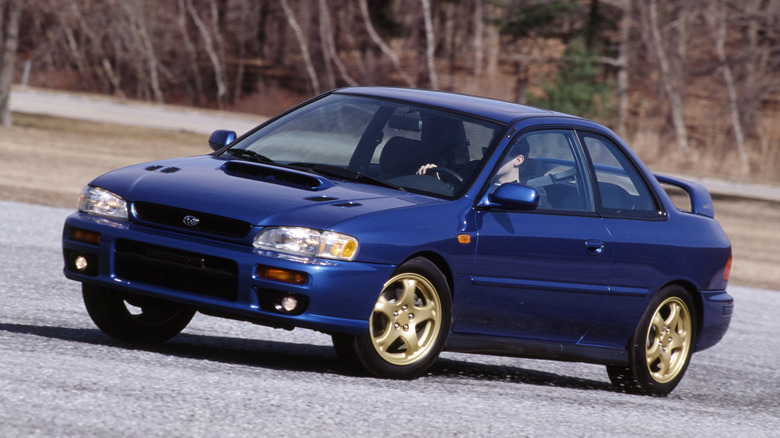
The Subaru WRX's special moment came more recently than any other car on this list, spending three full generations as the rally-bred trim of the Impreza, and only getting its shot as a standalone model in 2014. About 20 years prior to that, however, the then-named Impreza WRX had many special moments all its own. Like many of the coolest production cars of all time, the WRX variant of the Impreza was a homologation car, built for just one purpose — motorsport.
But Subaru's heart wasn't in the traditional circuit racing scene, and instead, the rally stages are where this brand made its mark on automotive history. More specifically, the WRX (World Rally eXperimental) was Subaru's response to the demands of Group A rally racing. The Impreza was small enough to maneuver the tight stages of its class, and could easily be homologated as a compact all-wheel drive player that fit right in with the brand's overall image. And just three years after its original 1992 debut in Japan, the WRX would dominate the World Rally Championship.
It won three consecutive overall championships from 1995 through 1997, and at least 162 different championships across various series around the world. At first, homologation was its only goal, but the second and third generations of Impreza WRX would confirm to Subaru just how loved the car was for regular production buyers. And as we mentioned, by the fourth generation model in 2014, it was finally time to promote the WRX as its own model.
Buick Riviera
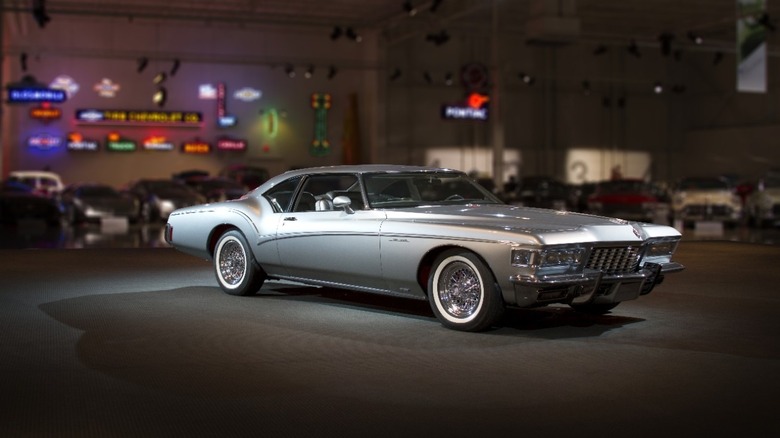
Unlike the Subaru WRX, the Buick Riviera doesn't have just one consistent image throughout its history. The WRX was always known for rally racing and being a performance compact, but the Riviera's claim to fame — its revolutionary early 1970s boat tail design — wasn't what GM had originally cooked up. That story starts all the way back in the post-war 1940s.
The late '40s saw Buick debut a major redesign for its full-size offering, the Roadmaster. The Riviera trim, named for the iconic Mediterranean coast, was the hardtop version. The new Buick sold well in the following years, and the Riviera name would venture even further into Buick's lineup. Its next role was as an upscale trim on the early 1950s Roadmaster sedan, before showing up as the pillarless cabin option for the Buick Special and Century around 1957.
But then came the Ford Thunderbird. Coining the "personal luxury car" term, the T-bird and its undeniable success sent shockwaves through GM, prompting a response that would call the Riviera up to the big leagues. In 1963, the new Buick Riviera arrived. This time, it wasn't a Special, a Century, or Roadmaster. It had sharp, classy edges that meant business. Throughout the 1960s, the beautiful Riviera got juiced up, with potent motors like Buick's 425, 430, and even 455-cubic-inch V8s. But, as we all know, the 1971 refresh was peak Riviera. This was when Buick debuted the now sought-after tapered boat-tail rear end that, even if you don't know it yet, will be one of your favorite cars from the 1970s.
Chevrolet Nova
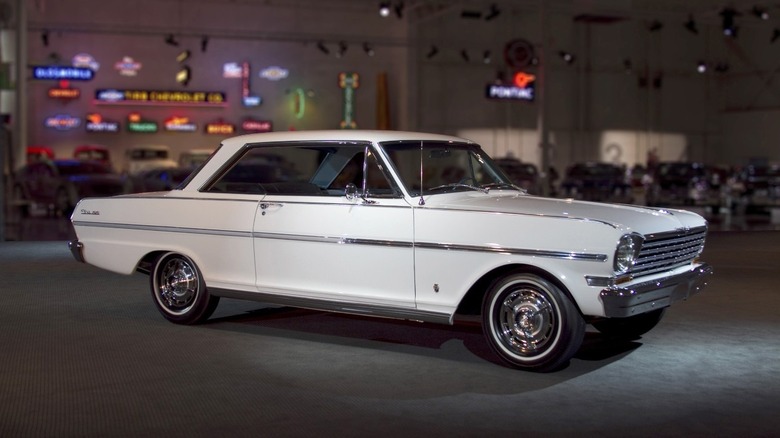
Ford was hard to beat in the sales department, especially when it came to compact cars. The Falcon and Mustang were two of the 1960s' most impactful models, and early on, Chevrolet knew it would be left behind if it couldn't come up with an answer. One might think that the Nova was a response to the Mustang, both being muscle cars and all, but that wasn't the original case.
The Nova, as it happens, wasn't its own model at first. In fact, the Nova nameplate was first deployed to combat the Falcon rather than Ford's pony. It was called the Chevy II, a compact car that directly targeted the Falcon. It came in all kinds of body styles: wagons, sedans, convertibles, and coupes, and within those were the customer's choice of three different trims, or "series," as GM called it — the 100, 300, and Nova 400. See where this is going?
At first, a 153-cubic-inch inline-four and a 194-cubic-inch inline-six were the only options. The Nova 400 trim, being the most expensive, came standard with the larger of the two. Looking back, these were very cute cars, but apparently, America didn't agree. The Chevy II got whooped by Ford and even Chevy's own Chevelle at dealerships, even after the Nova 400 trim received V8 options. By 1969, Chevrolet realized the Chevy II wasn't cutting it, and because sporty muscle cars were all the rage, the Nova dropped the "Chevy II" prefix and was its own model, continuing to offer high-output optional V8s similar to the Chevelle and Camaro.
Subaru Outback
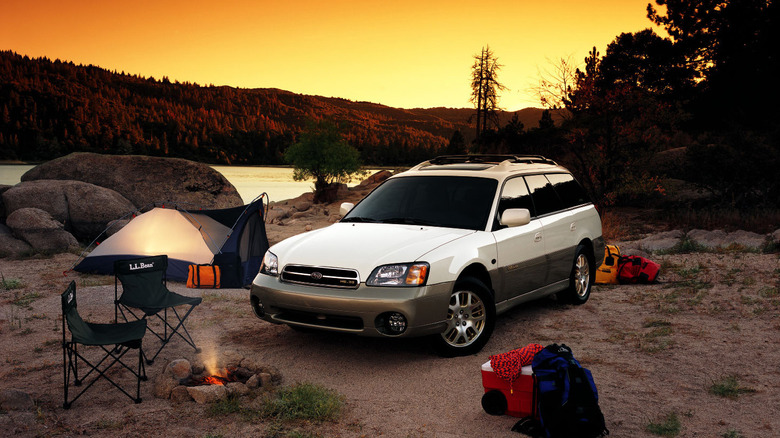
Similar to how the WRX has outlasted the Impreza sedan it was originally based upon (discontinued after 2023), the Subaru Outback has done the same. Which model was the Outback based upon, you ask? Well, it was none other than the Legacy. In 1995, Subaru added a trim to the Legacy L Wagon called the "Outback," which was supposed to act as the more rugged-appearing package, done up with a special cloth interior material and plastic exterior trim. That was all. No engine or suspension upgrade to be had.
That was until 1996, when a new 155-horsepower 2.5-liter flat-four arrived alongside a lifted suspension for the Outback models. Subaru liked this "Outback" look enough that it shared the love with the Impreza Wagon, adding the same exterior trim and extras that the '95 Legacy L Wagon got, calling it the Impreza Outback Sport.
Only five years after the Outback name debuted, it would become its own model. This 2000 model year car was similar underneath to the Legacy and, in order to differentiate, the Outback would be slightly larger and effectively end up as a half-size larger vehicle than the Legacy it was based on. Plus, it got a sweet 3.0-liter flat-six.
Oldsmobile 442
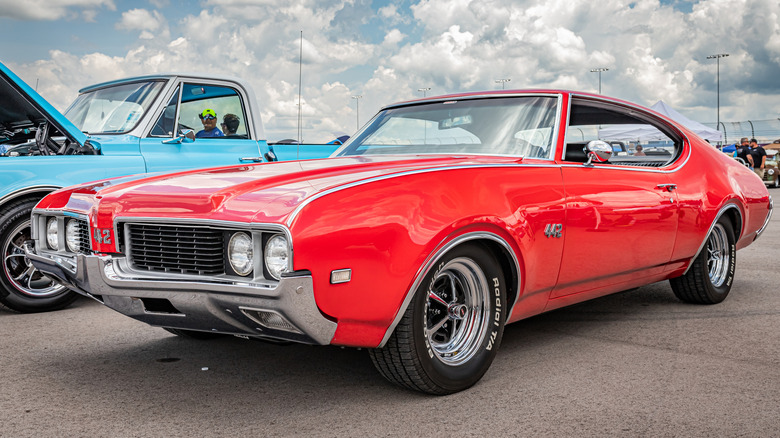
When the LeMans GTO trim shook up the performance world in the mid-1960s, Oldsmobile felt it needed its own response, and fast. So, Olds took a page out of Pontiac's book and went about creating a performance trim based on its own family car class, the F-85 and Cutlass models. What it settled on was the 442, and it would be Oldsmobile's prime weapon with which to battle the mighty GTO.
Though there is a convoluted history behind the 442 Oldsmobile's name, the denotation originally stood for four-barrel carburetor, four-speed transmission, and dual exhaust. The original engine was a 330 c.i. V8 capable of around 310 horsepower. That 1964 model gained enough public love to warrant its continuation, and in 1965, the 442 trim became a two-door-only package, now with a 345-horse 400-cubic-inch V8.
By 1968, the 442 ditched the F-85 line entirely, and became its own thing, debuting a new flowing coupe body. In 1970, the famous Olds 455-cubic-inch V8 was installed as the 442's standard. Yes, that was the standard option, and it made 365 horsepower. Sadly, the 442 only had a short run on its own, as the 1970s would once again bring the nameplate into trim level obscurity, before just about completely dying out in 1980.
Ford Ranger
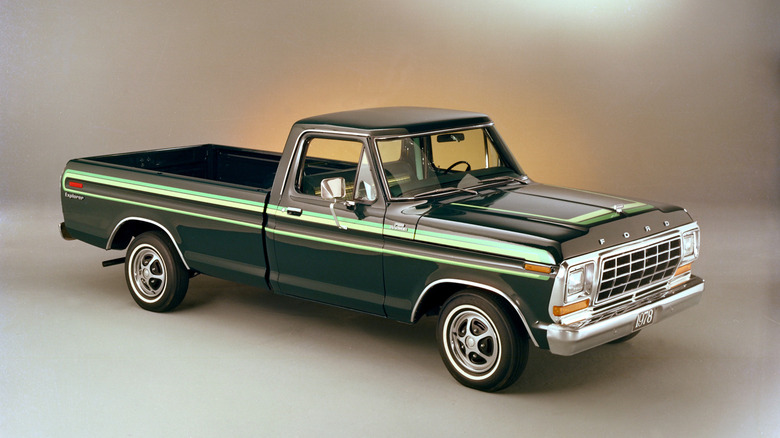
Luxury trucks were different back then. Today's trucks — equipped with adjustable leather bucket seats, dual-zone climate control, Apple CarPlay — are just as comfortable to drive as the average luxury SUV or sedan. But in the early days of fancy trucks, a high-class pickup experience was far more basic. In Ford's case, this luxury utility experience was a trim called the Ranger.
In the mid-1960s, the Ranger package was offered on F-series trucks — and even the Bronco starting in 1967 – and was the response to a truck market that demanded a less barebones driving experience. For the F-series trucks, the Ranger option was only available to those with the Custom Cab. Still, back in the day, this would have been worth it.
With the Ranger package, Ford would install a center console from Ford's compact vehicles like the Falcon, and an in-cab gas tank cover. Best of all, in place of the traditional bench, you got a pair of bucket seats straight out of the Mustang. But then the market changed, and small trucks like the Chevy S10 were popular as all hell. So for the 1983 model year, Ford promoted the Ranger name to become its ever-important small pickup as its one model.
Lincoln Town Car
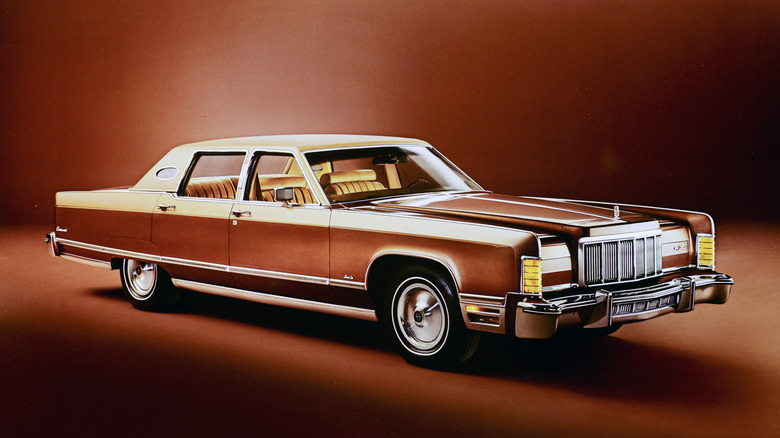
You know those fancy-looking black cabs that business people always come out of? That's a Lincoln Town Car. They have ruled places like New York City long after debuting on the Crown-Vic platform. What you may not know, however, is that the Town Car is just a spin-off of Lincoln's most iconic badge of all time — the Continental.
As the 1980s crept in and emissions standards were at their most stringent, the writing was on the wall for big, gas-guzzling luxury land yachts that had been so popular for decades. They just couldn't survive in a market and an industry that craved fuel efficiency and smaller cars in general. In 1981, the Ford Motor Company would scrap the Continental altogether in order to devise a comeback with a smaller body and a less thirsty engine.
The plan was a multiple-pronged approach, that would include the new Continental, as well as a new model previously relegated to trim status on the Continental since the late 1960s — the Town Car. It was classy, comfortable, and struck the exact chord Lincoln was after, enjoying a 30-year production run before its 2011 discontinuation.
Chevrolet Malibu
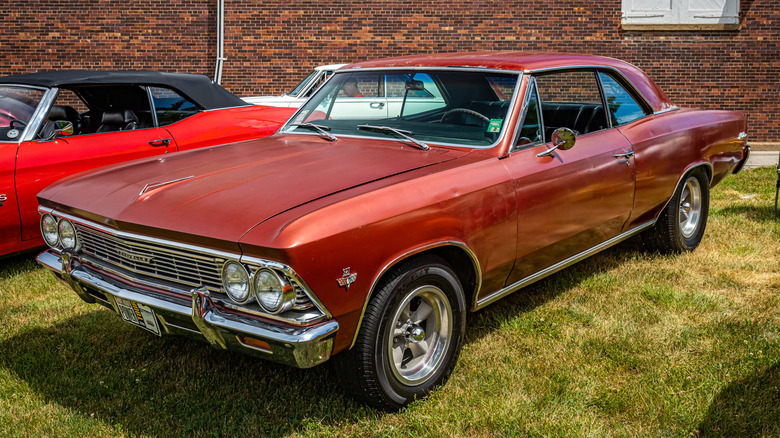
To hotrodders, the Malibu name is nearly as synonymous with the Chevrolet brand as the Camaro. It's taken on such an aura of 1960s luxury Americana that we often forget that the Malibu's best years were spent as nothing more than a trim level. It all started in 1964, when Chevy debuted the mid-sized Chevelle in order to compete with Ford's Fairlane.
But inside GM, there was some competition brewing. Pontiac released the GTO trim of the LeMans/Tempest platform, and Chevy needed something to compete with it. The result was the Chevelle Malibu and the Chevelle Malibu SS — the trim-topping variants that would bring the fight to Pontiac. Upon launch, its defining engine was the famed 327 small block, though there was also a 285-cubic-inch V8 available. The SS, however, would grow up for 1966, featuring a 396-cubic-inch V8 capable of up to 375 horsepower (the 396-powered Malibus were the only ones with SS badges at the time).
Fast forward to the 1970s, and the Malibu is still under the Chevelle banner, only now its whole bad-boy V8 attitude had been dampened by strict emissions regulations. In 1978, the Chevelle was finally dropped and fully replaced by the Malibu, which became its own model. As you may know, the Malibu went on for five more generations after 1978 and was still being produced until 2024, when Chevy finally decided to axe the badge for good.
Nissan GT-R
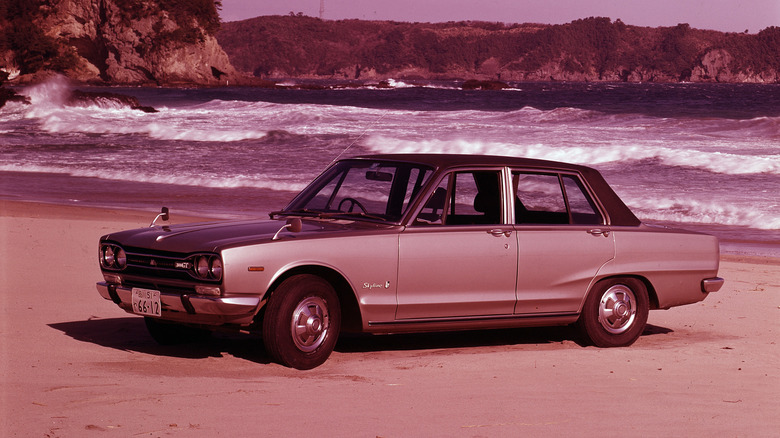
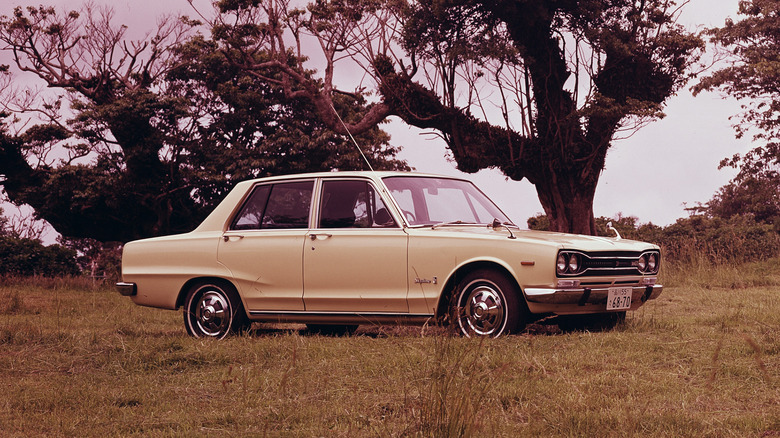
We're almost positive you know this story, but an automobile of this significance nonetheless deserves its history to be reiterated. It begins with the Prince Skyline, a car that had been produced by the small Japanese manufacturer since the 1950s. It was used in touring car races under the name 2000GT (not the Toyota) and had a triple carburetor-fed 2.0-liter straight-six to go toe-to-toe with giants like the Porsche 904.
It inspired the Prince team to create a mid-engined racecar, instead of the 2000GT's front-engine design, in order to truly battle the 904 and those like it. The R380, as this new racecar was called, was impressive, but its engine turned out to be far more impactful than the car itself. By now, Prince and Nissan had merged, and competition had caught up, so Nissan and the remaining Prince racing engineers cooked up another special version of the Skyline, this time using the R380 racecar's straight-six.
Dubbed the Skyline GT-R, it appeared in 1969 and was an instant cult classic. Fast forward to the 1990s, and the R32, R33, and R34 Skyline GT-Rs had fervently captured the attention of the motorsport and enthusiast worlds before disappearing for about six years. Finally, in 2008, after 40 years of using the Skyline name, Nissan brought the (R35) GT-R back as its own model, creating what was technically the first Nissan GT-R.
Chevrolet Silverado
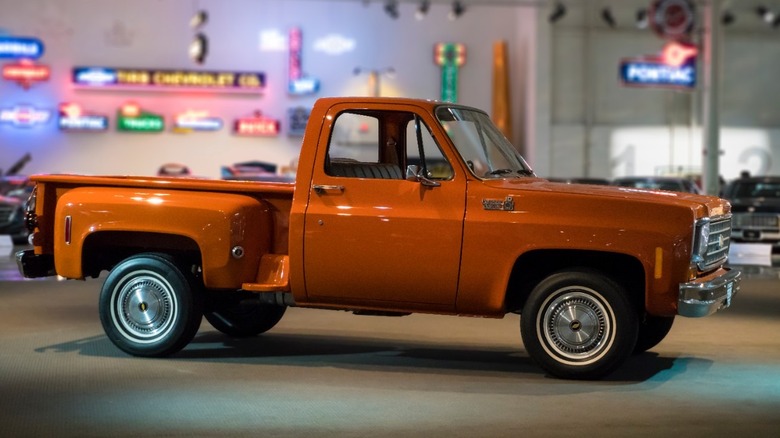
For most of Chevy trucks' lifespan, they were designated by simple letters and numbers. The C and K series pickups and utility vehicles had names like C10, K10, C1500, and so on. Of course, there were exceptions like the early Blazers that had proper names, but it wasn't until 1999 that Chevrolet finally rebranded what would become one of its most popular vehicles with a standalone model name.
We're talking, of course, about the Silverado. The name first cropped up in the 1975 C10 trucks as the range-topping trim, sitting above the Cheyenne and Scottsdale packages. Being the most exclusive option, the Silverado came with basically all the same stuff you'd get in the lower two trims, like full-depth foam cushioning, ashtrays with lighters (because the 1970s), wood grain steering wheels and door panels, and additional interior lighting.
Where it differentiated itself was with Silverado-exclusive weaved nylon upholstery, bucket seat options, and most notably, sound deadening. The Silverado got special hood, floor, headliner, and cowl insulation, making it the ultimate quiet luxury pickup. It continued to serve as a trim until 1999, when Chevrolet debuted the new GMT800 platform and gave the Silverado its own model slot. Obviously, that marketing move worked out pretty well in the long run.