

Purge Valve: What It Is, How It Works, And Why Proper Maintenance Matters
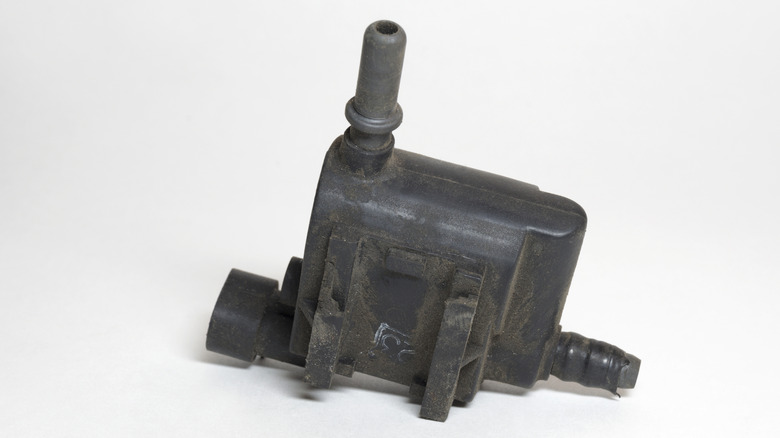
The emissions system of a modern automobile comprises many parts, and they collectively help reduce pollutants and other toxic gases from harming the planet and causing respiratory disorders. These include the exhaust manifold, catalytic converter (which can clog up with age and abuse), oxygen sensors, EGR valve (which can be deleted for performance applications, but it's highly illegal to do so), and the PCV valve (which can bring your motor to an early grave when it goes bad).
Alongside these components, there's also the purge valve. It's commonly overlooked, but it definitely makes itself known when something goes wrong. As a part of the emissions system, the purge valve (also referred to as the purge control solenoid or canister purge valve) helps make your car's engine burn cleaner. You can find the purge valve in the engine bay near the intake manifold, but it can be situated in places near the fuel tank in some cars.
The purge valve is typically a small plastic part with hose connectors, electric sockets, and an electrically-controlled solenoid inside. Its main job is to allow vapors from the fuel tank to flow to the intake, where the engine can burn the fuel vapors instead of mindlessly releasing the gases to the atmosphere. This results in better fuel economy and lower emissions.
How does the purge valve work?
The system includes a charcoal canister to store fuel vapors from the tank. The purge valve is in a closed position when the car isn't running, but when it's on, the power train control module can rhythmically pulse the valve to open. This allows stored fuel vapors from the charcoal canister to flow into the intake and burn in the combustion stroke.
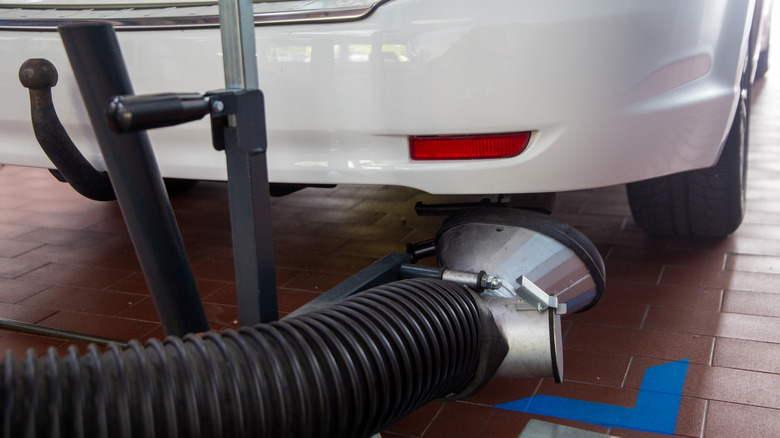
Sensors monitor how quickly the gases move towards the purge valve, and the system will illuminate the check engine light and issue some fault codes if the purge valve sticks, malfunctions, clogs up, or goes bad. When it does go haywire, your vehicle might eat more gas or idle roughly, the engine could feel hesitant when accelerating, and restarting the motor could prove challenging — particularly after filling up the tank with gas. You can also smell a faint whiff of gas when the valve is stuck in the open position, and your car could potentially fail smog tests.
Luckily, the system will trigger a check engine light when something goes wrong, and will typically display a P0441-P0446 fault code after diagnosing the issue with an OBD2 scanner. Purge valve malfunctions are highly common among all makes and models of vehicles, and replacing the part is highly recommended instead of cleaning it. Depending on the vehicle, installing a new purge valve could cost as much as $500, but you can save money by doing it yourself, since the price of the part alone is typically under $200.
How to replace a faulty purge valve

The most difficult part of replacing the purge valve is actually finding it. Refer to the owner's manual or service manual of your car, or ask a knowledgeable friend or mechanic to determine where it is. After finding it, the process is as simple as disconnecting the battery, removing the connectors, and unscrewing some bolts to remove the old valve.
At that point, it's a stellar idea to visually inspect the vacuum hoses and replace them when necessary, particularly if they seem to be cracking or fraying. After removing the purge valve, grab the new one, connect the hoses and sockets, and secure it to its stock location. The final step is to reconnect the terminals to the battery, and you're good to go.
The purge valve can last the life of your car, but general wear can shorten its lifespan just like any other car part. Moreover, topping off the fuel tank up to the brim could allow fuel to contaminate the emissions system, including the vacuum lines, charcoal canister, and purge valve. If you suspect the purge valve is going bad and you're handy with electronics, you can test it by applying voltage and a ground to the purge valve terminals. You should hear the solenoid valve clicking after applying voltage. If you don't, the purge valve has gone bad and needs replacing.