

9 Things You Need To Know Before You Test Drive A Car

For a lot of us, the humble test drive is one of few bright spots amid a dealership process that most people have grown to dislike pretty wholeheartedly. And you should for sure enjoy the heck out of it. As you do, just remember that the fun part of the experience is at least as much work as play, with you trying to glean precious first-hand insights that you can't get from devouring reviews and trolling the forums. Not only that, but like everything else that happens between when you walk into the dealership and when you drive off with your new ride, it's yet another front in your savvy battle to negotiate the best deal on a car.
Because in addition to evaluating handling, visibility, brake feel, infotainment usability, and road noise, you're also managing something less mechanical: pressure. You're processing a flood of information in a compressed window of time, often with a salesperson in the passenger seat and a negotiation waiting back at the desk. That combination can blur judgment fast. Go through the motions and you risk anything from buying the wrong car to agreeing to a subpar deal.
So yes, enjoy the drive. Just don't forget what it is. Before you slide behind the wheel and hear the inevitable "you're gonna wanna turn right out of the lot here," let's go through everything you need to know first.
Do your homework before you get there

As much as we'd like to live in a world where you can wander doe-eyed into the dealership and let your heart and whatever salesperson shakes your hand first be your guide, you're really doing yourself a disservice if you don't get your head on straight before setting foot on the lot. And since you're probably researching your car purchase all wrong to begin with, you'll want to take your time and get it right firmly in advance of actually stopping in.
The forums and reviews that we mentioned earlier aren't a substitute for a test drive, but they can absolutely help inform one. If drivers are complaining online about poor visibility, you can be sure to give a bit of extra attention to blind spots. If the magazine review lists road noise in their "con" column, you'll know to quiet down and ask the salesperson riding shotgun to pipe down and quit reading from the owner's manual for a minute to really pay attention to what you're hearing. Even something as simple as your favorite YouTuber pointing out something potentially annoying about the quirks and features of the infotainment system can give you something to think about during your limited time behind the wheel.
Bring the right paperwork
This one actually isn't a huge deal, and assuming that you drove to the dealership in the first place, you probably have everything you need. They will almost certainly ask for your driver's license and some places may ask for proof of insurance, but that's actually pretty uncommon. (We'll cover the insurance particulars in just a moment).
Just as a mild word of warning, assuming that you're doing this test drive at a dealership (as opposed to a private seller), it isn't unheard of for dealerships to "detain" a customer in one way or another in pursuit of closing a deal, and them keeping hold of your driver's license is one way that this can happen. While it's totally normal for them to make a photocopy of your license for their records, it's a red flag if they seem hesitant to give it back right away. Also it's pretty commonplace to later use that license to get a head start on financing and other paperwork, but they absolutely may not pull a credit report without your explicit permission. So bring your license, have your proof of insurance handy just in case, and absolutely feel free to get your original documents back before moving forward in the process.
The insurance basics

When it comes to understanding the particulars of insurance liability, there's a good chance that your strategy for test drives is very similar to your strategy for borrowing your brother-in-law's truck for the day: being super careful and really hoping you never have to learn how the insurance works if something happens. It turns out that you can breathe easy, though, since the answer is actually refreshingly straightforward. Car dealerships have a commercial policy that covers customers taking test drives, so your coverage will be considered "secondary," meaning that it would only come into play after the "primary" coverage is exhausted. Similarly (though not quite the same), if you're buying from a private seller, the seller's policy would kick in, though in this case you may want to verify that they have coverage to begin with, especially if you're navigating a potentially sketchy Craigslist deal or similar.
The point here is that under normal circumstances, this isn't really something you should worry about. If something truly unfortunate happens and you either exceed the limits of the other party's insurance or if you manage to get yourself sued for negligence after getting into an accident, then your own insurance might come into play. For their own comfort, a private seller might ask you for proof of insurance and a dealer might be more likely to do so if you're doing an extended test drive, but other than that, this isn't generally something that's going to come up.
Keep control of your trade-in
This isn't an article about how to negotiate the best deal or on the pros and cons of trading in your car, so we're not going to get into how to navigate your trade (or not), but since the test drive is often a point in the process where they ask you to hand over your keys as well, we'll touch on it quickly. Including your trade in the conversation from the beginning creates one more moving part that the dealership can use to massage the numbers in their favor. A $5,000 discount on the purchase price that's offset by $5,000 worth of wiggle room they know they have on your current vehicle isn't really a discount at all. So the real point here isn't to trade or not to trade, but rather simply not to let the inflection point of the test drive be what brings that conversation to the table. You can politely indicate that you haven't decided yet, or, for additional logistical leverage, you can bum a ride and leave your potential trade at home for this part–out of sight, out of mind.
Also, one more thing. Remember that hold-your-driver's-license-hostage tactic that we talked about earlier? This can also happen with your trade, either with the whole vehicle ("It's around back and will be a few minutes.") or even just your key fob ("Shoot, I must have left that back in service.") Regardless, even if your dealer has the best of intentions from top to bottom, keeping your trade close to the vest as you prepare for the test drive is likely in your best interest.
The route isn't set in stone

Dealerships tend to have a go-to route when it comes to test drives, which will usually consist of mostly right-hand turns simply because this keeps customers in the neighborhood, and turning left across traffic is just a riskier maneuver that they'd like to minimize if they can. Additionally — and this is a thought and not an accusation — a salesperson could select a route that helps to hide some known rough spots in how the car handles, avoiding the pothole-ridden stretch of main street in the sports sedan with the firm suspension or keeping away from the high-speed highway merge that gives the CVT an identity crisis.
Anyway, the point here is that your salesperson might grumble a bit, but it's worth it to advocate for taking the car on a route that's going to give you a real-world sampling of how you're going to use the car. This means spending time both in the city and on the highway, on smooth tarmac and on bumpy side streets. You should be aiming for a minimum of 30 minutes of seat time, so don't be afraid to advocate for yourself or to take another lap if you need to.
What to look for with driving dynamics
Now that you've escaped the showroom and taken the car somewhere resembling an actual road, it's time to stop thinking like a shopper and start thinking like a driver. Except you don't want to put yourself on autopilot, either. You know that experience where you're headed somewhere and you sort of zone out and suddenly you're at your destination without any real recollection of how you got there? Well that's called "highway hypnosis" and you really want to make sure that it doesn't happen during your test drive, or else you've lost the most valuable minutes you're going to get with the car. Even if you don't zone out completely, it's very easy to sort of go through the motions and not really pay attention to all of the little particulars along the way. This is where a mental checklist comes in handy.
Start simple: starting, stopping, turning. This is where you get a feeling for strong acceleration (both from a stop and in a highway merge situation), braking (gently and as if in an emergency), and steering dynamics (turns, lane-changes, etc.). Pay careful attention to the feel of a manual transmission or the responsiveness of an automatic. If you're stepping into an electric car, give extra consideration around how it feels to pull away from a stop or what it's like to use that particular regenerative braking system, because it might feel quite a bit different than you're used to. In general, confirm or deny the pros and cons you heard about in the reviews you checked out before you came or the cautionary internet comments you found. This is all stuff that you're going to live with, so take this time to focus, dial in, and absorb everything you can.
Test (way) more than the drive
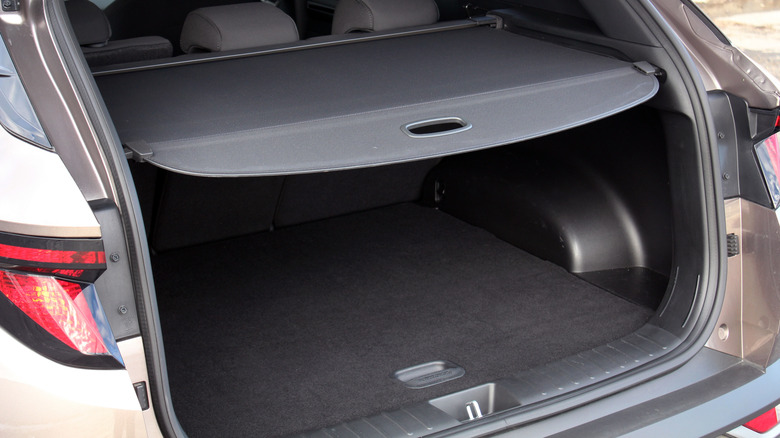
One of the most important elements of the test drive isn't part of the test drive at all. You've of course heard the phrase "kick the tires" to describe ineffectually puttering around a vehicle to make some sort of a vague evaluation, but just before or just after the "drive" portion of your test drive is a chance to do just that, both literally and (much more importantly) figuratively. This is where you get a chance to examine the fit and finish, from things you'll touch like the steering wheel or shifter to things that will just annoy you to look at if they're off, like the gaps between body panels. It's also your chance to really make sure that the vehicle matches your actual life. Will the dog crate fit through the rear door? Does the trunk have room for your golf clubs? Will the back seat accommodate a handful of growing teenagers who you need to run back and forth to hockey practice?
There are plenty of good cars with terrible interiors, so this is your chance to make sure you're not about to buy one. If you're buying an admittedly compromised sports car, maybe you know that it's going to be mildly-to-severely compromised and you just need to poke around and make sure you can really live with every day. But for a proper daily driver that's realistically going to be as much about loading, unloading, and running errands than anything else, you definitely want to make sure that it's going to meet your needs — not just on paper, but in your actual life.
Overnight test might be an option
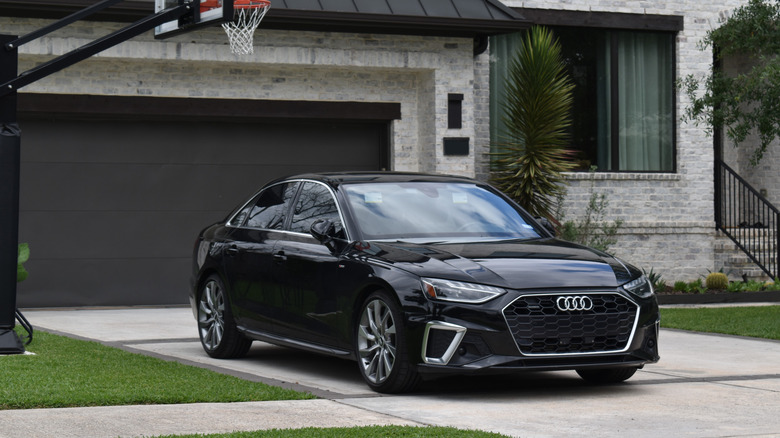
This might have never even occurred to you, but it turns out that in a lot of cases you can test drive a car for more than a few minutes afforded by your brief cruise with the salesperson riding shotgun. Taking the vehicle for an extended test drive, usually something like 24 hours may be an option depending on the dealership, the manufacturer, and the specific vehicle you have in mind. This gives you a chance not just to really live with the vehicle for a day-in-the-life of, well...you, but also to let you slow down and think through the driving and ownership experience at least somewhat divorced from the pressure of the sales process.
Even if the dealership you're working with doesn't offer such a thing, there are often still ways to pull it off. Nissan partners with peer-to-peer car rental service Turo to offer extended test drives in real customer vehicles, provided you live in Los Angeles, Salt Lake City, or the upper half of New Jersey. While this does feel like a very Nissan approach to such a thing, you can apply the same strategy to anything else on the Turo platform. This is potentially especially handy when it comes to more enthusiast-oriented vehicles which are less likely to be let off the dealership lot overnight but more likely to be earning their keep on the rental platform. There's also the traditional car rental companies, which might also have something in their fleet in line of what you're looking to test drive.
Separate the drive from the deal

Once you arrive on the lot, everything from the bad free coffee to the over-the-top compliment paid to your handshake is there to influence you to buy a car. So, remember that the test drive itself is part of your shopping experience and not the dealership's sales tactics. You have limited time to really focus on the hands-on driving experience, so you have every right to make the most of it. Unfortunately, it's pretty common in sales training to reinforce that the test drive is a prime sales opportunity. Well you don't have to let it be that. Use the time to experience the car, ask questions, and make sure you have all the information you need to make a decision that's good for you. If the salesperson is floating numbers or asking you about monthly payments, you can firmly let them know that you can talk about all that once you're back at the lot.
Regardless, no matter how pleasant the test drive is, the best time for them to strike a deal is going to be right after you pull back in and park it out front. You don't have to go from test drive euphoria to dealership haggling like Neo waking up from the Matrix. Take your time, walk around the building, or even excuse yourself to head home (or to the next dealership on your list) before you buckle in for the rest of the negotiation process. You'll have the benefit of calmly working through your decisions and maybe the financial numbers on your own time and in relative peace, at least as much peace as you can find making a deal in a world where seven-year car loans are becoming normal.