

8 Underrated V8 Engines That Deserve More Attention
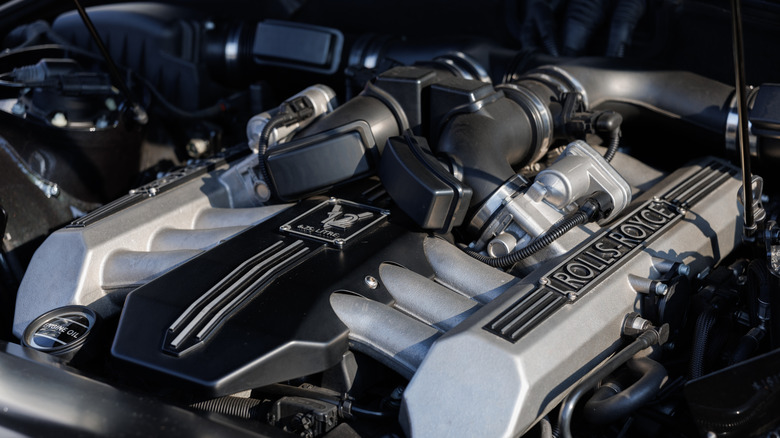
It wouldn't be a newsflash to declare the current status of the internal combustion engine as unpredictable. With regulations in a constant and extreme state of flux, the V8 in particular has drawn ire and full-throated support in equal measure. Between emission and CAFE regulations, many manufacturers had clearly mapped out long term plans that saw many V8s being phased out. But now, after both customer pushback and governmental, ah, regulatory recalculations, V8s are making their way back onto the options list.
Even with the current volatility, it's important to note that this is just the latest example in the cyclical history of the V8. Time and again since WWII — particularly with the foreign companies looking to make an impression in the United States — automakers believed that this engine configuration gave them a distinct advantage. Both on the numbers, and in customers' hearts and minds, you need a V8. With that in mind, it seems like a good time to look back and check out some lesser-known gems in the category that stand out — not just the LS, HEMIs, and Voodoo mills, but the game changers with a lower public profile.
There were a couple of ways for an engine to make this list. For example, if a company was using the V8 configuration for the first time, that merited consideration. Another reason would be longevity — in a world with constantly changing regulations and restrictions, an engine that had a long production span speaks volumes.
Last but not least, if the engine in question seemed to be well-aimed at enthusiasts and opened the company up to a market thanks to a halo car that reflected well on the rest of the lineup, we felt it deserved some recognition as well.
Fiat 8V
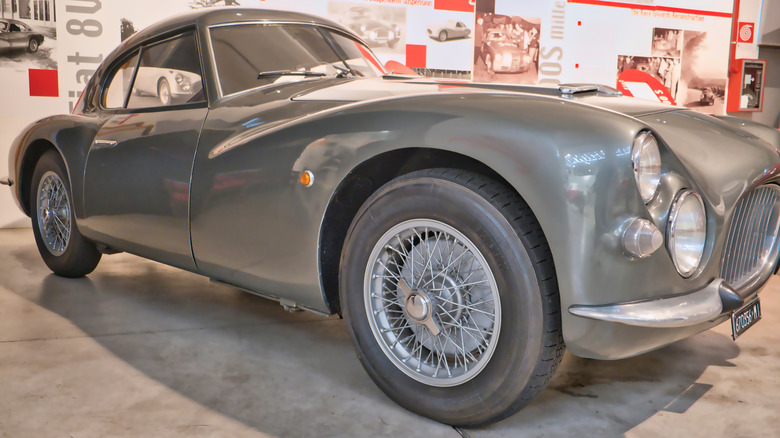
Our earliest entry begins its story in 1947. That year, Italian automaker Fiat began laying out a plan to pull itself together in the aftermath of World War II. Post-war, the company was surviving by selling 13 hp Topolinos, but as it steadied itself it began to aim a little higher than both customers and competition had anticipated.
As Fiat gazed towards the U.S. and its thriving economy, some observations led it to believe that a V8 would be just the thing to attract Americans to its products. At first the project planned for a sedan, but the company wound up going with a stylishly designed coupe. The engine itself was a relatively narrow 70-degree angle V8 displacing 2.0 liters and producing 105 hp.
The coupe debuted at the 1952 Geneva Auto Show, and was called the 8V — apparently not simply called the V8 because Fiat had been mistakenly informed that Ford had trademark rights to that name. Still, once Fiat was up and running with the 8V, the car became an important factor in building company momentum. In addition to producing racing variants to compete in the 2.0-liter class, Italian design houses like Ghia saw fit to draw up gorgeous coachwork to lay over the Fiat base, and the car helped the company continue its dominance as the largest Italian automaker.
While it would never reach the same level of cultural cache as the big Detroit V8s, as a way to prime the pump, the 8V proved to be a critical innovation for Fiat.
BMW M507 3.2-liter V8
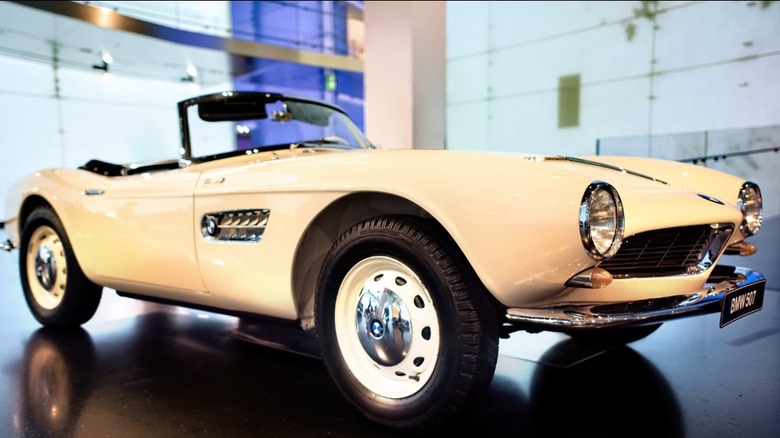
Like Fiat, BMW was also trying to pick itself up off the ground after the war, and similarly looked to the United States as a potential saving grace for greater sales. So as soon as it had its footing, BMW swung for the fences with the gorgeous V8 507. However, unlike Fiat's success with its 8V, the BMW V8 was nearly the end of the company.
It wasn't just BMW involved here. This sporty V8 endeavor was envisioned and encouraged by Max Hoffman, the legendary New York City-based European car dealer. Hoffman saw an opportunity to offer a stylish European sports car that would comfortably slot below the very expensive Mercedes-Benz 300SL but above the popular British roadsters that returning GIs brought with them, like MGs and Triumphs.
Hoffman's plan involved BMW designing and building a small V8 engine appropriate for its mission, but that mandate was nearly the end of BMW. A light 150 hp 3.2-liter OHV V8 was mated to a four-speed manual in a sleek body, but production costs for the car were significant. Originally conceived as a car that would cost about $5,000, the final asking price was closer to $10,000, which was well beyond the means of the average car buyer at the time. The resulting low sales of the car stretched BMW's resources thin and nearly drove the company to bankruptcy.
While Elvis Presley's love for the 507 helped brand awareness, true success for the company came through its more affordable sports sedans and coupes in the 1960s. Still, once BMW gained its foothold, it remained committed to both its performance street cars and the V8 engines that propelled many of its premier models.
Buick 3.5-liter V8
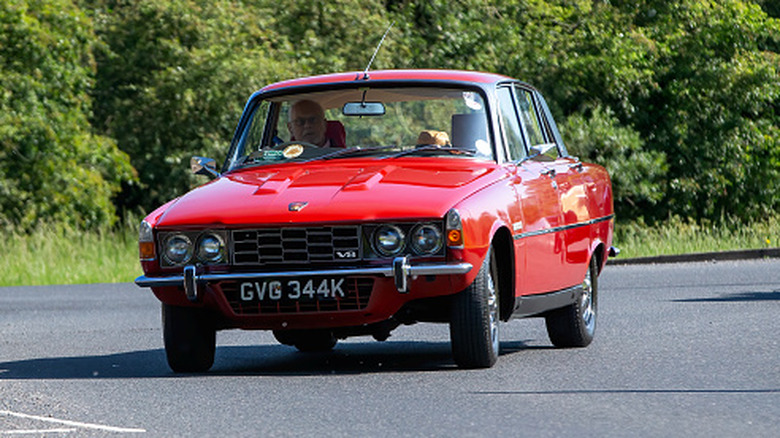
The short version of this story seems to warrant no further attention — Buick's all-aluminum 215-cubic-inch V8 was brought to market in 1961, immediately had issues mostly due to porous casting as GM struggled with the aluminum alloy, and it stopped production in 1963. Not exactly the stuff of legends.
However, in the mid-1960s, Rover stepped in with a plan to buy the rights to the engine. Improved casting techniques for the lightweight alloy made it a good bet, and allowed a quicker turnaround to actual production instead of starting from scratch. The V8 acquisition paid off handsomely. First used in British-market Rover sedans, the relatively light V8 made a difference in its P5B sedan starting in 1967. Beyond that, Rover eventually saw fit to install the motor in Triumph and Land Rover products, and the first Range Rover in 1970 came equipped with the V8.
Though head gasket repair for this engine is practically its own cottage industry, it was a workhorse motor used in both Rover, Land Rover, and Range Rover models. It was used in the fastest versions of the Rover sedans, but also became a fixture in the off-road community starting with the Defender and the first Range Rover, and continued to be used right up until 2005 with the Discovery II.
Rolls-Royce/Bentley L-Series
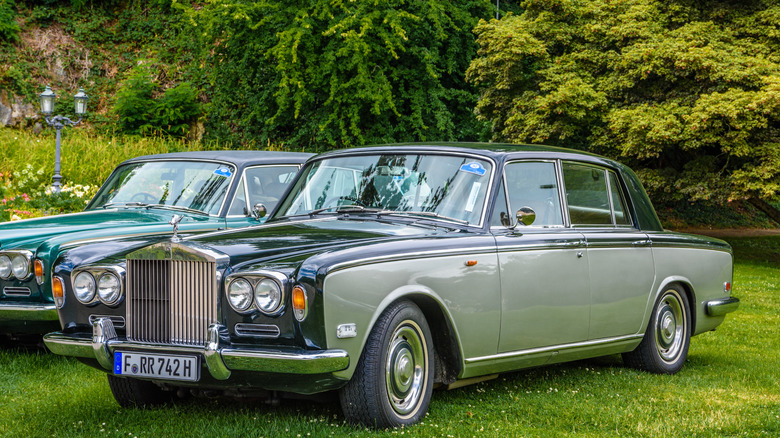
Once upon a time — before BMW and Volkswagen made a spectacle of acquiring British luxury motor car companies in 1998 – Rolls-Royce and Bentley were under one roof, and had been since Rolls had purchased Bentley in 1931. While the companies already had six- and 12-cylinder engines, its first V8, a 6.25-liter variant, found its way to market for Rolls-Royce in 1959. This engine performed its job while barely being heard — proper landed gentry motivation, capable if not normally suited for track work.
At first, adequate power was all that was called for in favor of smooth silence — these pushrod engines were not powerhouses, but low revving and torquey. As the years progressed, the size grew to its largest and final 6.75-liter capacity. Still, things got truly interesting when Bentley began offering a series of turbocharged variants, with the final 2020 iteration arriving a twin turbo configuration with 530 hp and a rather startling 811 pound-feet of torque.
This longevity is made all the more remarkable because the parent companies had other exclusive engines to use — BMW favoring V12s in various Rolls-Royce models, and Bentley models with VW-sourced modern W-12 and twin turbo V8s. Alongside those more modern dual overhead cam engines, the original pushrod L-Series V8 enduring into its 60th year in a premier luxury brand is an incredible achievement.
Ferrari 2.0 liter Turbo V8
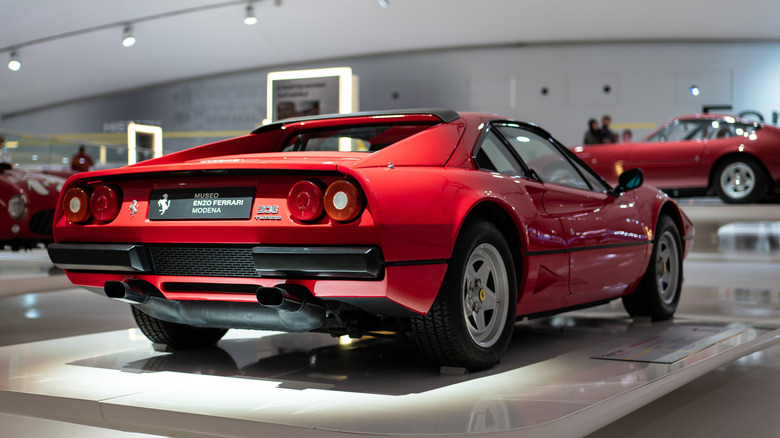
Ferrari engines are hard to classify as underrated, but this domestic market engine was a triumph of engineering over regulation. The issue for cars sold in Italy during this period was a new tax burden, imposed in the 1970s in the fallout from the international fuel crisis. For any car sold there, the value added tax on anything equipped with an engine over 2.0 liters jumped to a hefty 38%, roughly twice what it was for engines under 2.0 liters.
Ferrari first responded with a base 2.0-liter V8 that was naturally aspirated and less powerful than the 3.0-liter version. Heading into the 1980s, however, Ferrari used technology developed for its Formula 1 racing efforts to bring the 208 GTB Turbo to market, which was nearly as quick and powerful as the regular 308.
By adding the 2.0 Turbo to the lineup, Ferrari essentially had two models providing similar power, but in much different ways. This was an unusual move at the time with a dramatic impact for the little 2.0 V8 — power increased from 155 hp to 220 hp, negating the performance disadvantage of the tax-dodging smaller displacement motor effectively. This forward thinking strategy predated similar moves by other companies to build smaller, more efficient turbo engines by many decades.
Jaguar AJ V8
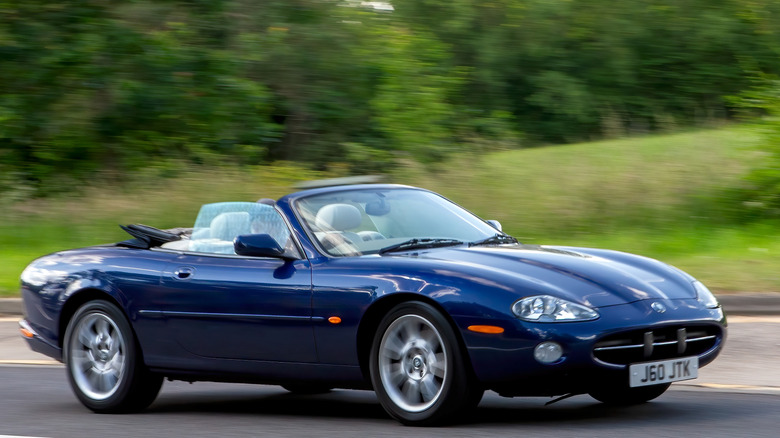
Jaguar engines have a long and storied history in models ranging from the gorgeous XK-E coupes to the stylish XJ sedans, but until the late 1990s they never offered a V8. Long a purveyor of successful inline-six cylinder engines, when it was time for more power Jaguar just doubled up and made V12s. However, the clean-sheet design for the AJ V8 deserves special mention, as it was an instant hit that went on to power many different vehicles in different variations — even up to the present day.
While this engine was a Jaguar design, its debut immediately before Jaguar found itself lumped into Ford's newly formed Premier Automotive Group, which installed variants of the AJ in anything that it deemed worthy of the sophisticated 32-valve DOHC mill. It began with the XK8 coupes and convertibles in 4.0 liter form for the 1997 model year, but the variants of the engine soon appeared in Aston Martins, multiple Lincolns, the retro 2002 Ford Thunderbird, and several Land Rovers.
In its final 5.0 liter iteration, the supercharged versions powered R model Jaguars, and is still available in the new Land Rover Defender sporting as much as 518 hp — no longer the fastest model, with the existence of the BMW-engined Octa top trim, but one that holds its own despite decades on the market.
Nissan VK45DE
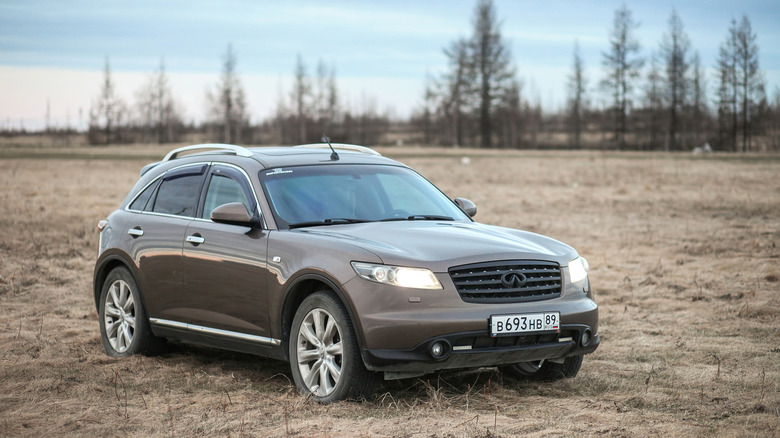
Nissan's second generation V8 designed for its Infiniti marque doesn't get the attention afforded its Lexus rival. Unlike Toyota's runaway success with its LS400 and the 1UZ-FE, the first Q45 was plenty quick, but the car itself wasn't as commercially successful as its Lexus rival. It probably didn't help that the initial memorably ambiguous Infiniti ads didn't seem to be advertising anything but a higher state of consciousness. Still, contemporary tests noted that the Q45 was a faster and more athletic interpretation of a big luxury car, and a lot of that was from the V8's grunt and ability.
The VK45DE leaned into that. The new V8 was simply a much more advanced motor than its predecessor, and it wound up powering the top line Infinitis to consistent praise for its capabilities. While the big body Q45 had the expected luxury gloss added, Infiniti put this engine in some fascinating vehicles, including the performance focused first-generation Infiniti FX45 – a sports SUV with striking looks and commensurate speed.
That bullfrog of a design was just the start, as its new sports sedan, the M45, came cleaving through the air looking downright dangerous with its straight edged sheet metal, a Japanese interpretation of an early '70s Mopar sedan with all the speed. It was some of Nissan's best work, both cosmetically and mechanically, but the engine remains in the long shadow cast by Toyota and Lexus.
Volvo/Yamaha V8
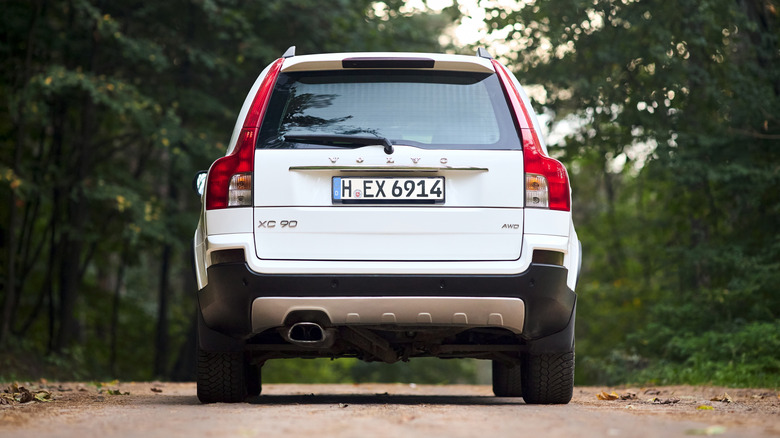
Last but not least, we come to those enduring purveyors of Scandinavian design — Volvo.
Volvo was late to the V8 party, trading mostly in small- to medium-sized sedans and wagons that featured unique approaches to motivation, such as relatively early adoption of turbos, five-cylinder engines warbling the distinct tune that was once mostly the province of Audi Quattros, and both inline engines and V6s. However, with its first SUV and a refresh of its large sedan on the way in the early 2000s, the mandate was made for a V8 and the decision to team up with a partner to expedite the process.
Yamaha was not a stranger to the process, in case anyone forgot the Taurus SHO engines developed with Ford that came in both V6 and V8 form. For Volvo, Yamaha created a light all-alloy 4.4-liter gem of a motor — and forget the power, it's the incredible sound and harmonics this engine makes under power that feels like development included singing lessons. Especially compared to the inline-six that had been the powerful option, the difference in sound and harmonics had a profound effect on how people felt about the S80 and XC90 in particular.
Like all good engines, it soon found a home in other engine bays. The most impressive variation is in Noble's M600 sports coupe, where twin turbos and strengthened internals produced a lightweight power unit with up to 650 hp that begs to be swapped into an aging Volvo C30 for the ultimate sleeper.