

SpaceX Comes Up With Yet Another New Business Model, Privatized Space Traffic Control
SpaceX, the company that makes reuseable rockets, which is also the company that makes the Starlink constellation of satellites, which is also the company that provides internet service from said satellites, which is also the company that wants to start making voice-controlled attack drones, has now added on a new business venture! No, not CEO Elon Musk's other company xAI, although the former is set to acquire the latter. Instead, SpaceX has announced that it will start providing a space traffic control service, called Stargaze, to make sure satellites don't crash into each other.
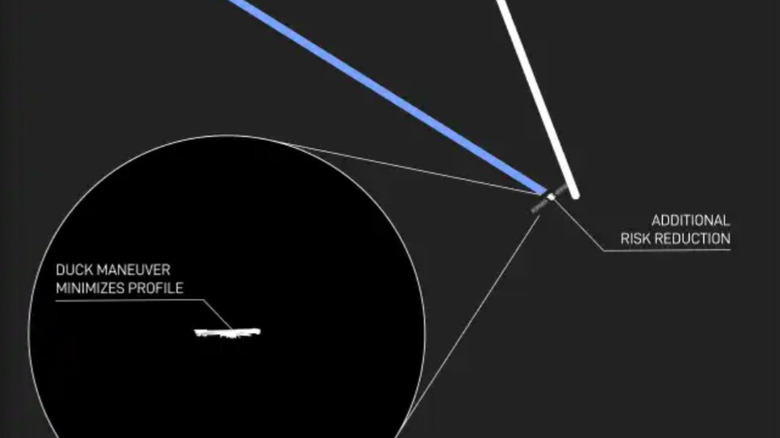
The need is real: low-Earth orbit is getting mighty crowded these days, thanks mostly to Starlink itself, although everyone else wants to hop on the constellation bandwagon too. In fact, a Starlink satellite nearly collided with another operator's just in December. The old system of shoving satellites into space and hoping for the best is not going to work going forward. PC Magazine reports that Starlink had to take nearly 150,000 safety maneuvers in the second half of 2025, compared to under 7,000 in all of 2022.
So it seems that Starlink, whose tens of thousands of satellites brought the issue to a head, wants to try to solve the problem for everyone. On the surface, this appears to be a noble gesture done for the benefit of all spacefaring operators, offered free of charge. But this is capitalism: nothing's really free.
How to tell what's in space, where
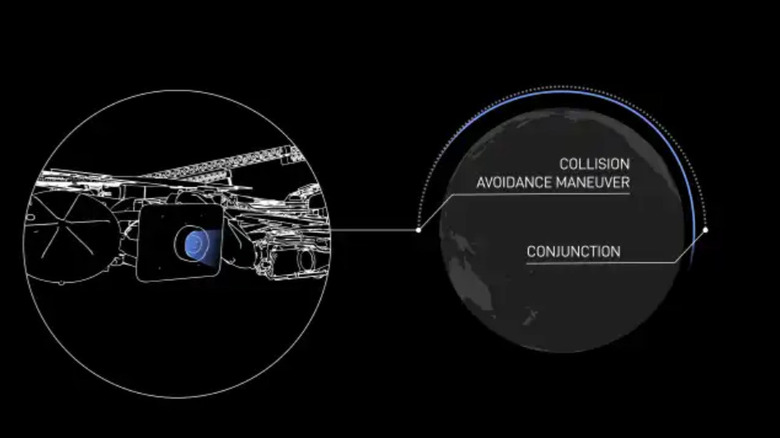
It's surprisingly hard to know what's actually in space, where it is, and where it's going. Satellite operators don't do a great job of sharing information with each other, and besides, there's plenty of debris with no operator at all. Radar can track some of this, and the U.S. Space Force does share this information, but it's only updated every few hours, and it doesn't catch everything.
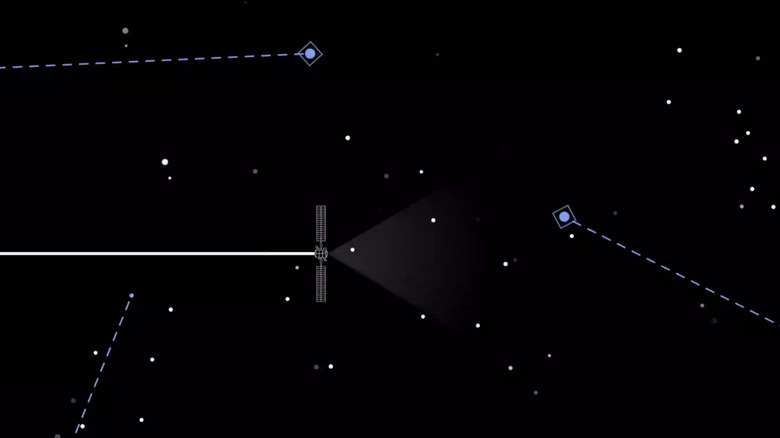
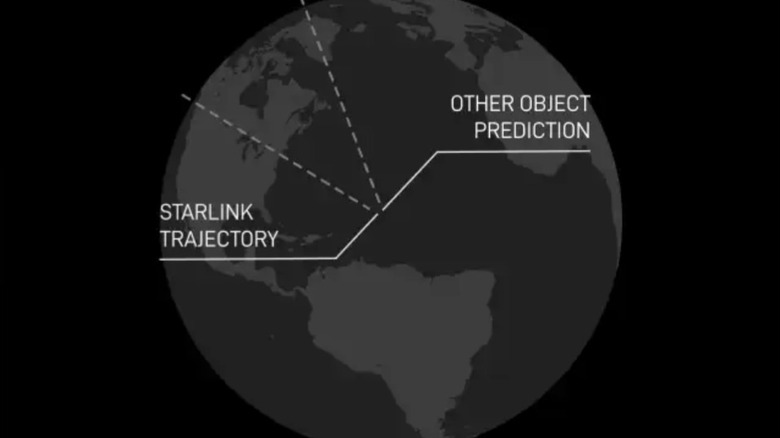
The announcement doesn't say this directly, but SpaceX appears to have come to its own solution somewhat accidentally. Its Starlink satellites are equipped with so-called "star tracker" sensors, essentially fancy cameras that can navigate by the stars. That lets the satellite know its exact position and trajectory. But while gazing at the stars, these sensors detect lots of other objects: debris, other satellites, old rocket parts, or anything else. The new Stargaze system can take in these sightings and calculate the other object's trajectory. Multiply this capability by thousands of Starlink satellites, and you've got better space situational awareness of low-Earth orbit than anything in history has provided.
Sounds pretty cool! Starlink has been in a closed beta of this system with a dozen other operators, and now, it's ready to open up the system to any other operator who wants it, for free. Well, "free."
Social spatial media
The asterisk on this offer is that in order to get access to the Stargaze platform, you have to give SpaceX all of your own satellites' trajectory data. There's two ways to read that condition. One is that, as Starlink itself says, "the most definitive source of satellite trajectories should be provided by operators themselves, allowing deconfliction and minimizing collision avoidance maneuvers." Historically, spacefaring entities haven't done a great job of sharing. So SpaceX might be encouraging them all to open up, using access to Stargaze as the incentive. If everybody comes on board, then everybody has each other's info, and space is safer.
But the other way to read this is like a social media platform: it's "free" to use... but they get all your personal data. And they track you. In other words, the information itself is how you pay for the service. What might SpaceX do with knowledge of every satellite's whereabouts? As with social media, the instinct may be to just get all the data now and monetize it later. Don't forget that xAI owns the social platform X, so once the merger happens, SpaceX will literally be a social media company. It may start acting like one.
Playing ball in orbit
Of course, there are many satellite operators that may not exactly want to share. Military and intelligence types don't exactly love handing out information. Will China? Will Russia? But even then, some level of space traffic control is better than none, which is more or less what we have now.
In the meantime, the federal government is in the process of setting up a serious solution, called the Traffic Coordination System for Space (TraCSS). Originally threatened for cancellation by the Trump administration, TraCSS appears to have survived the budget battles in Washington and is now opening up a waitlist for interested users. So like air traffic control, spaceflight may run on a mix of public and private solutions. In the long run, even that may not be enough. In an inherently international arena like Earth orbit, international treaties are what's required.