

Why Texas Leads The US In Interstate Fatalities (And It's Not Just Bad Drivers)
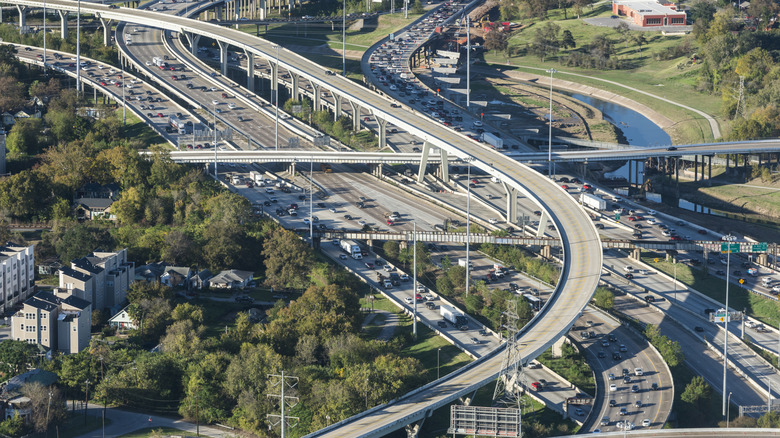
It's true what they say, everything really is bigger in Texas. The state loses out only to Alaska in terms of land mass, but Texas packs a population roughly 60 times denser than Alaska, and an economy roughly the size of India. Those are some impressive stats, but one stat that Texans won't be proud to boast is that the state leads the way in terms of interstate fatalities.
Just take a look at some of the stats from the Texas Department of Transportation: 4,291 fatalities were registered in 2023, and 4,150 in 2024, all from incidents on the road. Now of course, some of these incidents will be down to driver behavior, and we will get to that, but you might be surprised at just how much the road conditions and traffic laws in Texas contribute to these numbers. To add a little perspective, the average number of traffic fatalities per state in 2023 was 802, so Texas clearly sticks out like a sore thumb when compared to the national average.
Factors like congestion, a continued expansion of the highway network, cold weather, and geographical considerations are all partially to blame for the high number of traffic deaths logged in the state of Texas, and here's how each factor plays its part.
Texans have more roads, and they cover more miles
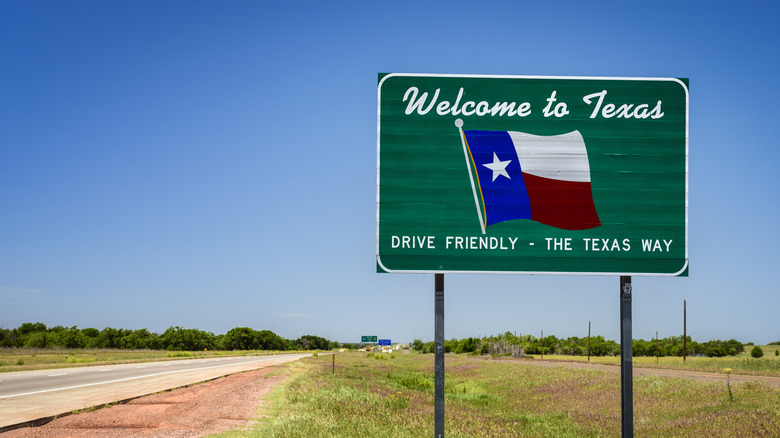
One thing Texas sure isn't short on is roads. In fact, the state has more road miles than any other state in the U.S., and the powers that be are still committed to expanding the freeway network, despite the data telling us that such ventures actually won't improve the congestion situation.
The only other state in the United States with a higher population than Texas is California, and over there, they have access to a total number of 396,540 lane miles. Not to be bested, Texas pips California to the top-spot in terms of total miles, with a gargantuan leap to 683,533 total lane miles. Now, couple this with the fact that Texans also drive further than almost anyone else in the country, and the sky-high number of fatalities starts to make a little more sense.
For reference, Texans covered over 307 billion miles in 2024 alone — a figure that gets eclipsed only by California, and not by much — although there are 8 million more Californians. It's worth noting that total miles covered in California have been dropping year-on-year, while the figure for Texas is up over 2% from 2023 to 2024. So, couple the most expansive road network in the U.S. with folks who cover the second-highest amount of miles, and it's immediately a little more understandable why so many road fatalities are registered in Texas each year. It's just a numbers game, but this is far from the full picture.
Congested roads and high speed limits play a significant role
While an expansive network of highways and millions of road users does play its part, it doesn't necessarily equate to danger. If the roads are vast, then surely there is space for the millions of drivers, and everyone can have their own safe space on the roads? Sure, in an ideal world, but in Texas, everyone wants to be on the same few strips of tarmac.
That is to say, Texas has a real problem with congestion. Interstates such as the I-45 through Houston, and I-35 that stretches from the border of Mexico up through San Antonio, Austin, and Waco are notoriously bad for congestion. The problem with congested traffic is that a single collision between two vehicles can quickly become a multiple-vehicle pile-up, and in recent years in Texas, we've seen this possibility become a reality.
Congestion can also encourage accidents, especially when a high portion of that congested traffic is trucks. Stressed-out commuters may be more tempted to weave in and out of traffic to get past slow-moving trucks; those truckers could easily miss tailgaters in their blind spots; and drivers frustrated by traffic are more likely to drive aggressively.
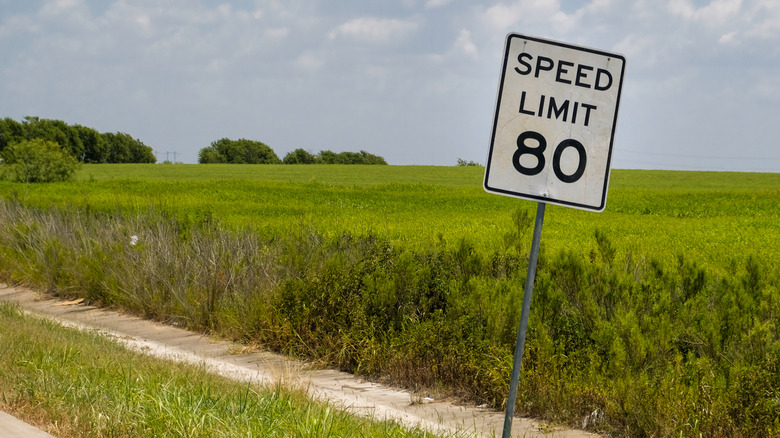
The list of exaggerated dangers is expansive, and couple this with the unusually high speed limits in Texas — upwards of 80 mph in some areas — and it's clear to see these roads are recipes for disasters. Longer stopping distances, more powerful collisions, and higher chances of losing control when swerving through slower traffic are all very real dangers of these higher-speed roads, and unfortunately, Texan motorists are paying the price year-on-year. In 2023 alone, Texas logged 1,484 speeding-related deaths (per the U.S. Department of Transportation and NHTSA); more than any other state.
The dangers of cold weather motoring are not to be ignored
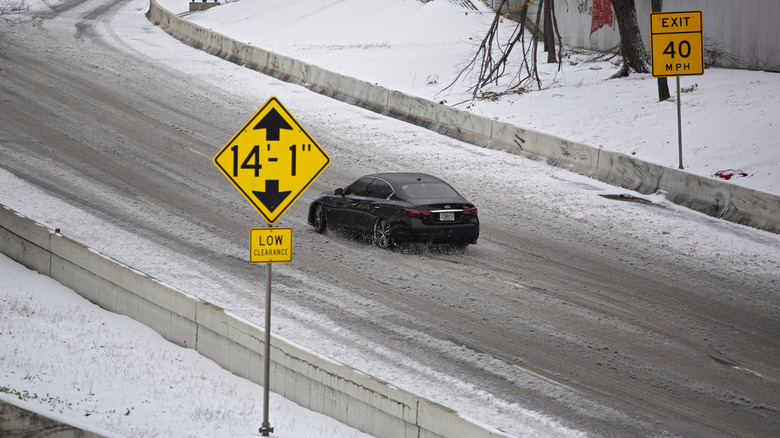
Texas is not the coldest state out there by far, but it's certainly not a summer-all-round state, with temperatures sometimes dropping near or below freezing during the colder months. Weather like this just works to exacerbate the existing traffic problems already experienced by Texan motorists, and no doubt is a serious contributor to those 'leading' fatality statistics.
There is no one single factor that has resulted in Texas topping the traffic-fatality charts; rather, it's a combination of many factors working together. So, while cold weather doesn't directly translate through to thousands of fatalities annually, couple it with congestion and higher speed limits, and you'll soon have a recipe for disaster.
These colder temperatures can lead to even longer stopping distances, particular if ice has built-up on the roads, and reduced grip too. Black ice is particularly nasty, and if given a chance to form on congested roads, pile-ups with trucks involved become a very real possibility. Not only this but, as Texas is typically quite warm throughout the rest of the year, it's easy to imagine many motorists overlooking winter prep on their cars in the interest of saving a few bucks. This is a particularly upsetting thought, since all-season tires, correct pressures, and even simple things like sub-zero washer fluid could save them from adding to the sky-high fatality count.
Heavy rain and fog reduce visibility too, but the need to commute on these busier stretches of road doesn't change for regular commuters, so the dangers only build. In fact, traffic throughout the holiday season might increase with shoppers and holiday-makers, so winter is an especially dangerous time for a wide range of reasons.
Geographical factors aren't helping either

Even studying the geographical make up of Texas can reveal a few clues as to why the interstate fatality rates are so high. It goes without saying that Texas is big, and even with those 30-million or so that call Texas their home, there's still a lot of rural land with not much going on.
Throughout these rural areas, there are long highways like the US-83 that connect more densely populated areas, but covering the stretch in between can become a little tedious. Fatigue builds, concentration drops, and accidents happen — it's an unfortunate but real occurrence. Furthermore, on many stretches of these rural roads, there are no medians, which means fatigued drivers could easily drift into rough ditches between lanes, or worse, into oncoming traffic. What might have typically been a scary barrier bump all of a sudden becomes a far more serious incident.
What's more, emergency service response times are understandably slower in less densely populated areas, so lives that could possibly have been saved with speedier response times unfortunately add to the statistic. Improved lighting, central reservations, and stop-off reminders could all work to reduce the severity and frequency of accidents on Texas' more rural highways.
Drunk drivers still have a lot to answer for
Our headline details that the high fatality figures aren't solely due to bad drivers, but it would be wrong to suggest the driving habits of some Texans aren't at least partially to blame. Recognizing when you are fatigued as a driver is something we could all be better at, but that can creep up on you, especially on longer drives, so it's an understandable factor that plays its part.
Impaired driving, however, is less forgivable. In 2024 alone, more than 1,000 lives were lost in DUI incidents, which equates to roughly three lives per day. These are totally preventable losses, which currently answer for roughly 25% of all traffic fatalities in the state.
Driving impaired can mean a variety of things, but specific drunk driving statistics are available. Take 2023 as an example; 622 fatalities were logged in drunk driving incidents that year, while the total for the United States sat at 12,429 (per NHTSA). In other words, drunk driving losses in Texas equated to 5% of the national total. While bad drivers aren't solely to blame for the high frequency of interstate fatalities in Texas, it's clear that they are still one of the most prominent factors.