

13 Chevy Models With The Longest Production Runs
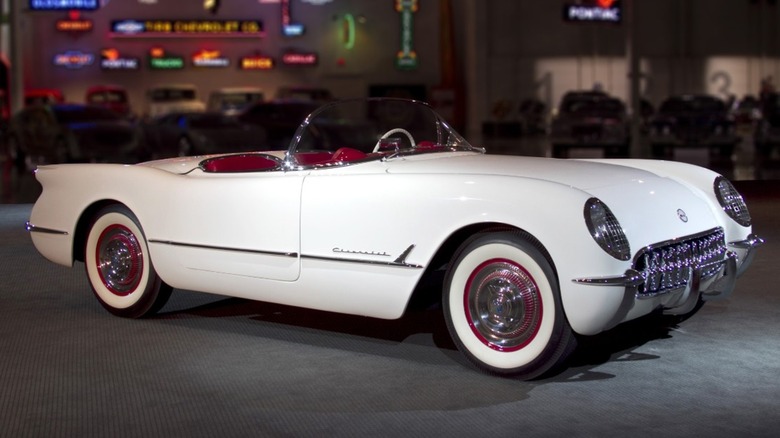
Founded by Louis Chevrolet and William Durant in 1911, the automaker affectionately known as Chevy these days was spun up as an affinity brand. Louis was a test driver for Buick who often appeared at promotional events and in races, which led the company to believe his status and popularity could be used to launch the new marque. Its first vehicle, the sporty and powerful Series C Classic Six, was Louis's brainchild.
Over time, Chevrolet became far more than a sports car nameplate. The Series C Classic Six was discontinued in 1914, and its short production run is somewhat of an anomaly. With over a century in existence, Chevy has offered some truly long-running nameplates, with some on our list lasting nearly as long as the company itself and spanning several generations.
For this list, we identified the longest single production run for vehicles sold in the United States. Some, like the Camaro, were dropped and reintroduced a few years later, so we identified the longest uninterrupted run for those vehicles. That said, we did exclude vehicles that are primarily positioned for business or commercial use, like the Express and G-Series vans.
Chevrolet S-10 (1982–2004) 22 years
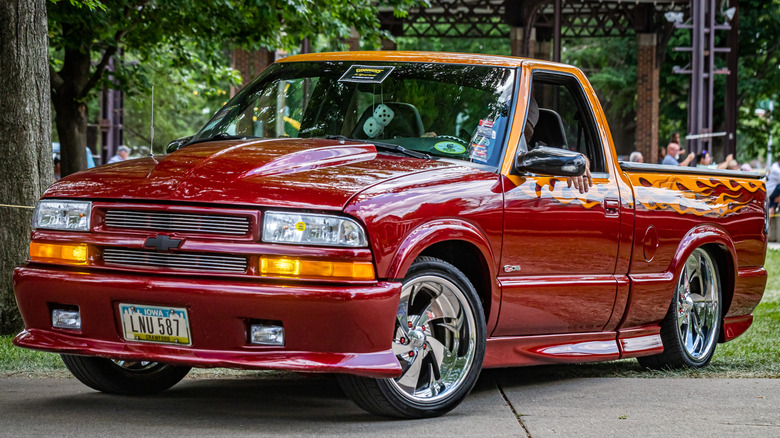
The S-10 had a single, successful 22-year production run before being replaced by the Colorado nameplate. It underwent one major overhaul in 1994, which is a testament to its success as a small truck and to its popularity. Many view the S-10 as the perfect truck — capable enough for everyday tasks, rugged enough for journeyman tradespeople, and consistently reliable. If you wanted a great truck in the 1980s or 1990s, chances are you were giving the S-10 a long look.
1994 ushered the S-10 into the modern small-truck era. It had a smoother riding chassis and better noise insulation, with Chevy initially offering it in regular and extended configurations before a crew-cab arrived in 2001. You could opt for a short or long bed, 2WD or 4WD, and engine options from a 2.2-liter four-cylinder up to a 4.3-liter V6 with an abundance of torque. With basic care and maintenance, the S-10 was a driveway stalwart well into the aughts. If you pay close attention, you'll still see some late-model S-10s on the road today.
Chevrolet Cavalier (1982–2005) 23 years
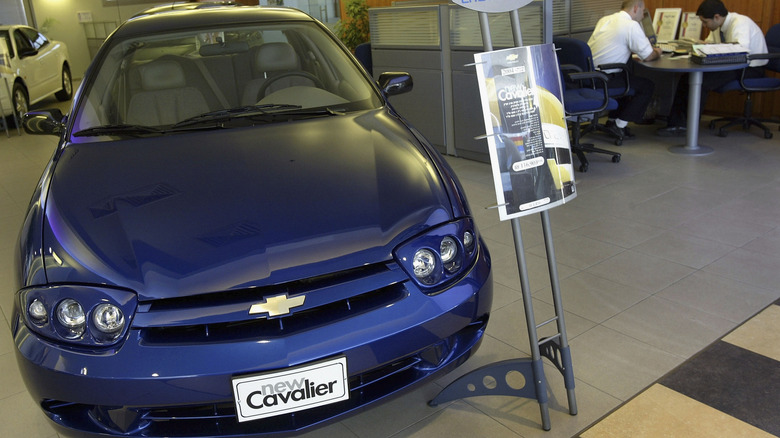
Chevy used the Cavalier name overseas after it was discontinued in the U.S., but its 23-year run in the states underscores how important small sedans were to drivers in the 1980s and 1990s. It saw two major overhauls, bringing its total number of generations to three. Its last iteration, introduced in 1995, brought dual airbags and ABS as well as structural changes to meet more rigorous crash test standards.
The following year saw a fresh iteration of the Z24 Cavalier featuring a 150-horsepower Twin Cam engine and a more rigid suspension. Still, the standard Cavalier was the vehicle Chevy produced at volume, and was meant as an affordable, entry-level vehicle for the masses. With routine maintenance, it was like other small-engine Chevys of the era — it would just keep running.
Though it was reliable, safe, affordable, and fun, the Cavalier was discontinued in the United States due to concerns about its safety (later models received poor crash-test results, even with the improvements Chevy made) and declining sales.
Chevrolet Silverado (1999–Present) 27 years
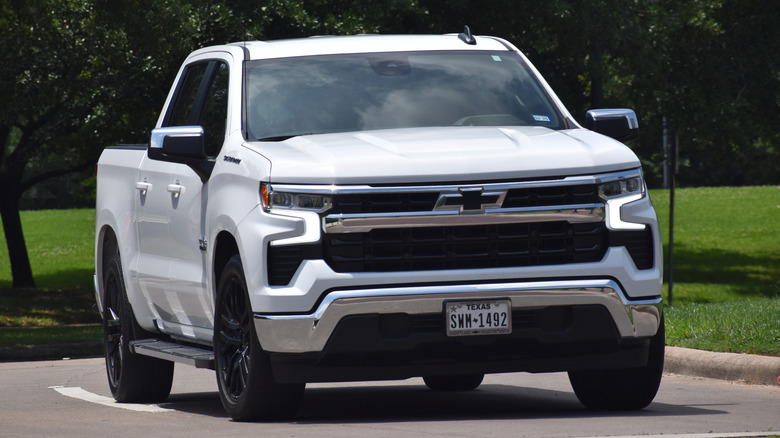
The successor to the wildly popular and long-running C/K series, the Silverado is incredibly popular on its own merit. With over 25 years of continuous production — and no signs of a break — the Silverado might push the C/K (and other models) down this list in a few years. There have been four distinct iterations of Silverado, with the last generational overhaul coming in 2019.
In 2019, Chevy was able to trim a full 450 pounds from the Silverado's curb weight while also increasing the frame's strength. Revised suspension tuning improved the truck's ride and handling, while tech upgrades and a larger cabin helped drivers feel more connected and comfortable inside. New engine options and the largest volume bed in its class — the Durabed — were also new in 2019.
Through the years, the Silverado has kept Chevy at the forefront of the truck segment. Every generation carefully matches the needs of its ownership base, from contractors to suburban parents, all of whom want a modern truck with old-school durability.
Chevrolet K5 Blazer (1969–1994) 25 years
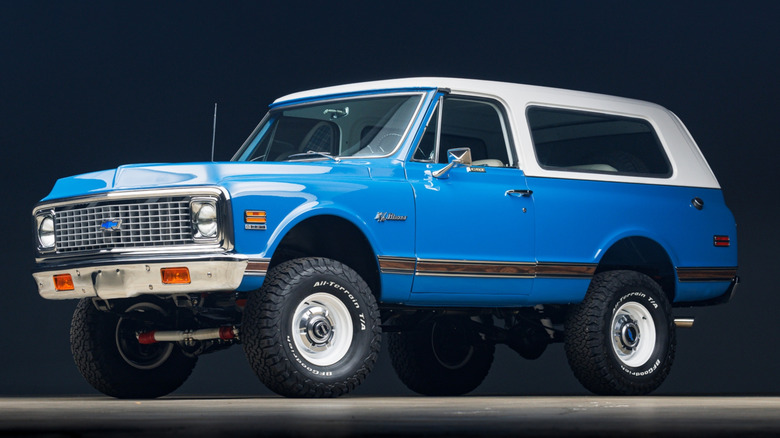
The Blazer nameplate has been used throughout Chevy's lineup, even making its way to the Tahoe and the smaller S-10 lineup over time. The K5 Blazer remains Chevy's most iconic Blazer, though, and it had a 25-year run that underscores how important it was for the company. From 1969 to 1994, the K5 Blazer only had three iterations, proving that Chevy got SUVs right from the earliest stages. The Blazer was recently reintroduced, but the latest iteration isn't considered a true K5 Blazer.
The K5 Blazer was built to scale any terrain you could put under its tires, and met each challenge with aplomb. Rocks, sand, mud, snow, pavement — you name it, the K5 Blazer could handle it. A classic, quintessential SUV, the K5 Blazer's biggest competition for decades was the iconic Ford Bronco. The K5 was a variant of the C/K truck, and was built atop the same platform. As the C/K was sunsetting, so too was the K5 Blazer, setting the stage for a new breed of Chevy SUV that prioritized comfort over rugged durability.
Chevrolet Bel Air (1950–1975) 26 years
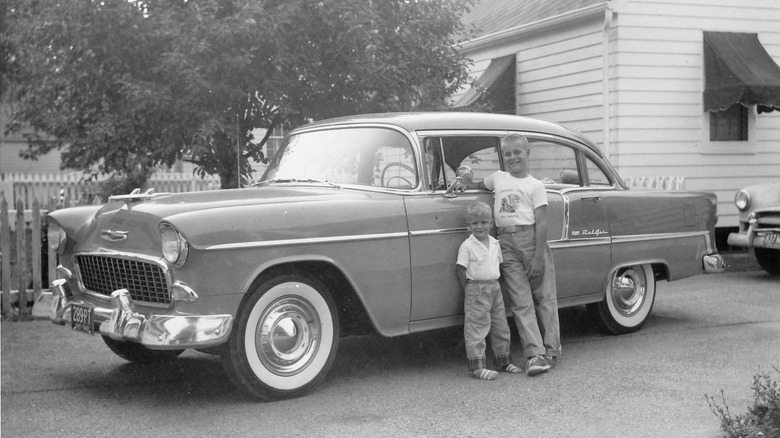
Of all the iconic Chevrolet vehicles introduced over the years, the first-generation Bel Air might be the company's most identifiable. An American icon, early Bel Airs came to represent mid-century Americana through its bold body lines and the potential for muscle-car prowess under the hood. Several consecutive generations of Bel Airs show Chevy's dedication to keeping the nameplate alive, but rising concerns about fuel consumption in the mid-'70s helped the Bel Air fade into obscurity.
By the early 1970s, the Bel Air was an expansive family sedan with seating for up to six people, a big-block V8, and the same sturdy body-on-frame construction as other Chevys of the era. It delivered everything drivers wanted from a Bel Air, but the times, they were a-changin'. The Bel Air lived on in Canada after 1975 for a final generation, but was ultimately discontinued entirely in 1981.
The Bel Air brought effortless cool to American autos and car culture, and for that, a generation of auto enthusiasts should be incredibly grateful. By the end of its run, the Bel Air was void of frills and special touches that made it an icon. Unless GM and Chevy choose to bring it back down the line, we've likely seen the last of the Bel Air. A new Bel Air concept was bandied about in 2002, but it never made it to production lines.
Chevrolet Impala (1958–1985) 27 years
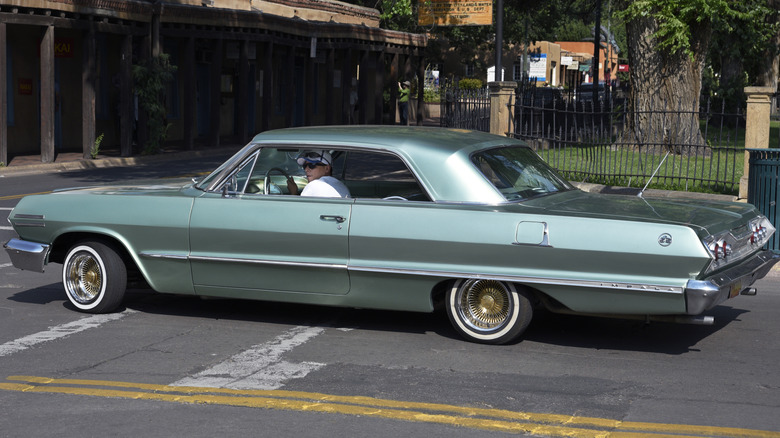
For 27 years, the iconic Chevy Impala was a mainstay on American roads. It was discontinued in the mid-1980s, and revisited a decade later in 1994, but ultimately failed to capture the spotlight as it had so many years ago. The Impala had another long run from 2000-2020, which almost gave it two spots on our list!
The first Impala was branded as a Bel Air Impala, which likely helped garner attention in 1958 when the Bel Air was at its height of popularity. The two-door came in hardtop or convertible form and a 145-horsepower Blue Flame inline-six was standard.
The original run of the Impala had several popular model years, notably the 1964 Impala, which has become a collector's item. For years, it also served as a flagship vehicle for shared architecture and body styling across GM brands. As cool and iconic as an Impala was, it also helped pave the way for sales across brands like Pontiac and Buick, both of which sold models that shared the Impala's underpinnings and styling over the years.
Chevrolet Malibu (1997–2025) 28 years
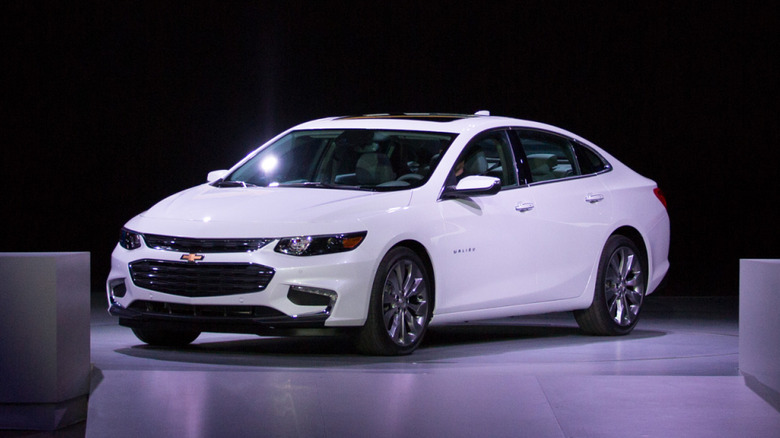
Unlike many vehicles on this list, the Malibu's initial product run wasn't its longest. It first ran from 1964 to 1983, but its 1997 revival ran through the 2025 model year, giving it 28 years in Chevy's lineup. In that span, the Malibu has had five distinct generations, the last of which arrived in 2016.
As a mid-size sedan, the Malibu fell victim to a lagging sedan market, with buyers prioritizing SUVs and electrified models. The Malibu was never offered as an EV, only had a couple of short stints as a hybrid, and it sure wasn't an SUV, which ultimately left it in a precarious position. Still, the Malibu offered sleek styling and modern technology throughout its second production run.
The last-generation Malibu was getting long in the tooth, but it still offered a smooth ride and svelte aesthetics. A single-engine option and sluggish acceleration made it more attractive for fleet and rental services, although it was a clear signal Chevy was going to end its run. The 2025 Malibu has decent MPG figures (28 city, 36 highway) but it still falls short compared to rivals in that department, too.
Chevrolet Tahoe (1995–Present) 31 years
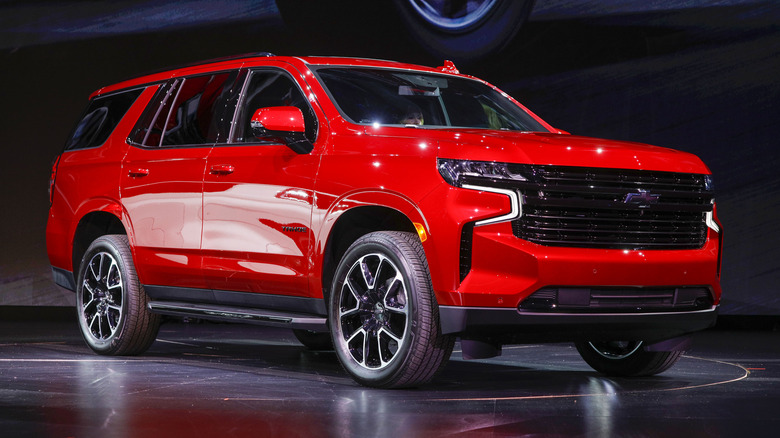
The Chevy Tahoe is the successor to the K5 Blazer, while its sibling, the GMC Yukon, replaced the GMC Jimmy. The Tahoe and Yukon — like the K5 Blazer and Jimmy — share most of the same drivetrain, body styling, and features. Now in its fifth generation, which was first introduced in 2021, the Chevy Tahoe remains popular among buyers looking for full-size SUVs.
Its latest iterations have doubled down on comfort, introducing an independent rear suspension that delivers a smoother ride. The Tahoe also has roomier third-row seating with its 2021 redesign, and the cargo area increases when the rear seats are folded down. Those looking to tow larger items will appreciate its top-end 6.2-liter V8 engine.
The roomy interior of the 2025 Tahoe is also laced with modern technology, including a dual-screen display with the center-mounted screen tilted gently to better meet the driver's gaze. While it might not seem as off-road-ready as the K5 Blazer, the Tahoe has always been capable off the beaten path. Chevy made it far more comfortable for city and highway driving, and its popularity shows that's precisely what drivers want.
Chevrolet Caprice (1966–1996) 30 years
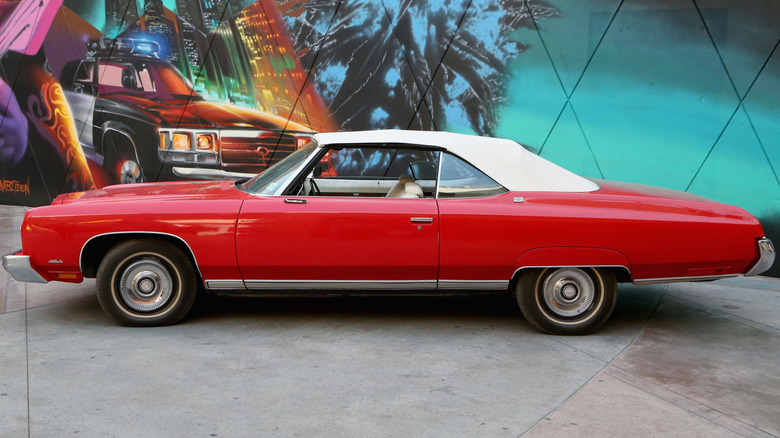
The Caprice name is shrouded in mystery. People speculate it's either named after an auto executive's daughter or a once-popular restaurant. What is certain is that any vehicle with a 30-year run is doing a lot right, and the Caprice got plenty right. Its 1991 model-year vehicle was named Motor Trend's car of the year, a considerable feat for any vehicle, let alone a sedan in a time when SUVs were coming into their own.
From 1966 through 1996, the Caprice saw only four generations, a testament to its popularity among drivers who prefer minimal change in their vehicles. The 1991 model year was easily the Caprice's best, with a small-block V8, better aerodynamics than previous generations, and refinements inside as well. The Caprice was built on GM's B-body platform, and was popular as a taxi and police cruiser.
The Caprice carefully balanced big-engine power with the comfort many buyers sought. Never flashy but always reliable, the Caprice is a favorite of Chevy enthusiasts looking for a deal.
Chevrolet Camaro (1967–2002) 35 years
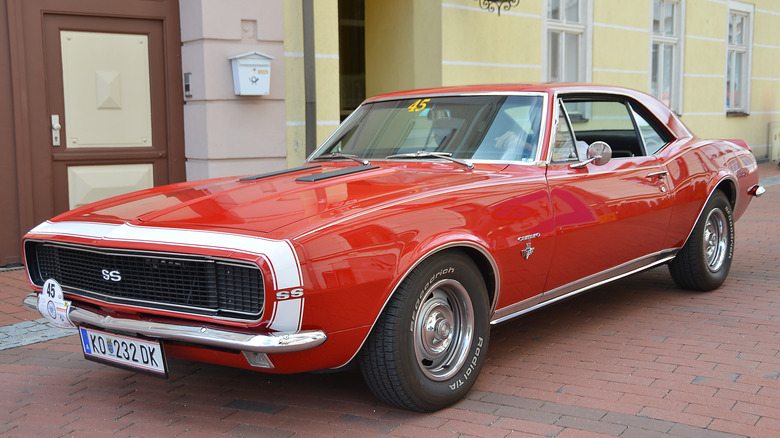
The Camaro was, in its earliest days, Chevy's answer to the Ford Mustang. A bold pony car for the masses, the Camaro was instantly popular. Borrowing an abbreviation from the Impala, the late-60s and early-70s Camaro Super Sport (SS) is a must-have for any car collector. The 1969 Camaro ZL1, in particular, is a rare find, particularly with its rare all-aluminum 427 engine.
In its initial 35-year run, the Camaro went through just four generations, although early '70s fuel-economy concerns dogged the auto industry and stifled the second-generation Camaro. Thankfully, the Camaro remained stylish, even if it was far less powerful than previous iterations. The third generation arrived in 1982 with a lighter, sturdier Camaro with fuel injection and a four-speed automatic transmission. It also ushered in the era of the IROC Camaro in 1985, a modern classic among collectors.
In 1993, Chevy brought us the fourth-generation Camaro, which received a mid-generation refresh in 1998 that brought a new LS1 V8 engine. However, it also came with styling changes that led some to refer to it as the catfish Camaro for its bulbous, rounded grille. That would prove the Camaro's swan song for its first continuous production run, although it would return for the 2010 model year.
Chevrolet C/K Pickup (1960–2000) 40 years
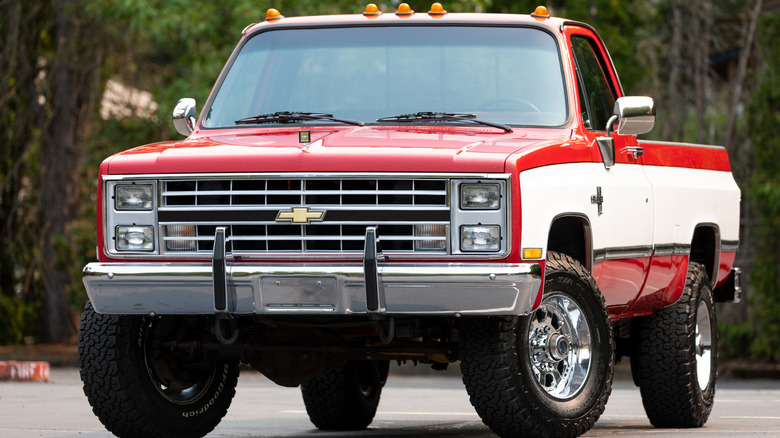
Introduced in 1960, the Chevrolet C/K was pivotal for GM. The first generation featured a drop-center frame and independent front suspension, a revolutionary combination for its time that offered truck-like durability with a surprisingly car-like ride. The second-generation C/K ran from 1967 to 1972 and slowly added things we now take for granted like floorboard carpeting and front disc brakes.
The third-generation C/K introduced the famous Square Body, and it was so good that it remained largely untouched for 14 years, running from 1973 to 1987. This generation also featured Chevy's famous crew cab dually pickup truck with four tires at the rear axle, which was nicknamed the Big Dooley.
Chevy made iterative changes to the C/K until 1998 — which was the C/K's last model year before the Silverado took its place — but throughout its run, the C/K validated owning a truck as your daily driver without compromising on features or comfort.
Chevrolet Corvette (1953–Present) 73 years
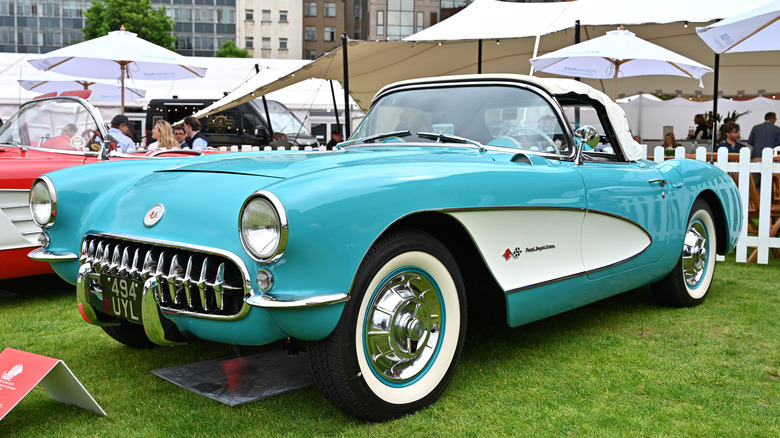
Nothing screams American sports car quite like the Corvette. When it was introduced in 1953, the Corvette captured hearts and minds everywhere and has seen eight generations in its 72-year run. Notably, the Corvette wasn't manufactured for the 1983 model year, but it was never discontinued – just put on a production hiatus.
The eighth-generation Corvette, introduced in 2020, was the first-ever mid-engine Corvette. With radical styling that makes it more of a supercar than a muscle car, the latest Corvette is still a pure American sports car. The 490-horsepower Stingray Z51 shoots from zero to 60 miles per hour in under three seconds, over half a second faster than a comparable model from its predecessor, the C7 Corvette.
As great as the latest Corvette is, its history is what makes it iconic. From the earliest days, the Corvette has been a fan favorite, with Chevy making 300 by hand in the first model year. It increased production sharply in 1954 and never looked back.
Chevrolet Suburban (1935–Present) 90 years
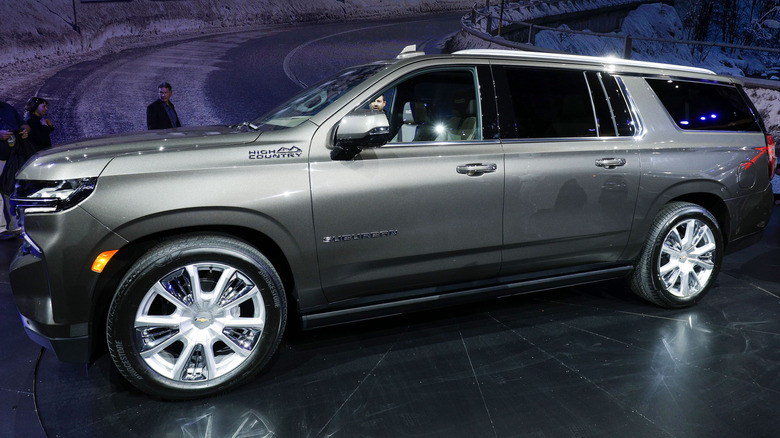
It's hard to believe the Suburban has been in continuous production for 90 years, yet it has gone strong for almost a century, with 12 generations and a Hollywood Walk of Fame star to show for it.
The first iteration was more of a station wagon than the full-size SUV we've come to know, where Chevy placed a station wagon body atop a small truck frame. By 1941, the Suburban was stretched to accommodate more people and cargo and began serving as an early precursor to the modern SUV as it slowly ditched the huckster truck aesthetic for a more family-friendly body style.
Mid-generation Suburbans shared many underpinnings with Chevy and GM's truck lineup. The Suburban was, in many regards, the SUV companion vehicle to Chevy's truck efforts. It shared engines, styling, and even internal components with Chevy's C/K over the years.
Now sharing a platform with the Silverado, the Chevy Suburban remains an SUV icon, with Chevy prioritizing hauling cargo and ride comfort over rugged durability. Plush seats and large infotainment screens now greet passengers, a far cry from the earliest days of the Suburban, which was purpose-built for the National Guard and constructed of wood.