

9 Discontinued Chevy Models We Want Back
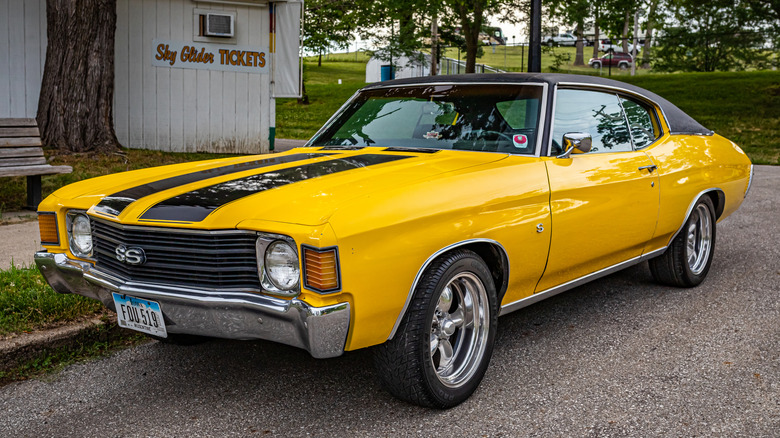
Compiling a list of budget-friendly cars from the Golden Era of American muscle set us on a trip down memory lane. Consequently, we began to wonder about all of the vehicles that are no longer with us, which has resulted in a new list. This time around, we're highlighting discontinued Chevy models that we'd like to see revived as new vehicles. Most choices are subjective and saturated in a longing for the things we used to have, though some choices are purely the result of unrestricted day dreaming.
For context, we attempted to provide a business case for each of our selections. While we would love to see V8-powered vehicles flourish in today's market, we tried to be (somewhat) realistic with our rationale. Still, at the end of the day, we're enthusiasts, not businessmen. As such, the bulk of our reasoning errs on the side of desire and emotion rather than the pursuit of actual profits. That said, we did rely on our ability to ground these day dreams in reality by referring to platforms, engines, and transmissions that Chevy still uses today.
Camaro

The first and most obvious choice would have to be the Chevy Camaro. It's an iconic nameplate with plenty of history, which we're sure most of you are aware of. For those who aren't, we'll provide a quick recap. The first-gen model was created as a response to the Ford Mustang, there was a brief hiatus between the fourth- and fifth-gen models, the sixth-gen model was discontinued after the 2024 model year even though it's a better car than its two main rivals: the aforementioned Mustang and Dodge Challenger.
Okay, you caught me, I'm most definitely biased when it comes to that three-way comparison. All three are impressive in their own right, but the Camaro ZL1 1LE is still the best car I've ever driven. So much so that I was willing to buy one myself – you can read about that adventure on GM Authority. That said, I'm aware that I'm in the minority when it comes to this decision, as Camaro sales lagged behind both Mustang and Challenger sales. Given the dwindling sales of the sixth-generation model along with recent reports regarding a potential revival, our understanding is that you shouldn't hold your breath for a new Camaro.
That said, the new Mustang isn't exactly flying off shelves, and the only gas-powered option for the new Charger is a twin-turbocharged inline six-cylinder as rumors regarding the return of the Hemi V8 have yet to be confirmed. This makes it easier for enthusiasts like us to pretend our hopeful outlook isn't downright delusional. The void in GM's lineup is certainly there, as it doesn't currently offer any vehicles equipped with both a naturally aspirated small block V8 and a manual transmission.
SS (but with a cooler name)
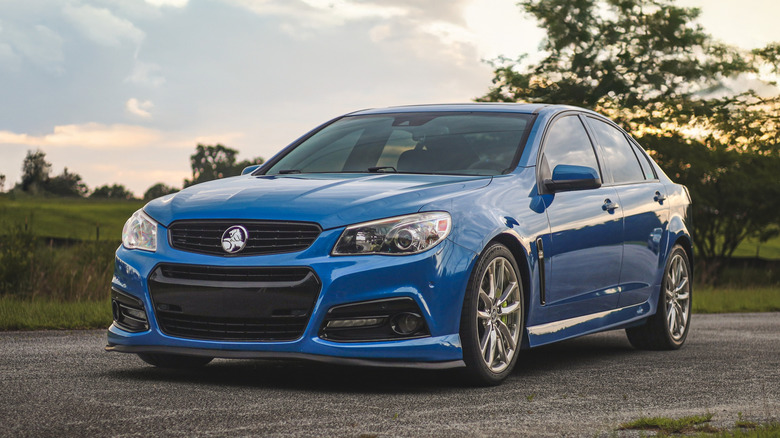
If the Camaro did come back as a gas-powered model, there's a decent chance it would utilize the updated Alpha chassis with the same 110.7-inch wheelbase. If that were the case, then perhaps Chevy could also bring back the beloved SS sedan that died after the 2017 model year, but under a cooler, more storied nameplate like the Bel Air. Also like the Bel Air, this model could be offered as both a sedan and a wagon.
Given the shared hardware between our hypothetical Camaro and SS/Bel Air, we imagine four-cylinder standard engines with optional six- and eight-cylinders. That said, GM appears to be phasing out both its 2.0-liter turbo-four and naturally aspirated 3.6-liter six-cylinder engines, which were the standard and mid-tier powertrain choices for the sixth-gen Camaro.
On the flip side, the Cadillac CT4 and CT5 still offer such a turbo-four, and also use the Alpha 2 platform. We don't think too many folks would be bothered if Chevy dropped the six-cylinder option and made V8s the only other choice aside from the standard four-banger. It would still be better than not having a Camaro or SS/Bel Air at all.
Given that we're not engineers nor accountants, and have absolutely no insight into what GM and Chevrolet are actually cooking up, you likely shouldn't hold your breath. Last time around, GM was able to offer the SS – and the Pontiac G8 before it – as a result of its partnership of Holden, which sold the model overseas as the Commodore. A frequent modification is swapping Chevy badging for Holden badging, hence what you see in the image above. In fact, at one point Chevrolet was selling Holden badges for the Chevy SS right on its website.
Nova
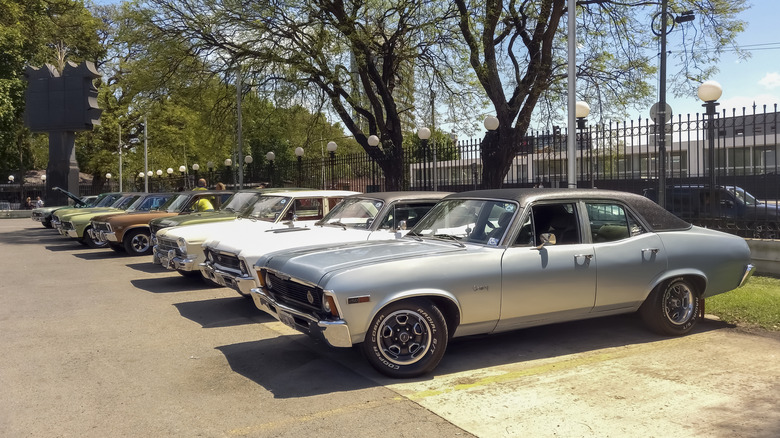
With the shorter Alpha platformed models satisfied by the revival of the Camaro and SS/Bel Air, the longer wheelbase option with a bow tie badge is still up for grabs. This might not make the most business sense, but we had to have some sort of rationale when drawing these lines in the sand. As such, we're thinking the Chevy Nova is a great choice for this segment. It can be offered in coupe, sedan, and wagon variants and offer a range of powertrain options, just as it did when it was in the market.
To clarify, we're mostly speaking to the first four generations of the Nova, which were built from 1962 to 1979. These rear-wheel-driven models were quite different from the front-wheel drive, fifth-gen models built during the mid to late '80s.
In an effort to differentiate the Nova from the first two entrants, we figure its extra mass justifies a more powerful standard engine. Yes, this is purely hypothetical and we aren't tethered to the constraints of reality, but can try. To that end, we figure Chevy's newer 2.5-liter turbo-four wouldn't be a sound choice, since it isn't currently used in any rear-wheel-driven applications. Instead, we'll suggest the 2.7-liter turbo-four, which we know works with the Alpha platform courtesy of the CT4-V — just the V, not the Blackwing. We also know Chevy has access to this engine since it's utilized by the Silverado.
Chevelle
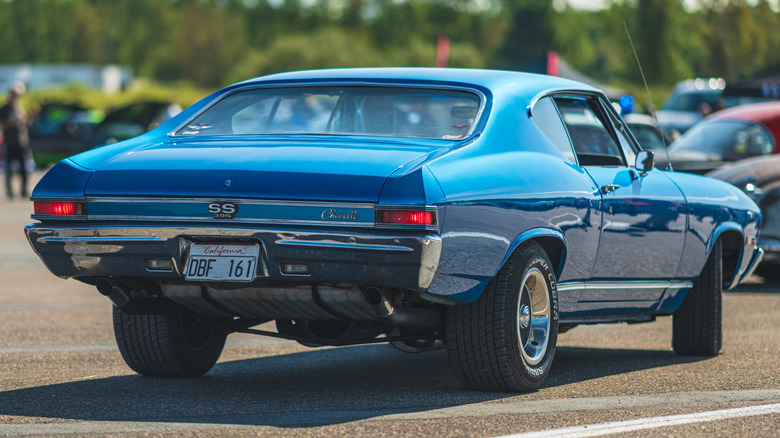
If we're allowing ourselves to dream up revivals for discontinued Chevys, we may as well go big. It sure would be dandy to have the Chevelle back with proportions akin to that of the discontinued Cadillac CT6, which rode upon the Omega platform and had a wheelbase of 122.4 inches. This means that our hypothetical Chevelle would slot above our hypothetical seventh-gen Camaro coupe and SS/Bel Air sedan and wagon.
Similar to the Chevelle models of yesteryear, this revived model would be available in coupe, sedan, and wagon body styles. It'll of course make use of GM's latest small block V8s, likely sticking with the naturally aspirated 6.2-liter LT1 and supercharged 6.2-liter LT4 V8s. Manual transmissions are required, though hybridized all-wheel-drive variants are more than welcome even if they're automatic only.
Unfortunately, there's virtually no chance of the Chevelle making a return, at least in this form. On top of that, GM is unlikely to offer one wagon, let alone two (this and our aforementioned Bel Air wagon, which was originally known as the Nomad). It didn't even bring a Cadillac CT5-V Blackwing wagon to market, and that's much more feasible than these mechanical marvels we've managed to dream up.
El Camino
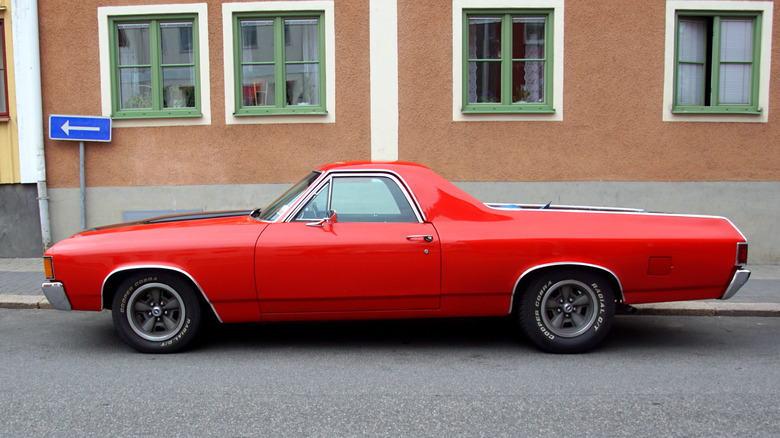
In an effort to spread the cost of our hypothetical Chevelle over other models, we envisioned the return of the El Camino pickup, aka the ute. Notably, the El Camino also shared its underpinnings with the Chevelle when it made its comeback in 1964. If Hyundai can (sort of) do it today with the Santa Cruz, then why can't Chevy? It would coincide with the resurgence of mullets, too.
Similar to the Camaro, the El Camino was discontinued due to poor sales in 1960. However, it was then brought back in 1964. If we're lucky, perhaps the same outcome is in store for the Camaro — the revival part, not the ultimate demise part. Production of the El Camino continued on for five generations, and ended in 1987.
Although it's been regarded as highly impractical, we think the El Camino could be a great solution for folks who want a bed but also want the drivability of a passenger car rather than an actual truck. As long as it offered more cabin space and was substantially better looking than the also discontinued Chevy SSR, which was the closest thing to the El Camino since it was discontinued, then there's a chance it could be well received by the market. Or not. All we know is that a modern iteration of a V8-powered El Camino would be badass.
Corvair
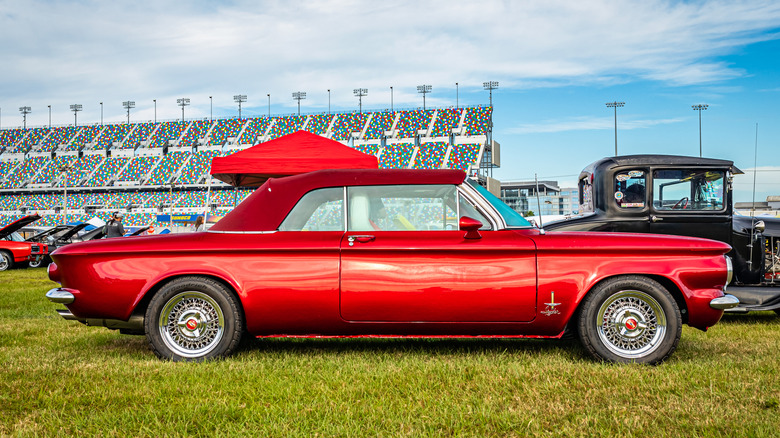
Enthusiasts know that the Chevrolet C8 Corvette isn't the automaker's first vehicle to hit the market with an engine in the back half of the car. That badge of honor goes to the Corvair, which was built and sold back in the '60s. It featured an air-cooled flat-six, which sounds more Porsche-like than something you'd expect from Chevy.
As for how such a vehicle would fit into the brand's portfolio, well, Chevy doesn't currently offer anything that's both fun and affordable. In keeping with its rear-engined heritage, wouldn't it be cool if the automaker came out with a sub-compact model that has its propulsion unit in the back? Think Saturn Sky meets Toyota MR-2. We would even be ok with it borrowing the tiny 1.2-liter three-cylinder from the Trax, which makes 137 horsepower and 162 pound-feet of torque.
While we would prefer something with a tiny bit more heft, like the 1.5-liter turbo-four from the Equinox, which puts out 175 hp and 203 lb-ft, the main objective would be to offer budget-friendly fun. If that means a battery-powered mill instead of a gas-powered one, then we'd be fine with that, too, as long as it wasn't too heavy. Doing so could give GM the opportunity to badge engineer the Buick Electra back to life, too.
Such a vehicle would also give General Motors something to compete with when it comes to small, sporty offerings from other automakers. That said, we have a much better chance of seeing a seventh-gen Camaro than something like a new Corvair.
Cobalt (especially the SS)
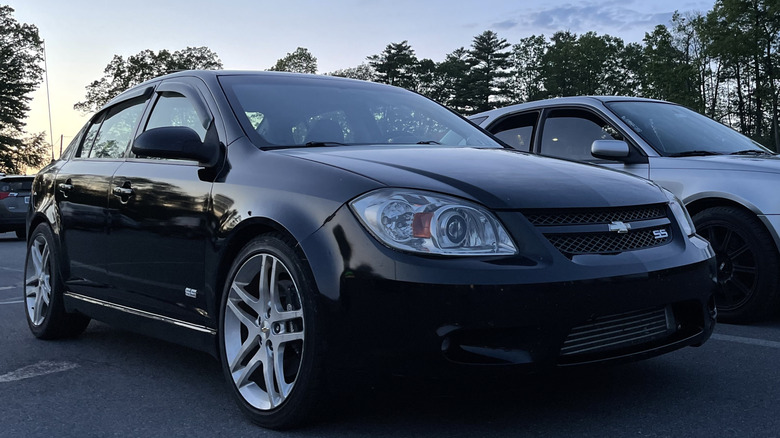
If you've ever driven one, then you'll know that the Cobalt SS is a super fun-to-drive subcompact that also offers practicality and efficiency. That said, we would love to see this little thing make a comeback. I could've suggested the Chevy Cruze but that seemed a touch too narcissistic, plus Chevy never offered a Cruze SS model.
When it comes to logistics, we'll take the easy way out and suggest a modified version of the VSS-F platform utilized by the Chevy Trax. The little 1.3-liter turbo-three we are also suggesting for the Corvair would seem right at home in such an application. However, we would love to see a Cobalt SS variant equipped with the current 2.0-liter turbo-four, which is a descendent of the engines used in the original Cobalt SS models. For the uninitiated, the 2005 through 2007 Cobalt SSes used a supercharged 2.0 dubbed the LSJ, while 2008-2010 models used a turbocharged 2.0 called the LNF.
Some say the turbo-four Cobalt SS sedan, which was only built for the 2009 model year, is the most cherished. With that in mind, we think four-door sedan and five-door hatchback body styles would be most ideal.
Malibu
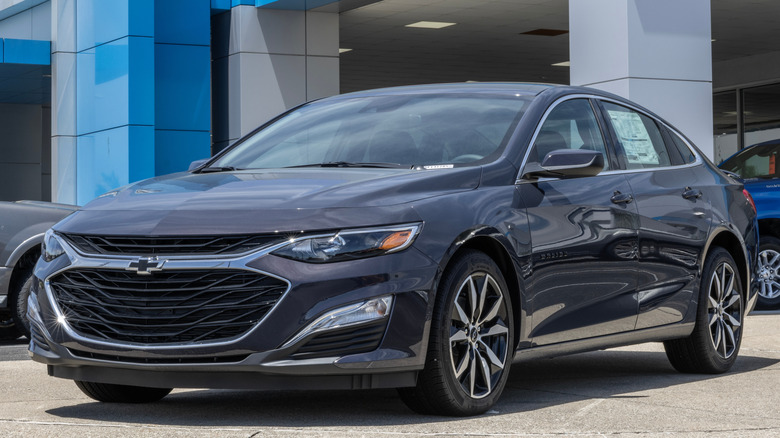
Since GM and Chevy are going through the trouble of modifying the Trax's platform for a subcompact vehicle for our hypothetical list, we figure we may as well do our due diligence and incorporate a compact or mid-size model. To satisfy this need, we turned to the unassuming Chevrolet Malibu, which was discontinued in 2024.
The front-wheel-drive Chevy Malibu as we know it today first debuted in 1997. Before that, it was a rear-wheel-driven model that replaced the Chevelle. Initially, though, it was simply a trim level for the Chevelle.
Our resurrected version would align with the more recent Malibu variants, riding on the VSS-F platform, which stands for Vehicle Strategy Set – Front — the front meaning front-wheel drive. As for powertrain options, we think sticking with four-cylinder engines makes the most sense. A larger, more powerful setup would be enticing, but we're saving that for the next revival on our list. Instead, we think Chevy should offer a hybridized all-wheel-drivetrain, similar to what's offered on the Toyota Corolla. The hardware could also be shared with the aforementioned Cobalt.
Impala
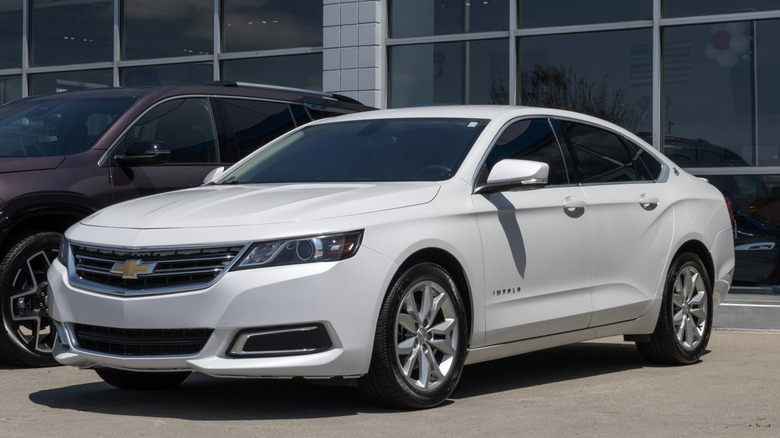
Modularity is the name of the game in the business models of today's automaker conglomerates. So, modifying the platform to expand the use case for our hypothetical Cobalt and Malibu makes it much easier for us to pretend that these day dreams could become a reality. What nameplate would be more appropriate for such a vehicle application than the Impala?
The last Chevy Impala built was a 2020 model, and the automaker hasn't offered a full-size sedan since then. In our world, Impala would return as either a wagon or a sedan. To justify this business need, we've decided that Chevy would offer the hypothetical, subcompact Cobalt in sedan or hatchback form while the hypothetical Malibu is exclusively a sedan. This leaves room for sales of the full-size Impala wagon to flourish. Because, in our world, everyone in the North American market understands the appeal and value of a wagon.
The turbo-four engines fit in this vehicle application, too, though we think a V6 is warranted in this case. The naturally aspirated 3.6-liter has already been paired with a nine-speed automatic transmission in a front-wheel drive application: the current Chevy Blazer. In other words, the bones are there, but GM would still need to invest in designing a new body and deal with all the red tape and expenses associated with it.
Still, we can't help but think that consumers would appreciate a bow-tie-branded vehicle option that offered the same practicality and stylistic appeal of the current Blazer but in sedan or wagon form, especially given how saturated with crossovers the market currently is. Oh well. At least we can dream.
Honorable mentions
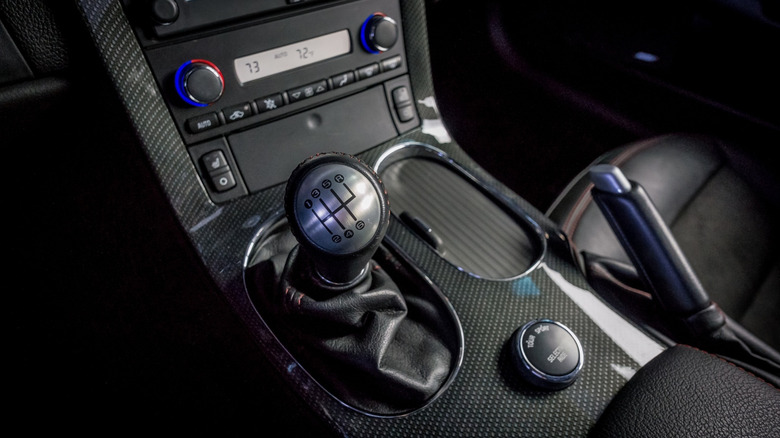
When thinking of Chevy models that are no longer offered, there were two that still technically exist, but not in the way we want them. First up is a Chevrolet Corvette with a manual transmission.
Ever since Chevy moved the engine to the middle of the Corvette, it's been exclusively offered with an eight-speed dual-clutch automatic transmission. That said, GM did patent a clutch-by-wire system back in 2018. Such technology could be used to create a manual mid-engine Corvette. We empathize with those who may have reservations about such a setup, especially when it comes to pedal feel. However, GM's implementation of brake-by-wire technology, specifically in the CT4-V and CT5-V Blackwing models, works so well that most folks wouldn't know about the absence of hydraulic lines unless they were told.
The other vehicle we're longing for is a true 4x4 Blazer variant that can compete head-on with the Ford Bronco. The Blazer EV and sporty looking Blazer crossover have their merits, but neither one offers much in the way of supreme off-road capability. We suppose folks with those desires can look to the Chevy Colorado ZR2 or even the GMC Hummer EV, although the notion of a modern day Blazer with old-school brute and a small block V8 is quite alluring.