

These Are The Automakers Who Don't Support Apple CarPlay
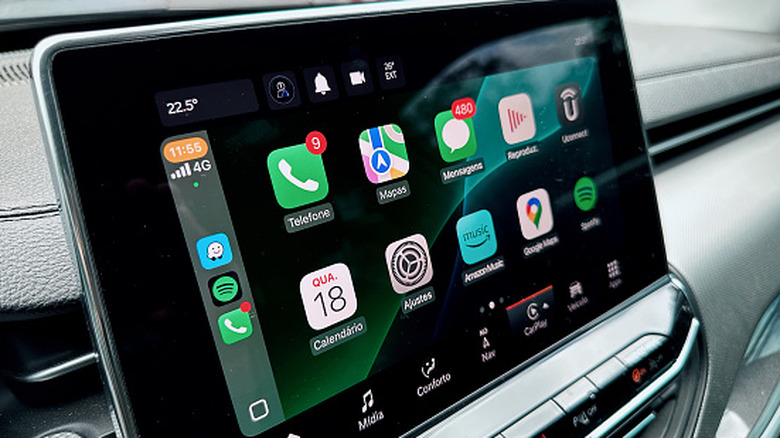
The Apple CarPlay software is built into many cars, allowing their drivers to pair their phone with the infotainment system and project their interface. In a matter of a few seconds, you can access many of your apps on your phone (including navigation, podcasts, and music players) without having to use the car's built-in system, log in to any additional accounts, or pay an extra monthly fee for a data connection. People love it and consider it to be absolutely essential when buying a new vehicle.
Despite how loved it is, Tesla, Rivian, and General Motors brands don't offer Apple CarPlay on their vehicles. This can be for a variety of reasons, including claims of these brands offering a better infotainment experience or being better stewards of your personal data than Apple. Some even suggest it's a profit-driven decision, forcing people to pay the automaker a data fee to use apps like Spotify or Apple Music in their vehicles.
Tesla
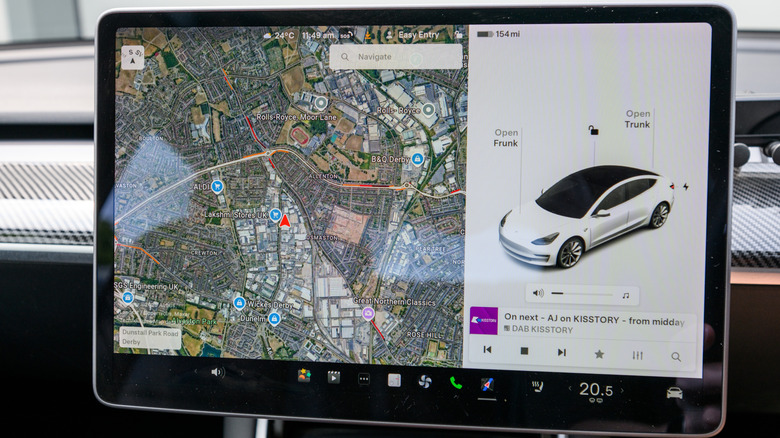
Tesla has never offered Apple CarPlay in any of its vehicles. For the most part, that hasn't been an issue because many of Tesla's integrated solutions work better than what an iPhone does, and it can potentially offer better functionality.
Tesla's infotainment system can communicate directly with the company's network of Supercharging stations. That way, each car knows where stations are, whether they are busy, and even which charging stalls are non-operational. It's what makes Tesla's dynamic route planning one of the best solutions in the business, and it's something that's not easily replicated in an iPhone app over CarPlay.
With frequent over-the-air updates that constantly refresh the user experience and add support for some streaming music services, many Tesla owners might not feel like they're missing out by not having Apple CarPlay. That said, there are companies that sell separate screens for Tesla vehicles that add Apple CarPlay support. It might not be official, but its existence does demonstrate the fact that there's still some strong demand for CarPlay among owners.
Rivian
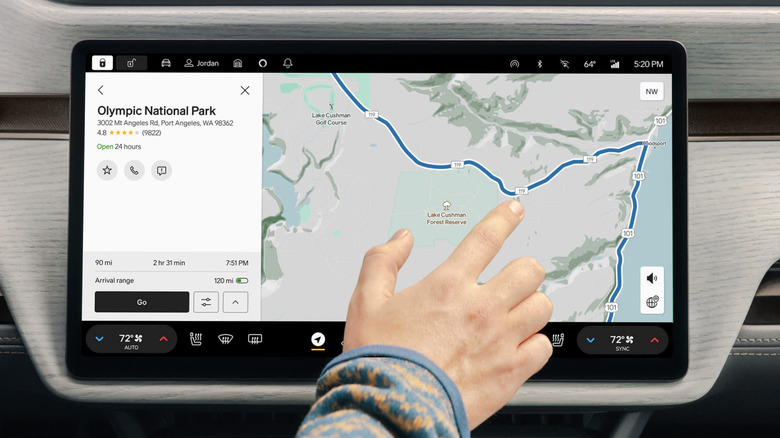
Alongside Tesla, Rivian is the other big manufacturer that has eschewed offering CarPlay for its customers. The reasoning is similar to Tesla's, as Rivian believes it can offer a better integrated experience than what it can with an app.
Built-in systems know the status of the entire vehicle. They keep track of the battery's charge, exterior temperatures, and even route topography set in the navigation to offer the best range predictions. When it's time to automatically route to a charging station, built-in systems can start battery preconditioning, changing its temperature on-the-fly and allowing drivers to experience the maximum charging rate while they wait.
Rivian has its own charging network, so it can get accurate real-time information about charging stations without relying on a third-party provider. On the other hand, its network is much smaller than Tesla's, and it's only been adding support for popular services recently. Rivian received Google Maps integration in 2025, but the company still has no plans to ever offer Apple CarPlay support.
General Motors (Chevrolet, Buick, GMC, Cadillac)
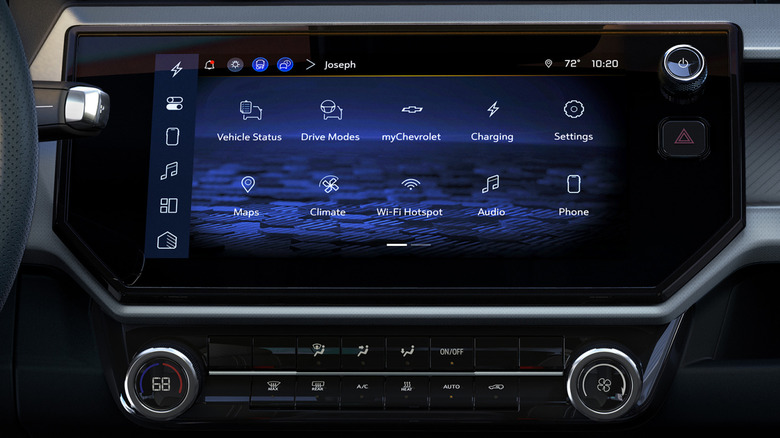
General Motors is an interesting one because it's a company that still currently sells vehicles with Apple CarPlay built in. But it follows Tesla's and Rivian's trends by refusing to offer it on the new EVs it launches, including the limited-return Chevrolet Bolt. In fact, it eventually won't sell new cars with it at all. This would be the first time a company offered support for the technology on its vehicles only to take it away later.
GM believes it can offer a better-performing and more integrated solution than Apple CarPlay. It also argues that it will protect your data far better than Apple would. This comes alongside news of the company working on a new unified platform to reduce the number of ECUs in its vehicles while offering more functionality, including in-vehicle AI (like Google's Gemini).
GM's abandonment of the technology has caused quite a stir online, with some people saying they won't buy another GM product unless it supports Apple CarPlay. That being said, considering how these infotainment systems are easily updated over the air, it would probably not be too difficult to add CarPlay back if enough customers push for it.
Is there anyone else?
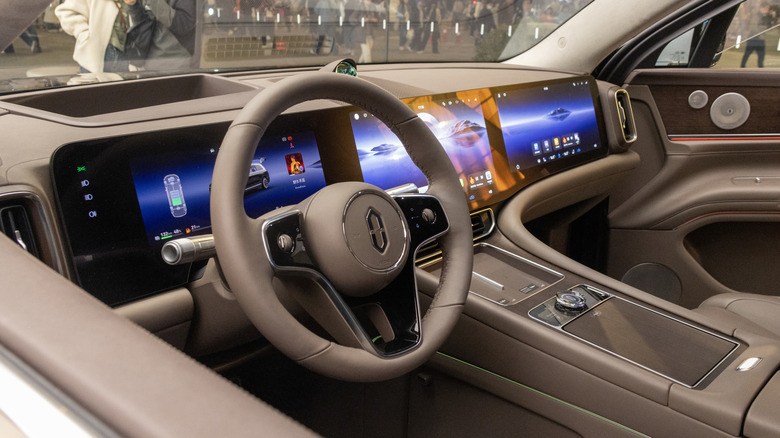
Every other automaker that sells cars in the United States offers Apple CarPlay on many or all of their models. Globally, most automakers offer it on their vehicles. Even many Chinese brands that focus on their own software still provided customers with the option to use CarPlay, though some have refused to add it even when sales suffered as a result.
Rivian is unlikely to ever offer CarPlay in its vehicles, as its CEO has recently reiterated the company's lack of plans to include the functionality. On the other hand, Tesla might be in a different boat with its sales dropping around the world. There have even been rumors that the brand's desperation for sales is leading to it adding Apple CarPlay, though only time will tell if that proves true.
If GM ultimately removes CarPlay from all of its new vehicles, it might convince other automakers to follow suit. Even if these removals are more about protecting customer data, it does open a new recurring revenue stream up for the automaker — and that type of revenue would be hard for other brands to ignore.