

Why Does GM Keep Reusing Engine Codes?
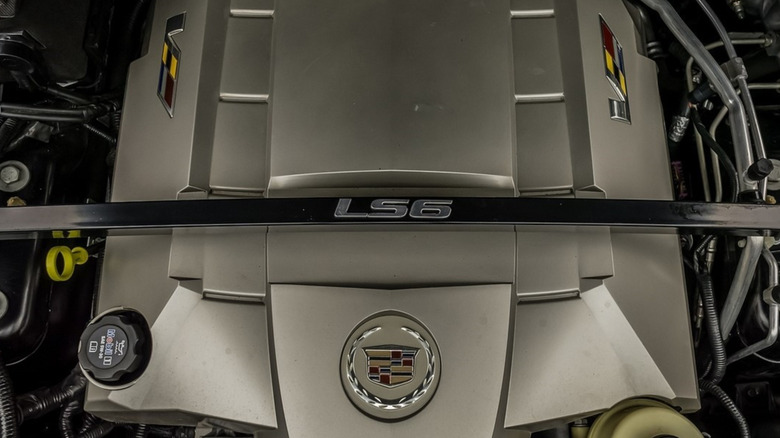
In an age where AI says glue will hold cheese to a pizza, confusing information added to the internet makes it easy to get important details wrong. To be fair, General Motors was reusing engine codes long before the modern era of endless misinformation, but it was still confusing. If you were shopping for parts in the early 2010s for your LS6 V8, you had to specify whether you meant the carbureted big-block 454 from the early 1970s or the 5.7-liter all-aluminum Gen-III small-block used in C5 Corvette Z06s and V1 Cadillac CTS-Vs.
So why did GM do this? There is a real answer, and it comes from Tadge Juechter, executive chief engineer for the Corvette from 2006 to 2024. He was asked this question in 2019 on the Corvette Forum during an "Ask Tadge" feature. User ArmchairArchitect wrote that this code reuse "Makes it very difficult when searching for parts. There are thousands of other possible combinations of 3 characters (or more) to use...why reuse the same engine names?"
Tadge answered that while GM's three-digit RPO (regular production order) codes seem to give vast possible combinations, the codes actually follow strict usage conventions. Brake systems start with J, transmissions start with M, suspensions start with F, and engines start with L. He also wrote, "There are times we will re-use an RPO when we feel like the brand equity conveys the mission of the modern hardware. It gives people a reference of what they are getting when they check the option box. Todays ZR1, also featuring an LT5, is a good example."
Why does code appropriation feel more confusing with engines than other parts?
Even with Tadge's explanation, code reuse can feel more frustrating with engines than any other part. No one seems attached to the M40 RPO code for the TH-400 automatic transmission. Likewise, buyers probably wouldn't have cared if Chevrolet had resurrected the JL8 four-wheel disc brake RPO code for third-gen Camaros. Engines, though, are the hearts of our cars. While historic RPO codes may merge modern products into the lineage of legendary models, they sure complicate things when you're trying to buy a replacement valve cover.
Take the C4 Corvette ZR-1 as an example. That car had plenty of changes from the base Corvette, including bespoke wide bodywork to accommodate wider tires, low-power and high-power keys, and FX3 selective ride control as standard. But there's only one part that actually transformed the ZR-1 into the monster that it was: The LT5 engine. But if you search for the "Corvette LT5," you'll likely get plenty of hits for the C7 generation ZR1's LT5. That engine wasn't a 5.7-liter double overhead-cam naturally aspirated V8 designed by Lotus and built by Mercury Marine, but rather a supercharged pushrod 6.2-liter. Zero parts between these engines are interchangeable, and yet both come up in search engine results.
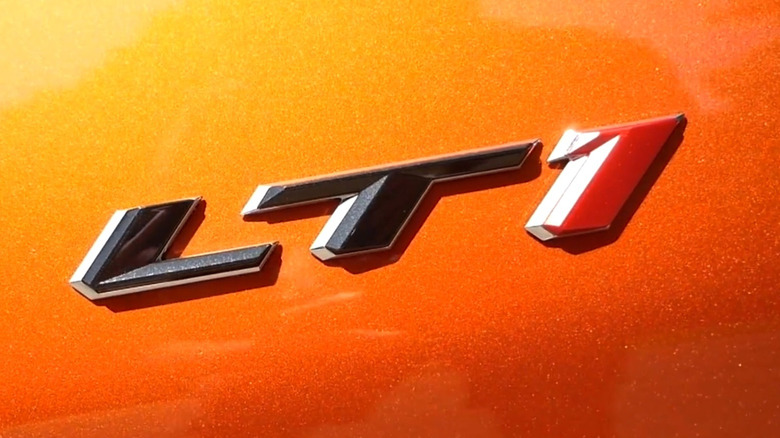
It's even worse with LT1s. There's the 1970-1972 solid lifter, four-barrel carbed Gen-I 350 LT1 that went into the C3-era ZR1s, the fuel-injected Gen-II 350 LT1 that went into pretty much everything GM had in the early '90s (except C4 ZR-1s, of course), and the 6.2-liter direct-injected LT1 used in C7 Corvettes and gen-six Camaros. Your search had better include lots of quotation marks and specific attributes to get the right engine.
How could this be solved?
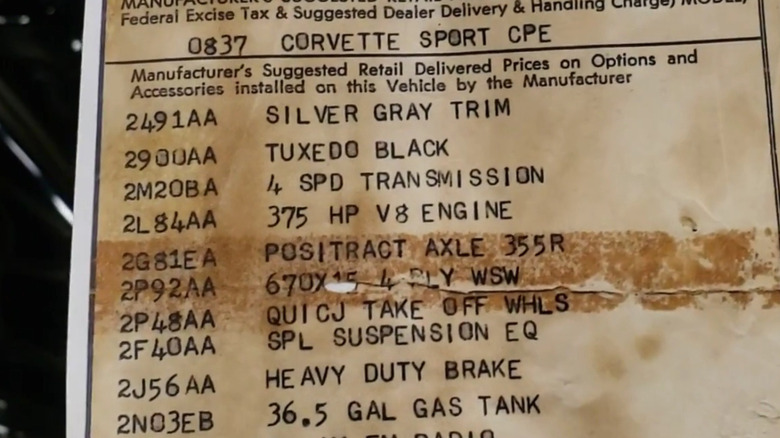
GM could enact a few changes that would make it easier to find parts for your '84 Corvette's Cease-Fire — sorry, Cross-Fire – L83 350, rather than forcing you to sift through results including the modern L83 5.3-liter truck engine. Perhaps an extra number could indicate which specific engine it is. We're all used to the concept of software being in version 2.0, 2.1, 2.2, and so on, so we could have codes like L83.1 and L83.2. Sure, this violates GM's "three-digit code" guideline, but surely the company can change its own RPO rules. Besides, as seen in a 1964 Corvette's delivery sheet, more than three digits fit on a delivery tag.
We could also do with heavier use of dashes and slashes, similarly to how the 302-powered 1967 Camaro Z28 turned into the Z/28 in 1968. RPO code LS-1 refers to a California smog-compliant 427 big-block sold in 1969, while RPO code LS1 refers to the first of the Gen-III 5.7 small-blocks that debuted in the 1997 C5 Corvette, so we've already got a head start with this particular coding fix.
Another solution is to just stop using engine RPOs for marketing purposes. Are buyers that attached to engine codes? C3 ZR1s had LT1s, and no one complained when C4 ZR-1s got LT5s and C6 ZR1s got LS9s. Was anyone cheering when C7 ZR1s went back to the LT5 designation? Current C8 ZR1s have LT7s, and drivers are probably more concerned with wrangling 1,064 horsepower than what engine code appeared on the order sheet.