

How Old Is Too Old For Tires? When It's Time To Replace Them
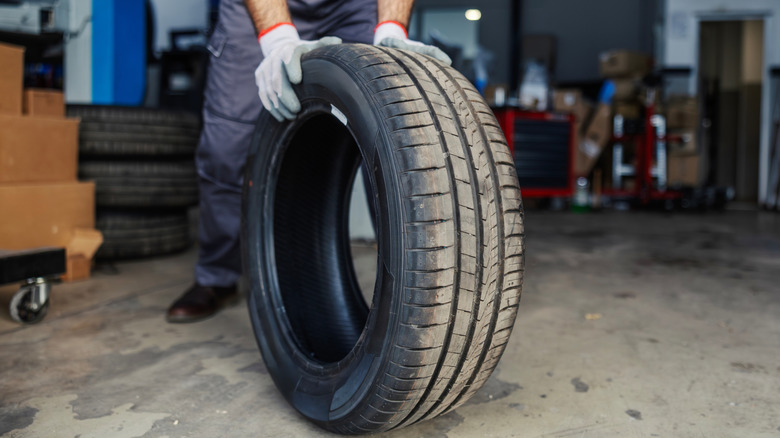
Most vehicle owners may believe that the right time to change their vehicle's tires is when they notice the usual signs of tread wear or cracks in the tire, or when the performance of the tires has reduced. But tires have a shelf life, which means that even if there's plenty of tread and the tire is undamaged, you will have to replace them eventually. Tires are composed of not just rubber but steel and textile cords that add strength to them, and as tires age, the cords or belts can lose their bonding with the rubber. This, in turn, results in cracks on the tire, which can cause the steel belt to dislodge from the rubber, posing a serious risk while driving.
Tire manufacturers recommend that tires be changed between six and 10 years, even if their usage is below the specified mileage limit. The likes of Michelin and Bridgestone advise owners not run tires that are older than 10 years, even if tread depth is at acceptable levels. Michelin recommends that tires be inspected every year after the five-year mark to check for any visible signs of damage. Goodyear – which Consumer Reports declared the most satisfying tire brand — and its subsidiary, Cooper Tires, on the other hand, state that owners should not use tires for more than six years from the date of manufacture or from when they were mounted on the vehicle. But as the average driver covers just over 13,000 miles per year, and dealers expect tires to last around 50,000 miles, most drivers in the U.S. will likely wear out their tires before their expiration date.
How to determine if your tire is too old?

There's a simple way to know when tires are too old for use, which can be decoded from a few characters that are written on the sidewall of each tire. Each tire manufactured after 2000 has a DOT Tire Identification Number, which indicates the week and year the tire was manufactured. The above image has the number 4020, which signifies that this particular tire was manufactured in the 40th week of 2020. For tires manufactured before 2000, you should ideally have replaced them by now. However, if you're curious to determine when your now classic car's tire was made, you'll need to decipher a three-digit date code, which also follows the week-year format but uses only a single digit for the year. For example, 1999 would be represented by "9," 1998 by "8," and so on.
Although little-used tires can degrade before they wear out, they can also age more quickly in certain conditions. Warm weather and the tires' exposure to sunlight could accelerate aging, which NHTSA says is more of an issue for those living in the southern U.S., where it is much hotter. One tire on your vehicle that is often overlooked is the spare, which experts say should also be replaced before the 10-year mark. Spare tires mounted on the tailgate or underside of the vehicle — as on pickups — should be inspected for corrosion on the nuts and bolts that hold them in place.