

What Causes Brakes To Overheat (And What To Do When It Happens)
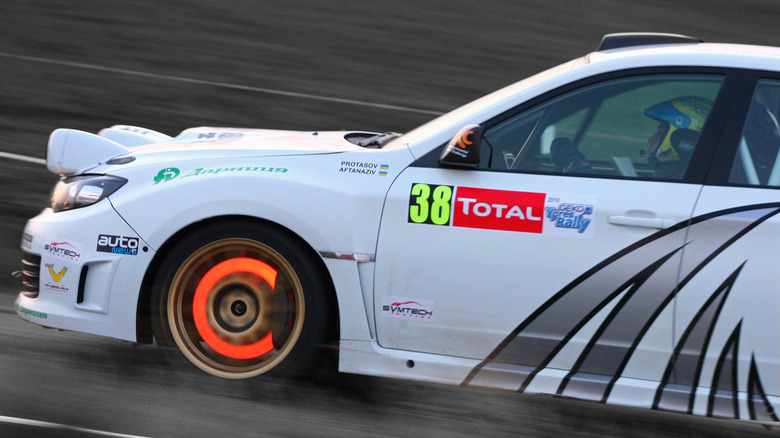
You probably won't be driving hard enough to overheat the brakes of your car on the way to the grocery store or during a school run. But it's a different matter on a track day, when towing and going downhill, or while driving hard on a twisty road in the summer heat. Brakes can tolerate heat, and their components are designed to do just that. Increased temperatures are a byproduct of braking, resulting from the friction required to bring your jalopy to a steady halt.
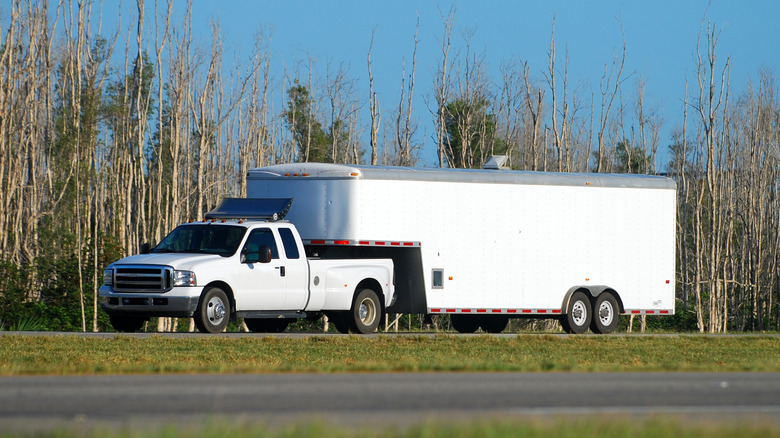
Contemporary braking systems are designed to tolerate everyday wear and tear, and the advent of disc brakes is why most modern cars stopped using drums. Simply put, discs can dissipate heat better than drum brakes, but it doesn't make them immune to overheating either. Carrying heavy cargo or towing extra loads will make your vehicle harder to stop, which puts more strain on your car's braking system and increases the chances of overheating. Riding the brakes on downhill slopes while driving on those scenic yet perilous mountain roads is also a surefire recipe for overcooking the brakes.
It's important to note that vehicle maintenance and your driving habits contribute greatly to braking performance under duress. And while it's not impossible to overheat the brakes if you stop, go, and corner like a professional racer (especially on the occasional track day), worn brake pads and faulty installation of braking components can also lead to overheating.
Why do car brakes overheat?
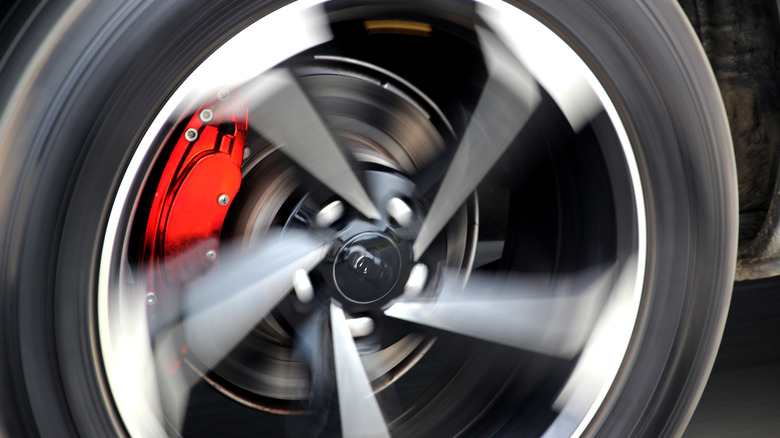
Aggressive driving or frequently pulling loads that weigh near your vehicle's towing limits all put enormous strain on the brakes, especially when braking frequently downhill. The brakes can also overheat quickly with cheaply built aftermarket brake pads, which could have weaker adhesive-bonded attachments that do not conform to OEM specifications, despite what the print on the box may suggest.
Meanwhile, faulty components may contribute to overheating. Corrosion and degraded seals will cause the caliper to stick. When this occurs, the caliper won't retract the pads from the rotors after releasing the pedal. Since the pads are still touching the rotors, the situation generates more heat as you drive, and it eventually leads to rising temperatures within the system. If one or two wheels are too hot to touch after driving, you're possibly dealing with sticky calipers.
Moreover, bad wheel bearings are not only noisy but can also contribute to overheating and weak braking. Other possible causes of brake overheating include excessively worn brake pads and low brake fluid levels.
Overheating causes brake fade

Modern brakes have many components to stop your car, but the main players are discs or rotors that rotate with the wheels, pads that grab the discs to slow the car, calipers that push the pads onto the discs, and DOT 3 or DOT 4 hydraulic brake fluid to make it all work (there are other types of brake fluid, but they're less common than DOT 3 and DOT 4). Heat is generated when the pads contact the disc, but too much heat leads to brake fade, and it's something you don't want when the need to stop suddenly arises.
Although the pads and rotors can handle temperatures of around 250 degrees Fahrenheit to 300 degrees Fahrenheit (121 degrees Celsius to 149 degrees Celsius) during normal driving, riding the brakes when going downhill or driving too aggressively can increase the braking temperature to a scorching 600 degrees Fahrenheit to 700 degrees Fahrenheit (315 degrees Celsius to 371 degrees Celsius), which is enough to crystallize or glaze the friction-generating materials of the brake pads. In short, the pads can overcook, which affects their friction-generating properties. This can leave you unable to stop, no matter how hard you push the brake pedal.
Symptoms of overheating brakes
Brake fade is the ultimate consequence of overheated brakes, but there are telltale signs that your brakes are scorching. One of the main symptoms is a spongy feel on the brake pedal or the sensation of the pedal becoming softer or unresponsive. The sensation is caused mainly by overheated brake fluid. When brake fluid overheats, it can expand, and the system can lose hydraulic pressure. The condition can also cause an increase in the brake pedal travel, making it seem like the pedal is pushing through the floor while braking. It goes without saying that brake fade brings weaker stopping power, and this means dangerously longer braking distances.
Other symptoms of overheated brakes include visible smoke, burning smells emanating from behind the wheels, and a bit of blue or purple discoloration on the rotors, all of which are prime indicators of sweltering brakes. Another noticeable symptom is vibrations or pulsing sensations while stepping on the brake pedal. These vibrations are mostly caused by warped brake rotors, which mainly occurs when the rotor surface develops uneven areas due to, you guessed it, too much heat.
What to do when the brakes overheat
Driving fast and kicking the tail out around those bends is huge fun, but overheating brakes can put an end to all that jubilation. If you suddenly feel that the brakes are not as grabby or are not as efficient in slowing the vehicle down, the only thing to do is to reduce your speed and find a safe place to stop and cool the brakes.
After doing so, lift the hood, inspect the brake fluid level, and add more fluid if necessary. Allow the brakes to cool for 10 to 15 minutes before setting off. You should avoid ignoring the symptoms of overheated brakes if you can help it, since doing so can lead to huge repair bills or total brake failure.
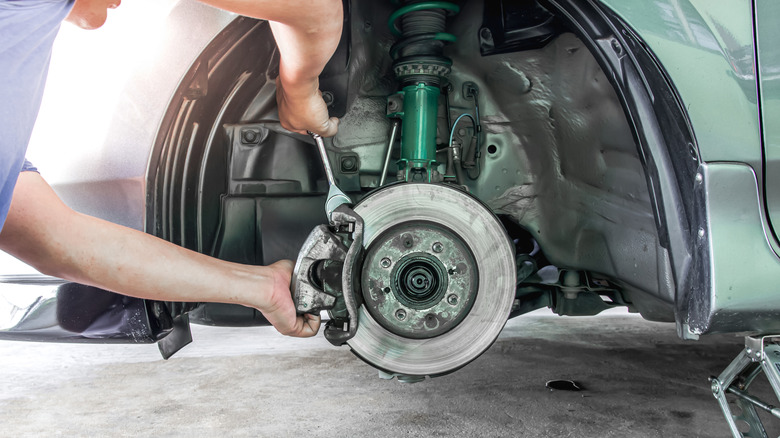
If you find that your car or truck's brakes overheat easily, it's probably time to service the brakes and have the vehicle inspected by your favorite mechanic or garage as soon as possible. You may need new brake pads, rotors, or a brake fluid flush. For reference, brake rotors can last 60,000 miles or longer, while inspecting and replacing the pads every 20,000 to 60,000 miles will ensure that your anchors are up to scratch when you need them most. It's also worth looking into upgrading the braking components of your ride if overheating issues persist. For instance, drilled or slotted rotors have their pros and cons, but they can dramatically improve braking performance when combined with performance-oriented ceramic or semi-metallic brake pads.